Cultural Stories
Discover the rich history, traditions, and stories behind Caribbean jerk culture.
Jerk cooking is far more than a culinary technique — it is a living piece of Caribbean history, a story of resilience, creativity, and cultural pride that stretches back centuries. To truly appreciate the jerk on your plate, you need to understand the people, the land, and the circumstances that created it.
The origins of jerk cooking are deeply intertwined with the story of the Maroons, escaped enslaved Africans who established free communities in the mountainous interior of Jamaica during the 17th and 18th centuries. Living in the rugged terrain of the Blue and John Crow Mountains, the Maroons developed jerk as a method of preserving and cooking wild boar and other game using the abundant pimento trees that grew in the region.
The word "jerk" itself has debated origins. Some scholars trace it to the Quechua word "charqui" (dried meat, the same root as "jerky"), brought to the Caribbean by Spanish colonizers. Others connect it to the English "jerk" meaning to poke or prod, referring to the technique of poking holes in the meat to insert seasoning. Whatever its etymology, the practice has become synonymous with Jamaican identity worldwide.
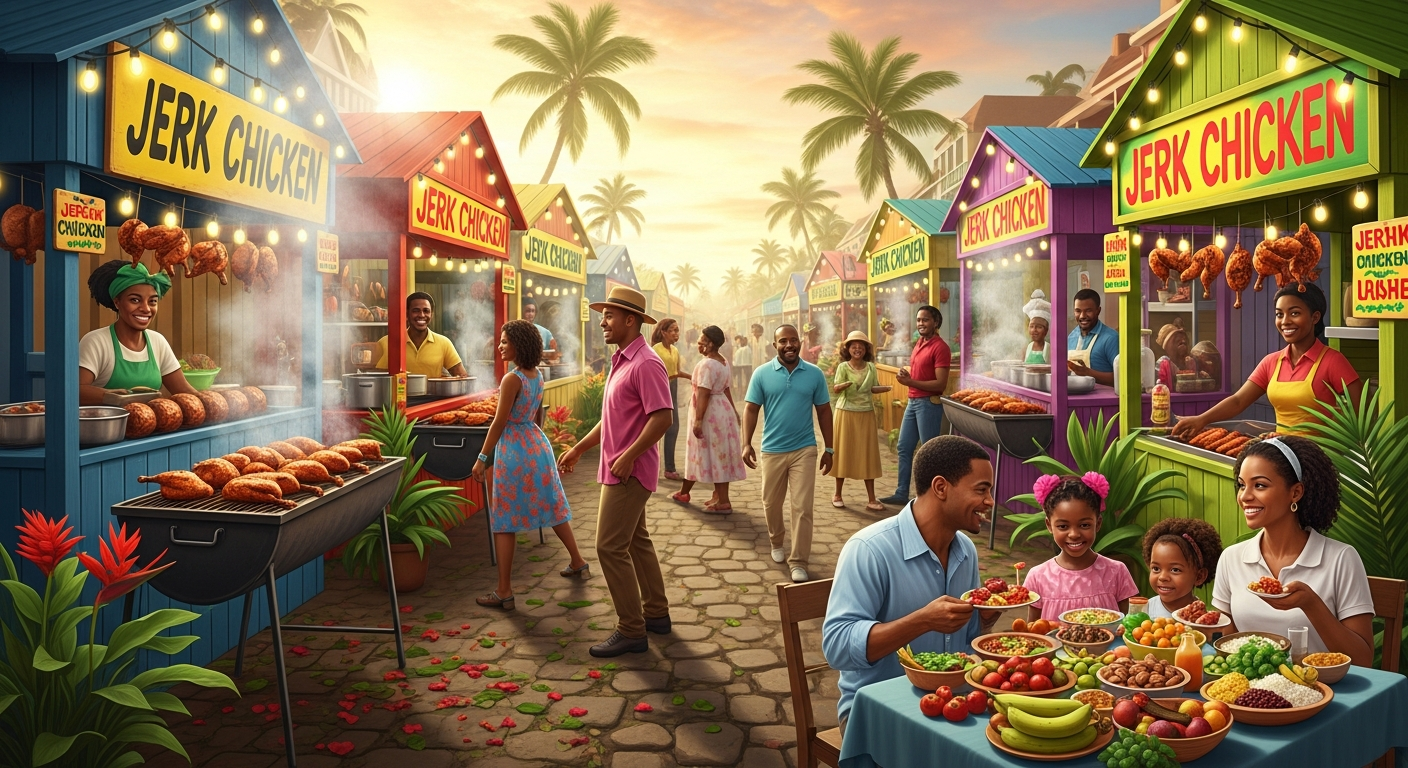
From the roadside jerk stands of Boston Bay in Portland Parish — widely considered the birthplace of commercial jerk cooking — to the international jerk festivals held in cities around the world, this tradition has grown from a survival technique into a global culinary phenomenon.
This section explores the stories behind the food: the Maroon heritage that created it, the Jamaican communities that perfected it, the festivals that celebrate it, and the ways it continues to evolve while honoring its roots.
All Cultural Stories Articles (10)
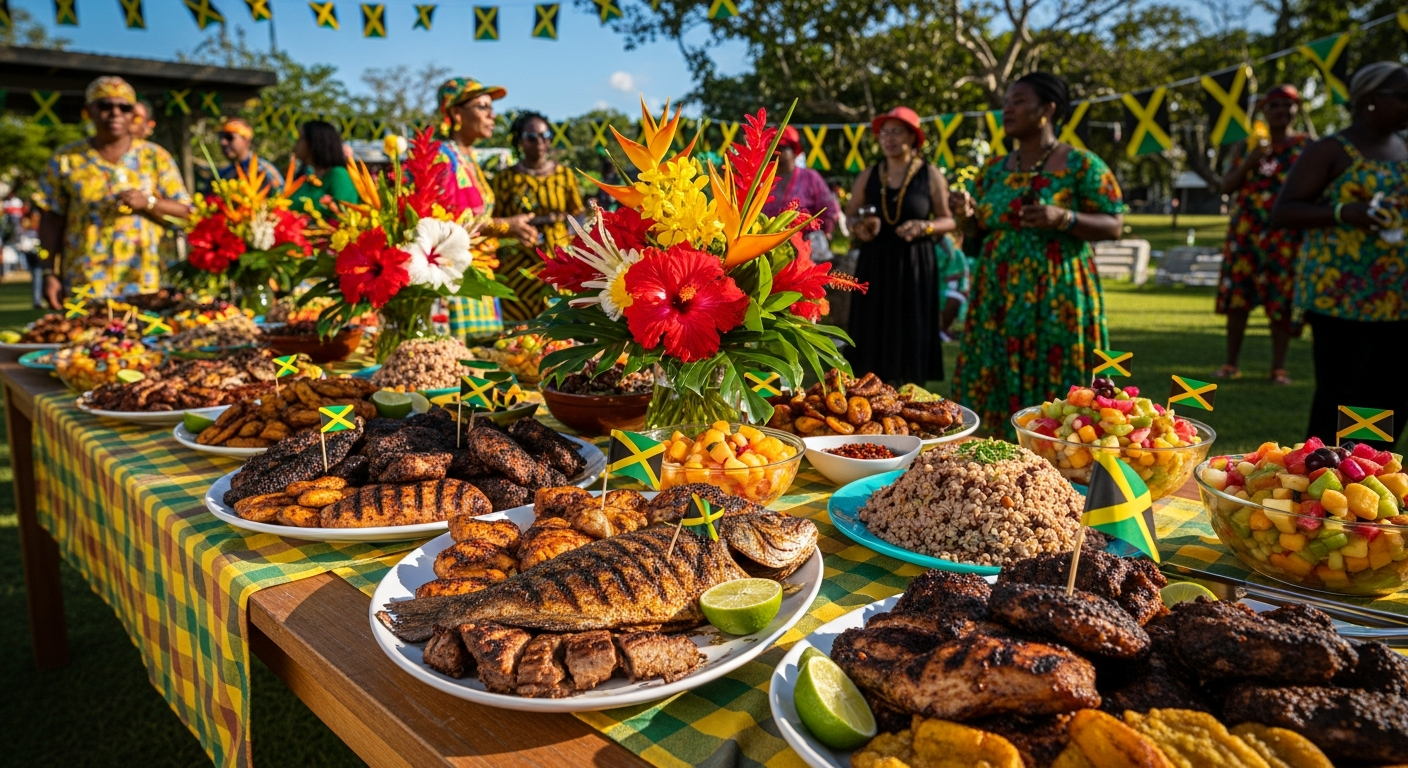
Jamaican Jerk: A Taste of Heritage
Discover the deep cultural roots of Jamaican jerk cooking, from its Maroon origins to its status as a symbol of national pride and resilience.
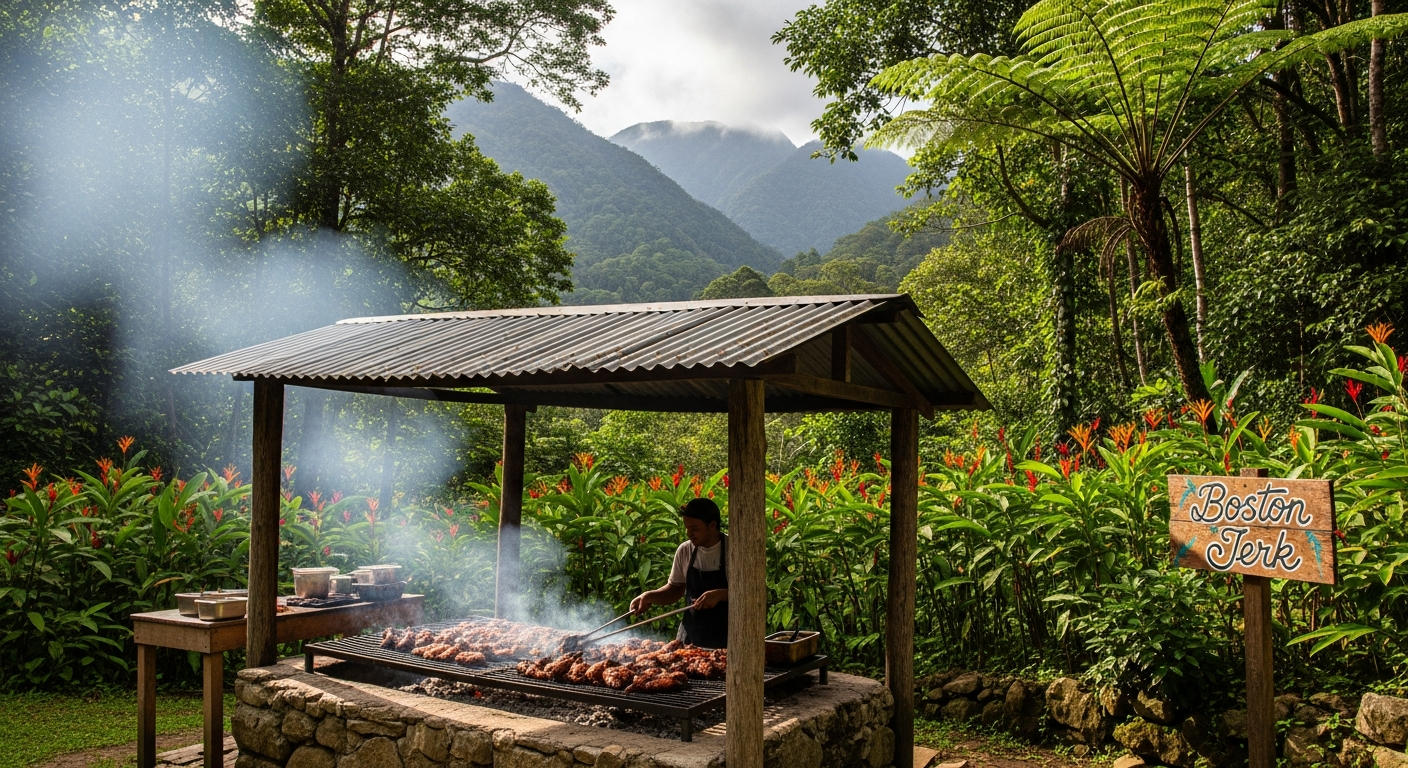
Jerk Pits and Jamaican Culture
Explore how jerk pits function as more than cooking stations in Jamaica — they are community centers, cultural landmarks, and living connections to Maroon heritage.
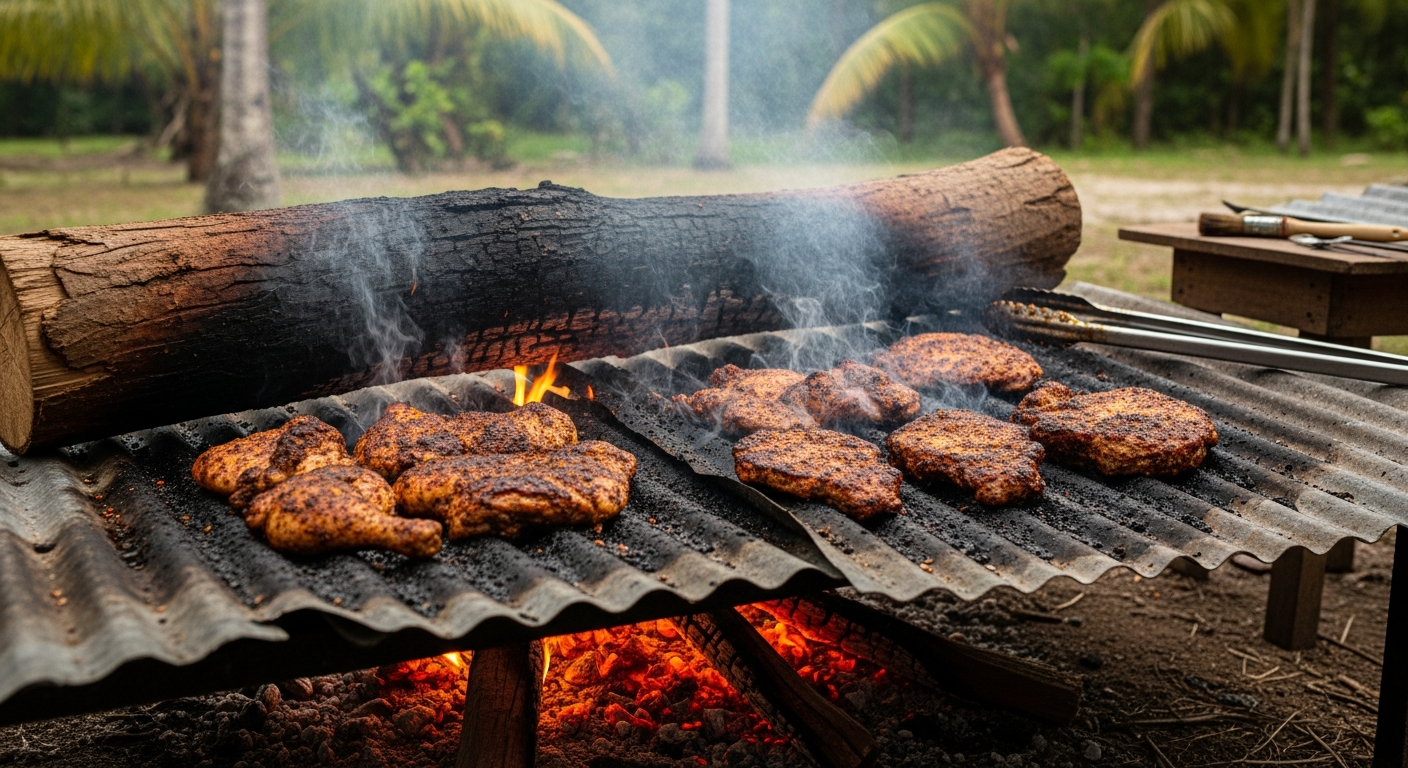
Jamaican Jerk Pit Cooking Techniques
Learn the authentic techniques behind Jamaican jerk pit cooking, from fire building and pimento wood selection to the secrets pit masters have passed down for generations.
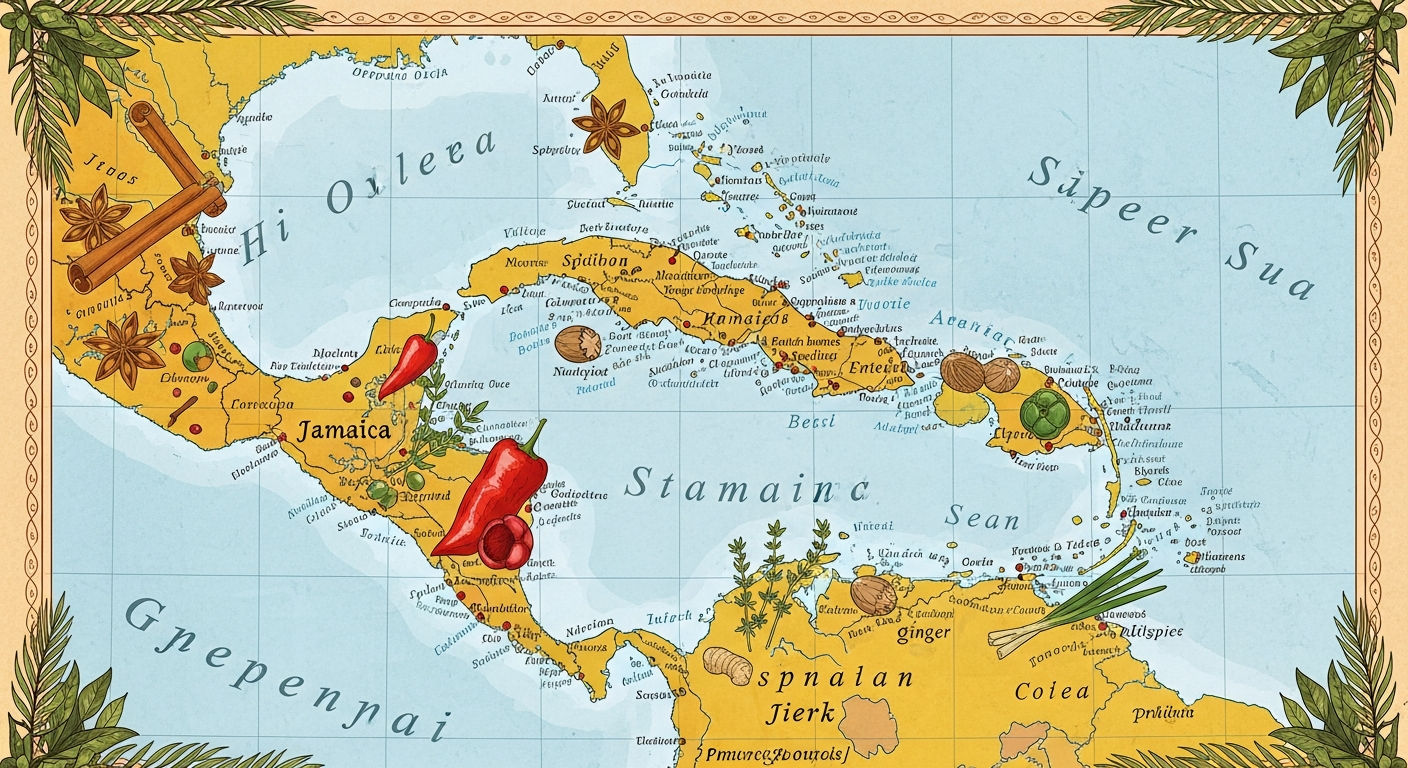
Jerk's Role in Caribbean Identity
Discover how jerk cooking has grown beyond its Jamaican roots to become a defining element of broader Caribbean identity and cultural expression worldwide.
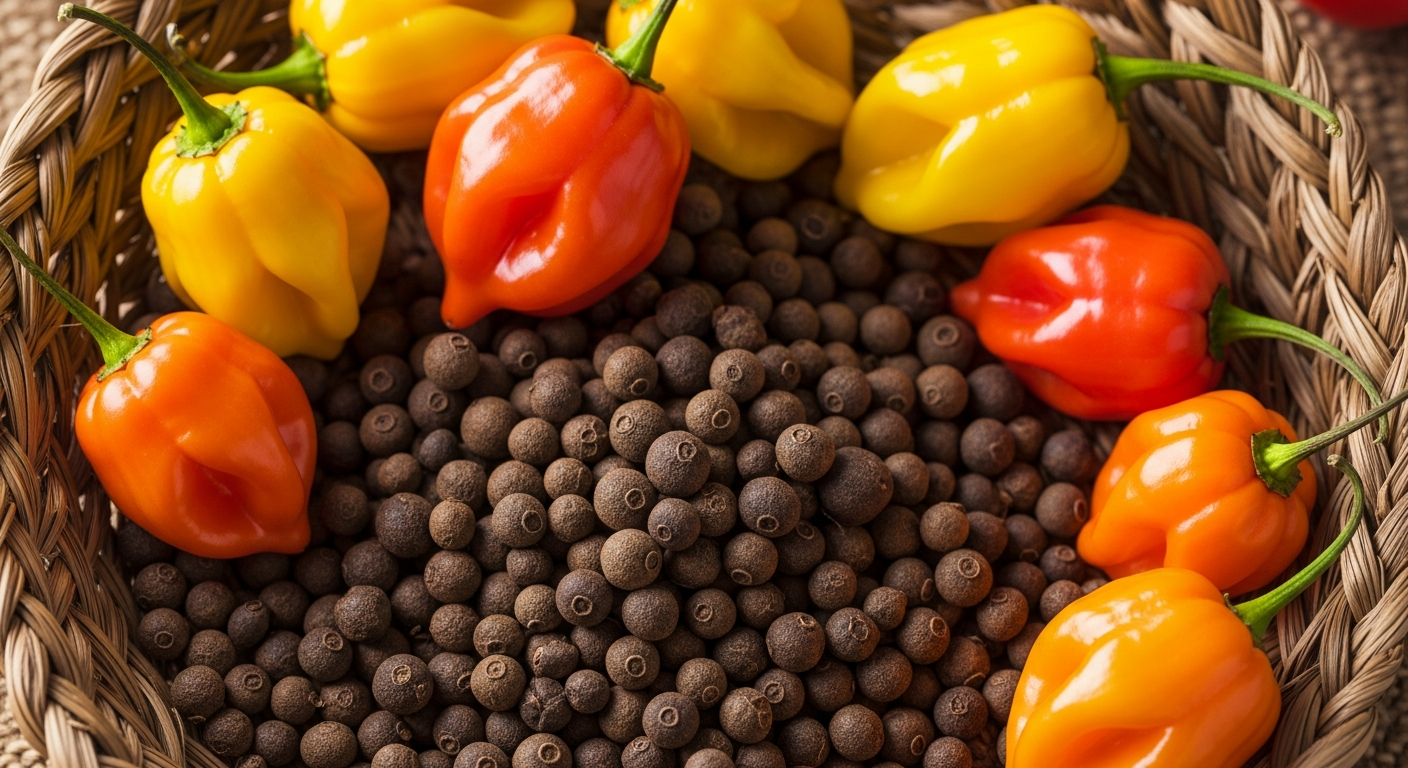
Allspice and Scotch Bonnet in Jerk
Explore how allspice and scotch bonnet peppers define the soul of jerk cooking, from their botanical origins to their irreplaceable roles in creating authentic Caribbean flavor.
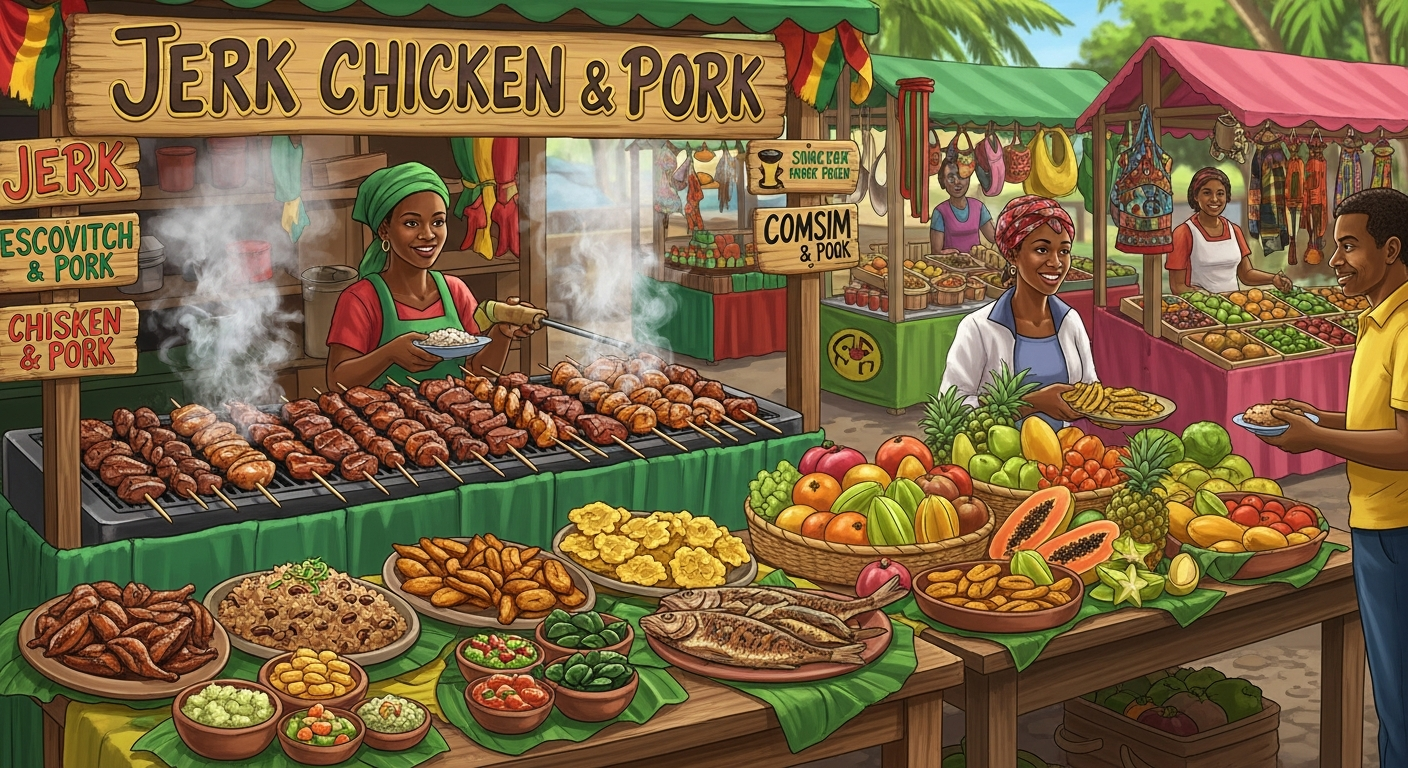
Jamaican Jerk: A Cultural Journey
Trace the cultural journey of Jamaican jerk from the Blue Mountains to global kitchens, exploring how this remarkable tradition evolved from survival food to culinary phenomenon.
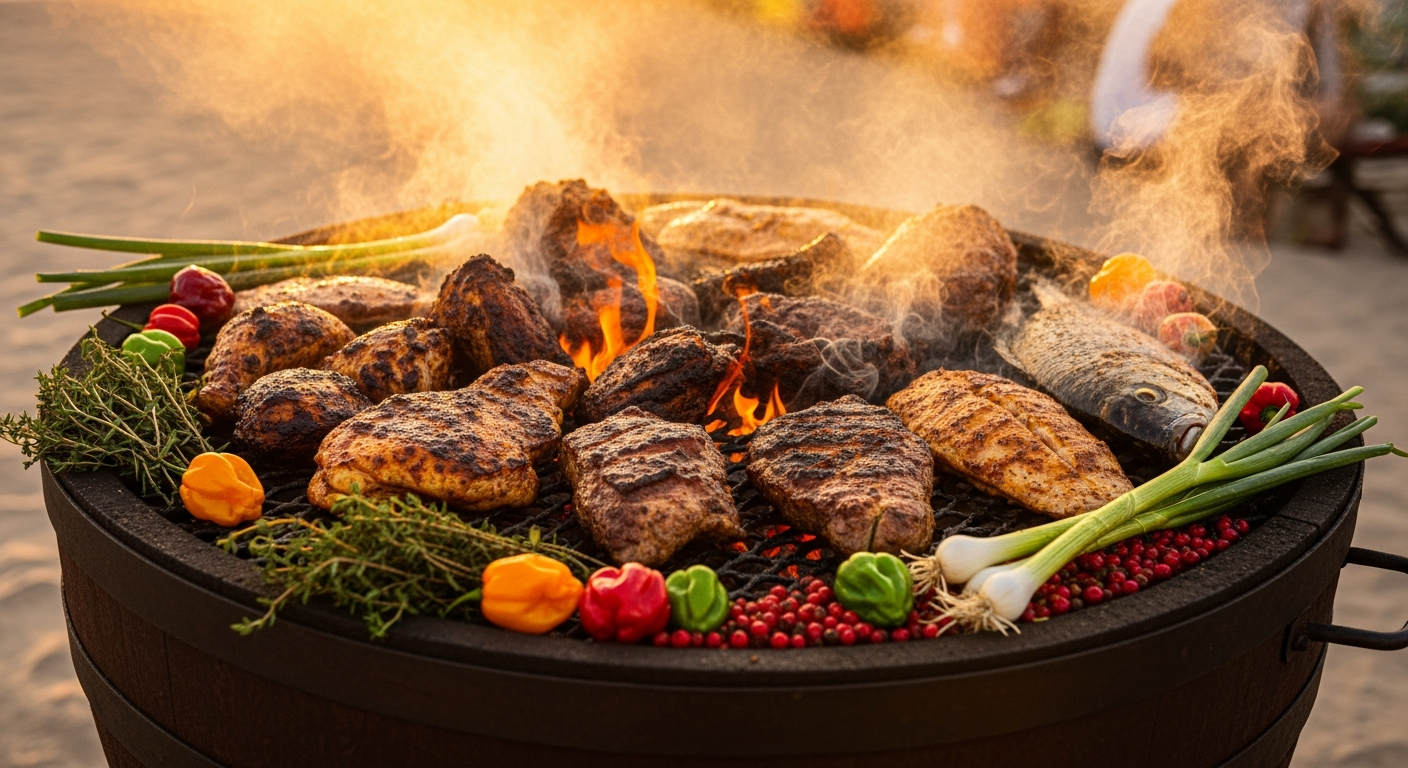
Jerk Pit: A Culinary Journey
Embark on a culinary journey through the flavors, techniques, and traditions of jerk pit cooking, exploring what makes it one of the world's great barbecue traditions.
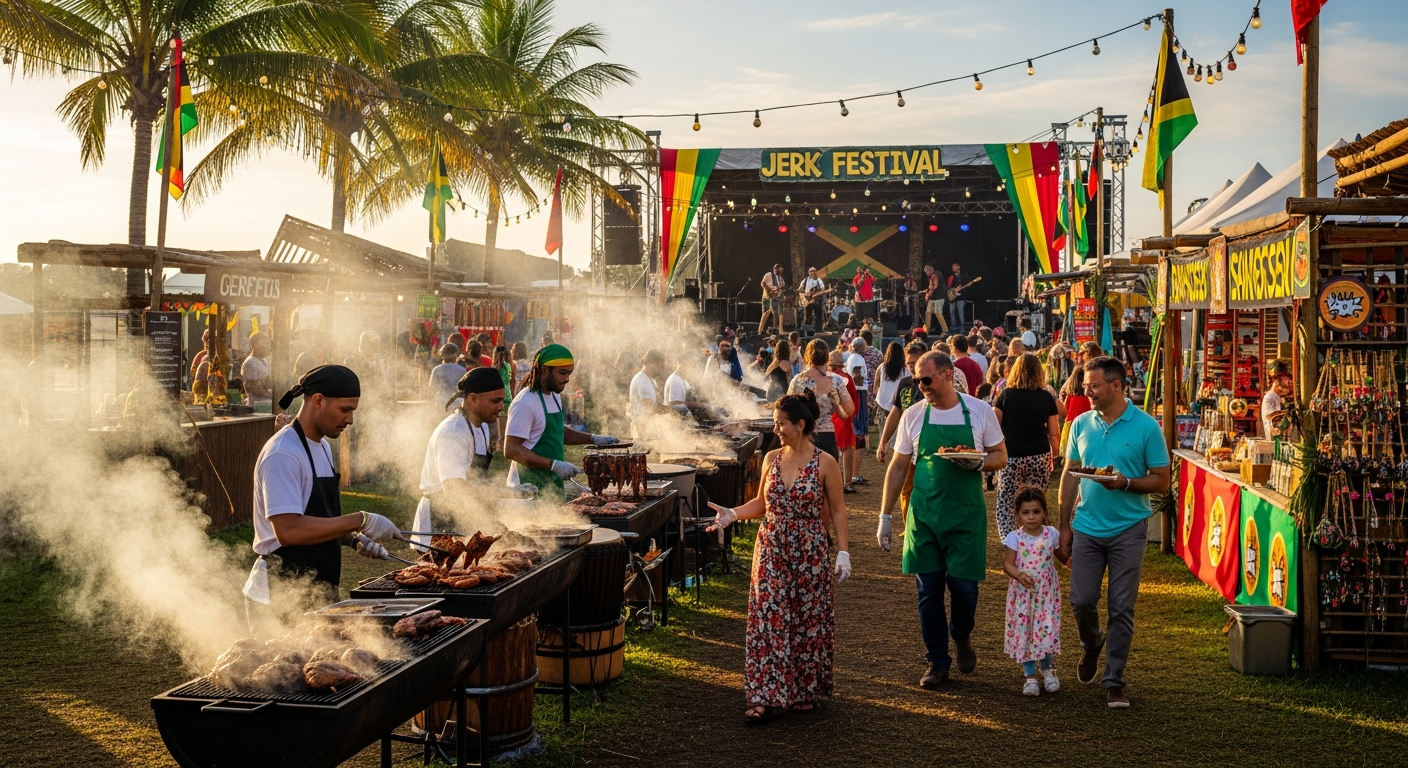
Jamaican Jerk Festival: Food and Music
Experience the vibrant world of Jamaican jerk festivals where incredible food meets pulsating music, bringing Caribbean culture to life in celebrations across the globe.
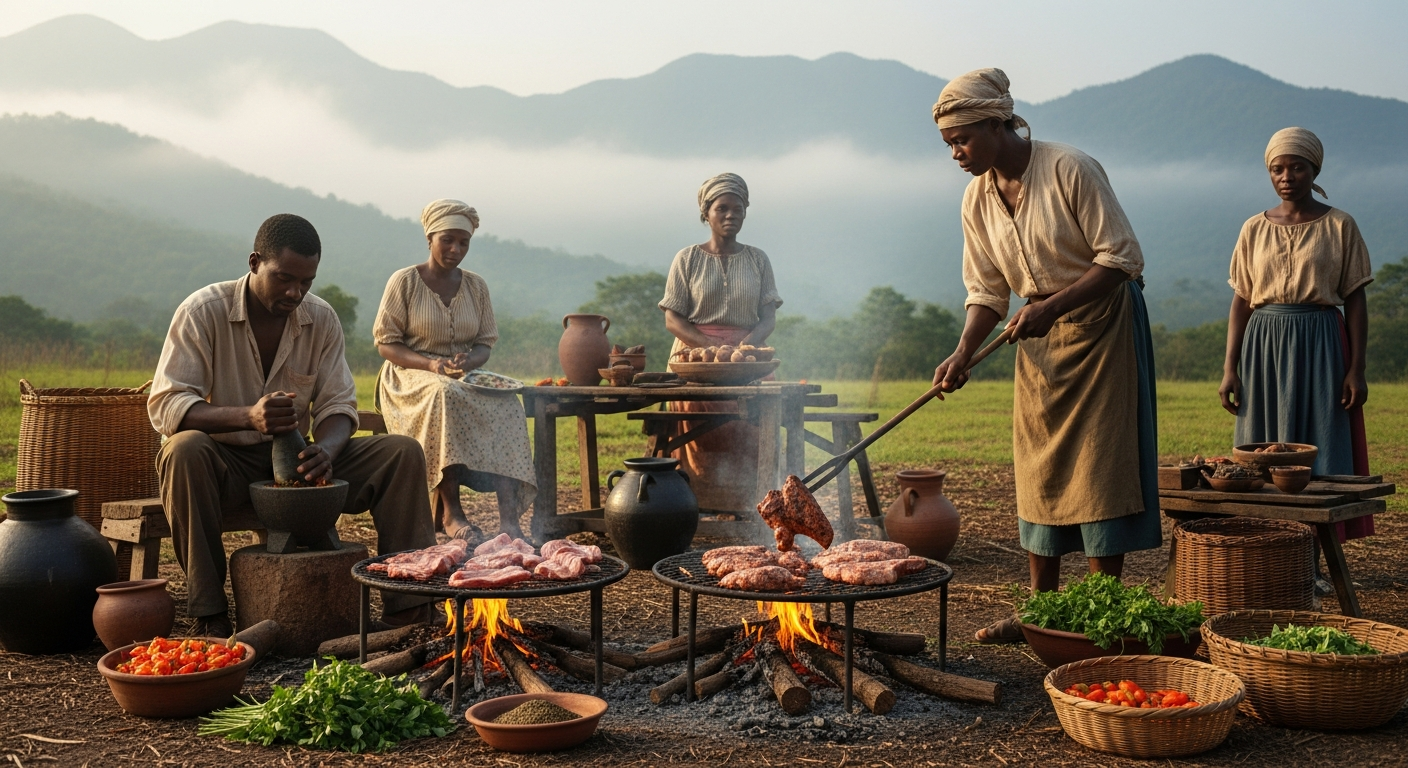
Jerk Cooking: Jamaican Identity and Resistance
Explore how jerk cooking embodies the spirit of Jamaican resistance and identity, from its origins with Maroon freedom fighters to its role as a symbol of cultural pride today.
History of Jerk Seasoning – From Maroon Survival Food to Global Icon
From a survival technique used by Jamaica's Maroon warriors to a global culinary phenomenon, the history of jerk seasoning is a story of resilience, ingenuity, and extraordinary flavor.