The Definitive Jamaican Jerk Chicken Recipe Guide
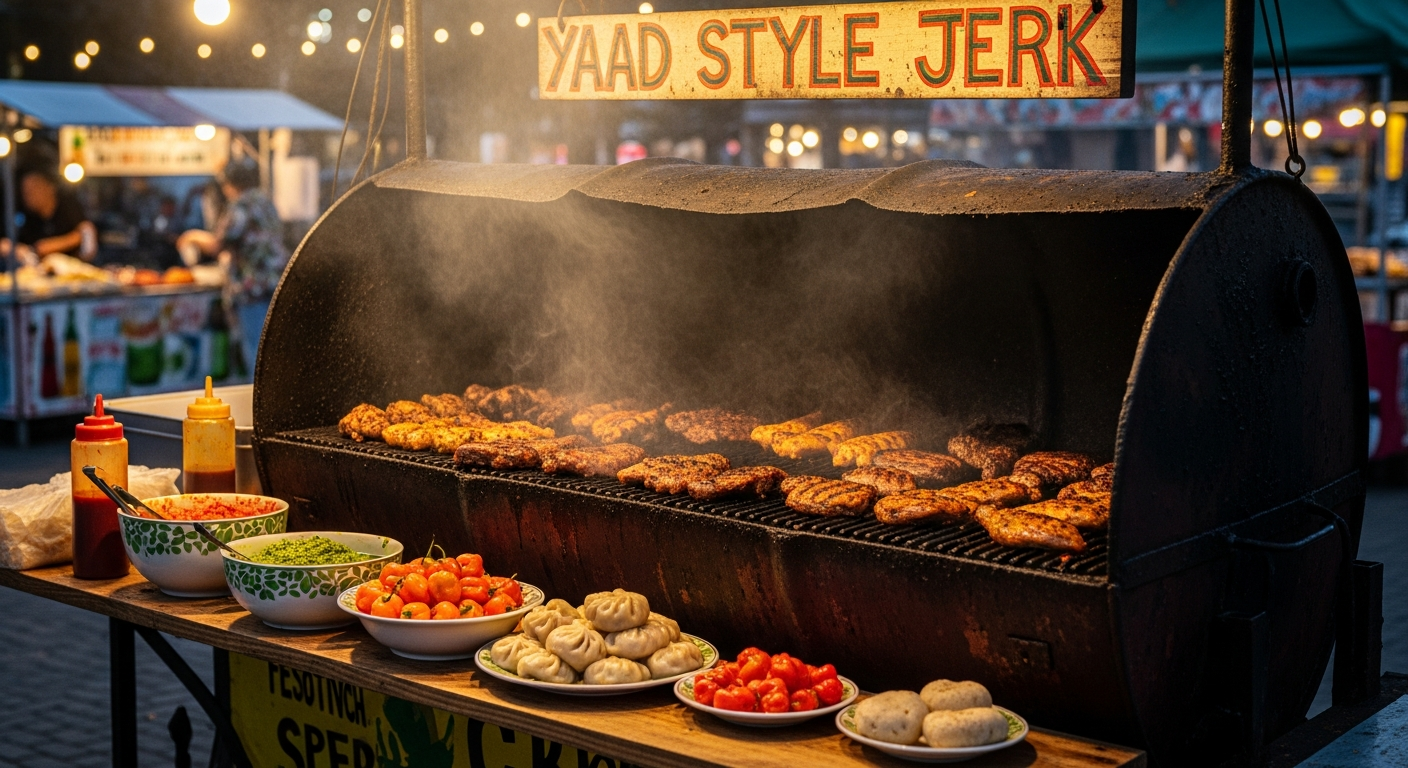
This Jamaican jerk chicken recipe guide walks you through every step of creating authentic, deeply flavored jerk chicken that rivals the best roadside stands in Boston Bay, Portland Parish. Jamaican jerk chicken is one of the most recognized and beloved dishes in Caribbean cuisine, a masterpiece of heat, smoke, and aromatic spice that has captivated taste buds around the world. Yet despite its global popularity, truly great jerk chicken remains surprisingly difficult to find outside of Jamaica, largely because the techniques and attention to detail required are poorly understood.
This Jamaican jerk chicken recipe guide changes that by providing not just a recipe but a complete understanding of the process from selecting your ingredients to the final resting and serving. Whether you are attempting jerk chicken for the first time or looking to refine a technique you have been practicing for years, the information here will elevate your results.
Ingredients for Authentic Jamaican Jerk Chicken
Start with the right chicken. The ideal cut for jerk is bone-in, skin-on chicken thighs and drumsticks. Dark meat stays moist during the extended cooking time and has enough fat to baste itself from within. You want about three to four pounds of chicken, which serves four to six people generously.
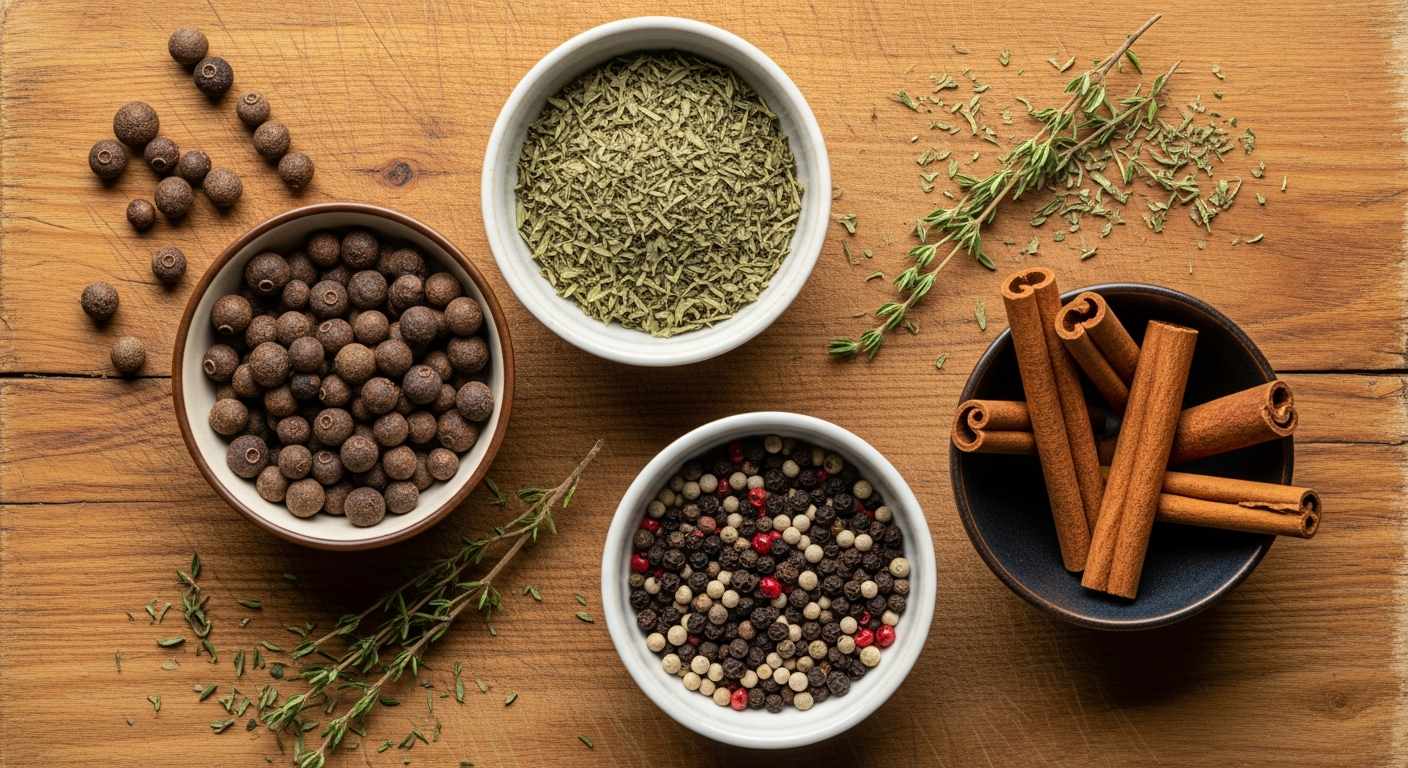
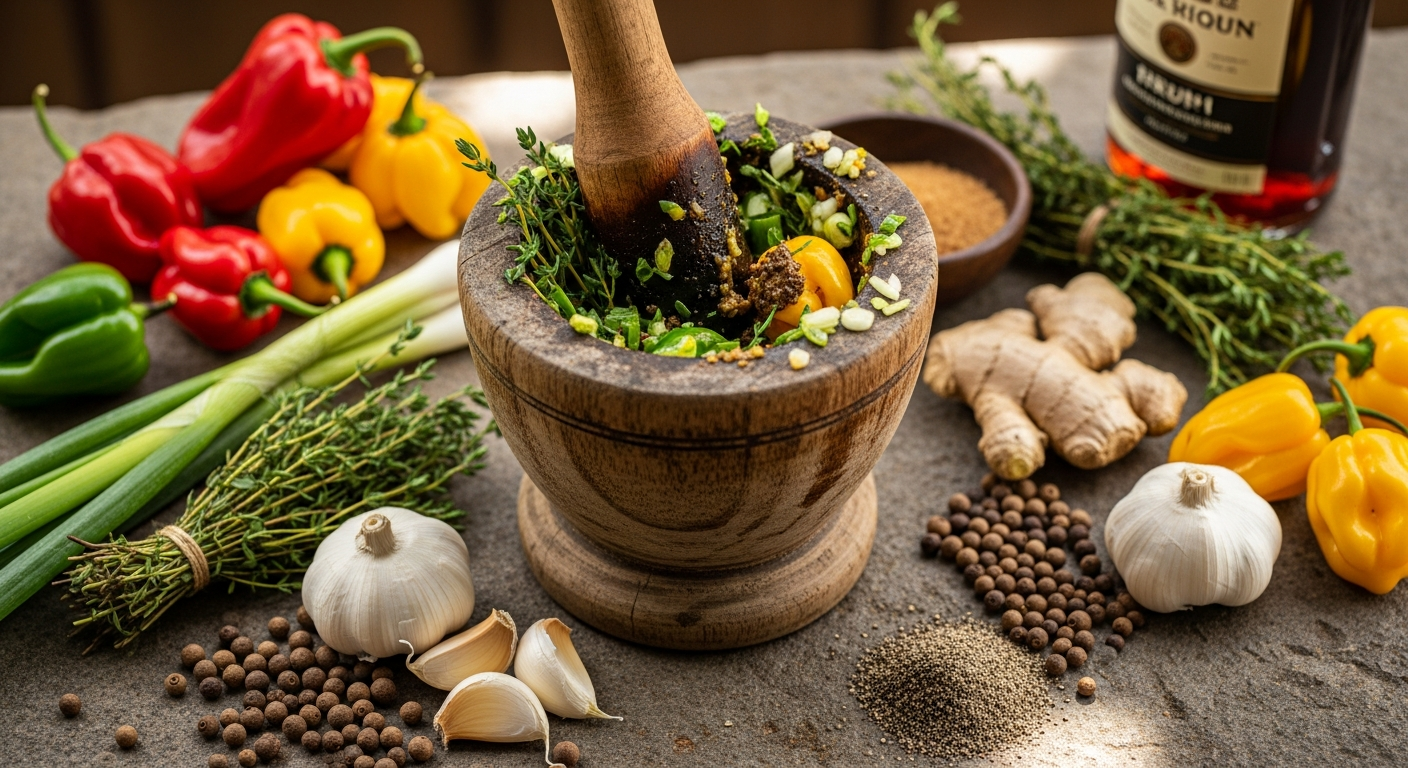
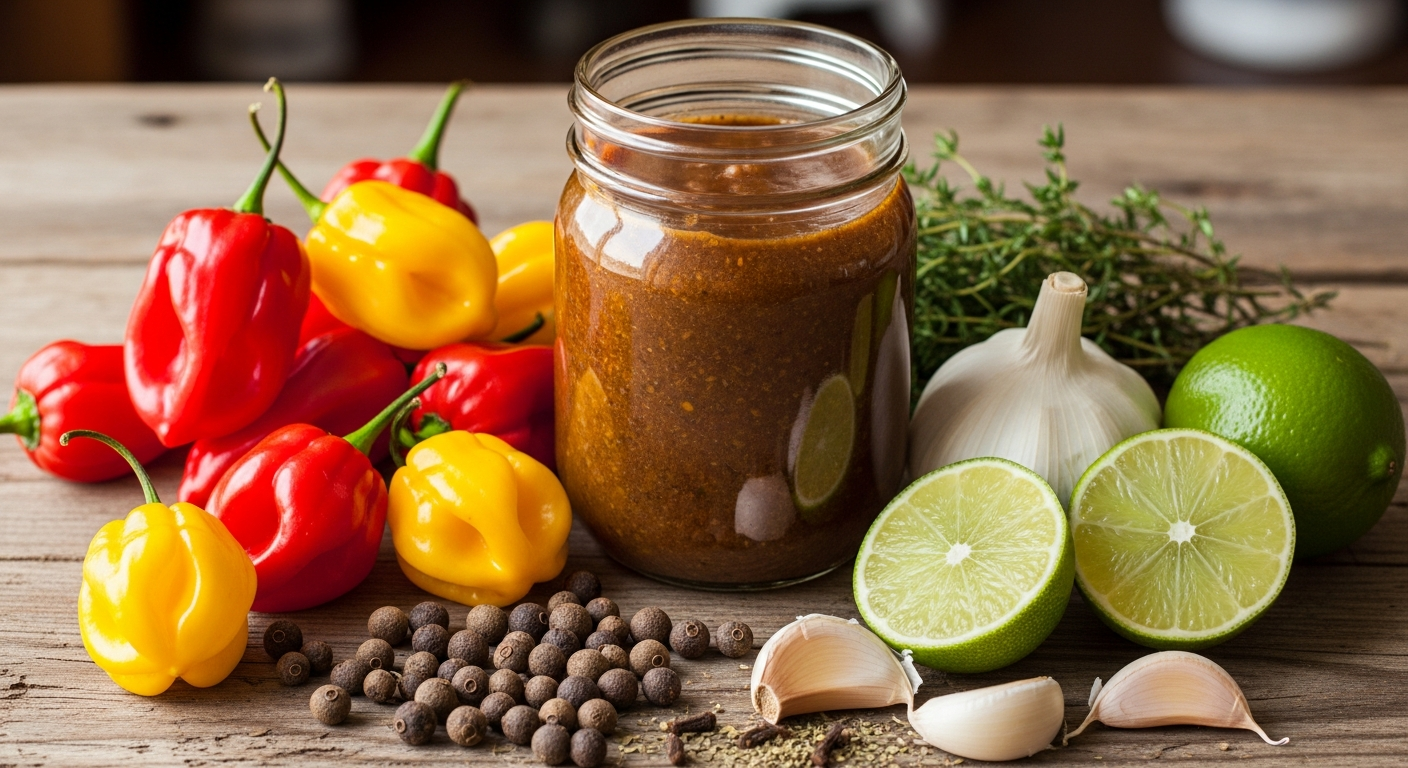
For the marinade, gather the following fresh ingredients: six scotch bonnet peppers (adjust for heat preference), ten scallions (green onions), eight sprigs of fresh thyme, eight garlic cloves, a two-inch piece of fresh ginger, juice of three limes, three tablespoons of soy sauce, two tablespoons of allspice berries (toasted and ground), two tablespoons of brown sugar, two tablespoons of vegetable oil, one tablespoon of black pepper, one teaspoon of cinnamon, half a teaspoon of nutmeg, and salt to taste.
The quality of each ingredient matters enormously. Fresh scotch bonnet peppers should be firm and brightly colored, with no soft spots or wrinkling. Allspice berries should be aromatic and slightly oily when crushed. Thyme should be vibrant green with no dried or blackened leaves. Scallions should be crisp and firm. These ingredients are the soul of your jerk chicken, and compromising on their quality means compromising on the final result.
Preparing the Jerk Marinade
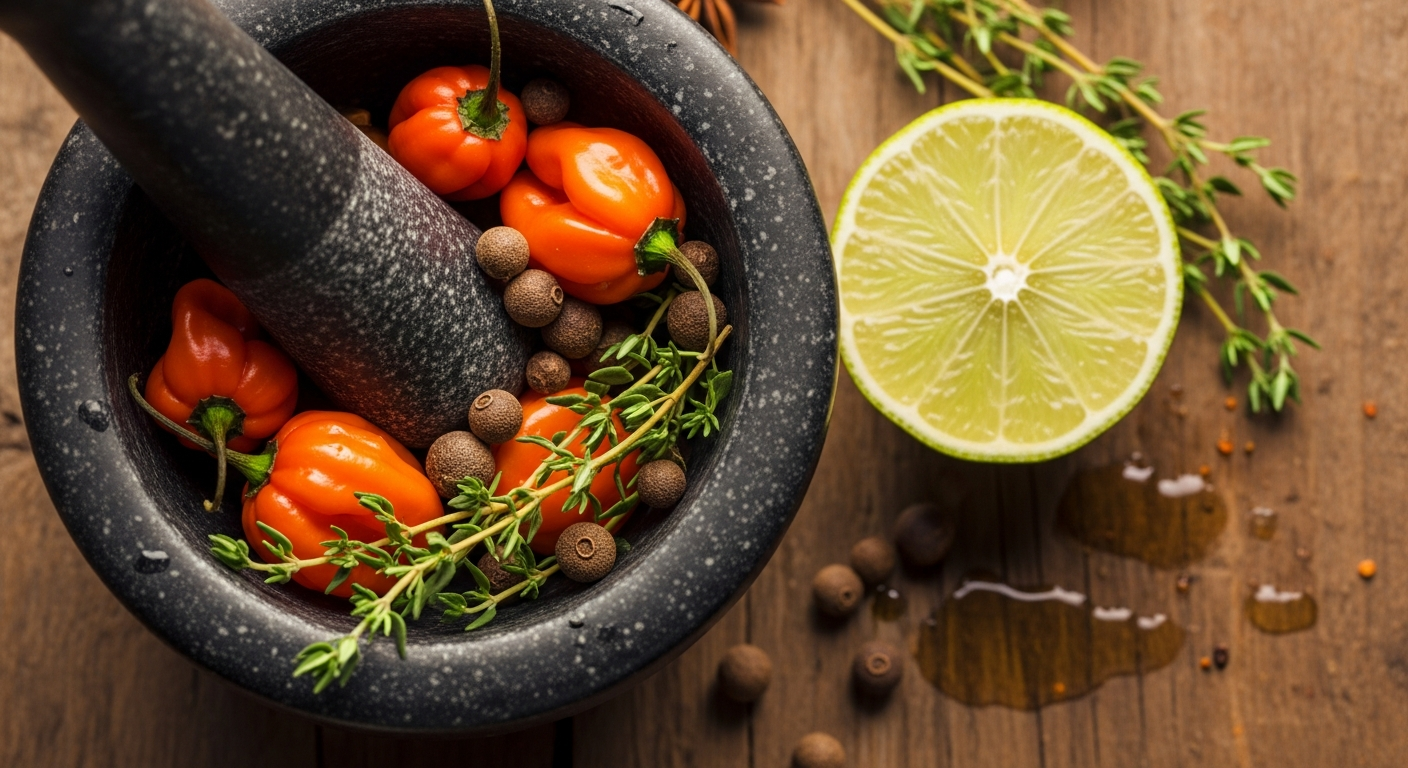
Toast the allspice berries in a dry skillet over medium heat for two to three minutes, shaking frequently, until fragrant. Transfer to a mortar and pestle or spice grinder and grind to a coarse powder. This step activates the essential oils in the allspice and makes a noticeable difference in the finished dish.
Wearing gloves, prepare the scotch bonnet peppers by removing the stems. For moderate heat, remove the seeds and membranes. For authentic Jamaican heat, leave everything in. Roughly chop the peppers and add them to a food processor along with the scallions, garlic, ginger, thyme leaves (stripped from stems), lime juice, soy sauce, ground allspice, brown sugar, oil, black pepper, cinnamon, nutmeg, and salt.
Process until you achieve a thick, slightly chunky paste. The consistency should be similar to a loose pesto, smooth enough to coat the chicken evenly but retaining small visible pieces of scallion and pepper for texture. Taste carefully and adjust seasoning. The raw marinade should taste intensely flavored and noticeably salty, as the flavors will mellow during cooking.
Marinating the Chicken
Prepare the chicken by patting each piece dry with paper towels. Using a sharp knife, score the meat by making two to three diagonal cuts about half an inch deep into the thickest parts of each piece. These cuts are essential because they allow the marinade to penetrate beyond the surface, delivering flavor and tenderness deep into the meat.
Place the chicken in a large glass or ceramic dish or a heavy-duty zip-top bag. Pour the marinade over the chicken and use your hands (still gloved) to work the marinade into every score mark, under the skin where possible, and into every fold and crevice. Ensure every piece is thoroughly and evenly coated.
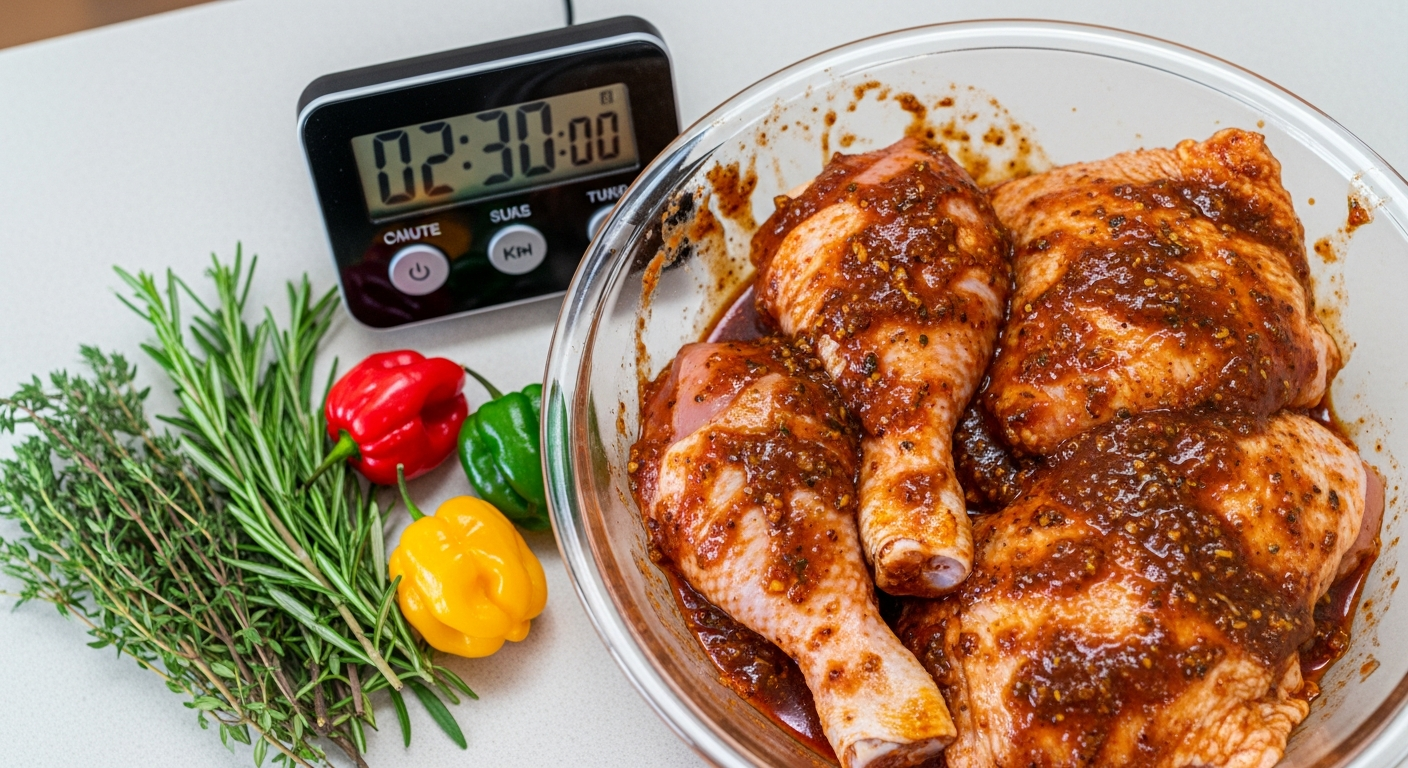
Cover the dish tightly with plastic wrap or seal the bag, removing as much air as possible. Refrigerate for a minimum of four hours, though twelve to twenty-four hours is optimal. Turn the chicken pieces once or twice during marination to ensure even coverage. Remove from the refrigerator thirty minutes before cooking to allow the meat to come closer to room temperature.
Grilling Method: The Traditional Approach
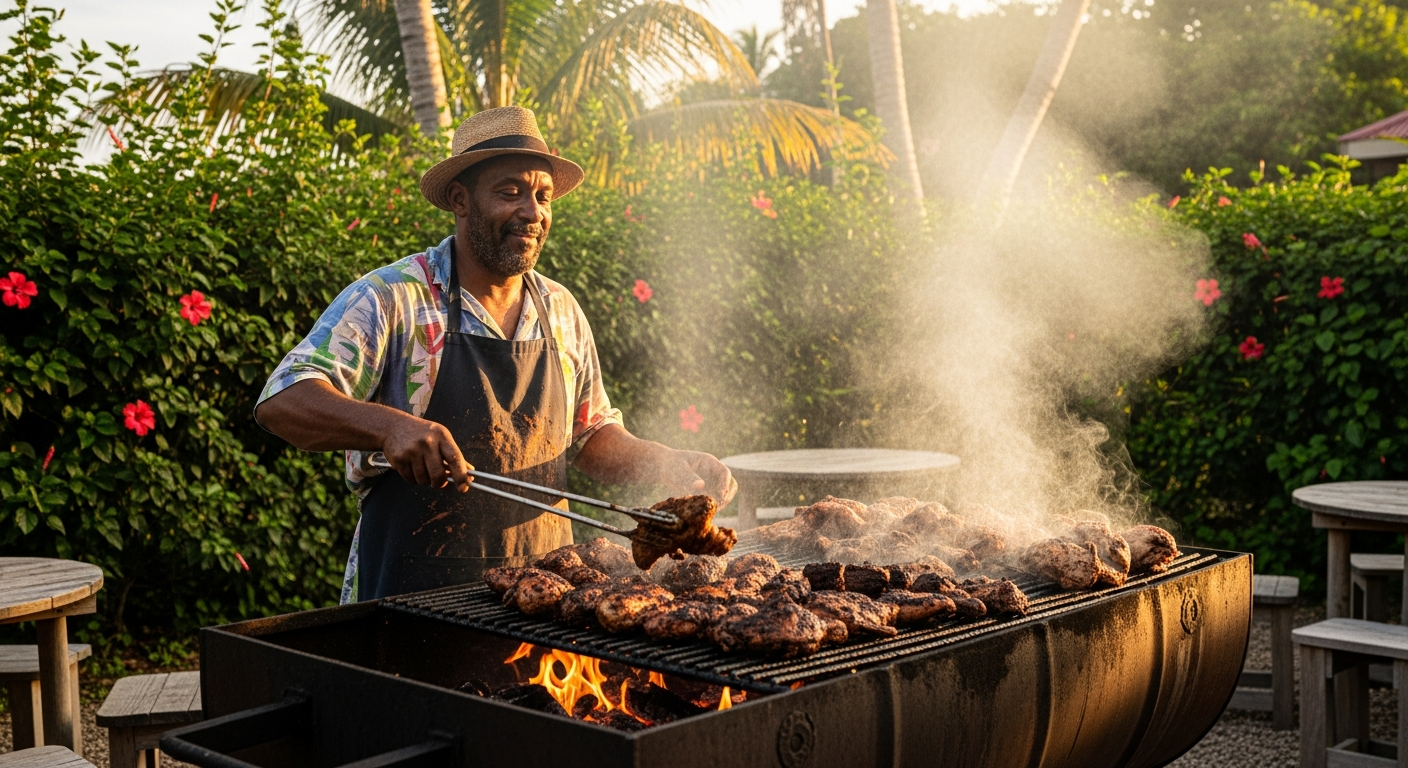
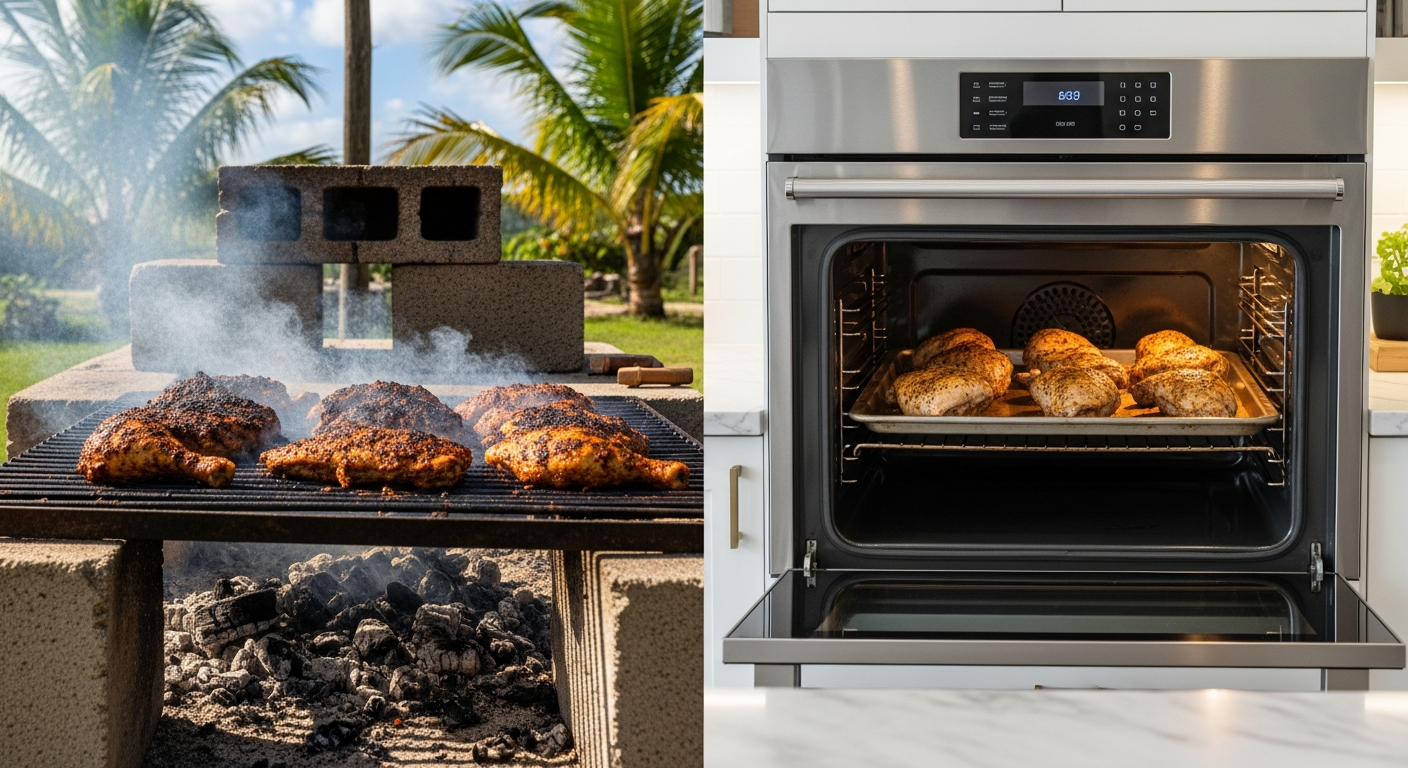
Set up your grill for two-zone cooking by placing charcoal on one side only, creating a hot direct-heat zone and a cooler indirect-heat zone. If using a gas grill, light only one side. Target a temperature of 300 to 325 degrees Fahrenheit on the indirect side. Add soaked pimento wood chips or a combination of apple wood chips and whole allspice berries to the coals for smoke.
Remove the chicken from the marinade, allowing excess to drip off but keeping the coating that clings to the surface. Reserve any marinade remaining in the container for basting (you will heat it through during cooking to make it safe).
Place the chicken pieces skin-side up on the indirect heat side of the grill. Close the lid with the vents positioned to draw smoke over the chicken. Cook for forty-five minutes at this moderate temperature, adding wood chips every fifteen minutes and turning the pieces once at the thirty-minute mark.
After forty-five minutes, move the chicken to the direct-heat side of the grill and cook for an additional fifteen to twenty minutes, turning every five minutes, to develop the characteristic charred crust. Baste with the reserved marinade during this stage, allowing each application to caramelize before the next. The internal temperature should reach 165 degrees Fahrenheit in the thickest part of the meat.
Oven Method: The Weeknight Alternative
Preheat your oven to 375 degrees Fahrenheit and line a baking sheet with aluminum foil. Place a wire rack on the baking sheet to elevate the chicken and allow air circulation underneath. Arrange the marinated chicken pieces on the rack, skin side up, spacing them at least an inch apart.
Roast for forty to forty-five minutes until the chicken is cooked through and the marinade has formed a thick, aromatic coating. Then switch the oven to broil on high and broil for five to seven minutes, watching closely, until the skin is darkly charred in spots. The broiler creates a reasonable approximation of the charred crust that grilling produces.
For added smoke flavor in the oven method, place a small oven-safe pan of soaked wood chips on the lowest rack of the oven during cooking. The chips will smolder and produce light smoke that infuses the chicken. Open a window and ensure your kitchen ventilation is adequate before trying this technique.
Resting and Serving
Remove the chicken from the grill or oven and let it rest on a cutting board for ten minutes, loosely tented with foil. This rest period is essential because it allows the juices that have been driven toward the center by the heat to redistribute throughout the meat. Cutting into the chicken immediately would release these juices onto the cutting board, resulting in drier meat.
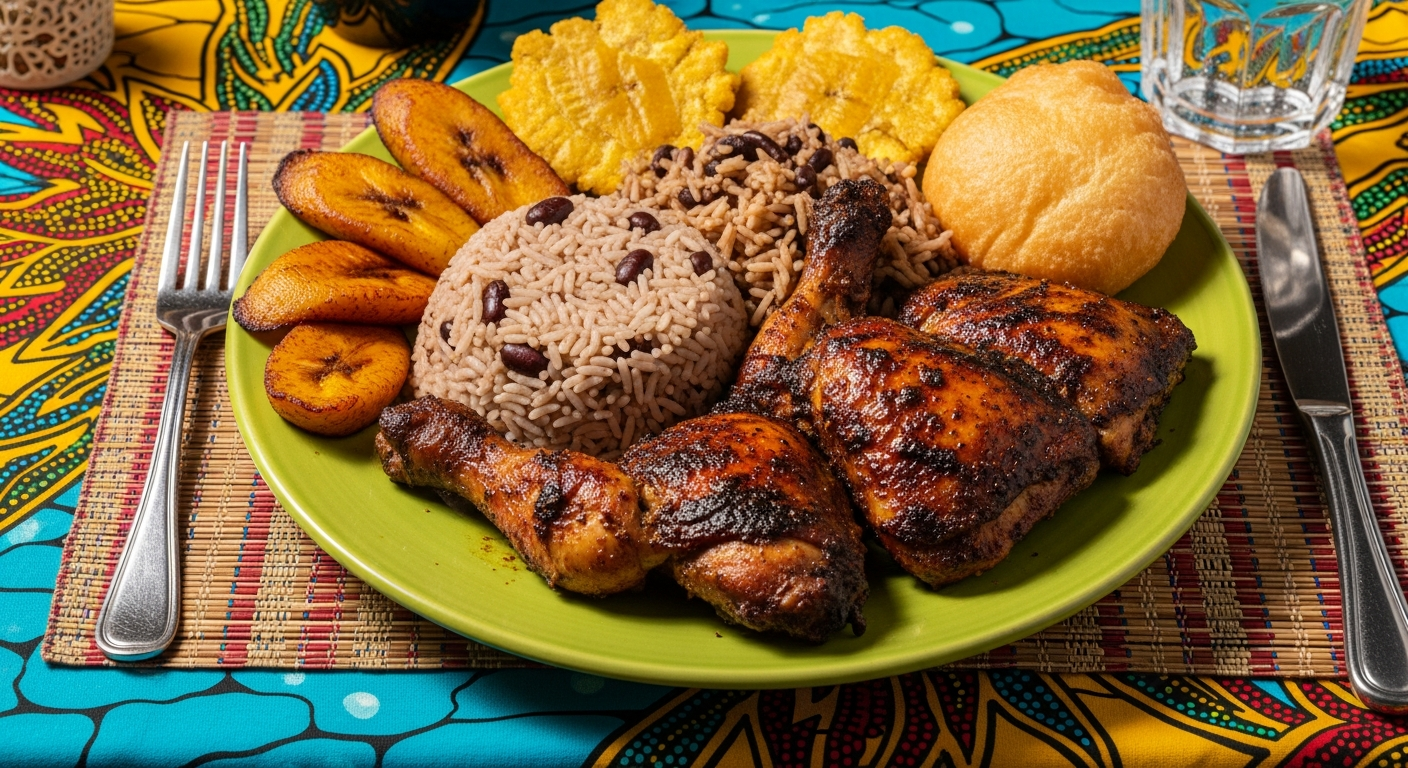
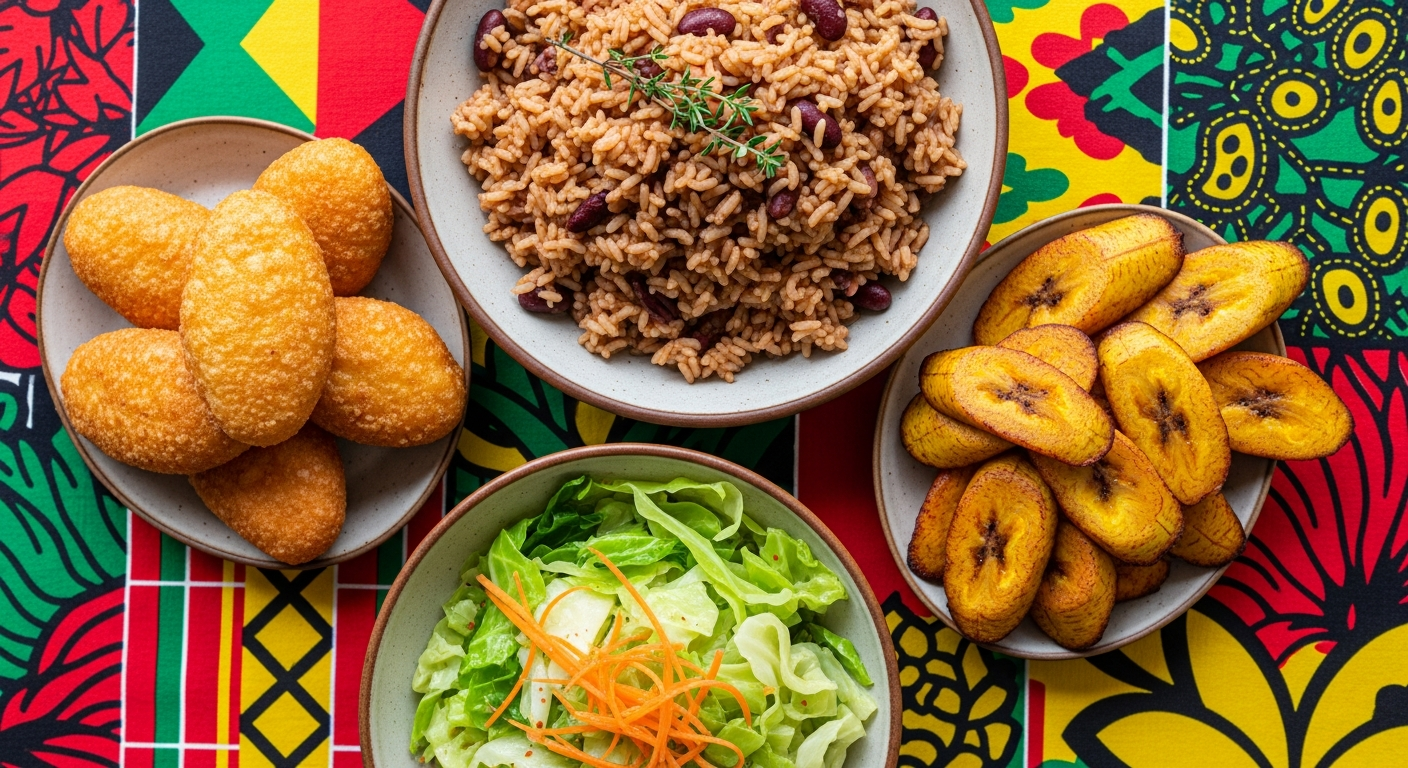
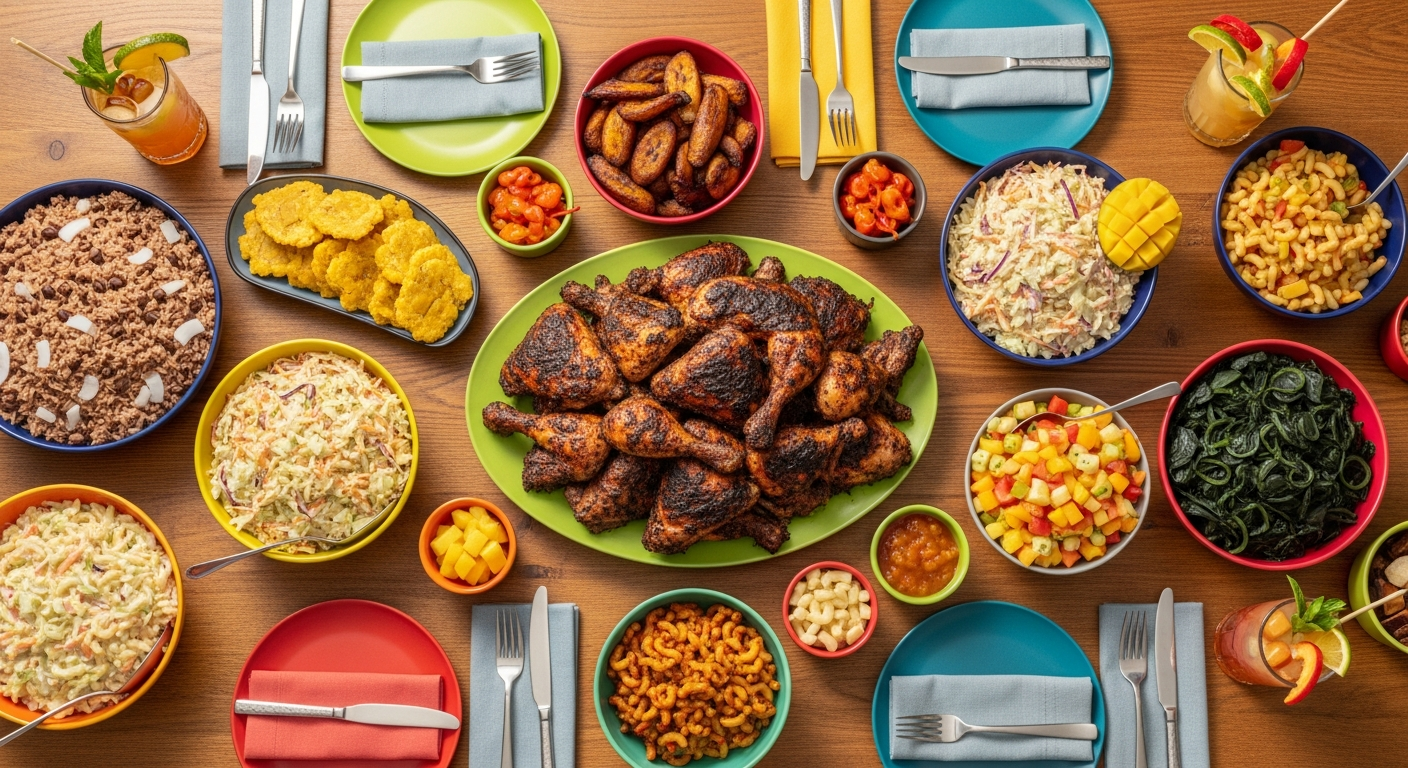
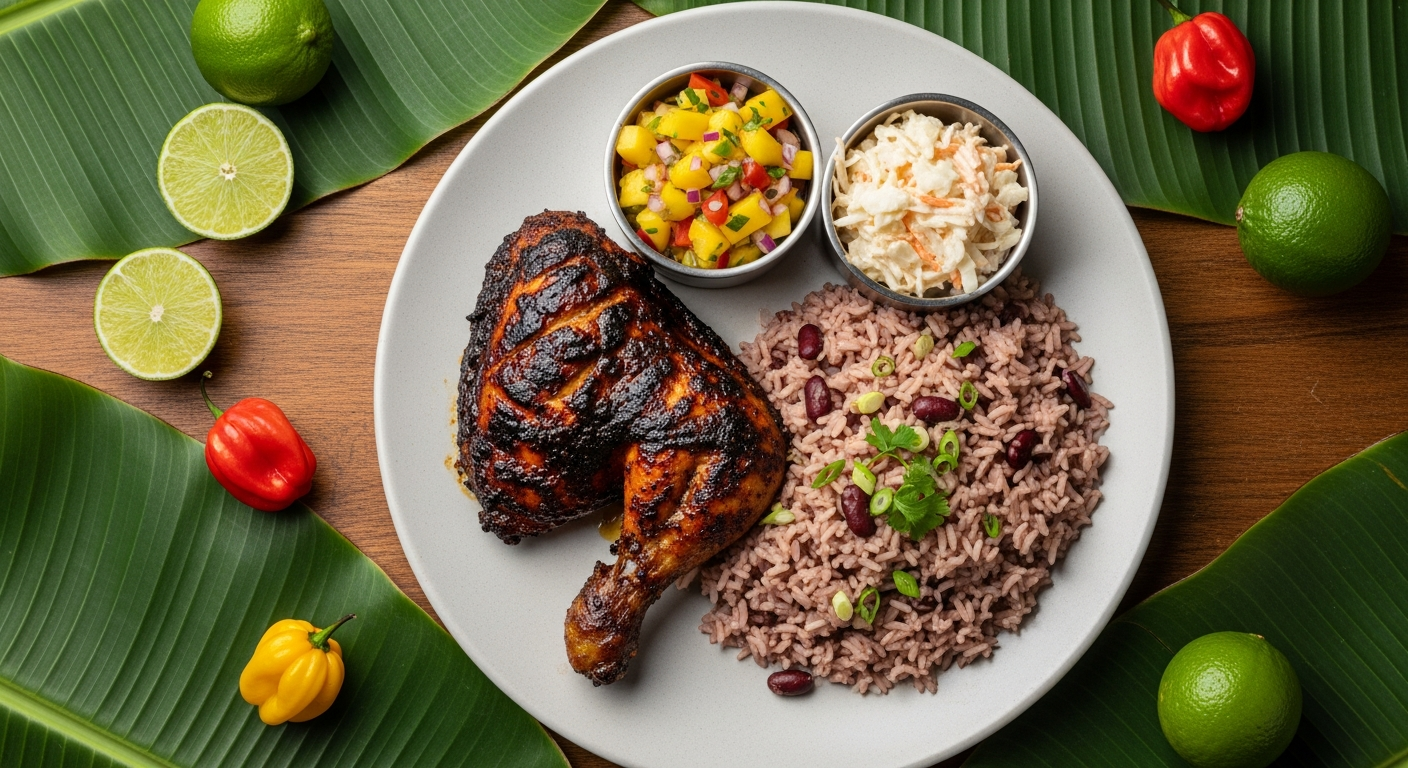
Serve your jerk chicken on a warm platter with traditional accompaniments. Rice and peas is the most essential side, providing a creamy, coconut-infused starchy base that balances the spicy, smoky chicken. Festival bread, Caribbean coleslaw, fried plantains, and steamed vegetables are all excellent additions that round out the meal.
Garnish with fresh lime wedges for squeezing over the chicken at the table, sliced scallions for color and freshness, and additional scotch bonnet pepper slices for those who want extra heat. A bottle of Caribbean hot sauce on the table is always appreciated by the heat-seekers in your group.
Common Mistakes and How to Avoid Them
The most common mistake in making jerk chicken is not marinating long enough. Two hours produces acceptable results, but twelve to twenty-four hours produces extraordinary ones. Plan ahead and start your marinade the night before for the best possible outcome.
The second most common mistake is cooking over heat that is too high. Jerk chicken is not a quick-grilling exercise. The moderate initial temperature allows the smoke to penetrate and the marinade to set into a coating rather than burning off immediately. Patience during the first forty-five minutes of cooking is rewarded with deeper, more complex flavor.
Another frequent error is not scoring the meat. Without scores, the marinade sits only on the surface and never reaches the interior of the thickest pieces. The time it takes to make a few quick cuts with a knife is repaid many times over in flavor and tenderness.
Finally, many home cooks skip the resting step, cutting into the chicken the moment it comes off the heat. This impatience results in dry meat because the juices have not had time to redistribute. Ten minutes of patience produces noticeably juicier, more flavorful chicken that is worth every second of the wait.
With practice and attention to these details, this Jamaican jerk chicken recipe guide will help you produce authentic Caribbean jerk chicken that stands alongside the best you could find anywhere in the world. The techniques are straightforward, the ingredients are accessible, and the results are extraordinary.