The authentic Jamaican jerk marinade guide you are reading represents the culmination of centuries of Caribbean culinary tradition. Every great jerk dish begins with its marinade, and every great marinade begins with a deep understanding of the ingredients, the proportions, and the techniques that transform simple spices and peppers into something extraordinary. This guide covers everything from sourcing the finest ingredients to applying the paste correctly so every bite delivers the full spectrum of authentic jerk flavor.
Ingredients for Authentic Jamaican Jerk Marinade
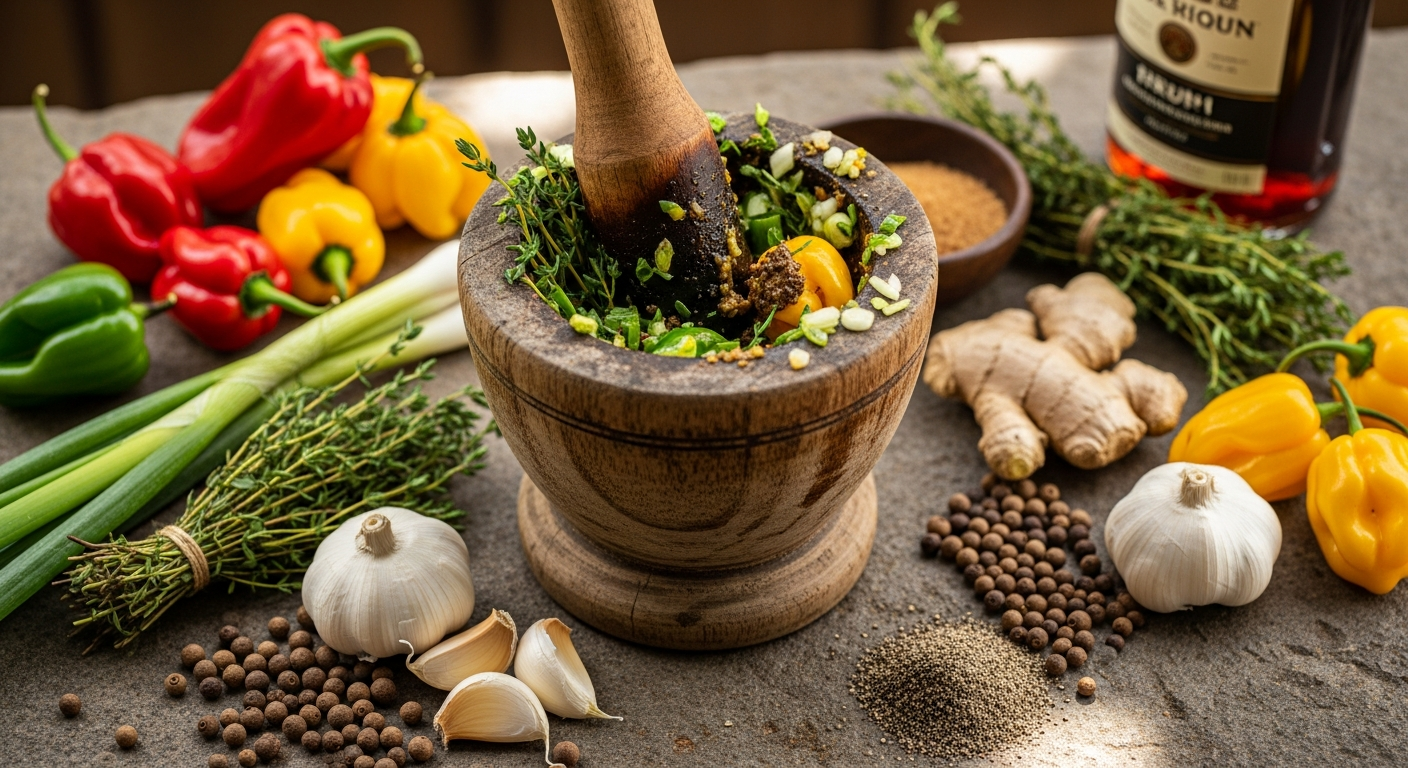
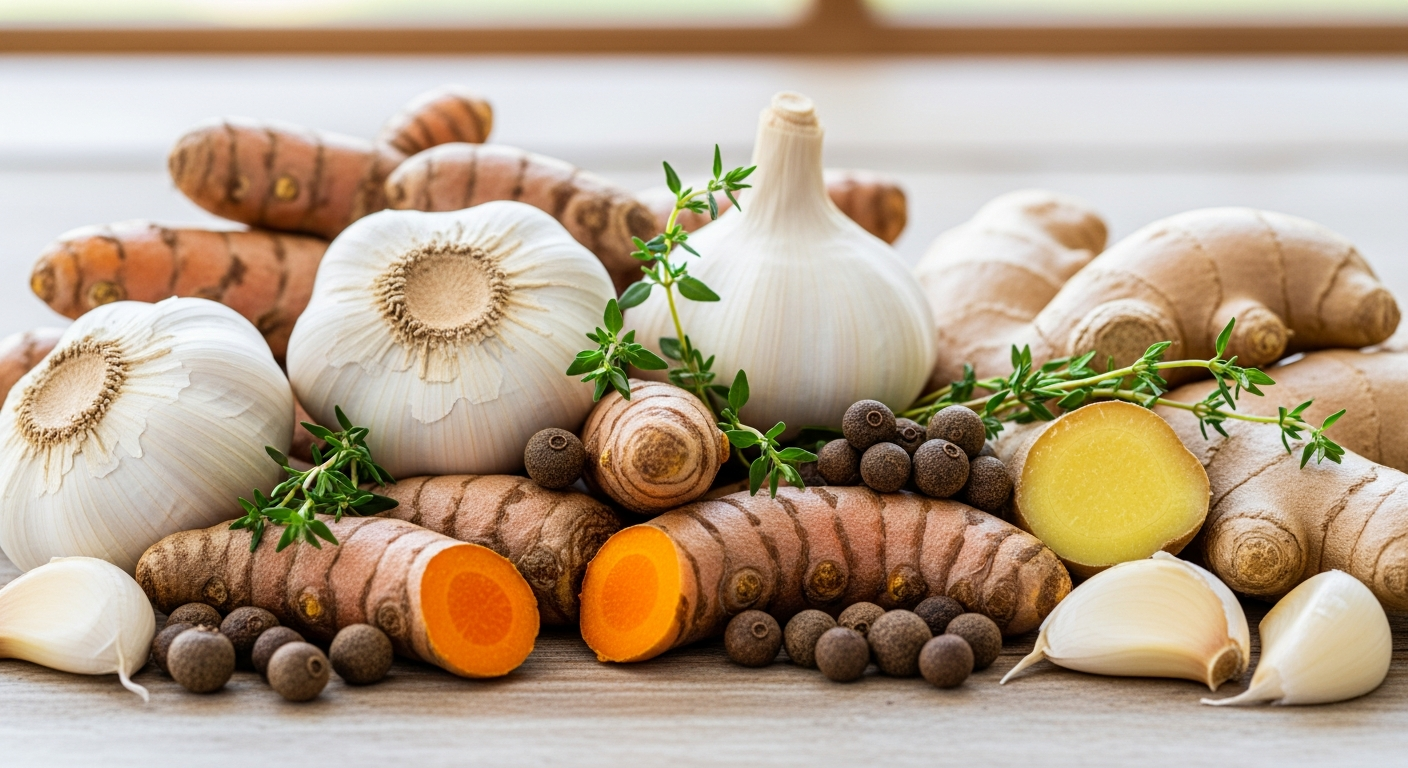
An authentic Jamaican jerk marinade contains a core group of ingredients that are non-negotiable. Remove any one of them and you no longer have jerk — you have something else. These essential components are scotch bonnet peppers, allspice (pimento), fresh thyme, scallions, garlic, and ginger. Everything else is supporting cast.
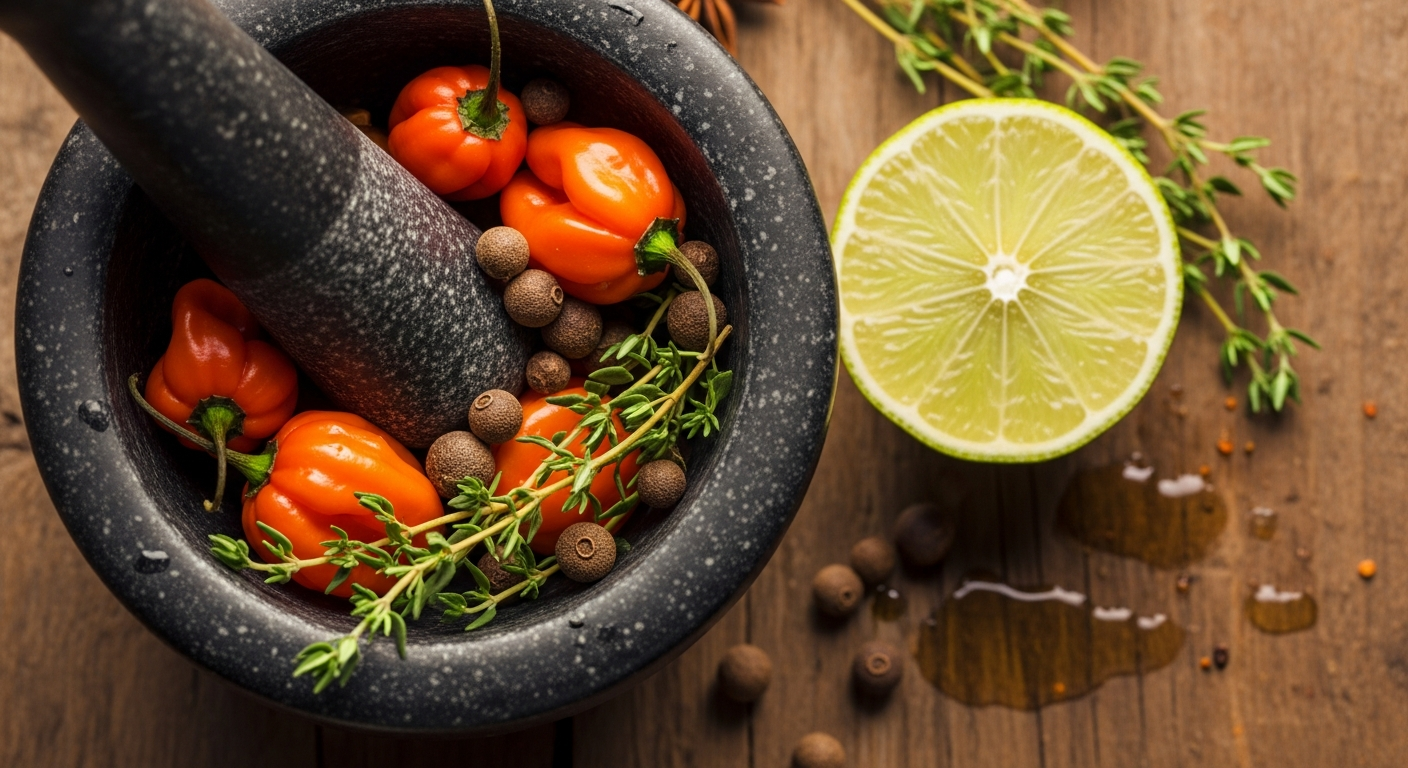
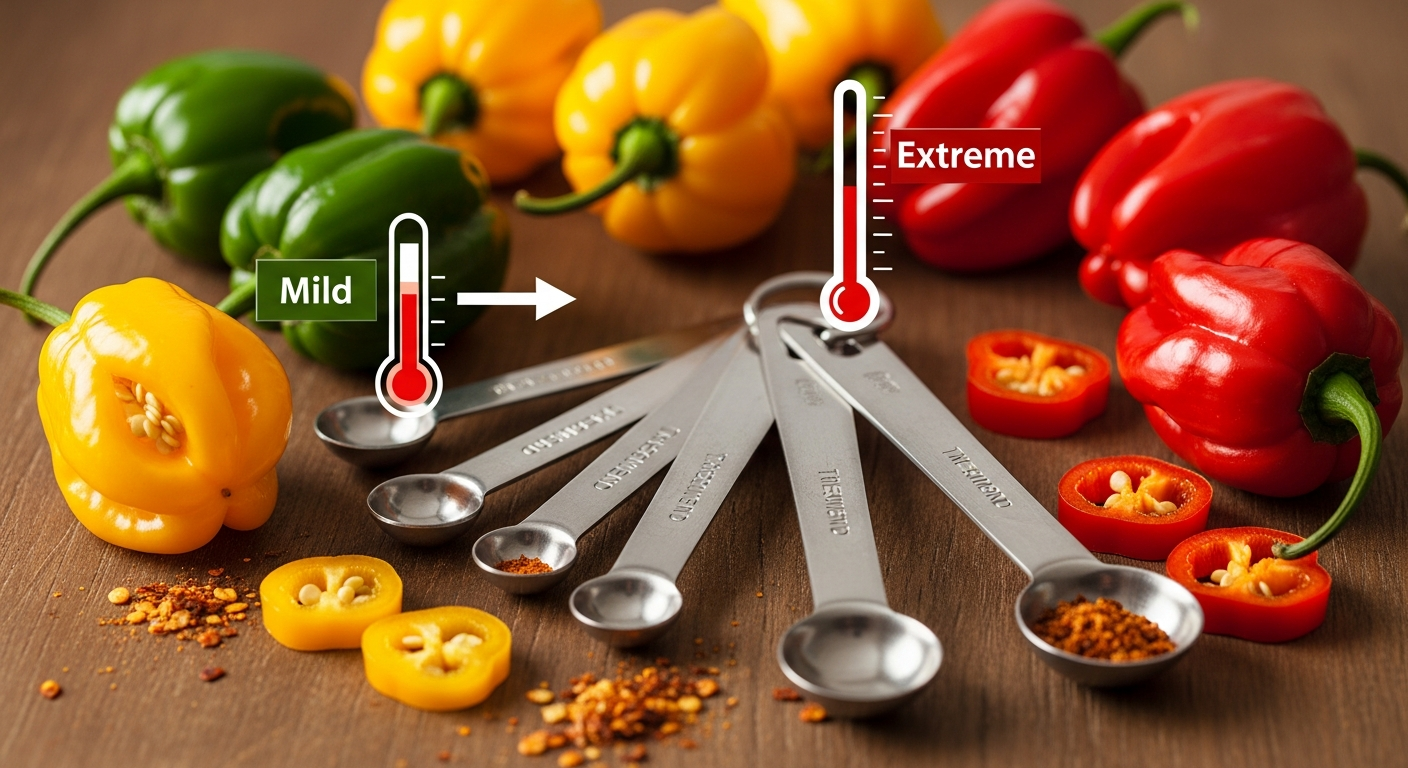
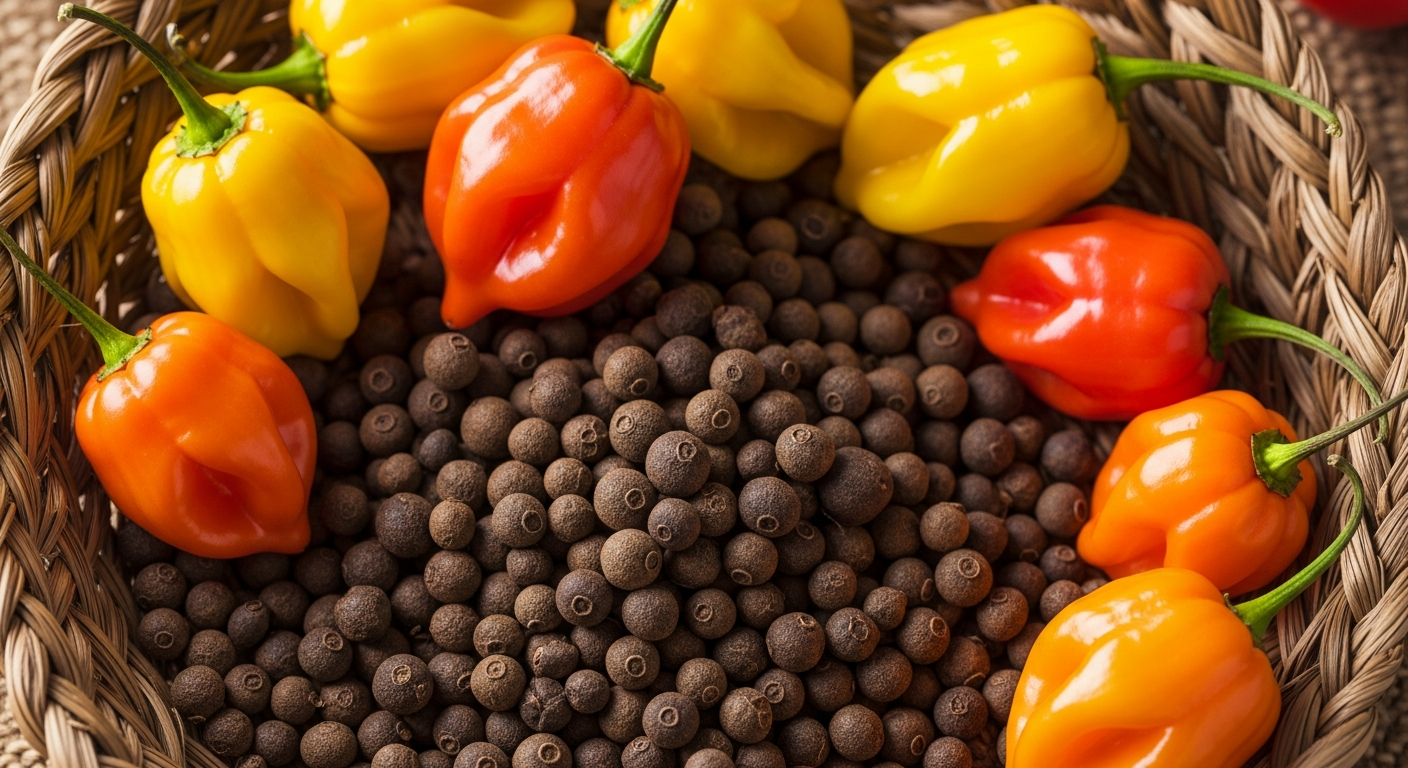
Scotch bonnet peppers provide the defining heat. These small, lantern-shaped peppers range from bright green to yellow to red when mature, and each color offers a slightly different flavor profile. Green scotch bonnets have a sharper, more vegetal heat. Red and yellow peppers are fruitier and slightly sweeter. Traditional Jamaican jerk uses whatever is ripe and available, often a mix of colors. On the Scoville scale, scotch bonnets measure 100,000-350,000 units — significantly hotter than jalapeños but with a distinct fruity quality habaneros approximate well.
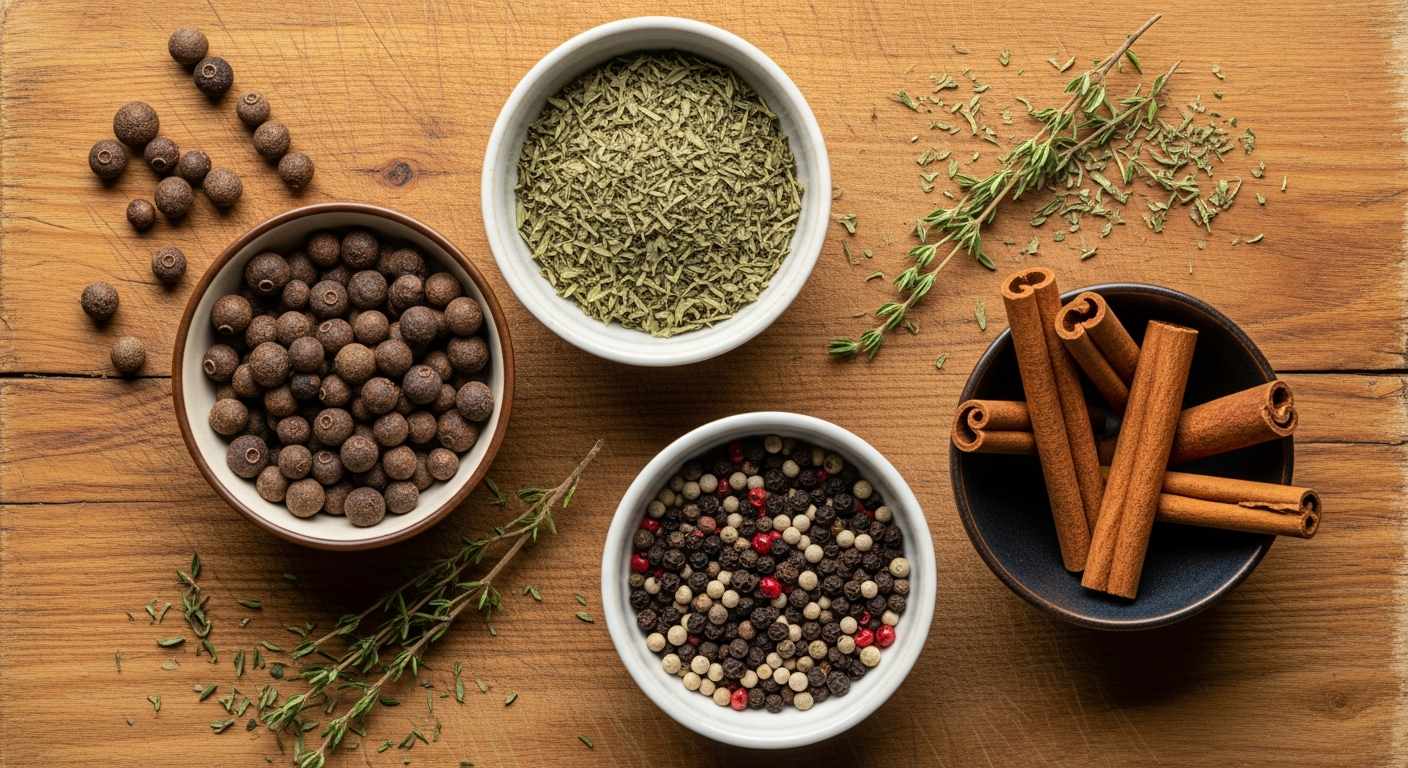
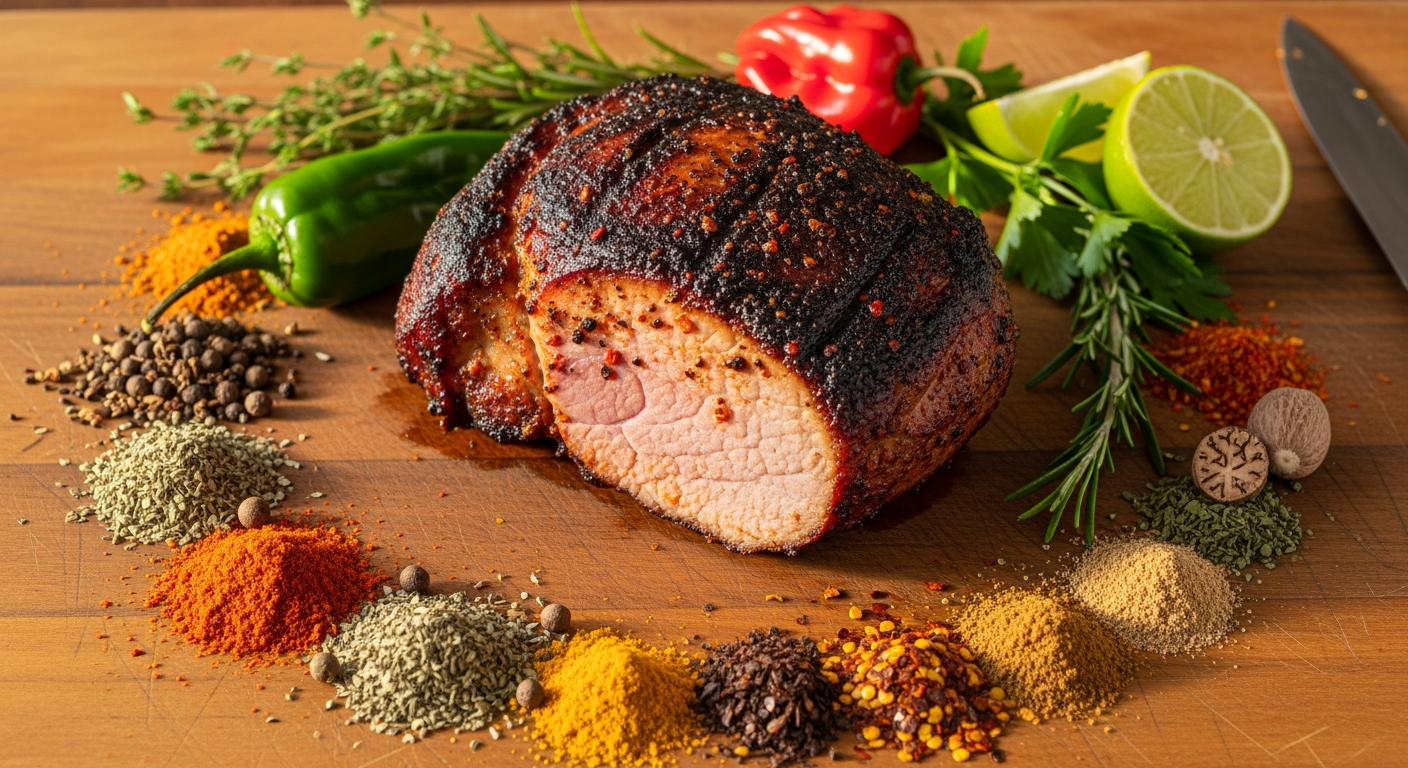
Allspice is the soul of jerk. The dried berries of the pimento tree (Pimenta dioica), native to Jamaica, contain a complex bouquet of flavors that suggests cinnamon, nutmeg, cloves, and black pepper simultaneously — hence the English name allspice. Fresh berries, crushed just before use, deliver dramatically more aroma and depth than pre-ground allspice from a jar. Jamaica produces the world's finest allspice, and the difference in quality between fresh-ground Jamaican allspice and generic supermarket ground allspice is remarkable.
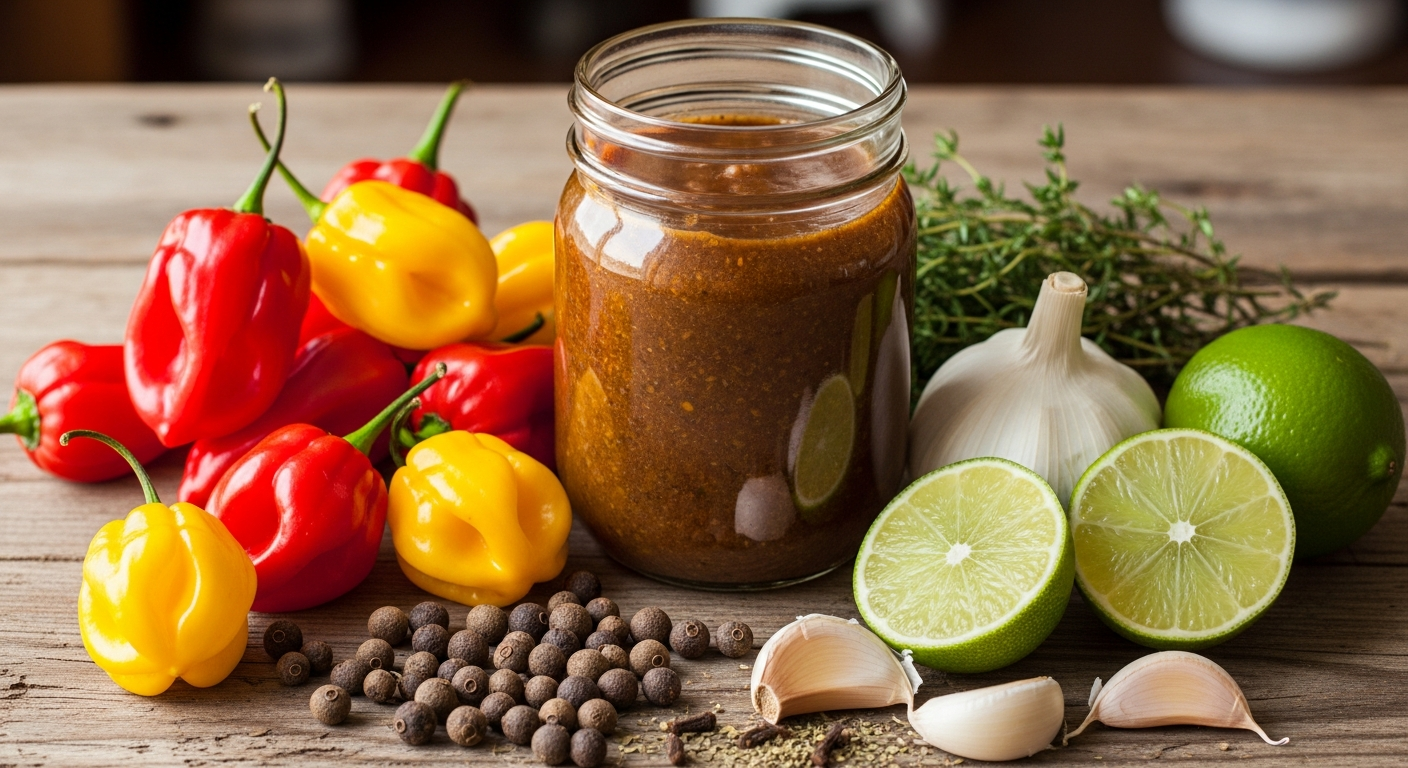
For a standard batch serving 3-4 pounds of protein, you will need: 3-4 scotch bonnet peppers, 8 scallions, 6 garlic cloves, a 2-inch piece of fresh ginger, 10 sprigs fresh thyme, 2 tablespoons whole allspice berries, ½ cup soy sauce, juice of 2 limes, 2 tablespoons brown sugar, 2 tablespoons vegetable oil, 1 tablespoon white vinegar, 1 teaspoon black pepper, ½ teaspoon cinnamon, and ¼ teaspoon nutmeg.
Step-by-Step Instructions
Begin by dry-toasting the whole allspice berries in a small skillet over medium heat for two to three minutes, shaking the pan frequently. You will smell the berries beginning to release their aromatic oils. Transfer to a mortar and pestle or spice grinder and crush to a coarse powder. This one extra step dramatically intensifies the allspice flavor and is what separates exceptional jerk from merely good jerk.
Rough-chop the scallions (both white and green parts), garlic, and ginger. Halve the scotch bonnets — include seeds and membranes for full heat, remove them for milder results. Strip thyme leaves from stems. Place all ingredients in a food processor or blender. Pulse initially to break down the larger pieces, then blend for 30-45 seconds until you achieve a thick, slightly textured paste. Scrape down the sides and blend again briefly.
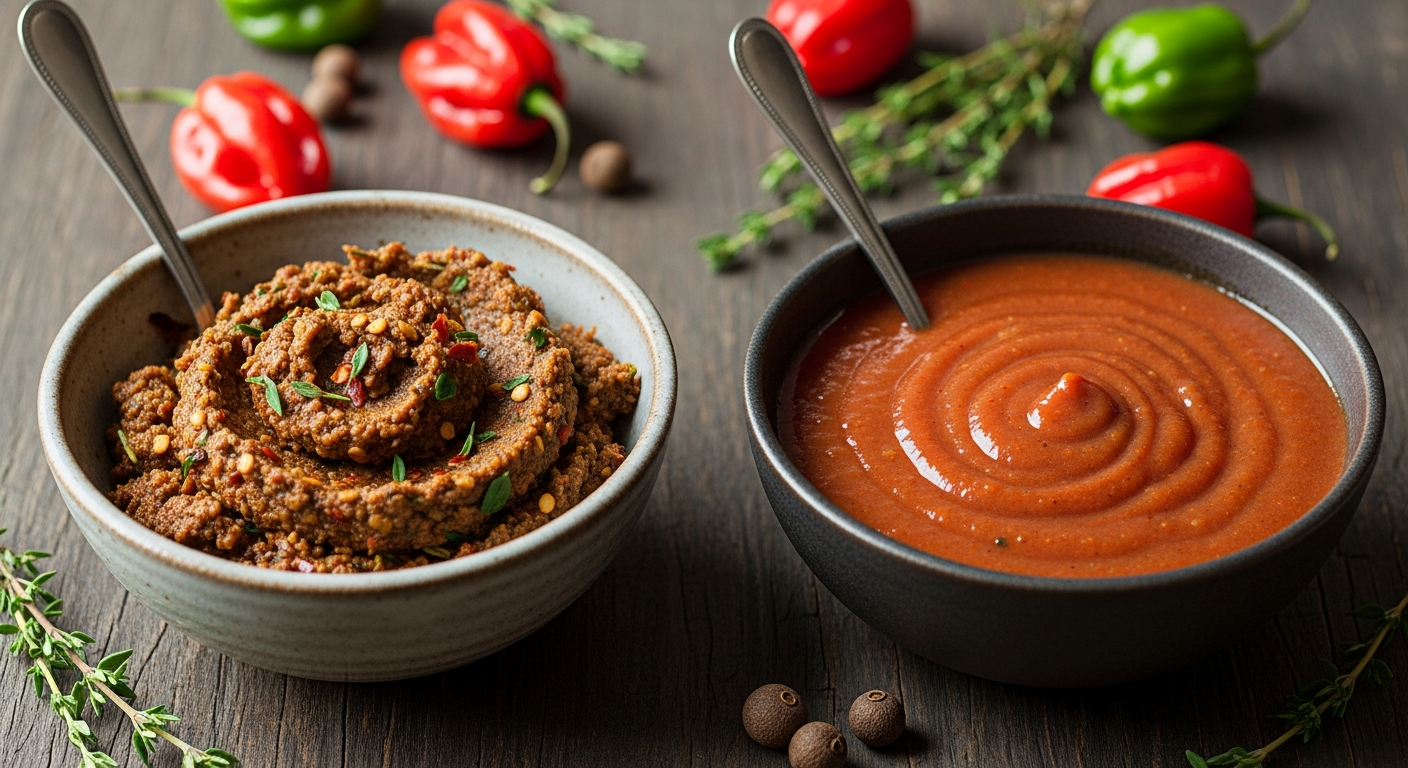
The consistency should resemble chunky pesto — not completely smooth but without large unblended chunks. If the mixture is too thick to blend, add one tablespoon of water at a time. If too thin, it contains too much liquid — authentic jerk paste is thick, not pourable. Taste carefully by dipping a piece of bread rather than tasting directly, as the marinade is intensely flavored and hot.
Marination Tips for Maximum Flavor
Application technique is as important as the marinade itself. For chicken — the most traditional jerk protein — start by scoring the meat deeply. Make three to four diagonal cuts on each side of bone-in pieces, cutting down to the bone. These cuts serve two purposes: they allow the marinade to penetrate deep into the thickest parts of the meat, and they help the chicken cook more evenly on the grill.
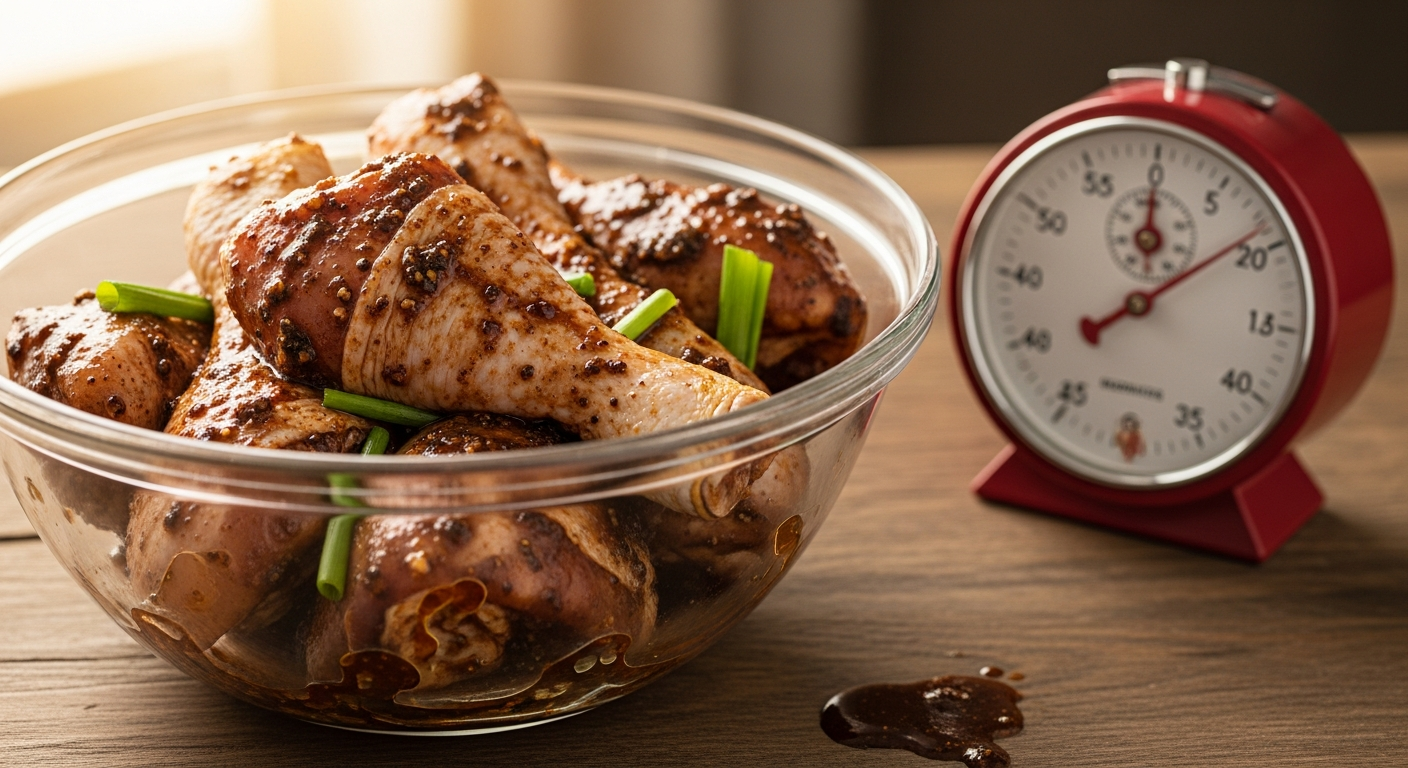
Wear food-safe gloves when handling the marinade — the scotch bonnet oils will burn bare skin for hours. Rub the marinade into every cut, every crevice, and every surface. Work it in with your gloved fingers rather than simply coating the outside. Place the marinated protein in a glass container or heavy-duty zip-top bag, ensuring every piece is thoroughly coated. Never use aluminum containers, which react with the acid in the marinade.
Marinate chicken for a minimum of 4 hours, ideally 12-24 hours overnight. Pork shoulder benefits from 8-24 hours. Seafood needs only 30-60 minutes — its delicate proteins break down quickly in acidic marinades. During marination, the acid from lime juice and vinegar tenderizes outer meat layers while fat-soluble compounds from allspice and scotch bonnet penetrate the protein structure, building flavor from the inside out.
Regional Variations Within Jamaica
While the core ingredients remain constant, authentic jerk marinade varies significantly across Jamaica's parishes. In Portland Parish — the acknowledged birthplace of commercial jerk, home to Boston Bay — marinades tend to be heavier on the scotch bonnet and lighter on the sugar, producing an intensely hot, savory result. The proximity to pimento-wood fuel means smoke flavor from cooking compensates for less sweetness in the marinade.
In Kingston and the southern parishes, jerk marinades often include browning sauce (a concentrated caramel seasoning), more brown sugar, and sometimes a splash of dark rum. This produces a sweeter, darker marinade that caramelizes beautifully on the grill, creating a glossy, almost lacquered finish that food photographers love.
In Montego Bay and the western parishes, marinades sometimes incorporate scotch bonnet mash — a fermented pepper paste — alongside fresh peppers. This adds tangy, complex heat distinctly different from fresh pepper alone. Some western-style marinades also include tamarind paste, which adds sour fruitiness that works particularly well with pork and gives the marinade a chutney-like depth.
Authentic vs. Store-Bought: Ingredient Comparison
| Factor | Authentic Homemade | Premium Brand (Walkerswood) | Generic Store-Bought |
|---|---|---|---|
| Scotch Bonnet | Fresh, whole peppers | Real scotch bonnet | Cayenne or chili powder |
| Allspice | Freshly toasted whole berries | Ground allspice (real) | Often minimal or absent |
| Thyme | Fresh sprigs | Dried thyme | Dried or absent |
| Sweetener | Brown sugar | Brown sugar | High fructose corn syrup |
| Flavor Complexity | Exceptional | Very good | Basic |
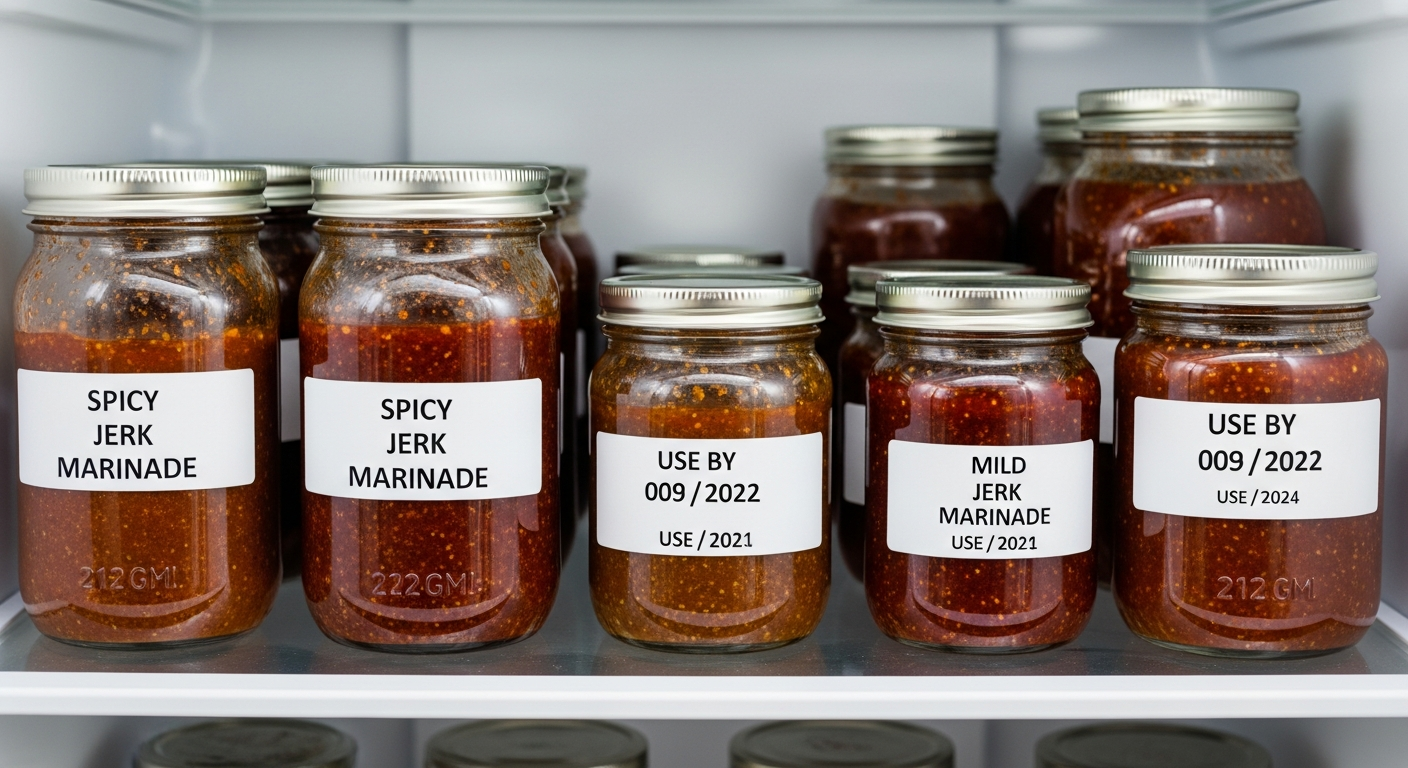
| Shelf Life | 5-7 days refrigerated | 12-18 months sealed | 18-24 months |
| Cost per batch | $4-7 | $5-8 per jar | $2-4 |
Common Mistakes to Avoid
The most common mistake home cooks make is creating a marinade that is too liquid. An authentic jerk marinade should be a thick paste — if it pours, it is too thin and will not adhere to the meat properly. Reduce the soy sauce or oil until the marinade has the consistency of thick pesto. If it is already too thin, add more allspice, garlic, or ginger to thicken.
Another frequent error is using stale spices. Ground allspice loses its potency rapidly — within three months of grinding, it has lost more than half its aromatic compounds. Whole allspice berries retain full flavor for years. Buy whole berries and grind them yourself immediately before making the marinade. The difference in aroma when you crack open a fresh allspice berry is extraordinary.
Do not skip the fresh ingredients. Garlic powder, onion powder, and dried thyme are not adequate substitutes for their fresh counterparts. The volatile aromatic compounds in fresh garlic, scallions, and thyme are what give authentic jerk marinade its vibrant, complex character. These compounds evaporate during drying, leaving behind only a pale shadow of the original flavor. Always source fresh herbs and aromatics for best results.
Finally, do not rush the marination. A 30-minute marinade produces meat that tastes seasoned on the outside but plain inside. The magic of jerk is that the seasoning penetrates deeply — but that penetration requires time. Overnight marination is the standard among Jamaican cooks and produces the most deeply flavored, authentically jerk result possible.