Beginning the Journey: Jerk in the Mountains
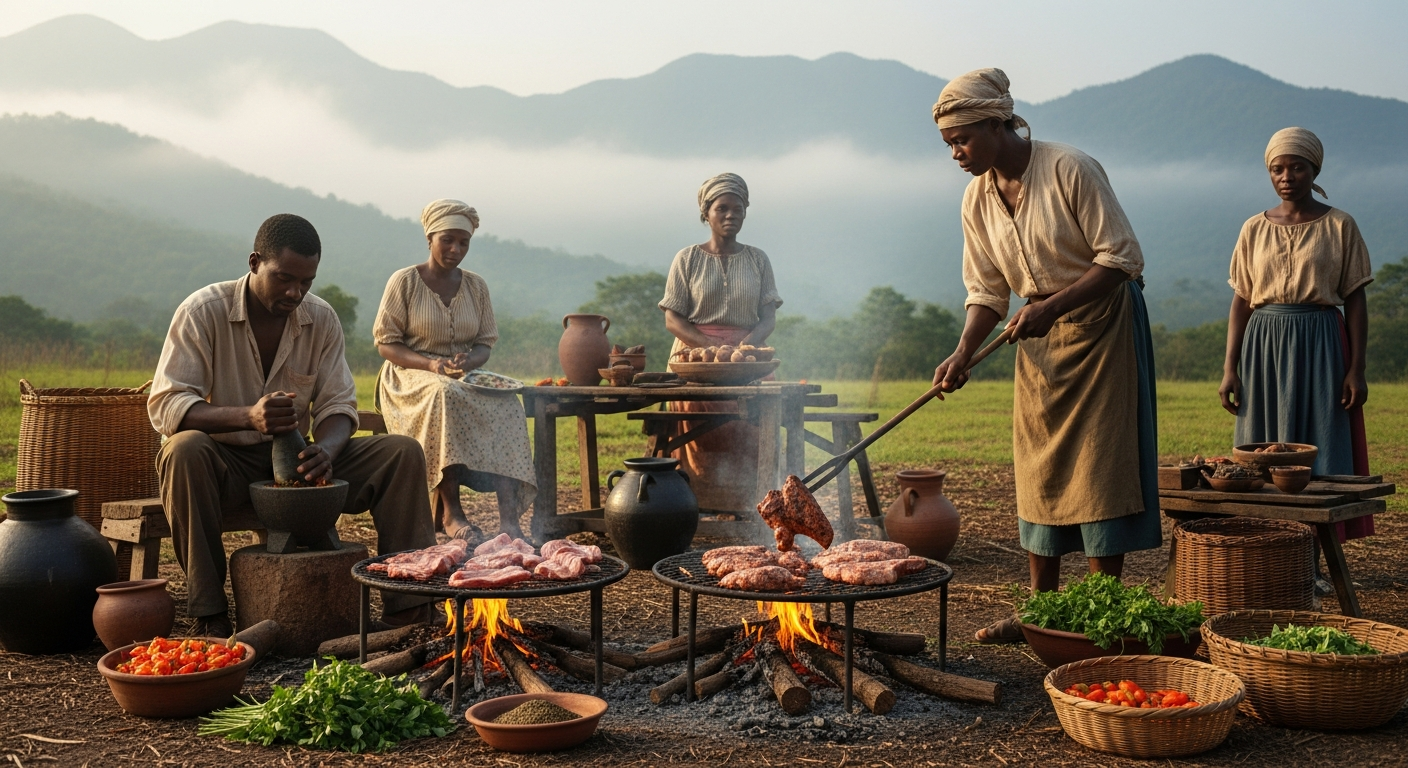
Every cultural journey has a starting point, and for Jamaican jerk, that starting point is the mist-shrouded peaks and dense forests of the Blue Mountains and John Crow Mountains in eastern Jamaica. It was here, in some of the most rugged and remote terrain in the Caribbean, that the Maroons created the cooking tradition that would eventually become one of the most recognized flavors in world cuisine.
The Maroons were escaped enslaved Africans who established free communities in Jamaica's mountainous interior during the 17th and 18th centuries. The Spanish had first brought enslaved Africans to Jamaica in the early 1500s, and when the British conquered the island in 1655, many enslaved people seized the opportunity to flee into the mountains. There, they built communities, developed agricultural systems, and created a culture that blended African traditions with the resources of their new environment.
Food was a central challenge for these mountain communities. The Maroons hunted wild boar, which had descended from pigs introduced by the Spanish, and supplemented their diet with crops they cultivated on small plots of cleared mountain land. The need to preserve meat in a tropical climate without refrigeration led them to develop the smoking and seasoning technique that would become jerk.
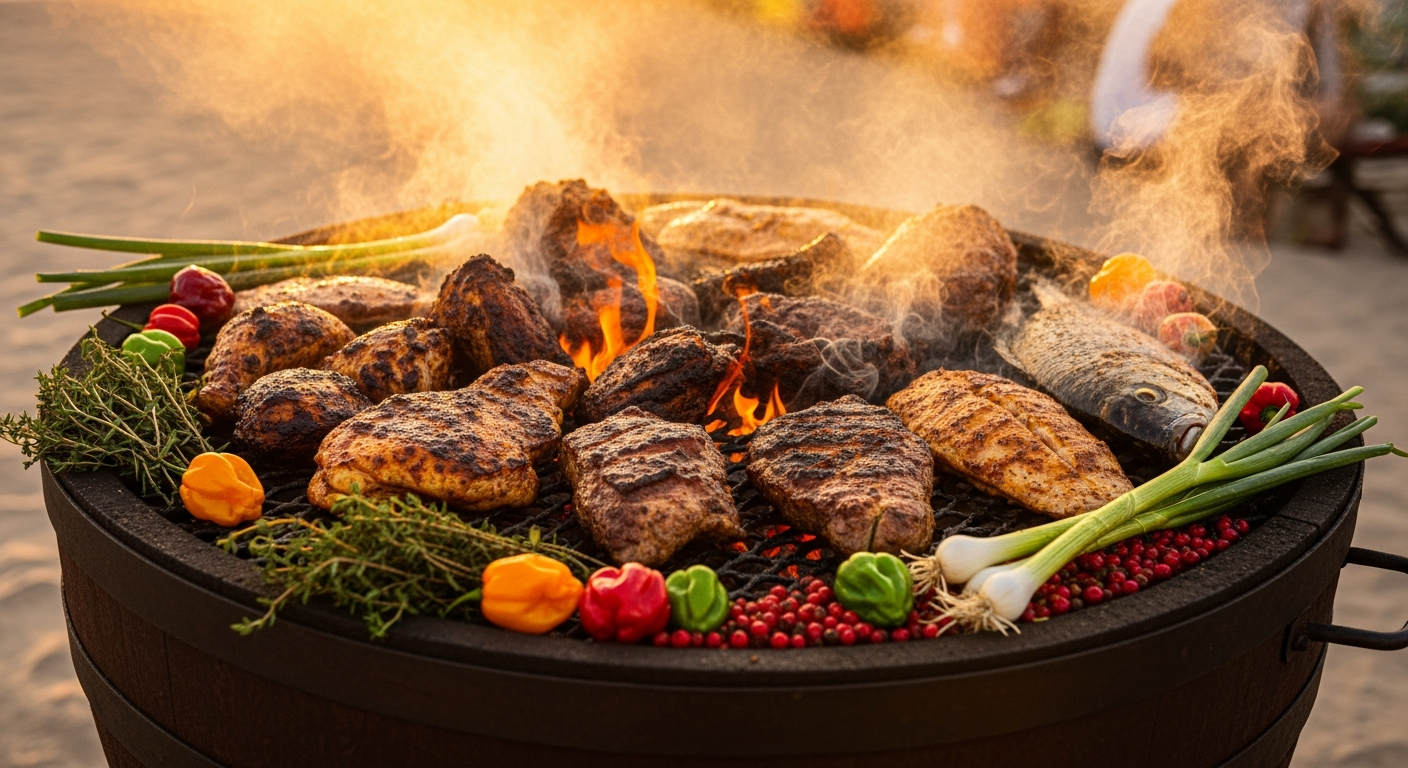
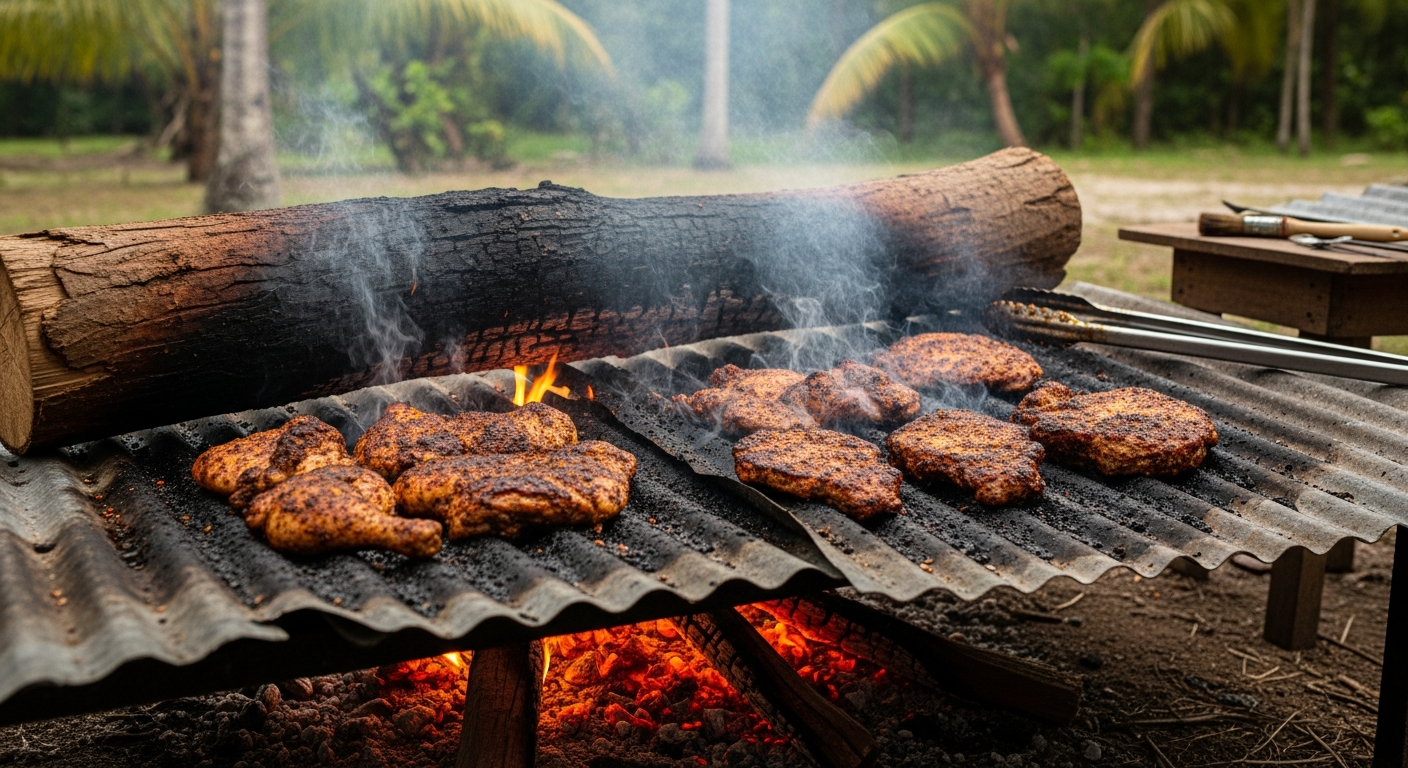
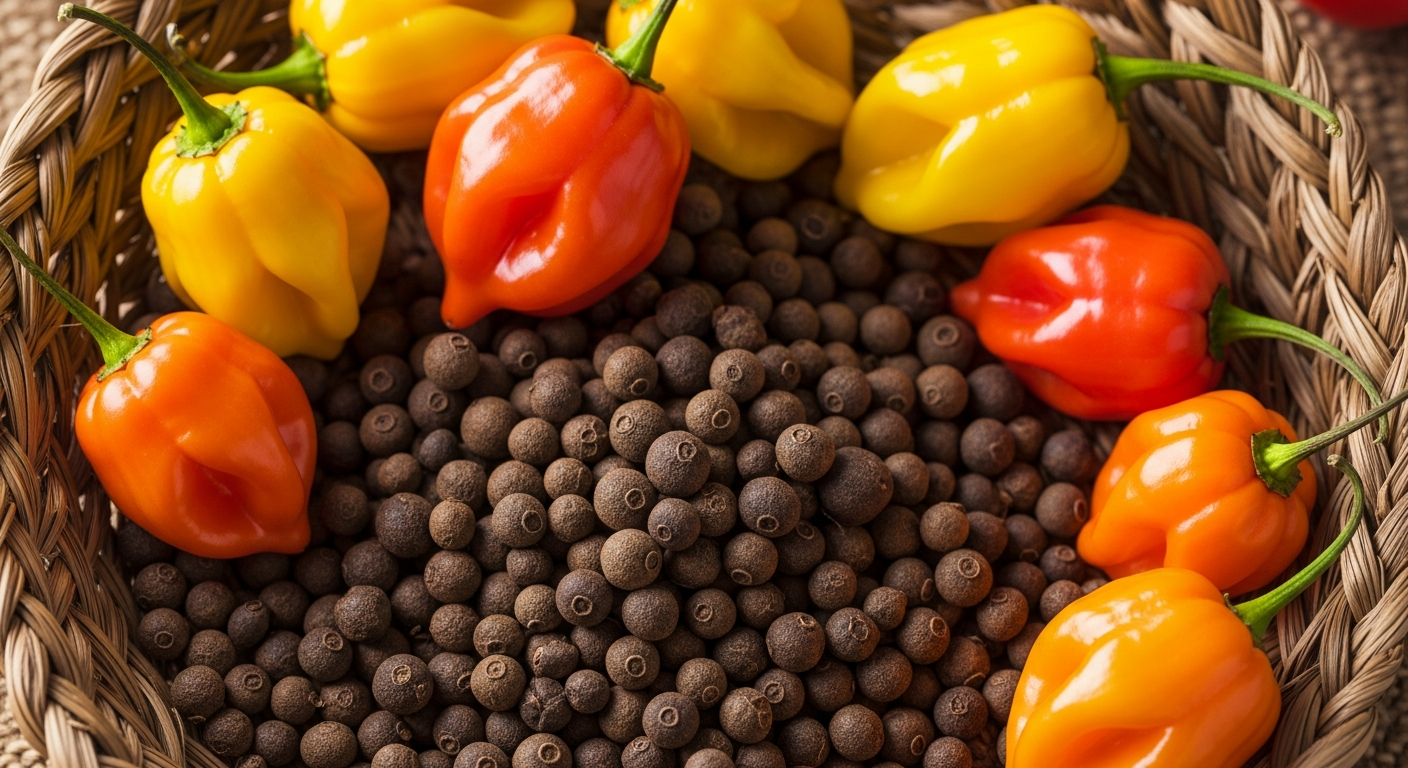
Using the abundant pimento trees that grew in the mountains, the Maroons created a preservation and cooking method that combined intense seasoning with slow smoking. The allspice in both the marinade and the smoke had natural antimicrobial properties, extending the meat's shelf life. The scotch bonnet peppers added not just heat but also capsaicin, another natural preservative. What began as a practical survival technique gradually evolved into a culinary art form as the Maroons refined their techniques over generations.
From the Mountains to Boston Bay
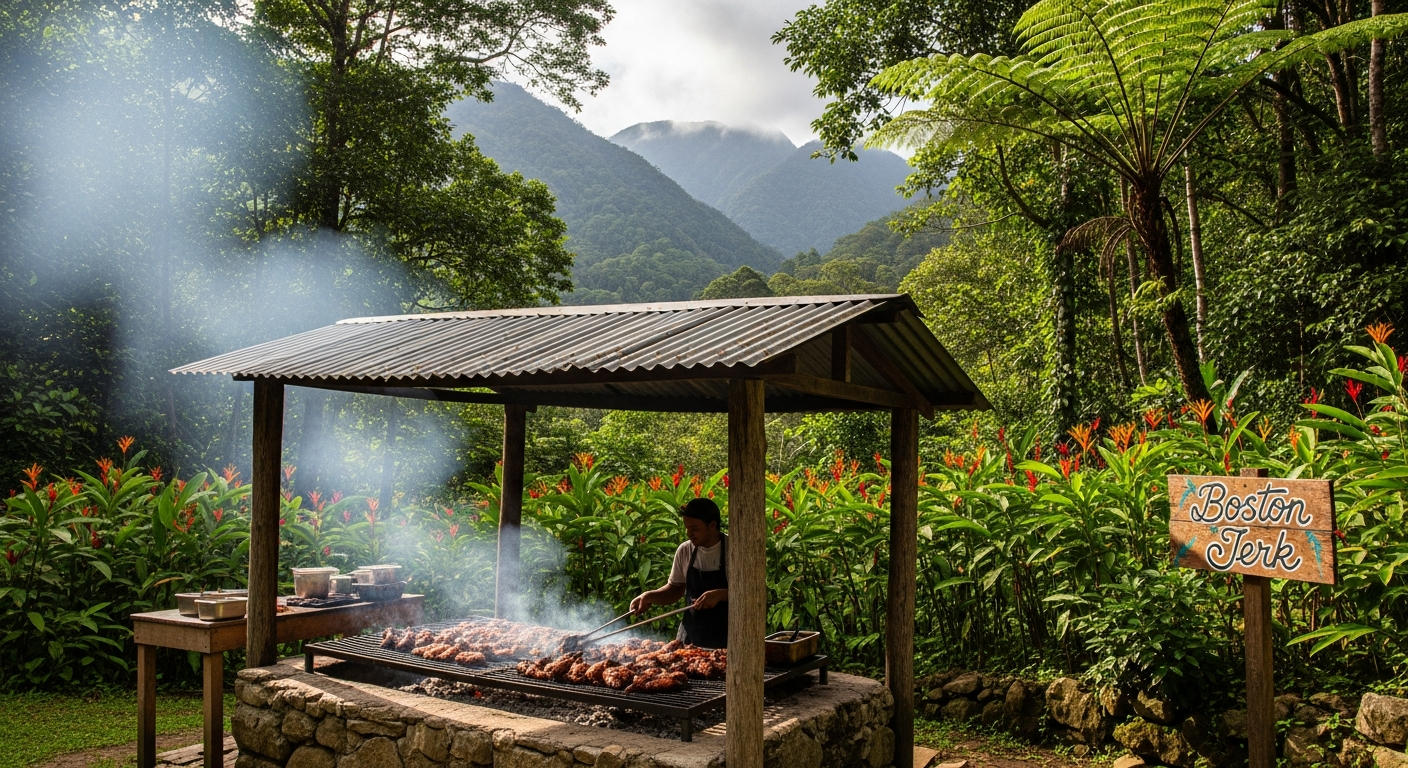
The cultural journey of jerk took its next significant step when the tradition moved from the mountain communities to the coast. Boston Bay, a small community in Portland Parish, became the bridge between traditional Maroon jerk and the broader Jamaican culture. Located at the foot of the Blue Mountains and facing the Caribbean Sea, Boston Bay was geographically positioned to receive the Maroon food tradition and share it with the wider world.
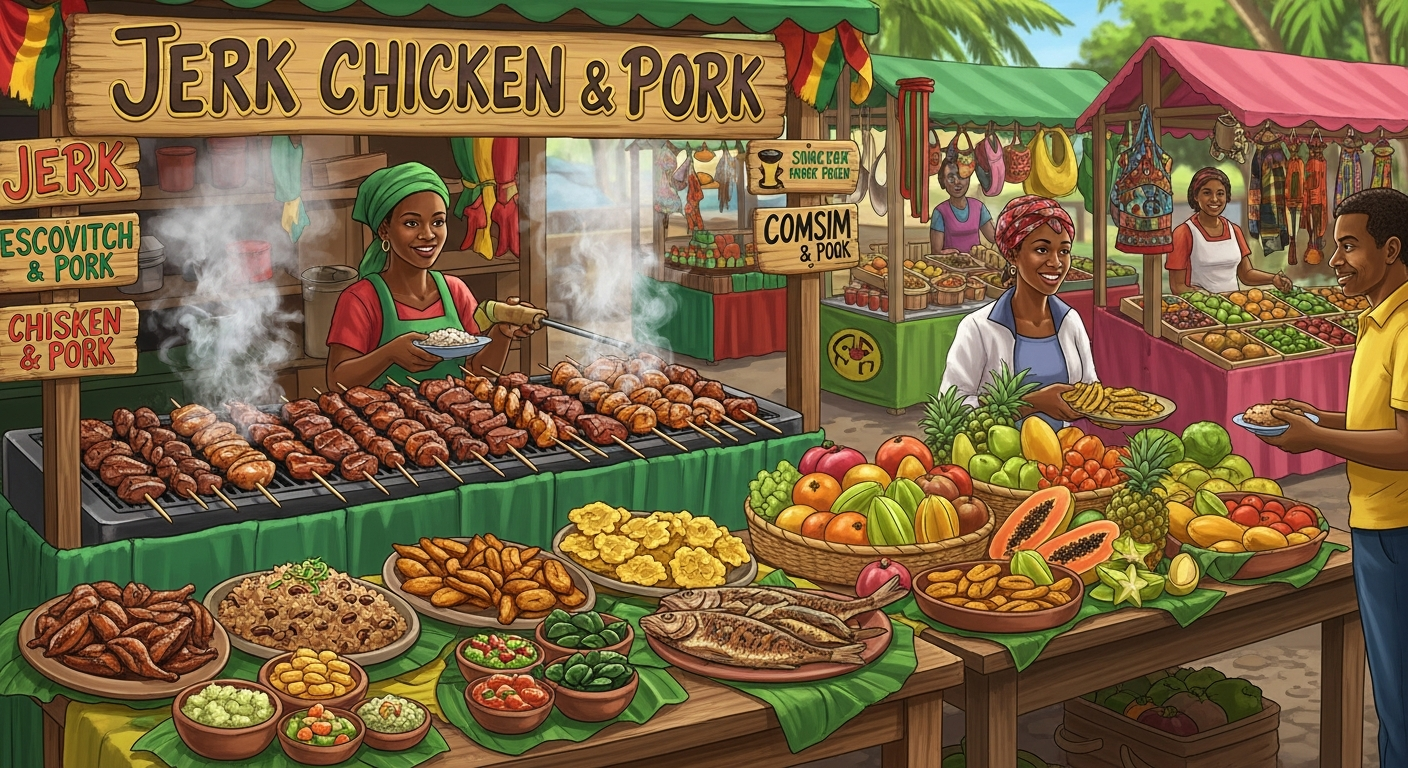
The exact timeline of this transition is difficult to establish, as the history of jerk was passed down orally rather than recorded in writing. However, by the mid-20th century, Boston Bay had established itself as the epicenter of commercial jerk cooking. Roadside vendors set up pits along the main road, selling jerk pork and chicken to travelers, truck drivers, and local residents.
These early commercial jerk pits were simple affairs — a few metal drums, a supply of pimento wood, and a hand-painted sign. But the food they produced was extraordinary, and word spread. Boston Bay became a destination, drawing Jamaicans from across the island who wanted to taste jerk at its source. The beach at Boston Bay, with its excellent surfing waves, added to the appeal, creating a unique combination of sun, sea, and smoke that defined the early commercial jerk experience.
Jerk Goes National
The nationalization of jerk cooking accelerated in the decades following Jamaican independence in 1962. As the new nation sought to define its cultural identity, food traditions like jerk became important symbols of Jamaican distinctiveness. The government and cultural organizations began to recognize jerk as a national treasure, and its presence expanded rapidly beyond Portland Parish.
In Kingston, jerk stands began appearing in neighborhoods across the city. Each one brought the flavor of Boston Bay to the urban landscape, adapting the tradition to the realities of city life while maintaining the essential cooking method. The most successful of these establishments became legendary in their own right, with loyal followings and fierce rivalries.
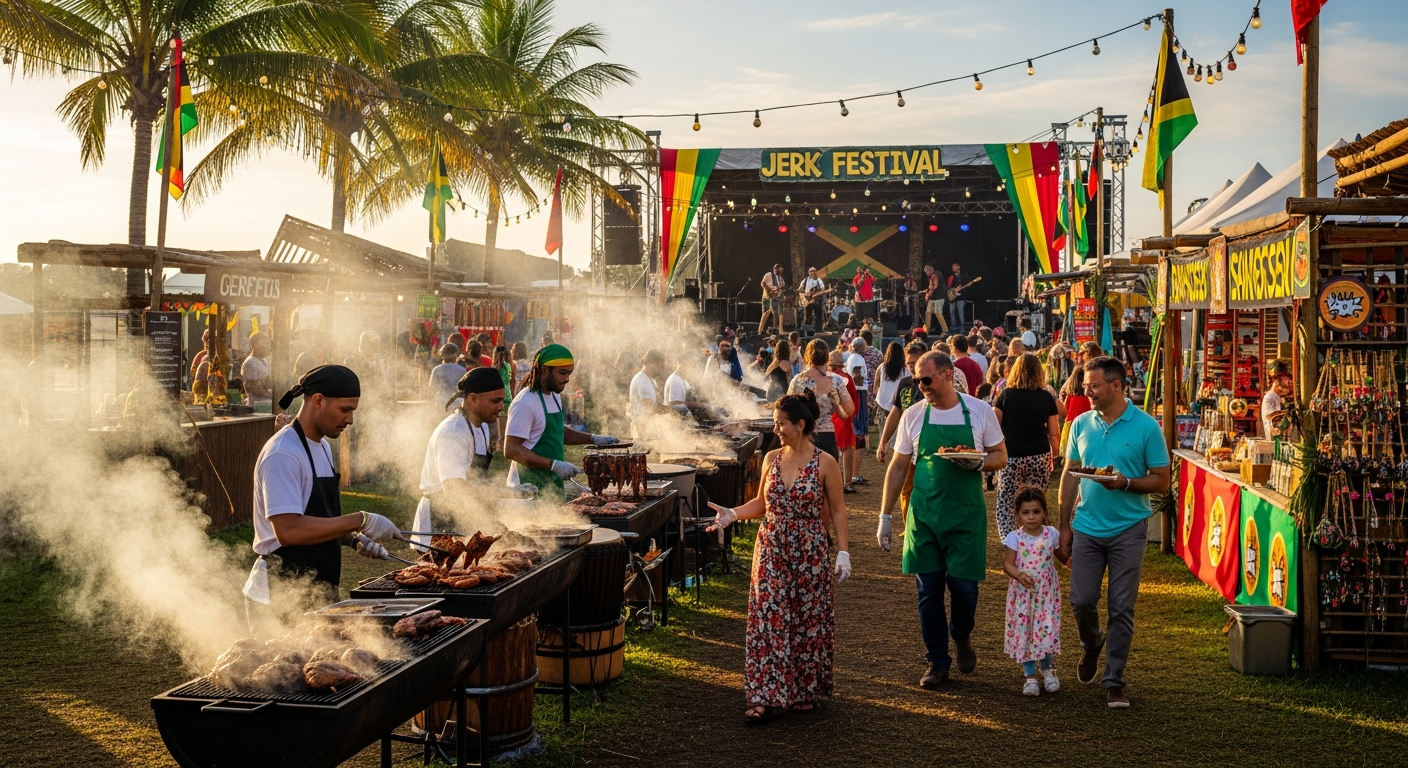
Tourism also played a crucial role in jerk's national expansion. As Jamaica developed its tourism industry, jerk became a key attraction. Hotels and resorts featured jerk nights, tour operators included jerk pit visits in their itineraries, and jerk became one of the experiences that tourists sought out and remembered long after returning home. This tourism-driven exposure helped solidify jerk's position as Jamaica's signature dish.
The music industry provided another powerful vehicle for jerk's cultural journey. Reggae and dancehall artists referenced jerk in their lyrics, reinforcing the connection between jerk and Jamaican identity. The global spread of Jamaican music in the 1970s and 1980s created international awareness of Jamaican culture, and jerk rode that wave of cultural interest.
The Diaspora Chapter
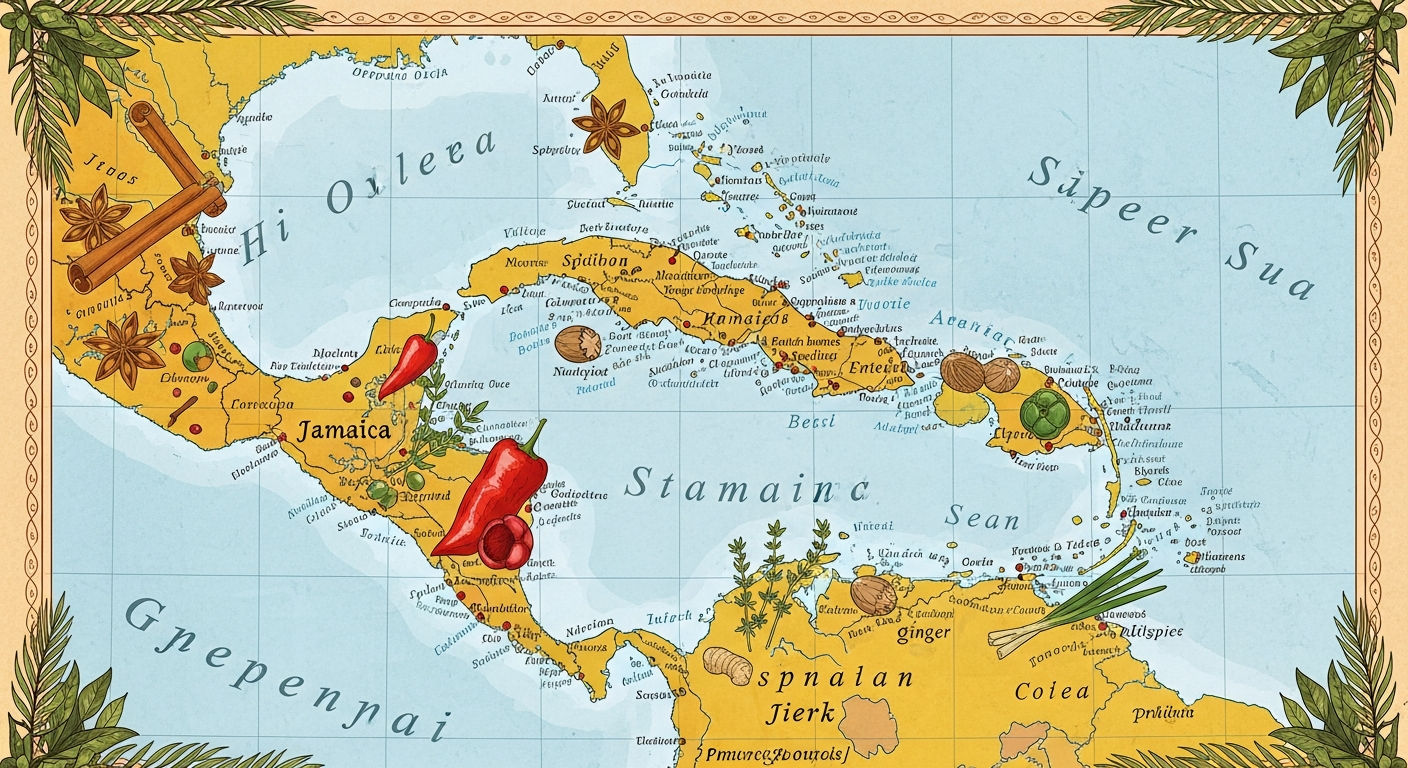
The Jamaican diaspora carried jerk cooking to cities around the world, writing a new chapter in its cultural journey. Waves of Jamaican emigration to the United Kingdom beginning in the 1940s, to the United States and Canada from the 1960s onward, and to other destinations created new outposts of jerk culture across the globe.
In each new location, Jamaican immigrants faced the challenge of recreating authentic jerk with different ingredients, equipment, and regulations. Fresh pimento wood was rarely available outside Jamaica. Local fire codes often prohibited the open-air smoking that traditional jerk requires. Scotch bonnet peppers might be difficult to source. Yet the diaspora persisted, adapting their techniques while maintaining the essential flavors.
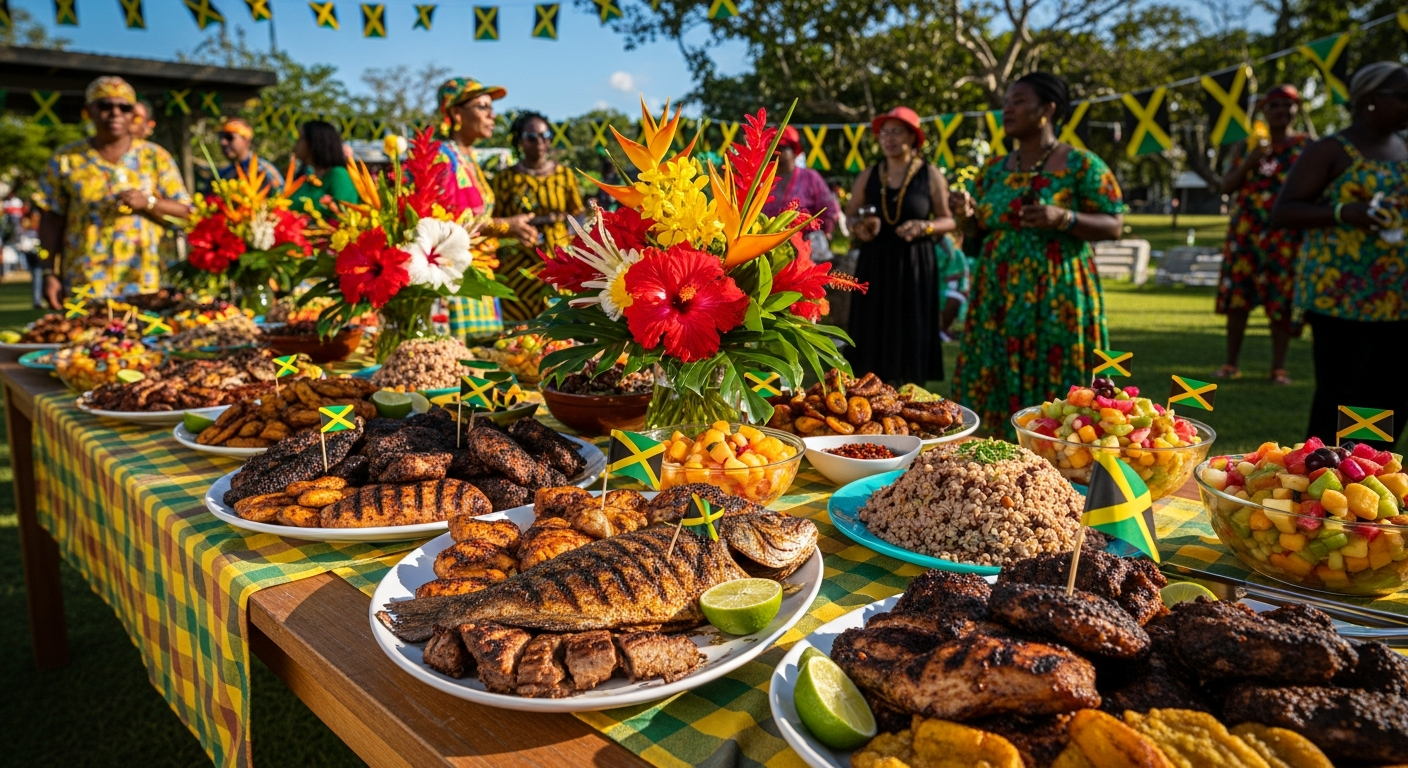
The jerk restaurants and food trucks established by diaspora communities did more than serve food. They created cultural spaces where Jamaican identity could be maintained and celebrated far from home. Walking into a jerk shop in Brixton, Flatbush, or Scarborough, a Jamaican expatriate could hear familiar music, speak patois, and eat food that tasted like home. These establishments became anchors of cultural identity in foreign lands.
Jerk in the Global Kitchen
The most recent chapter of jerk's cultural journey has seen it enter the global culinary mainstream. Jerk seasoning is now available in supermarkets on every continent. Celebrity chefs feature jerk preparations on cooking shows. Food writers explore jerk's history and techniques in major publications. Jerk has achieved the rare status of a regional cooking tradition that has been embraced worldwide.
This global adoption has brought both opportunities and challenges. On the positive side, the worldwide interest in jerk has created economic opportunities for Jamaican producers, elevated awareness of Caribbean culinary traditions, and brought the pleasure of jerk flavors to millions who might never visit Jamaica. On the challenging side, commercialization has sometimes diluted the authentic flavor and cultural significance of the tradition.
The most exciting developments in jerk's global journey involve fusion interpretations by creative chefs who combine jerk flavors with other culinary traditions. Jerk-spiced sushi, jerk pizza, jerk tacos — these innovations extend the reach of jerk while introducing its flavors to new contexts. When done with respect and understanding, these fusions honor the tradition by demonstrating its versatility and universal appeal.
The Journey Continues
The cultural journey of Jamaican jerk is far from over. New generations of cooks, both in Jamaica and around the world, continue to interpret and evolve the tradition. Young Jamaican chefs are exploring ways to elevate jerk into fine dining while preserving its essential character. Home cooks on every continent are discovering the joy of making jerk from scratch, connecting with a tradition that spans centuries.
What makes this ongoing journey remarkable is that despite all the changes and adaptations, the core of jerk remains recognizable. A plate of jerk chicken served in a Tokyo restaurant shares fundamental DNA with the jerk cooked by Maroons in the Blue Mountains three hundred years ago. The allspice, the scotch bonnet, the smoke, the slow cooking — these elements connect every point on jerk's cultural journey, creating a continuous thread that runs from survival food to global phenomenon.
This cultural journey of Jamaican jerk is ultimately a story about the power of food to carry culture across time and space. It demonstrates that a cooking tradition born from necessity can become a source of national pride, international acclaim, and enduring cultural identity. Every time someone lights a grill and reaches for the jerk seasoning, they become part of this ongoing journey.