The Jerk Pit as a Cultural Institution
In Jamaica, a jerk pit is far more than a place where meat is cooked. It is a cultural institution, a community gathering spot, and a living connection to the island's history. From the famous roadside stands of Boston Bay to the bustling jerk centers of Kingston, these humble cooking stations hold an outsized place in Jamaican culture and social life.
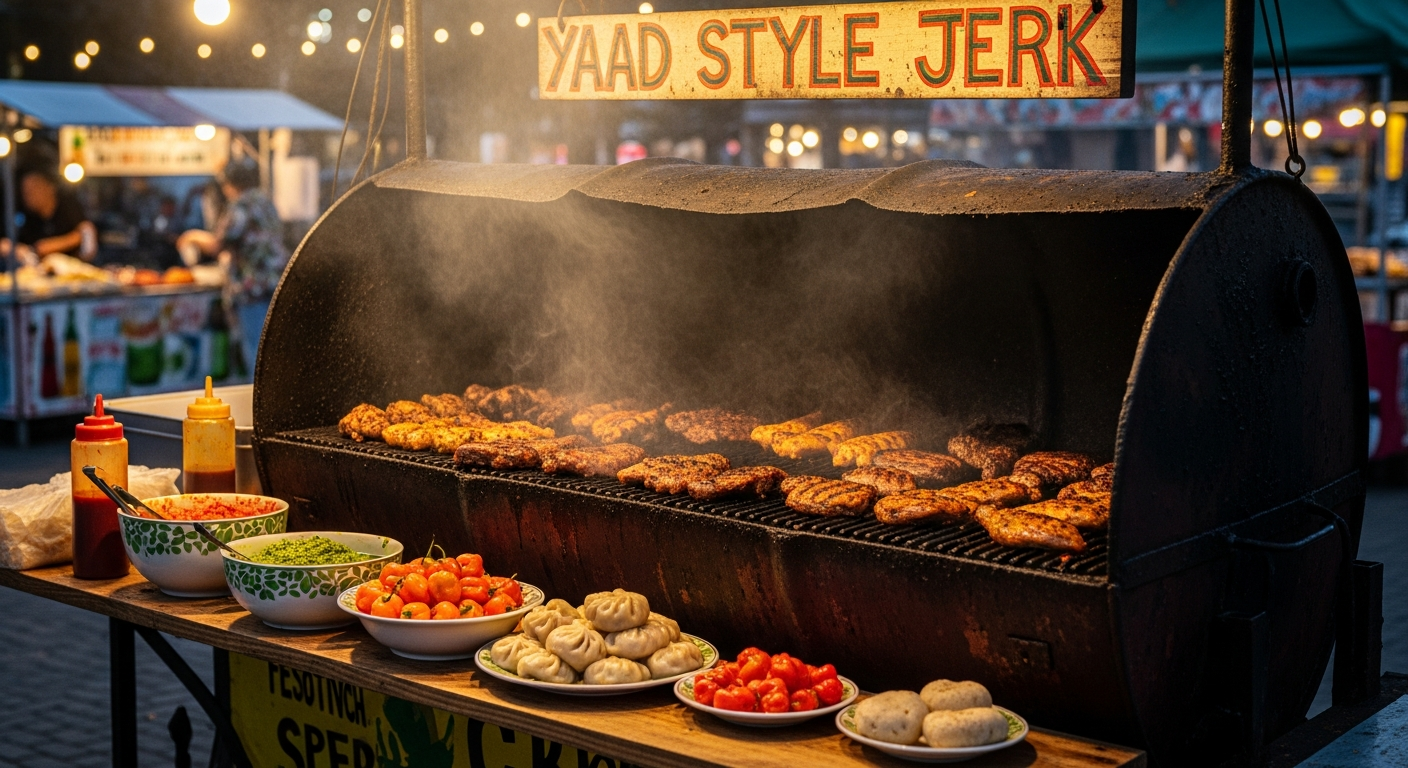
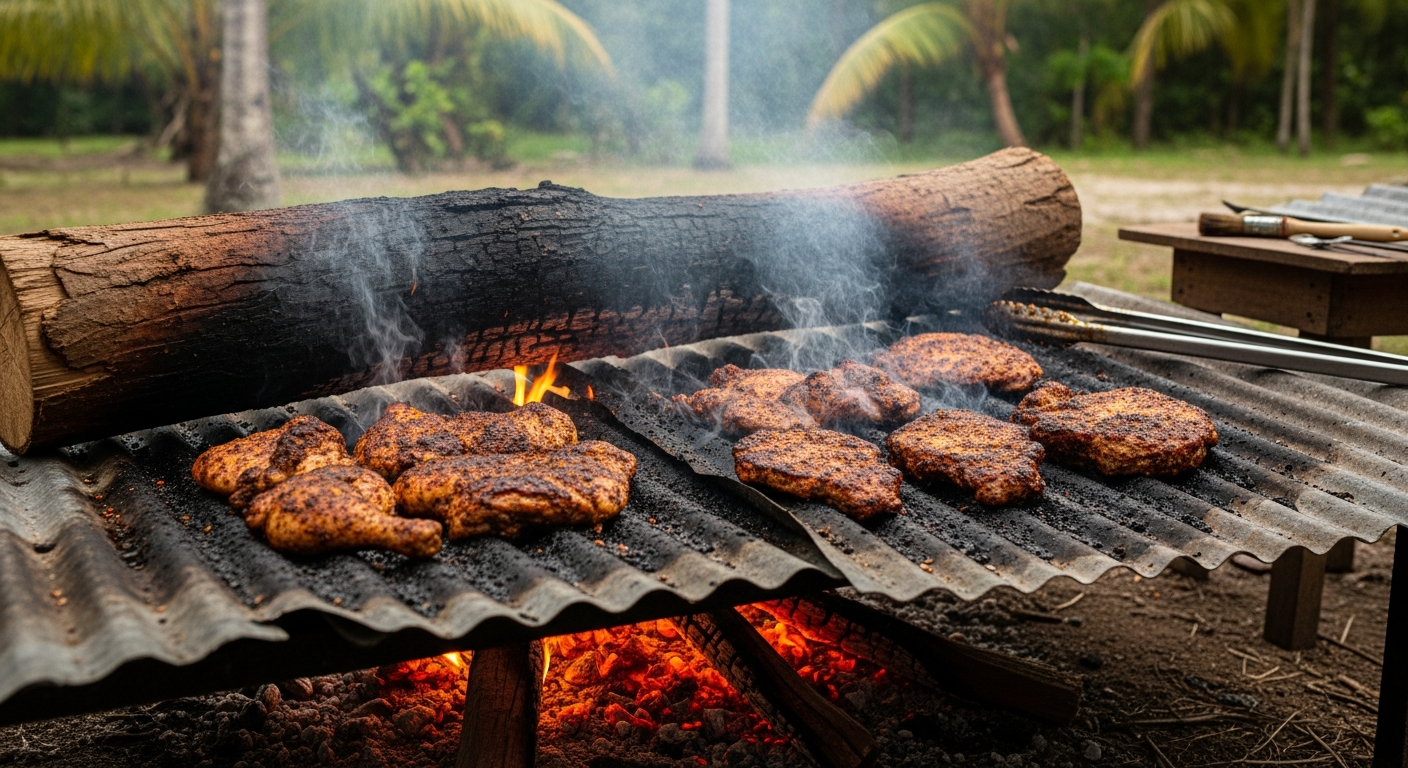
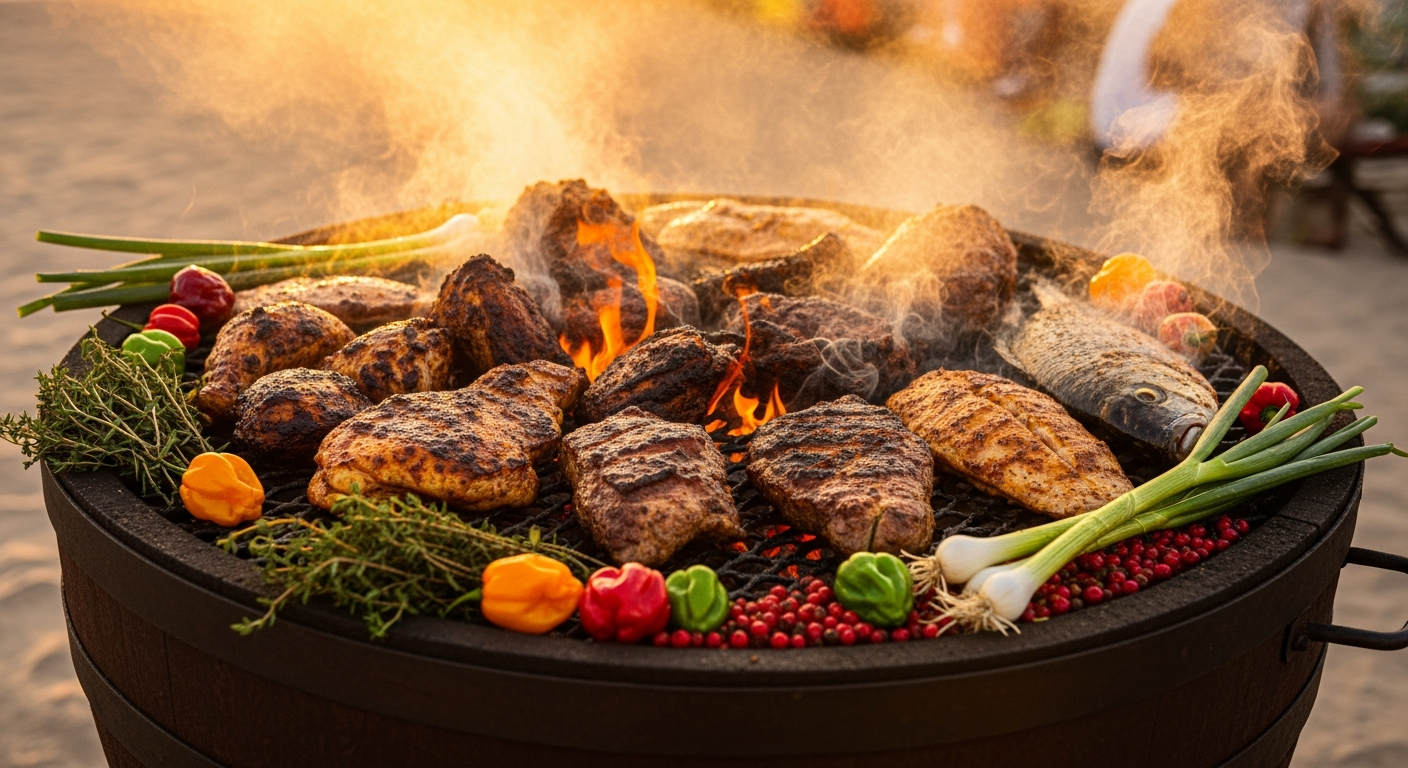
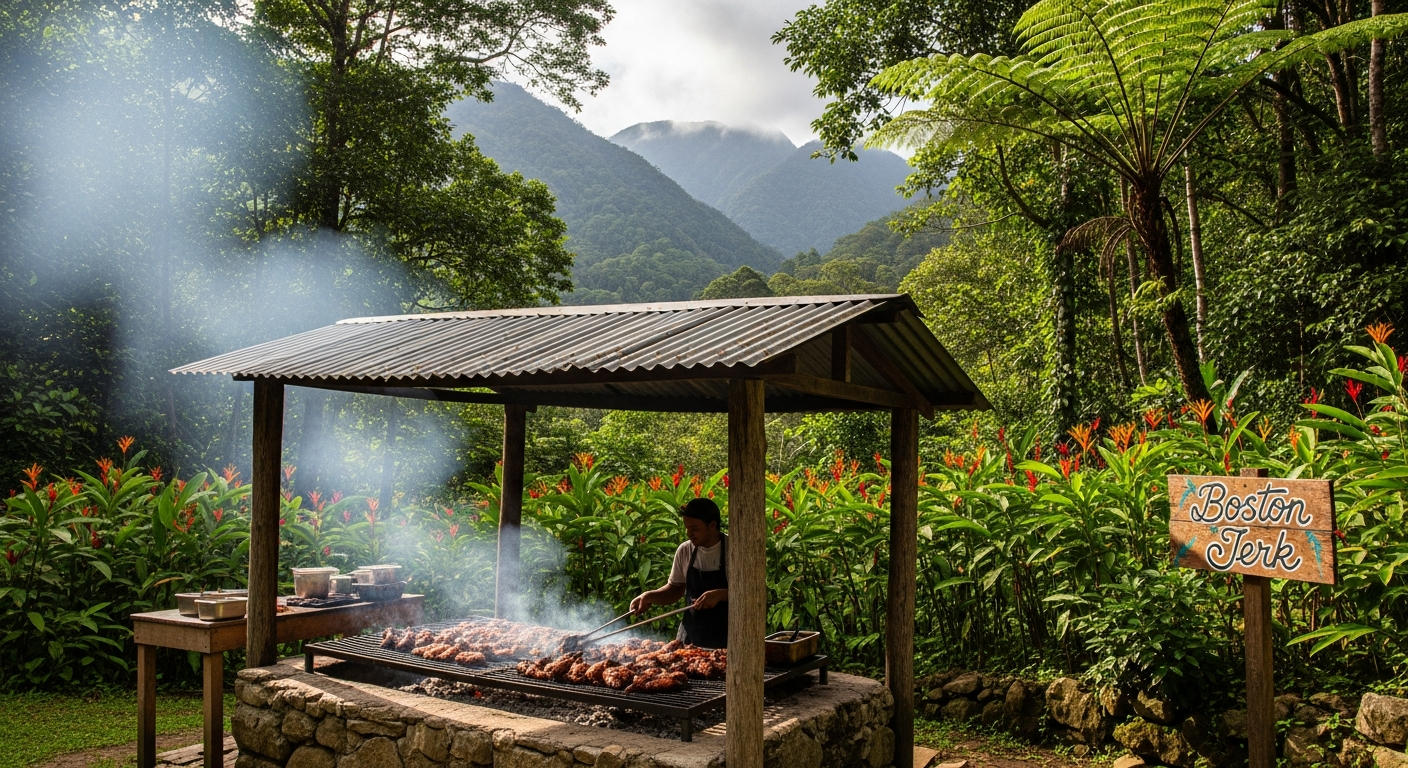
The traditional jerk pit is a simple construction: a metal drum or concrete block structure fitted with a grill grate, fueled by pimento wood, and often sheltered under a zinc roof or a canopy of trees. Yet this simplicity is deceptive. The jerk pit represents centuries of culinary knowledge, and the pit master who tends it is a custodian of one of the Caribbean's most important food traditions.
Understanding the role of jerk pits in Jamaican culture requires looking beyond the food itself. These are places where community happens, where news is shared, where arguments are settled over plates of perfectly smoked chicken, and where the rhythms of Jamaican life play out against a backdrop of wood smoke and sizzling spices.
Boston Bay: The Birthplace of the Jerk Pit
Any discussion of jerk pits and Jamaican culture must begin in Boston Bay, a small coastal community in Portland Parish on Jamaica's northeast coast. This is where commercial jerk cooking is believed to have originated, and where some of the oldest continuously operating jerk pits in the world can still be found.
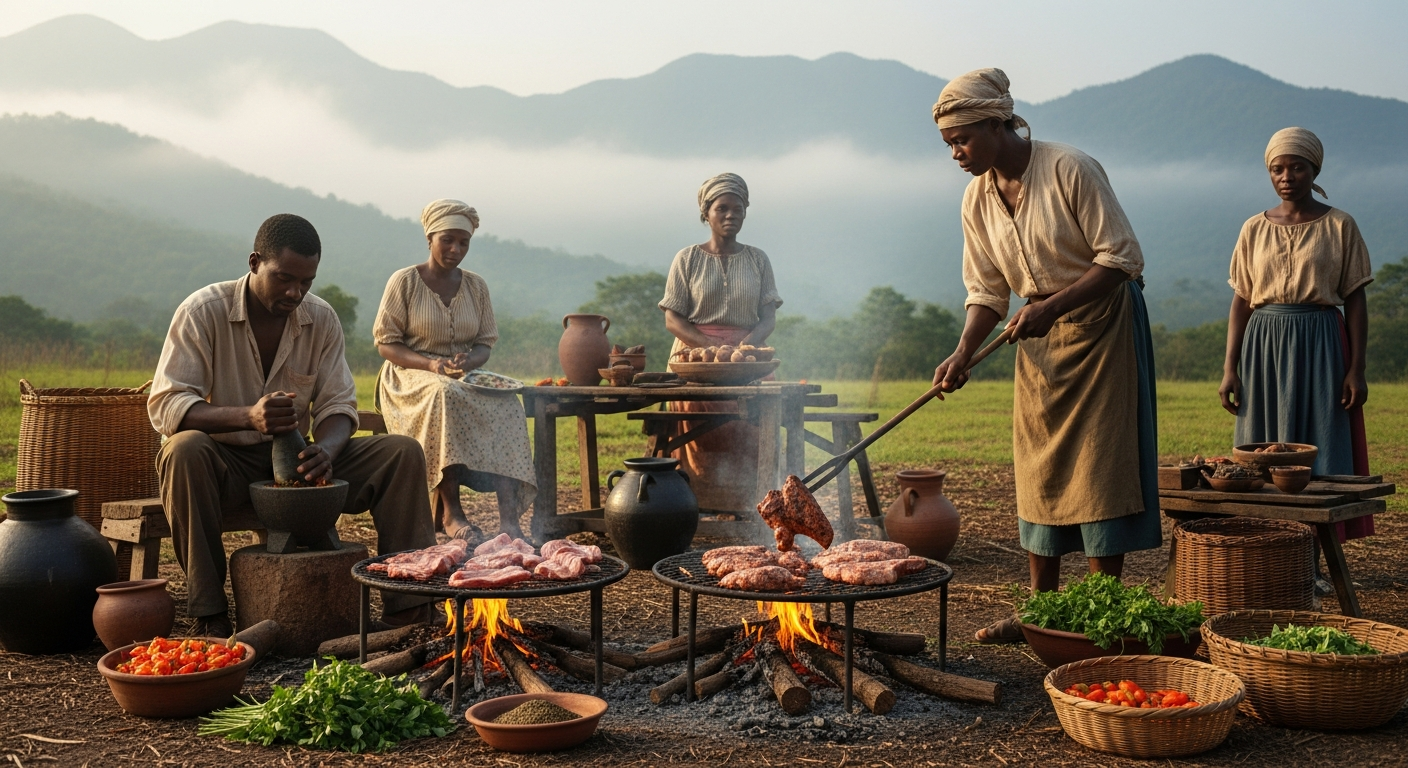
Boston Bay's connection to jerk runs deep. The area is adjacent to the Maroon territories in the Blue Mountains, and it was here that the Maroon tradition of jerk cooking first transitioned from a subsistence technique to a commercial enterprise. In the mid-20th century, vendors began setting up jerk pits along the road through Boston Bay, selling to travelers and local beachgoers.
Today, Boston Bay remains a pilgrimage site for jerk enthusiasts from around the world. The pits here operate much as they have for decades, with pit masters tending their fires from early morning until late at night, cooking chicken and pork over authentic pimento wood. The flavors produced in Boston Bay are considered the gold standard of jerk cooking, the benchmark against which all other jerk is measured.
What makes Boston Bay special is not just the quality of the food but the atmosphere. The beach, the music, the casual conversation between strangers united by their love of jerk, the friendly competition between vendors — all of these elements combine to create an experience that cannot be replicated in a restaurant or at home.
Jerk Pits as Community Gathering Places
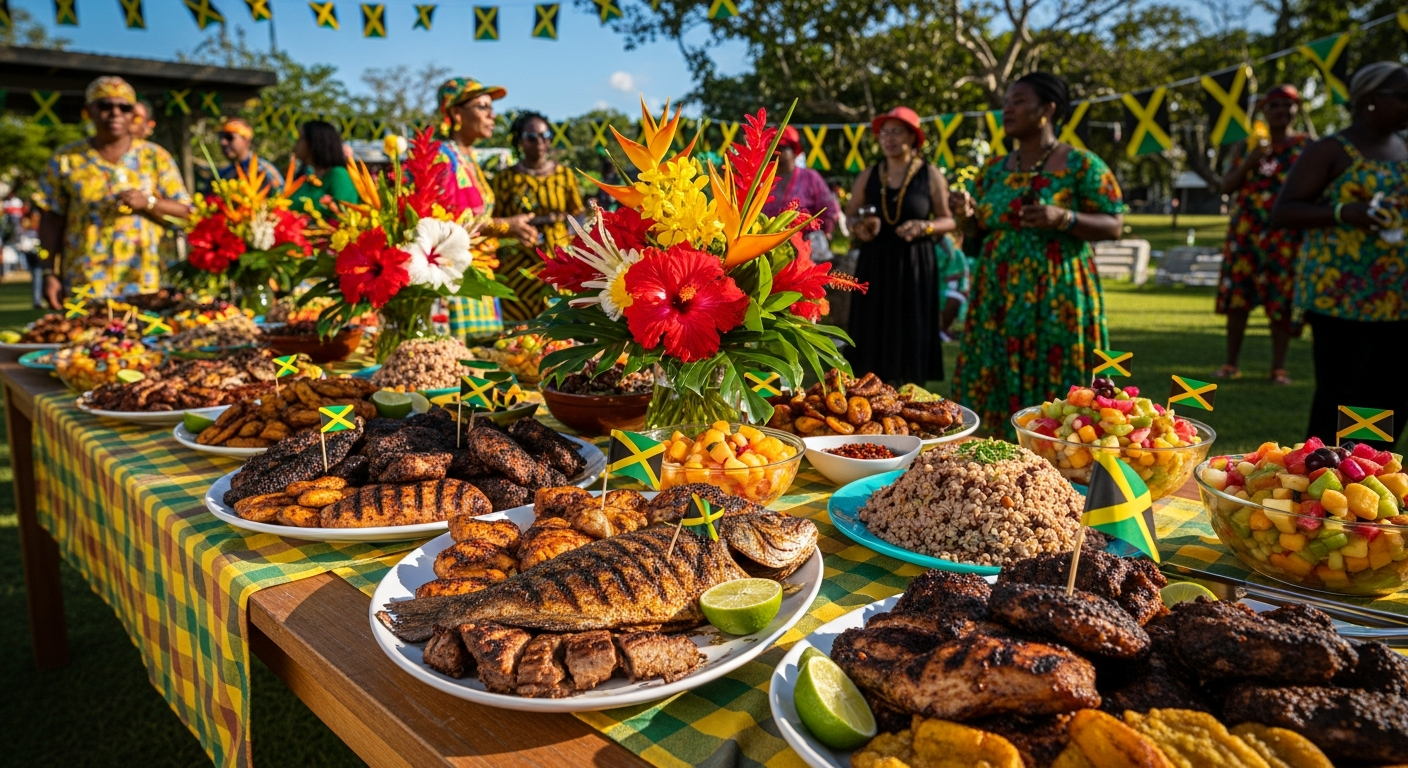
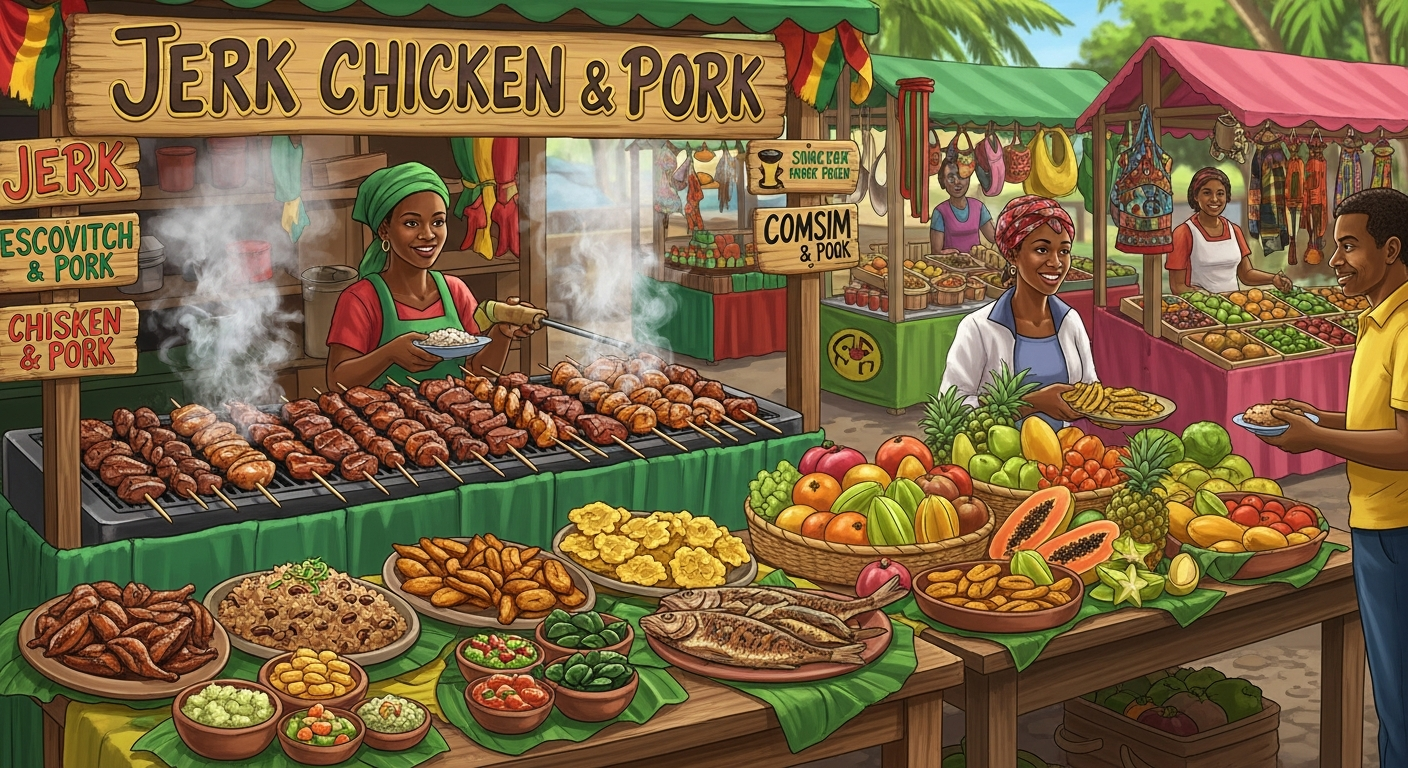
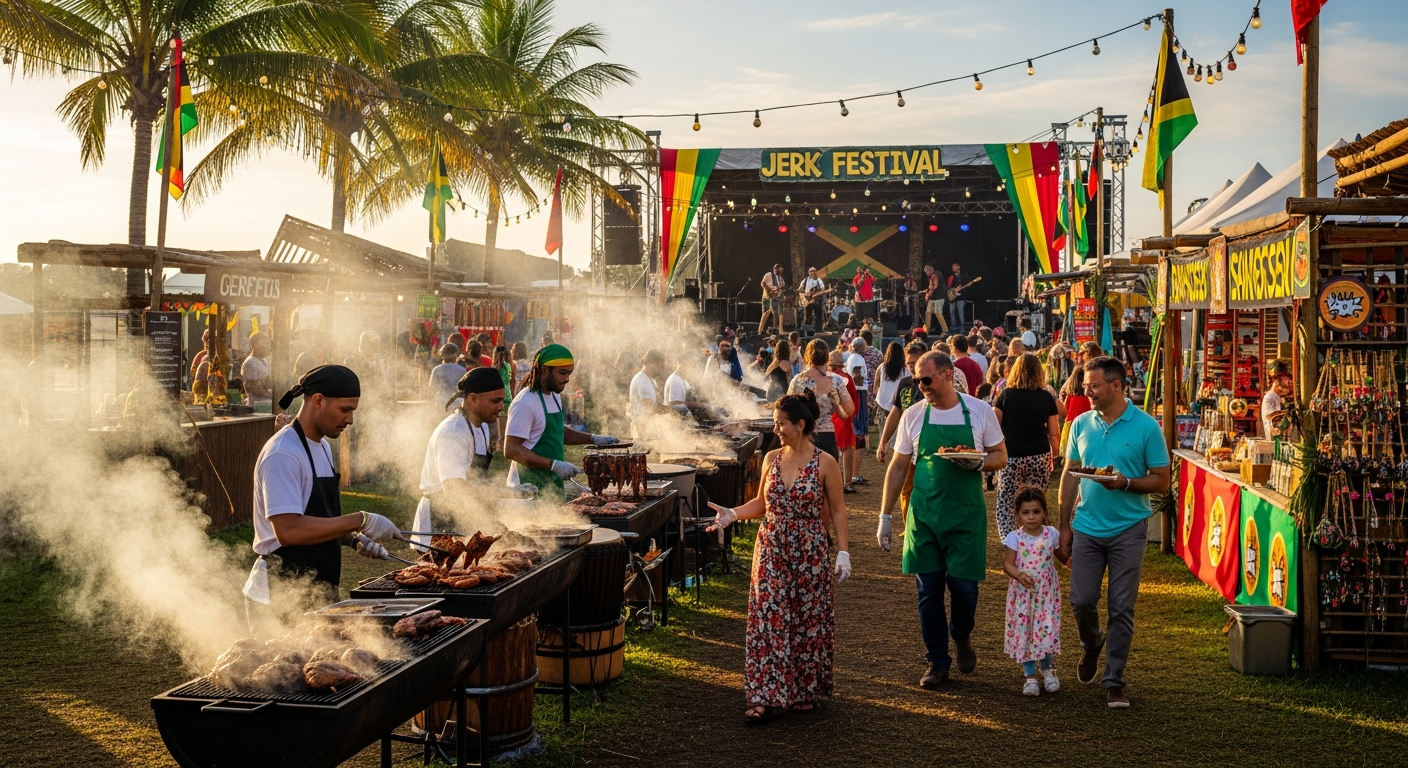
Across Jamaica, jerk pits serve as informal community centers. In neighborhoods throughout Kingston, Montego Bay, Ocho Rios, and smaller towns, the local jerk pit is where people come together after work, on weekends, and during celebrations. It is a democratic space where people from all walks of life share a common love of good food.
The social function of the jerk pit is rooted in the cooking process itself. Jerk is slow food by nature. Chicken takes 60 to 90 minutes over the coals, and pork can take even longer. This creates natural waiting time, and in Jamaica, waiting time is socializing time. Customers gather around the pit, watching the pit master work, chatting with friends and strangers alike, and enjoying the anticipation of the meal to come.
Many jerk pits also serve as informal music venues. A sound system playing reggae, dancehall, or old-school ska is standard equipment at most Jamaican jerk stands. On weekend nights, a busy jerk pit can feel like a party, with music, laughter, and the irresistible smell of smoking meat creating an atmosphere of celebration.
The jerk pit also functions as a kind of neighborhood news exchange. In a culture that values oral communication and personal relationships, the jerk stand is where you learn what is happening in your community, who is doing what, and what events are coming up. It is the Jamaican equivalent of the village square or the corner barbershop.
The Art and Craft of the Pit Master
At the heart of every jerk pit is the pit master, a figure who commands respect in Jamaican culture. The pit master is part cook, part chemist, part entertainer, and part community leader. Their skill lies not just in preparing the marinade or tending the fire but in understanding the complex interplay of heat, smoke, time, and seasoning that produces perfect jerk.
Becoming a pit master is typically a process of apprenticeship. Young cooks learn by watching and assisting experienced pit masters, gradually taking on more responsibility as their skills develop. The knowledge passed down in this way includes not just recipes and techniques but the cultural traditions and stories that give jerk its meaning.
Many pit masters have their own signature marinade recipes, closely guarded formulas that distinguish their jerk from that of their competitors. These recipes are a source of pride and identity, and debates about which pit master makes the best jerk are a staple of Jamaican conversation.
The best pit masters understand that great jerk is about more than flavor. It is about creating an experience, making customers feel welcome, and maintaining the traditions that make jerk culturally significant. They are, in a very real sense, cultural ambassadors, representing the best of Jamaican food traditions.
The Evolution of the Jerk Pit
While traditional jerk pits remain common in Jamaica, the concept has evolved over the decades. Modern jerk centers, like the famous Scotchies chain, offer a more structured dining experience while maintaining the essential elements of traditional pit cooking. These establishments typically feature multiple pits, covered seating areas, and a wider menu that includes sides and drinks.
The jerk pit concept has also traveled internationally. In cities with significant Jamaican diaspora populations, jerk restaurants and food trucks carry on the tradition, adapting to local regulations and tastes while preserving the core cooking method. London's Brixton neighborhood, New York's Crown Heights, and Toronto's Eglinton Avenue West all feature jerk establishments that serve as cultural anchors for their communities.
However, some purists worry that the evolution of the jerk pit threatens its cultural significance. As jerk becomes more commercialized and standardized, the intimate, community-focused character of the traditional pit can be lost. Balancing growth and accessibility with cultural preservation remains an ongoing challenge.
Despite these concerns, the fundamental role of the jerk pit in Jamaican culture remains strong. Whether it is a single drum grill by the side of a country road or a modern restaurant in Kingston, the jerk pit continues to bring people together around good food and shared heritage, fulfilling the same social function it has served for generations.