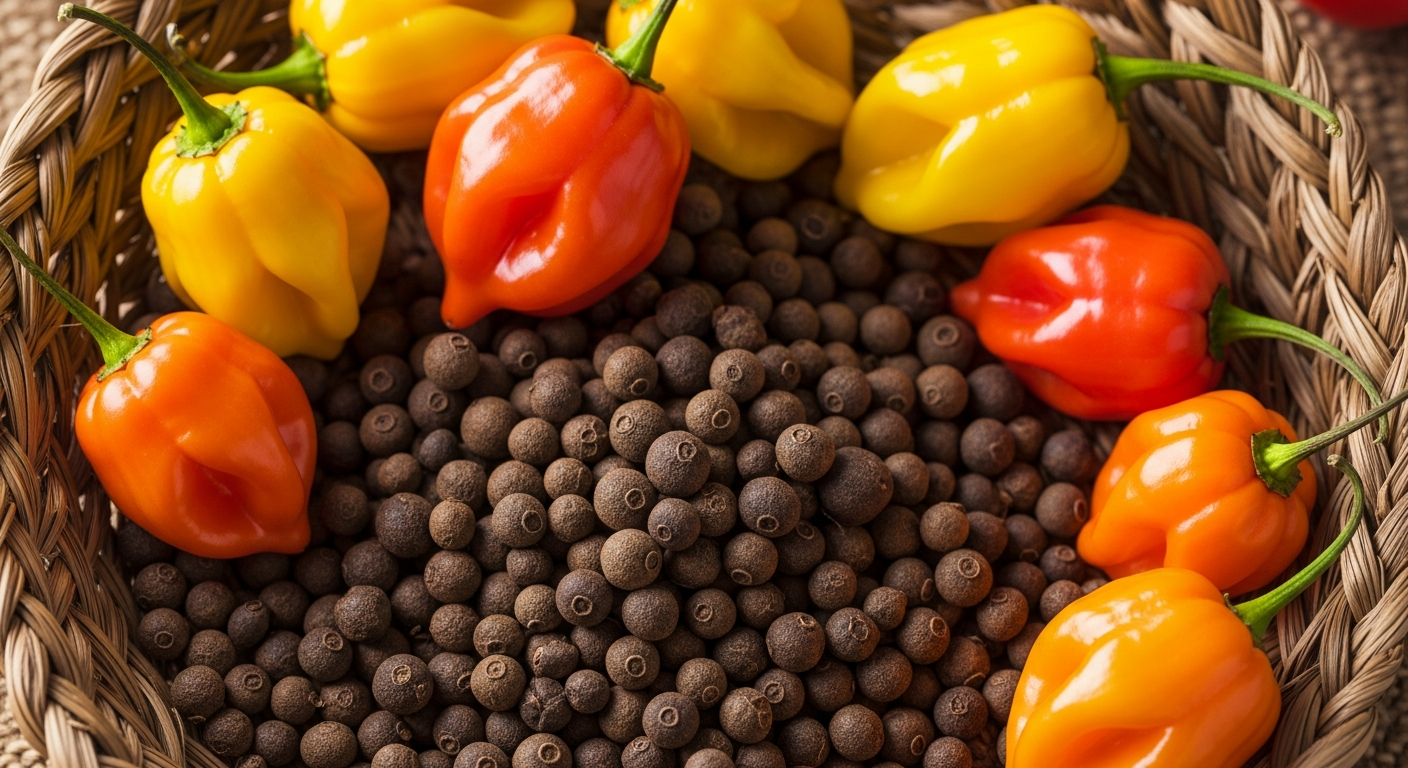
The Two Pillars of Jerk Flavor
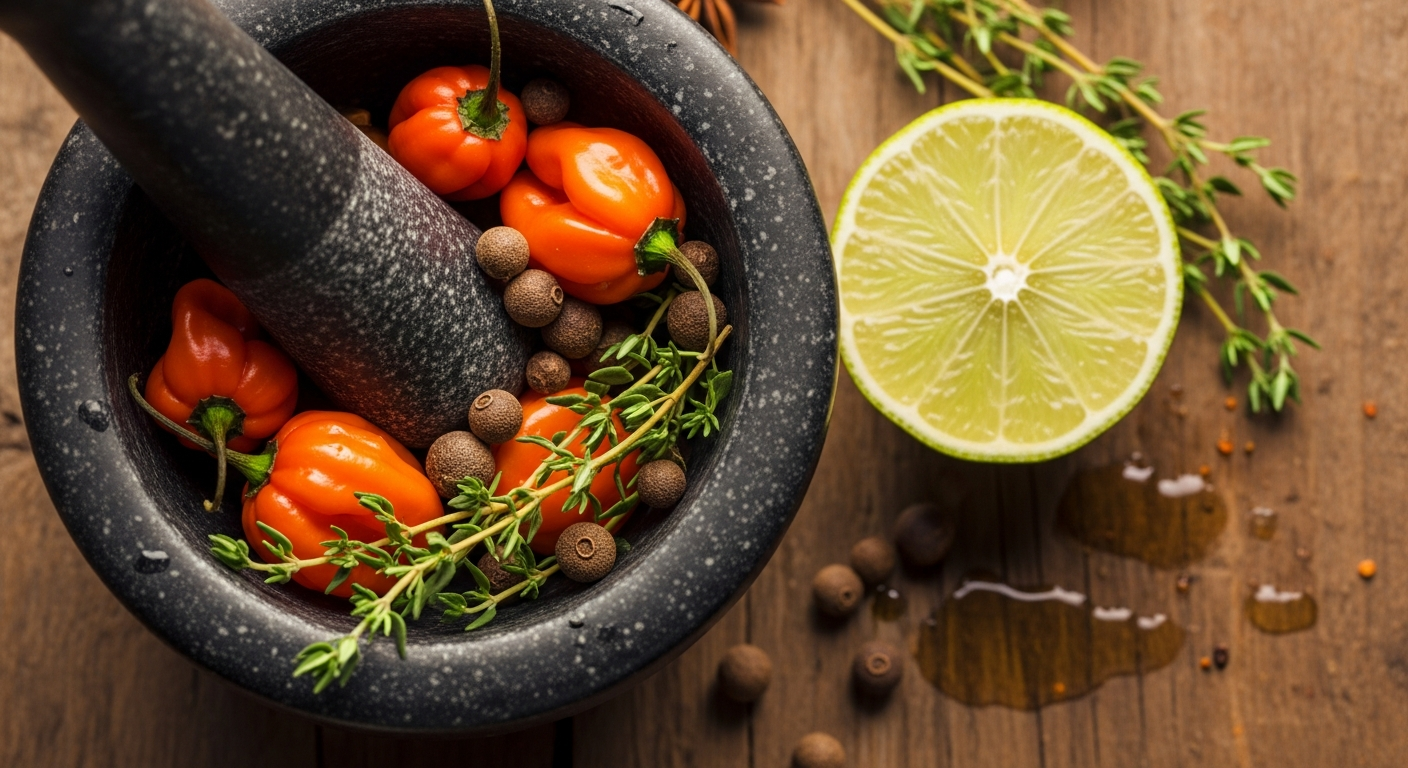
If jerk cooking had a DNA, its double helix would be allspice and scotch bonnet pepper. These two ingredients are the non-negotiable foundation of authentic jerk, the elements without which the dish simply cannot exist in its true form. While jerk marinades may contain a dozen or more ingredients, it is the interplay between the warm, aromatic complexity of allspice and the fierce, fruity heat of scotch bonnet that creates the flavor profile recognized as jerk around the world.
Understanding these two ingredients — their botanical origins, their historical significance, their chemical properties, and their cultural meaning — is essential for anyone who wants to go beyond simply following a recipe and truly comprehend what makes jerk cooking one of the great culinary traditions of the Americas.
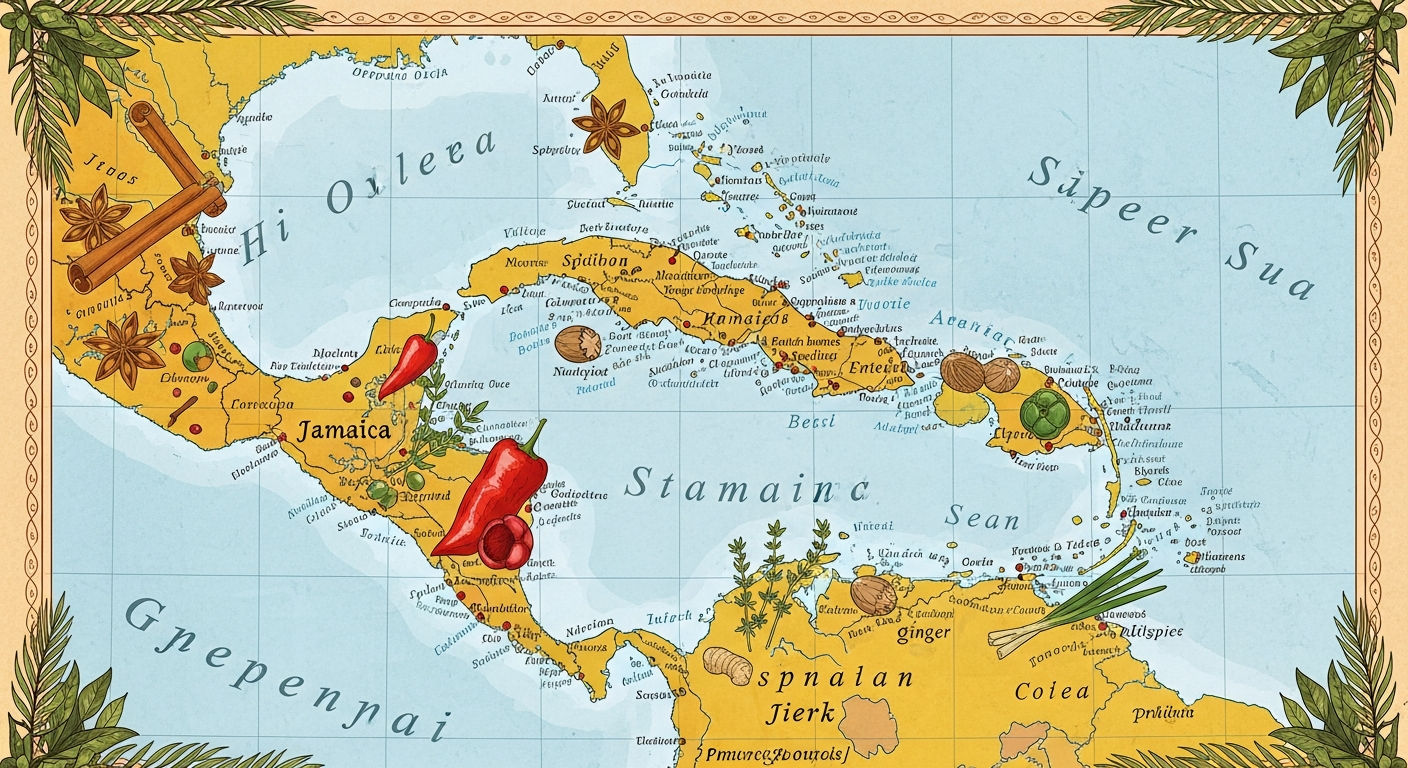
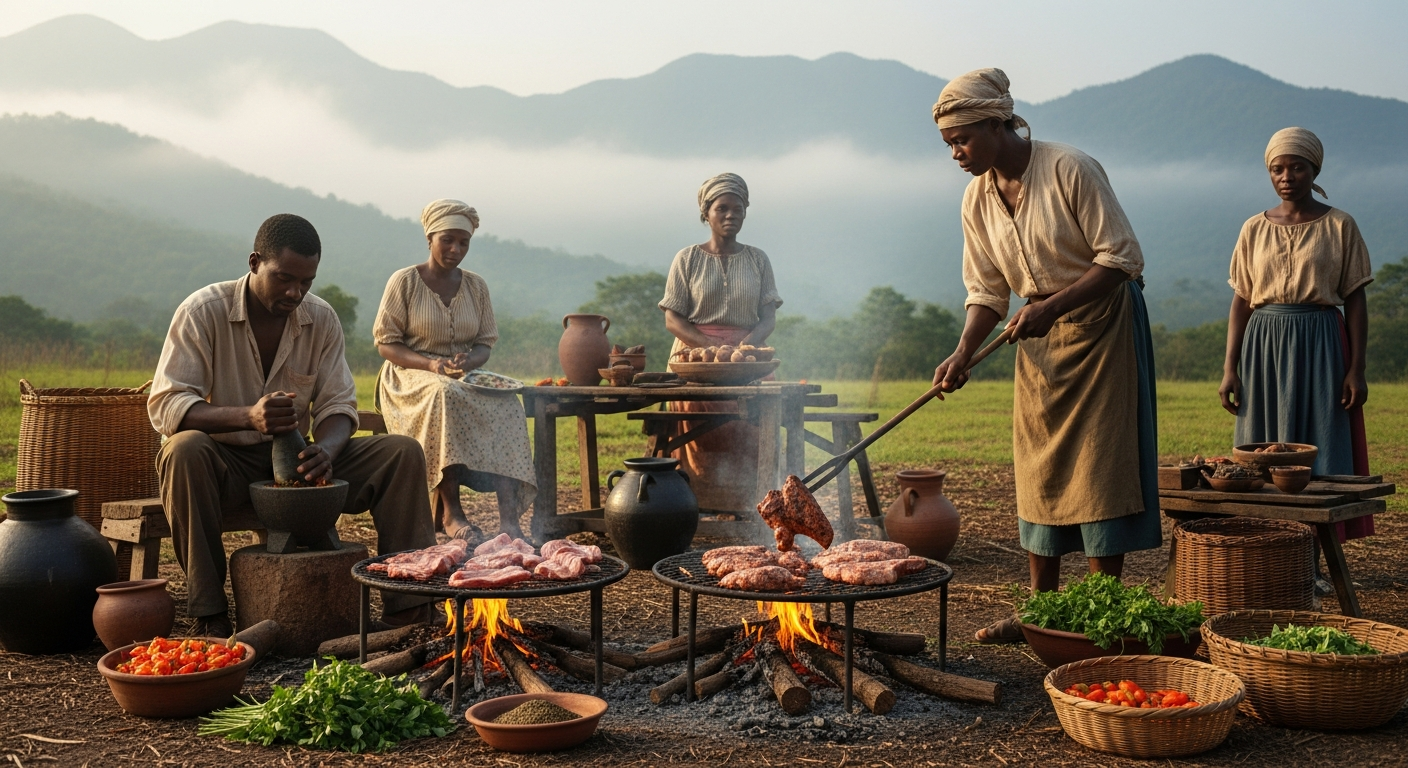
Both allspice and scotch bonnet peppers are native to the Caribbean and Central American region, which means that jerk cooking is a true expression of terroir, a dish that could only have been born in this specific place. The Maroons who created jerk did not need to import exotic spices. They worked with what the land provided, and the land provided two of the most remarkable flavor ingredients in the culinary world.
Allspice: Jamaica's Gift to World Cuisine
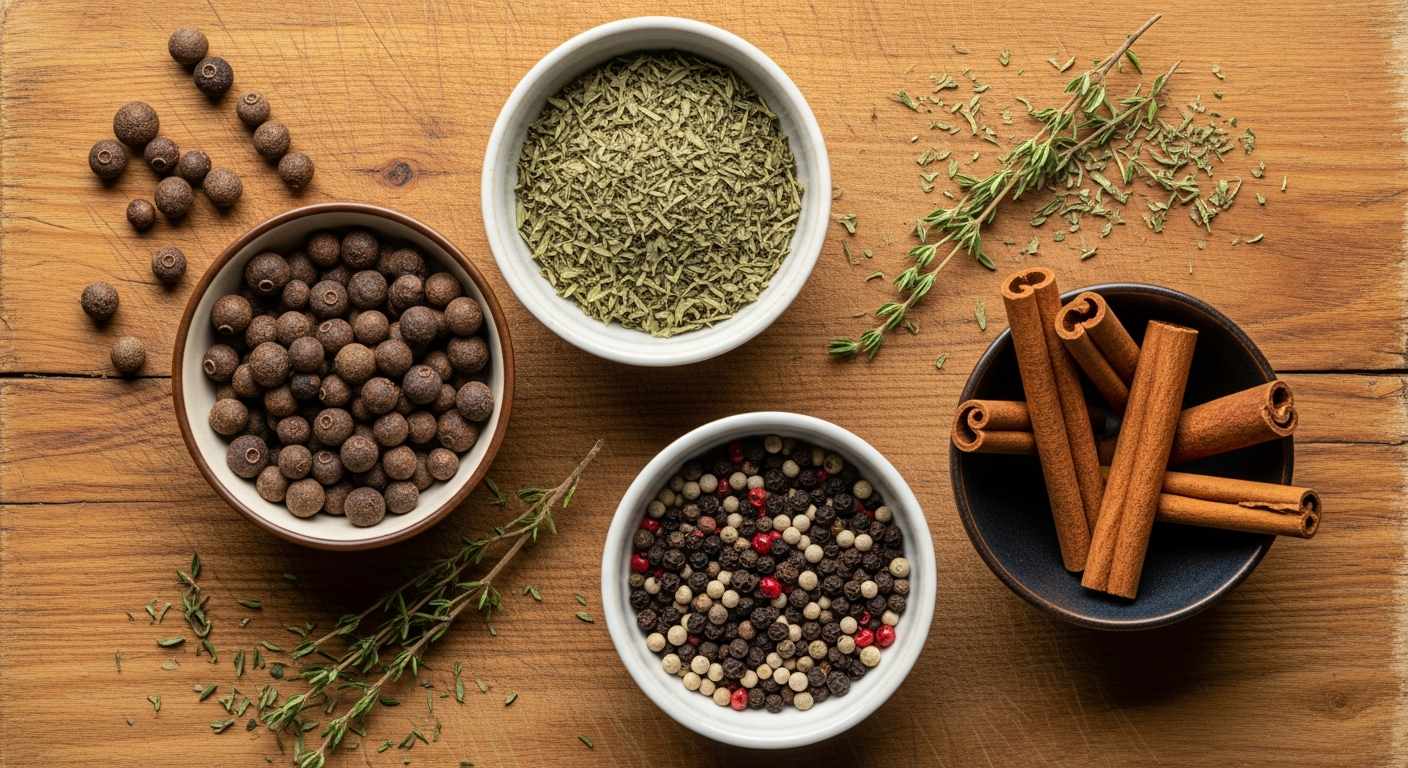
Allspice, known botanically as Pimenta dioica and locally as pimento, is one of the most important spices to emerge from the New World. The dried berries of the pimento tree produce an aroma and flavor that European colonizers compared to a combination of cinnamon, nutmeg, and cloves — hence the English name "allspice," suggesting it contained the essence of all spices in one.
The pimento tree is native to Jamaica, and the island remains the world's primary producer of allspice to this day. The trees grow throughout Jamaica's hills and mountains, reaching heights of 30 to 40 feet and producing clusters of small, dark brown berries that are harvested when green and dried in the sun. The tree's significance to Jamaican culture extends far beyond its use as a spice.
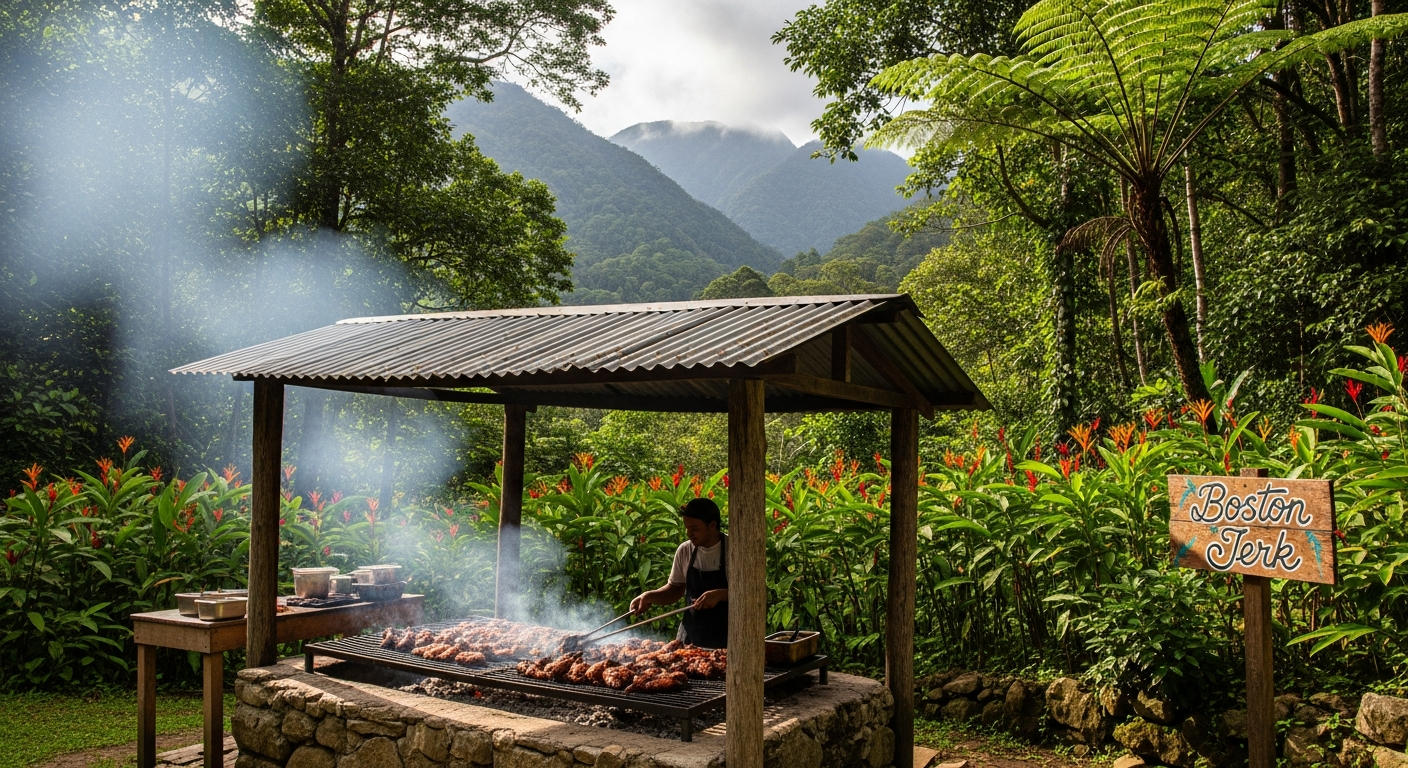
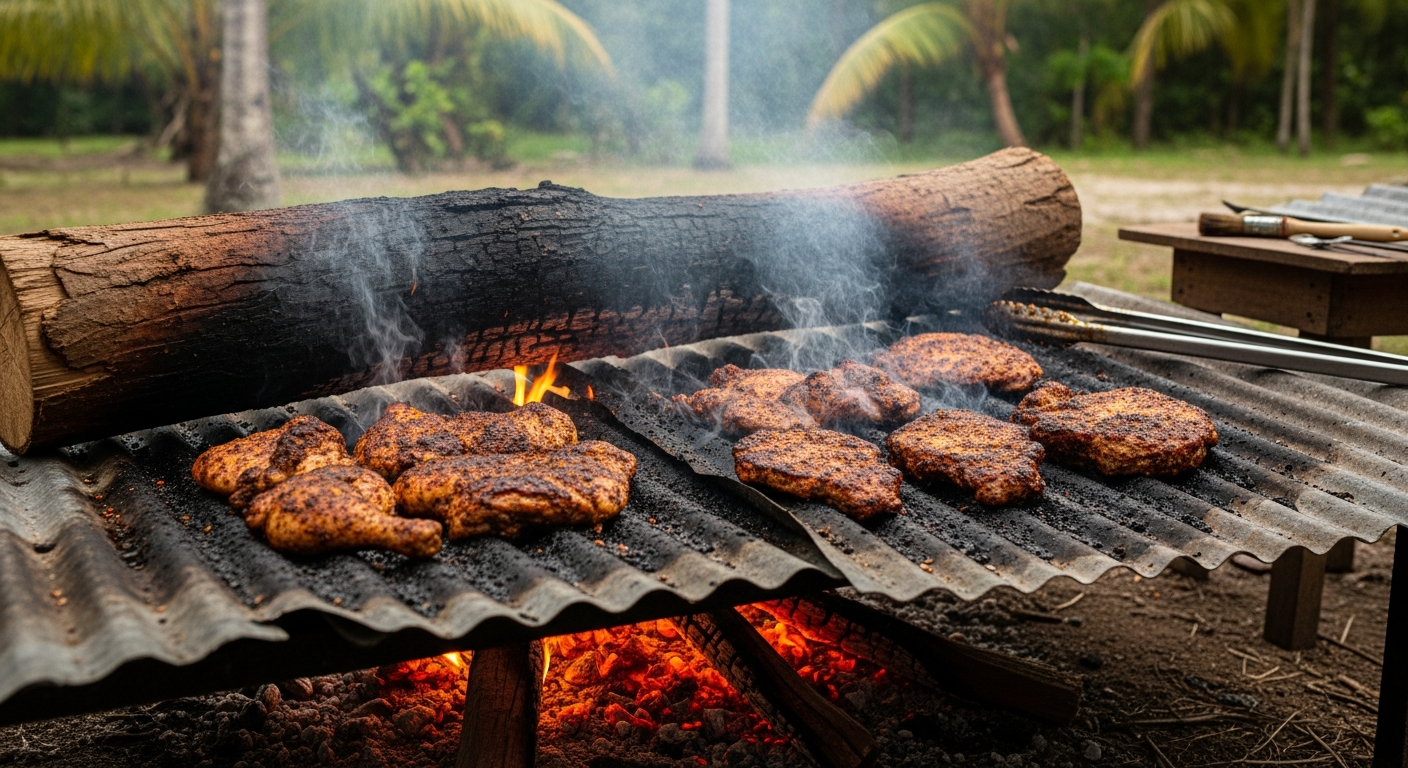
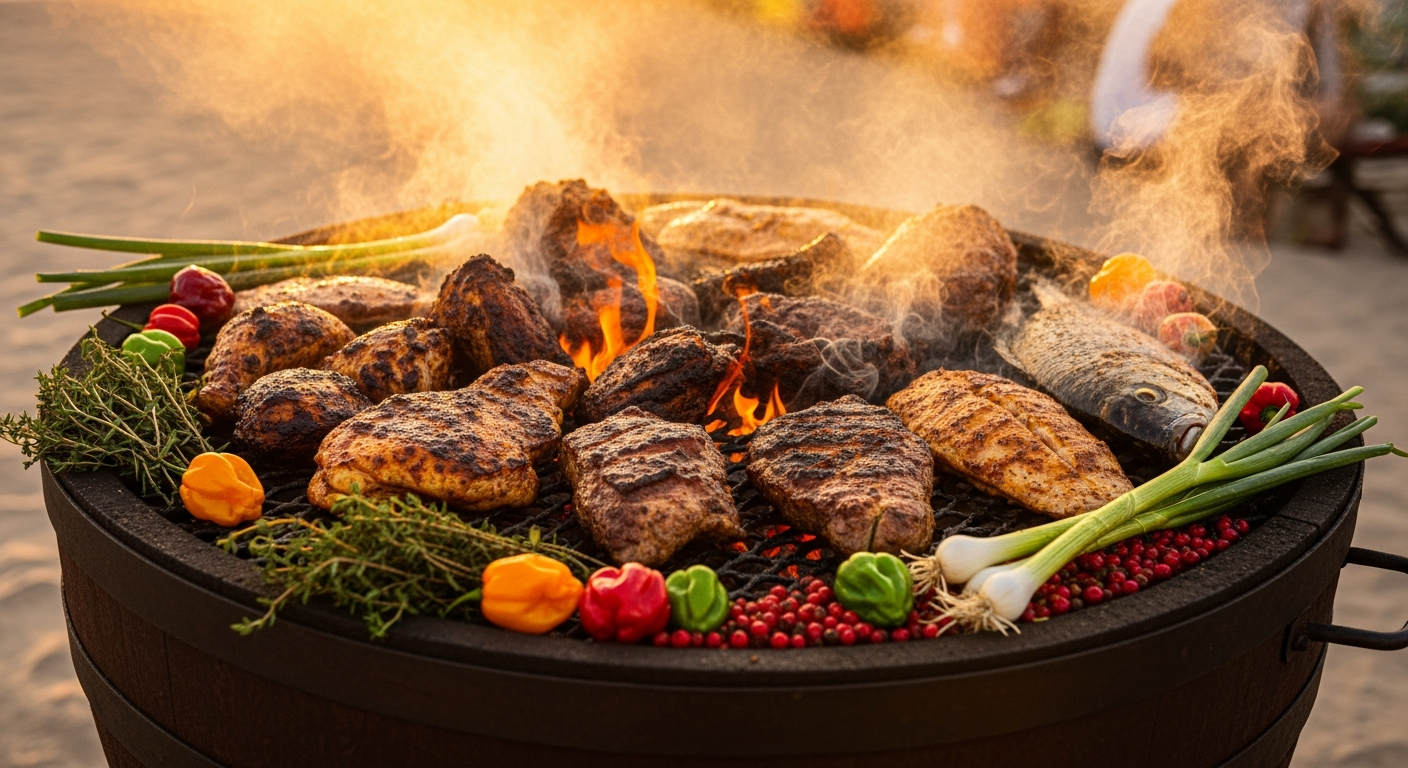
In jerk cooking, allspice appears in two forms. The dried berries are ground into the marinade, providing their characteristic warm, sweet, peppery flavor. But equally important is the wood of the pimento tree itself, which is used as the smoking fuel in traditional jerk pits. When pimento wood burns, it releases the same essential oils found in the berries — primarily eugenol, caryophyllene, and methyl eugenol — infusing the meat with aromatic smoke that is chemically related to the spice in the marinade.
This dual contribution of allspice — in both the marinade and the smoke — is what makes jerk flavor so distinctive and so difficult to replicate outside of the traditional cooking method. The allspice in the marinade seasons the meat from the inside, while the pimento wood smoke seasons it from the outside, creating layers of related but distinct flavors that merge during the long, slow cooking process.
The chemical compounds in allspice also serve a practical purpose. Eugenol, the primary essential oil in allspice, has well-documented antimicrobial properties. The Maroons, who developed jerk partly as a preservation technique, may not have understood the chemistry, but they observed that meat seasoned with pimento and smoked over pimento wood lasted longer without spoiling. This practical benefit was as important as the flavor in the early development of jerk.
Scotch Bonnet: The Fire of the Caribbean
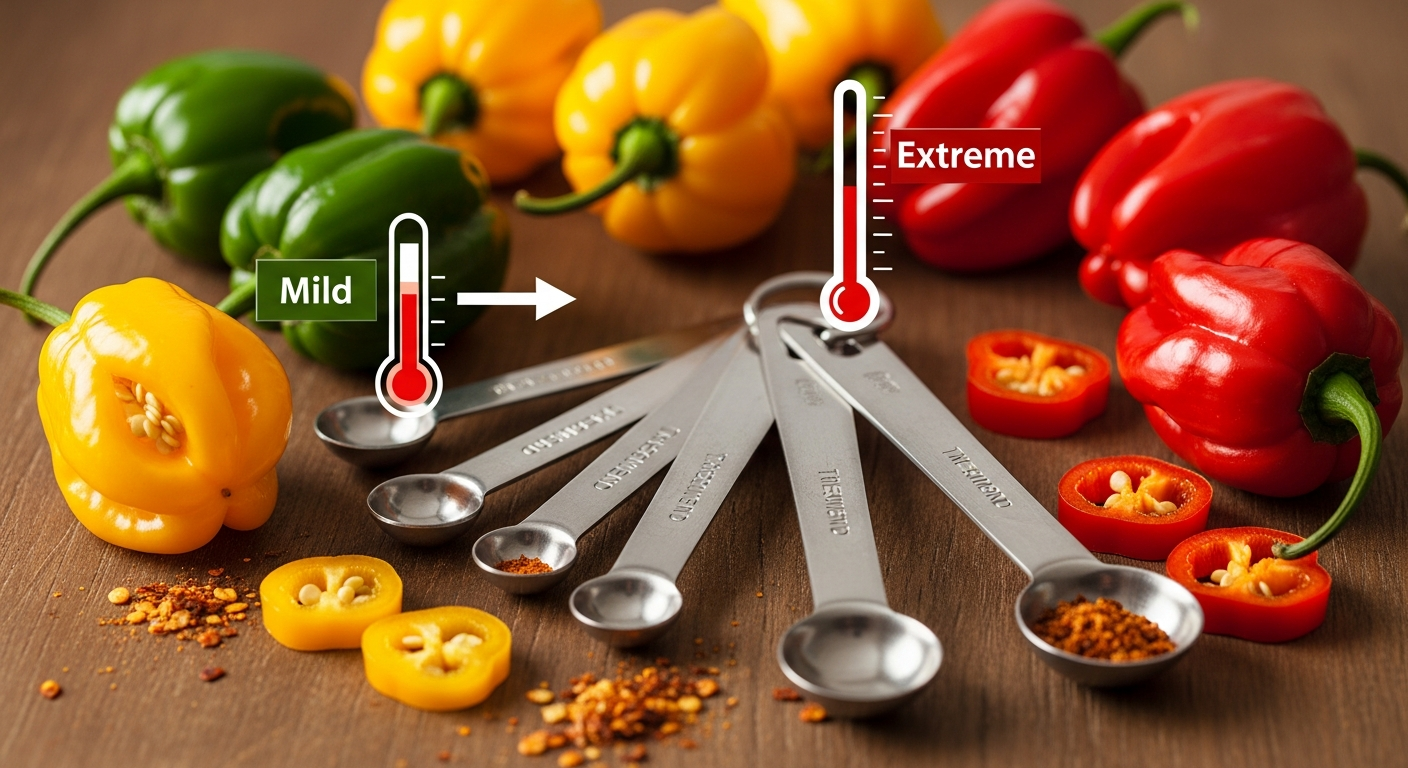
The scotch bonnet pepper, named for its resemblance to a traditional Scottish tam o'shanter bonnet, is the defining heat source of Caribbean cuisine in general and jerk cooking in particular. Rating between 100,000 and 350,000 Scoville heat units, it is one of the hottest commonly used culinary peppers in the world, but its contribution to jerk goes far beyond mere heat.
What distinguishes the scotch bonnet from other hot peppers is its flavor profile. Beneath the intense capsaicin heat lies a fruity, slightly sweet, almost tropical character that is uniquely suited to Caribbean cooking. This flavor dimension is lost when scotch bonnets are replaced with other hot peppers. A habanero, which is closely related, comes close but is not identical. A jalapeno or serrano pepper will provide heat but none of the fruity complexity that makes scotch bonnet essential to authentic jerk.
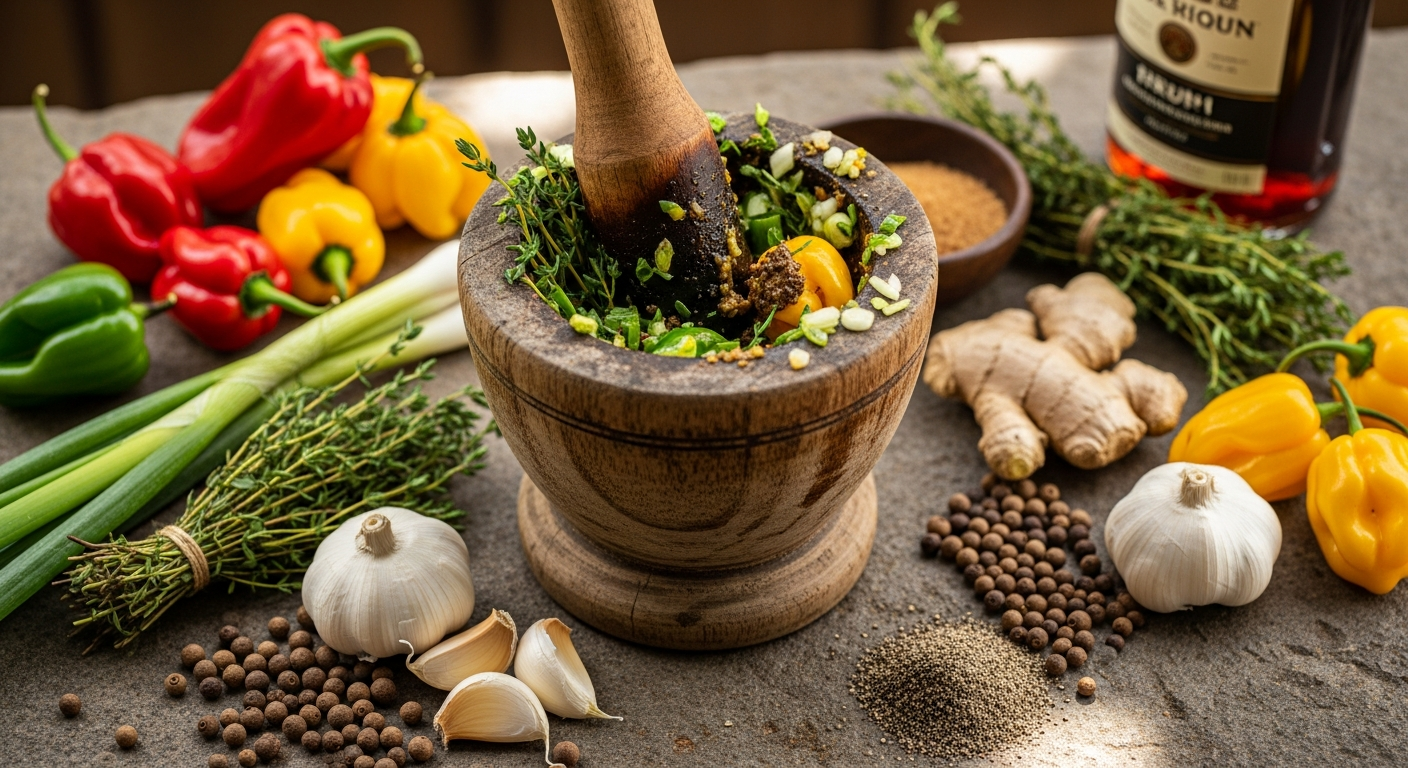
In traditional jerk marinade preparation, scotch bonnet peppers are used whole, including the seeds and internal membranes where the highest concentration of capsaicin resides. The peppers are chopped or blended into the marinade paste, distributing their heat and flavor throughout. The amount used varies by pit master and by intended heat level, but a truly traditional jerk uses enough scotch bonnet to produce significant heat.
The scotch bonnet's role in jerk extends beyond flavor to culture. In Jamaica, tolerance for scotch bonnet heat is sometimes viewed as a point of pride, a mark of authenticity. Ordering your jerk "extra hot" at a roadside stand is a way of signaling your connection to the tradition. Conversely, the availability of milder jerk options reflects the adaptation of the cuisine to international palates.
Scotch bonnet peppers also have a long history of medicinal use in the Caribbean. They are used in traditional remedies for colds, digestive problems, and pain relief. The capsaicin in scotch bonnets stimulates endorphin production, which may partly explain the addictive quality of spicy jerk — the heat literally triggers pleasure responses in the brain.
The Marriage of Heat and Warmth
The genius of jerk's flavor profile lies in the interaction between allspice and scotch bonnet. These two ingredients represent complementary flavor principles: the warm, sweet, aromatic qualities of allspice and the sharp, fruity, fiery qualities of scotch bonnet. Together, they create a taste experience that is greater than the sum of its parts.
From a flavor chemistry perspective, the compounds in allspice moderate the perception of capsaicin heat from the scotch bonnet. Eugenol has a mild numbing effect that slightly tempers the burning sensation while allowing the fruity and aromatic qualities of both ingredients to come through. This is why jerk can be intensely spicy yet still complex and nuanced in flavor, unlike preparations that are simply hot.
The balance between allspice and scotch bonnet is where individual pit masters express their artistry. Some favor a heavier hand with the allspice, creating a warmer, more aromatic jerk. Others emphasize the scotch bonnet, producing a fiercer, more assertively spicy result. The best jerk achieves a harmony between the two where neither dominates, and each enhances the other.
Growing and Sourcing These Essential Ingredients
For cooks outside the Caribbean, sourcing authentic allspice and scotch bonnet peppers can be a challenge. Whole allspice berries, freshly ground, produce far superior results to pre-ground allspice, which loses its volatile oils quickly. Look for Jamaican allspice specifically, as the Jamaican varieties are generally considered the most aromatic and flavorful.
Fresh scotch bonnet peppers are increasingly available in international markets, particularly in areas with Caribbean diaspora communities. When fresh peppers are not available, frozen scotch bonnets retain much of their flavor and heat. Dried scotch bonnets and scotch bonnet hot sauces can serve as substitutes in a pinch, though they lack the fresh, fruity character of the raw pepper.
For the adventurous cook with outdoor space, both allspice and scotch bonnet peppers can be grown in warm climates or in greenhouses. Scotch bonnet plants are productive and relatively easy to grow, producing abundant peppers throughout the warm season. Allspice trees require more space and patience but can eventually provide both berries and branches for smoking.
Whether you grow your own or source them from a specialty market, using authentic allspice and scotch bonnet peppers is the single most important step you can take toward achieving genuine jerk flavor. These two ingredients are not interchangeable with substitutes. They are the soul of jerk cooking, the essential elements that connect every modern preparation to the centuries-old tradition created by the Maroons in Jamaica's mountains.