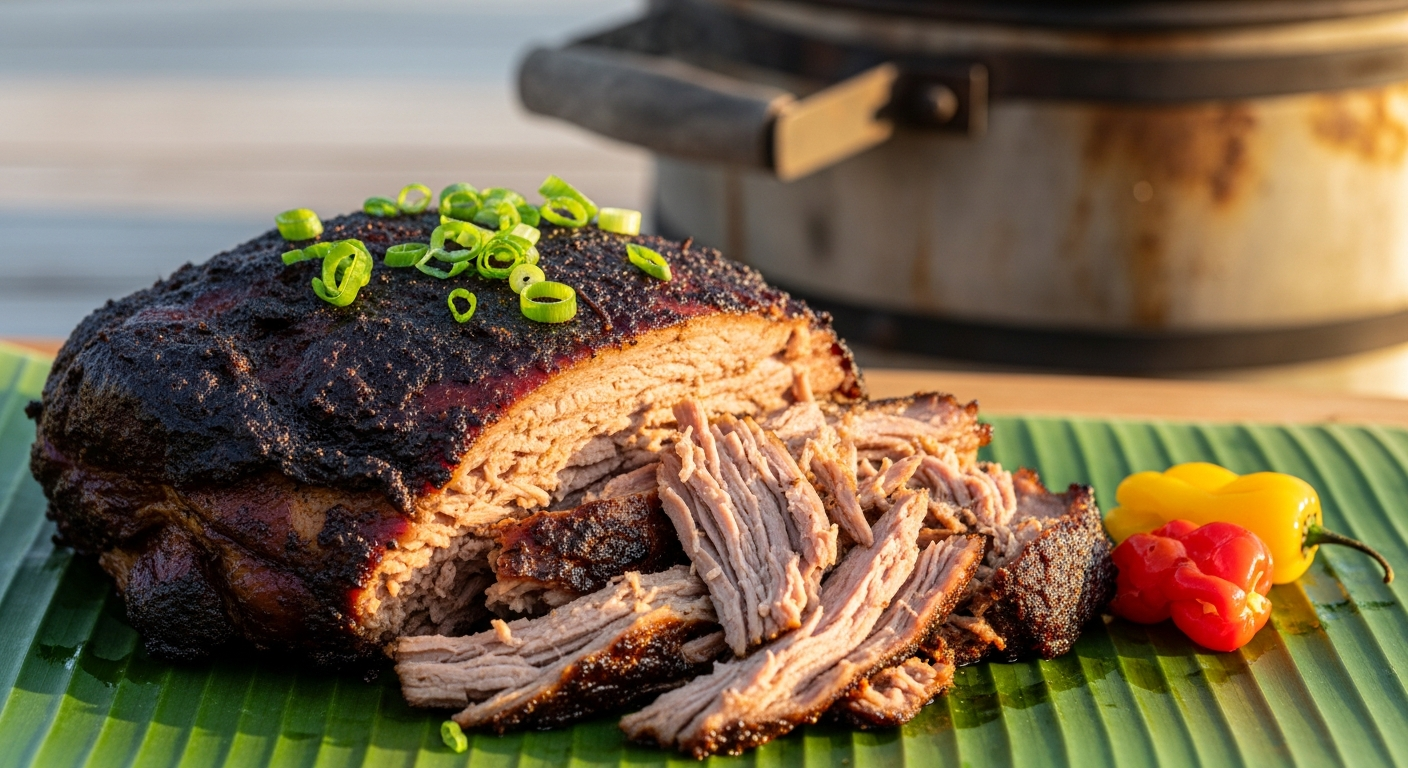
Best Temperature for Jerk Pork: Internal Temperature Guide for Every Cut
Jerk pork internal temperature targets vary dramatically by cut — shoulder needs 195–205°F for pulling (far above the 145°F safe minimum), while chops and tenderloin should be pulled at exactly 145°F. Using the wrong temperature for the cut produces either dry, overcooked pork or tough, under-rendered pork. This guide gives the exact targets.
USDA Safe Minimum vs Ideal Target
The USDA safe minimum internal temperature for all whole-muscle pork is 145°F (63°C) followed by a 3-minute rest. At 145°F, pork is safe from foodborne pathogens. However, for many cuts of jerk pork, 145°F is the wrong target for optimal eating quality. Pork shoulder at 145°F is safe but dense and impossible to pull. The ideal pulling temperature is 195–205°F — significantly above the safety threshold. The extended cooking from 145°F to 195°F is about texture, not safety. The complete jerk pork guide and cooking methods guide cover technique for each cut.
Temperature Guide by Cut
| Cut | Target Internal Temp | Rest Time | Why This Temperature |
|---|---|---|---|
| Pork Shoulder (pulling) | 195–205°F | 30–60 minutes | Collagen converts to gelatin for pulling |
| Pork Shoulder (slicing) | 165–175°F | 15 minutes | Sliceable but not yet pulling |
| Bone-In Pork Chop | 145°F | 3 minutes | USDA safe minimum — juiciest |
| Pork Tenderloin | 145°F | 5 minutes | Very lean — dries quickly above 155°F |
| Pork Ribs | 195–203°F | 10 minutes | Tender, fall-off-bone (or use bend test) |
| Pork Belly | 165–175°F | 10 minutes | Fat rendered, meat tender but not dry |
Why Shoulder Needs to Go So High
Pork shoulder is approximately 25% collagen and connective tissue by mass. Collagen is a tough, chewy protein that is responsible for the shoulder's difficulty to chew when cooked to the safe minimum of 145°F. Above approximately 165°F, collagen begins converting to gelatin — the smooth, slippery protein that makes braised short ribs and pulled pork silky and moist. By 195°F, enough collagen has converted that the muscle fibers separate easily with minimal force. By 205°F, the conversion is nearly complete and the meat pulls apart with two forks or bare hands. Below 185°F, the shoulder is technically safe but will be tough and unappealing regardless of marinade quality. Use a leave-in probe thermometer for the long shoulder cook to track this progress without opening the grill repeatedly.
Chops and Tenderloin: Why Lower Is Better
The lean cuts — chops and tenderloin — have virtually no collagen. Extended cooking past 145°F produces no textural benefit and only increases moisture loss from the muscle fibers. Pork chop at 155°F is noticeably drier than at 145°F. Tenderloin at 160°F is significantly drier. Pull these cuts at 145°F and rest immediately to allow juices to redistribute. A slight pink center at 145°F in chops and tenderloin is safe (per USDA 2011 guidelines) and indicates correct doneness. See the chops guide and tenderloin guide for technique details.
Frequently Asked Questions
Frequently Asked Questions
What temperature is jerk pork done?
Can I eat pork at 145°F if it looks pink?
How do I know when jerk ribs are done without a thermometer?
What happens if I cook jerk pork shoulder to only 165°F?
Does the thermometer go in the thickest part or near the bone?
Editorial Selection
Recommended Products
Leave-In Probe Thermometer
Essential for ShoulderBest for: Long low-and-slow pork cooks
Essential for jerk pork shoulder — monitors the long cook without opening the grill.
Why we recommend it: A 10-hour pork shoulder cook needs continuous monitoring. A leave-in probe thermometer alerts you when the target temperature is reached without you having to check repeatedly.
Affiliate link coming soonEditorial note: These are independent recommendations based on quality and usefulness for jerk cooking. We may earn a small commission if you purchase through our links — at no extra cost to you. See our affiliate disclosure for full details.
Free Newsletter
Get Authentic Jerk Recipes Delivered
Authentic Jamaican recipes, cooking tips, and new guides delivered to your inbox. No spam — unsubscribe any time.
No spam. Unsubscribe anytime.
Complete Guide
Jamaican Jerk Pork: Complete Guide
Everything you need to know about this topic in one comprehensive guide.
Read the complete guide →Continue Learning
Authority Guides
Buying Guides
Written by
Jerk Cuisine Specialist
Marcus Thompson has spent over a decade studying Jamaican culinary traditions, from the jerk pits of Boston Bay to home kitchens across the Caribbean diaspora.
View full bio