Jerk cooking is one of the oldest continuously practiced culinary traditions in the Americas. It did not emerge from a restaurant kitchen or a recipe book. It emerged from survival, resistance, and the ingenuity of people who built a free society in an island that colonial powers were determined to control.
To understand jerk — not just how to cook it, but what it means — you need to understand the Maroons of Jamaica, the specific geography that shaped their culture, and the two ingredients that tie everything together across four centuries of history.
⚡ Quick Facts — Jamaican Jerk History
🇯🇲 Why This Guide Matters
Understanding where jerk cooking comes from changes how you cook it. When you know that jerk was developed by communities fighting for freedom in Jamaica's mountains, using specific local ingredients to survive and preserve food over long patrols — you understand why the combination of scotch bonnet and allspice is not just a flavour preference. It is a cultural fingerprint. Preserving the authentic ingredients is preserving the tradition itself.
The True Origins of Jerk Cooking
The story of jerk begins not with chicken, which is the most iconic modern jerk protein, but with wild boar — the feral pigs that proliferated in Jamaica after Spanish colonizers arrived in 1494 and introduced domestic pigs that subsequently escaped into the mountainous interior.
When the Spanish colonized Jamaica, they brought enslaved Africans with them. Some of these enslaved people escaped — particularly after 1655, when British forces invaded and defeated the Spanish. As the Spanish fled, they freed or abandoned their enslaved workers. These free Africans fled into the Blue Mountains and the limestone karst region now known as Cockpit Country in the island's interior.
These communities — which would become known as the Maroons — needed to feed themselves from whatever the land provided. Wild boar was plentiful. So were the native allspice (pimento) trees that grew abundantly throughout the Jamaican highlands. And so were the scotch bonnet peppers that had spread across the Caribbean from their origin in Central and South America.
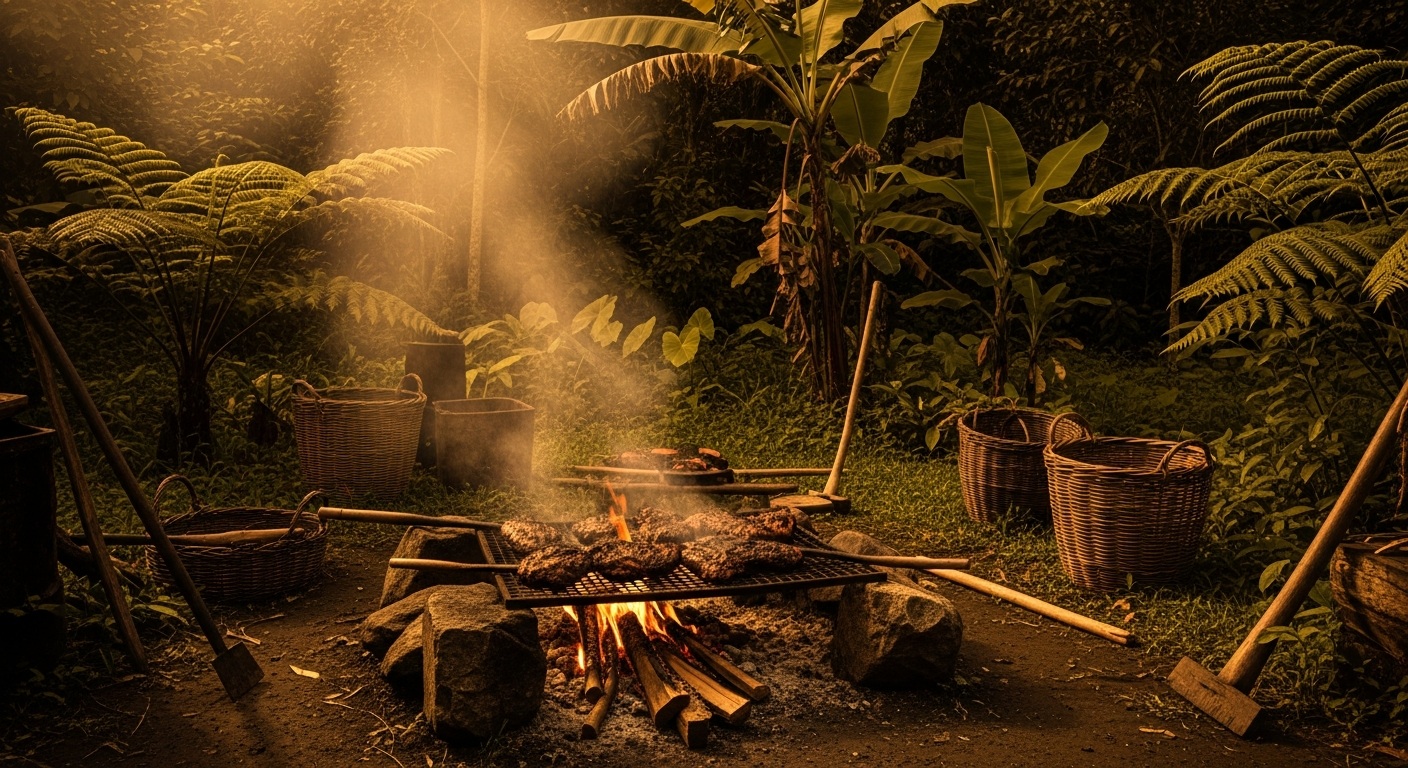
The Maroons developed a method of preserving and cooking this wild pork that drew on African traditions of heavily spicing and smoking meat for preservation, combined with the specific local ingredients available to them. They dug pits, lined them with stones, filled them with pimento wood fires, placed the heavily-spiced meat inside, and covered the pit to trap smoke and heat. This was not just cooking — it was preservation that allowed them to carry cooked meat on long hunts and patrols through the mountains without spoilage.
This is the origin of jerk cooking.
The Maroons: The People Who Created Jerk
The Maroons of Jamaica are one of the most remarkable communities in New World history. They maintained their freedom against the full military might of the British Empire for over 80 years, using guerrilla warfare tactics that exploited their intimate knowledge of Jamaica's interior terrain.
The Two Main Maroon Groups
There were two primary Maroon communities in Jamaica:
- The Leeward Maroons — led by the legendary Cudjoe (also spelled Kojo), based in Cockpit Country in the western interior of the island. Their impenetrable limestone terrain and guerrilla tactics made them effectively impossible to defeat militarily.
- The Windward Maroons — led by Nanny (now a Jamaican national hero, the only woman among them), based in the Blue Mountains in the east, including the area now known as Moore Town. Nanny is credited in Jamaican tradition with extraordinary military and spiritual leadership.
The Peace Treaties of 1739
In 1739, the British signed peace treaties with both groups — acknowledging their freedom and granting them land in exchange for an end to hostilities and agreement to return newly escaped enslaved people (a deeply contested provision that has been debated by historians and Jamaican communities ever since).
The Maroon communities maintained their distinct cultural traditions — including food, language, spiritual practices, and forms of governance — through these treaties and beyond. Their descendants still live in recognized Maroon communities in Jamaica today, particularly Moore Town (Windward) and Accompong (Leeward). These communities maintain connection to the jerk cooking tradition as an aspect of their cultural heritage.
The Maroon Diet and Food Preservation
Maroon communities needed food systems that could sustain people during extended military operations in difficult terrain, where lighting large fires was dangerous (visible to colonial troops) and carrying large quantities of food was impractical. Heavily spiced, smoked, preserved meat met all of these needs:
- The salt and acid in the marinade preserved the meat
- The heavy spicing masked spoilage odors and had mild antimicrobial effects
- The pimento wood smoke created a low-visibility, low-smell fire
- The cooked meat was stable for days in the tropical climate
The technique worked so well that it persisted long after military necessity was removed. By the 18th and 19th centuries, jerk cooking had spread from Maroon communities to broader Jamaican culture.
Related: Maroon history and jerk cooking, jerk cooking, Jamaican identity, and resistance, jerk's role in Caribbean identity.
The Two Essential Ingredients and Their Origins
Allspice (Pimento)
The pimento tree (Pimenta dioica) is native to the Greater Antilles and Central America. Jamaica became — and remains — the world's primary producer of allspice. The tree grew abundantly in the Jamaican highlands where the Maroons lived, making it both an available spice and a readily available wood for cooking fires.
The use of pimento wood for cooking is uniquely Jamaican — no other culinary tradition in the world uses the allspice tree as a cooking fuel in the same way. This is why the smoke of traditional Jamaican jerk has a quality that cannot be replicated elsewhere: the wood itself is the spice, and the spice is in the wood.
Scotch Bonnet
Scotch bonnet peppers (Capsicum chinense) arrived in the Caribbean from Central and South America. Their spread throughout the islands preceded European colonization — they were cultivated by the Taíno and other indigenous Caribbean peoples. The Maroons encountered them as an existing ingredient in their new homeland and incorporated them as the heat foundation of their cooking.
The scotch bonnet's specific fruity, floral heat profile — distinct from other hot peppers — is a function of its specific genetic variety and the growing conditions of the Caribbean climate. Scotch bonnets grown in Jamaica under Jamaican conditions have a flavor profile that differs subtly from the same variety grown elsewhere.
Related: allspice and scotch bonnet in jerk cooking, history of jerk seasoning, essential jerk ingredients guide.
Boston Bay: The Birthplace of Commercial Jerk
Boston Bay is a small community on the northeastern coast of Jamaica in Portland Parish, about 10 kilometers east of Port Antonio. It sits at the intersection of the Blue Mountains and the Caribbean Sea — a location that shaped its agricultural character (the surrounding mountains provided timber and spice; the sea provided trade access).
The First Jerk Stalls
By the early 20th century, Boston Bay had developed into a center of informal jerk cooking commerce. Local vendors began selling jerk pork from roadside stalls to travelers on the coastal road. The technique was the Maroon tradition: whole pigs slow-cooked over pimento wood on open pit grills made from corrugated metal or concrete blocks.
The reputation of Boston Bay jerk spread by word of mouth — first through Portland Parish, then across the island. By the mid-20th century, Boston Bay had become a destination specifically for jerk, drawing Kingstonians willing to make the long drive to Portland for what was universally agreed to be the best jerk on the island.
The Boston Bay Style
What distinguishes Boston Bay jerk from other preparations:
- Pimento wood — the cooking fuel, not just an additive. The smoke permeates the meat from the wood burning beneath
- High volume, low-and-slow — large quantities cooked at once over maintained fires, allowing the meat to absorb smoke over 2–4 hours
- Sold by weight — chopped or hacked from larger pieces on request, by the pound, wrapped in foil
- Served with festival and rice and peas — always, at every stall, as the complete plate
- Eaten immediately — jerk is hot-from-the-pit food, not food that travels well
Related: Boston Bay: the birthplace of jerk, Jamaican jerk pit cooking techniques.
Traditional Jerk Pit Cooking
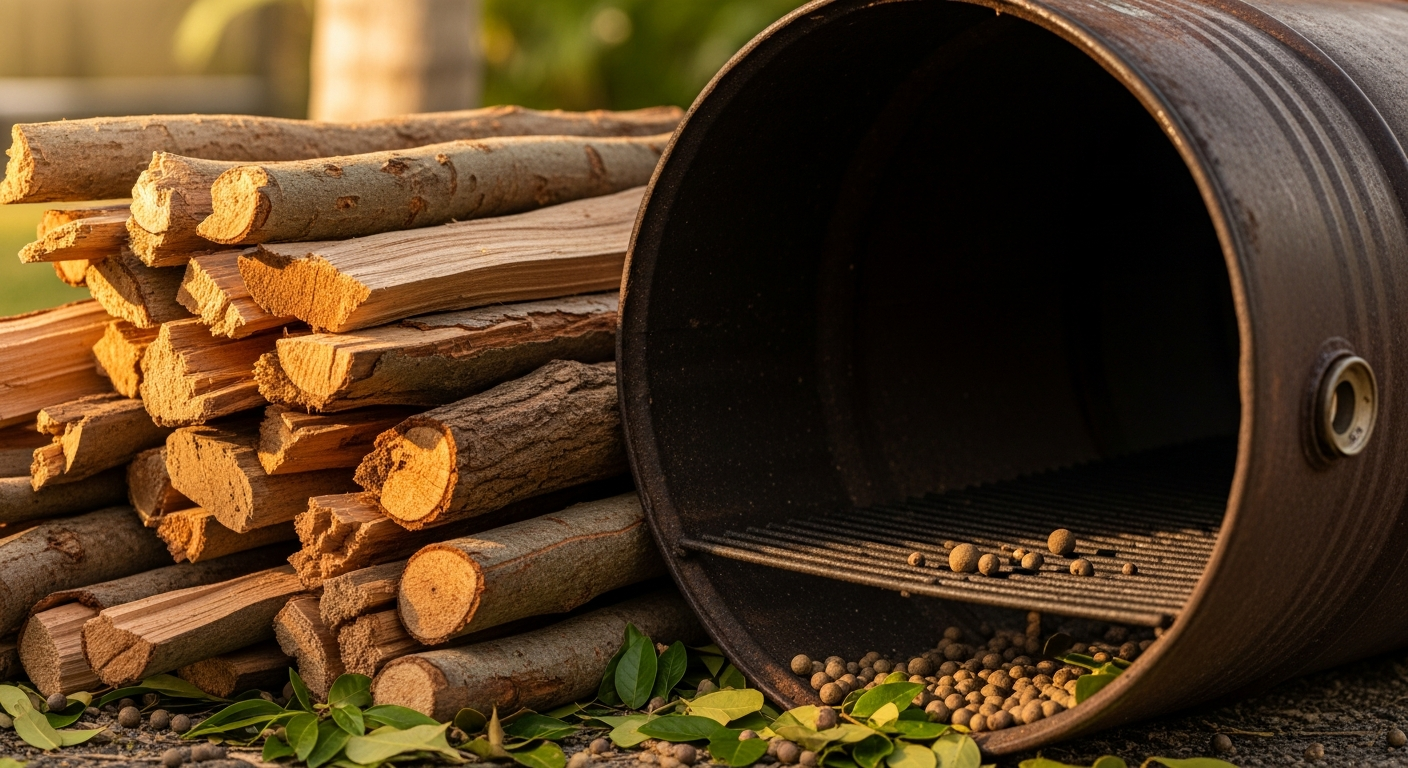
The traditional jerk pit is not a commercial smoker or a restaurant kitchen appliance — it is a constructed outdoor cooking station specific to Jamaican jerk culture.
The Classic Jerk Pit Design
A traditional Boston Bay-style jerk pit consists of:
- A shallow trench or flat surface (sometimes elevated on concrete blocks)
- Pimento wood logs as the primary fuel
- Metal grates placed over the fire, close to the wood
- Sheet metal, corrugated iron, or wooden covers placed over the meat to trap heat and smoke
- Weight (stones or additional metal) to keep the cover tight
The setup produces a specific cooking environment: the meat cooks primarily from the radiated heat of the pimento wood coals, surrounded by pimento wood smoke trapped by the cover. The temperature is typically 250–325°F. The cook time is 1.5–4 hours depending on the cut.
The Scoring and Spicing Technique
Maroon and traditional Boston Bay technique involves deep scoring of the meat — cuts made with a machete or heavy knife down to the bone — before pressing the marinade forcefully into every cut. In traditional preparations, the spicing was done at least a day in advance, sometimes two or three days before cooking, to allow maximum penetration.
How Jerk Evolved: 1650–2000
| Era | Key Developments |
|---|---|
| 1650–1739 | Maroon communities develop jerk technique from African traditions + local ingredients. Wild boar primary protein. Pit cooking with pimento wood. |
| 1739–1900 | Post-treaty, jerk spreads to broader Jamaican population. Chicken and domestic pork replace wild boar. Technique codifies regionally. |
| Early 1900s | Boston Bay develops as informal commercial jerk stall district. Roadside cooking establishes the "jerk stall" format still in use today. |
| 1950s–1970s | Jamaican independence (1962) increases national pride in cultural traditions including food. Soy sauce, ginger, and more aromatics added to marinade as access to ingredients expands. |
| 1980s | Jamaican diaspora carries jerk to UK, USA, and Canada. First Jamaican jerk restaurants outside Jamaica open in London and New York. |
| 1990s–2000s | Commercial jerk seasonings (Walkerswood, Grace) achieve international distribution. Food media coverage expands jerk's profile globally. Jerk adaptations appear on mainstream restaurant menus. |
Modern Jerk Cooking
Modern jerk cooking retains the core technique — marinate with scotch bonnet and allspice, cook with heat — but has adapted significantly in response to available ingredients, cooking equipment, and the global context in which it now exists.
What Has Changed
- Protein — chicken is now the dominant jerk protein globally, though pork remains traditional in Jamaica. Modern jerk extends to fish, shrimp, tofu, vegetables, and even lamb.
- Marinade — soy sauce, ginger, brown sugar, and citrus are modern additions (post-1900) that are now considered standard. Traditional Maroon jerk likely used salt water, citrus, and local herbs.
- Equipment — gas grills, electric ovens, air fryers, and slow cookers now cook jerk worldwide. Each produces different but legitimate results.
- Commercial products — Walkerswood Traditional Jerk Seasoning and Grace Jerk Seasoning have made jerk accessible without traditional technique knowledge.
What Has Not Changed
- Scotch bonnet as the primary heat source
- Allspice (pimento) as the aromatic backbone
- Deep scoring and heavy marinade application
- The cultural significance as Jamaican identity food
Related: Jamaican jerk: a taste of heritage, Jamaican jerk: a cultural journey.
Jerk, Culture, and Jamaican Identity
Jerk occupies a unique position in Jamaican national identity. It is simultaneously everyday food (sold from roadside stalls, eaten after church, served at family Sunday dinners) and a potent symbol of Jamaican distinctiveness and resilience.
The connection to the Maroons matters — jerk is food created by free people who refused enslavement, developed using intelligence and knowledge of their specific environment, and maintained across generations as a living tradition. In Jamaica, this origin story is understood culturally even when not explicitly stated. Eating jerk carries some of that meaning.
For the diaspora — Jamaicans living in the UK, USA, Canada, and beyond — jerk functions as cultural anchor. A jerk restaurant in the Bronx, a jerk yard in Birmingham, a jerk cookout in Toronto: these are sites of community gathering and cultural expression as much as places to eat. The food carries home with it.
Related: jerk, Jamaican identity, and resistance, jerk's role in Caribbean identity, Jamaican jerk: a cultural journey.
Jerk and Music
The connection between Jamaican food and Jamaican music is not incidental. Reggae, dancehall, and the broader continuum of Jamaican popular music developed in many of the same communities and time periods that shaped modern jerk culture.
Jerk stalls in Kingston and Portland are frequently adjacent to sound system events and outdoor dancehall parties. The social architecture of a Jamaican music event typically includes food — and that food is typically jerk. The smells, the sounds, and the gathering of community are inseparable.
Several major reggae artists have referenced jerk in their work, and the association of jerk with Jamaican pride makes it a natural cultural touchstone for music that foregrounds that pride. When Bob Marley spoke of "natural mystic" and "roots," the physical manifestation of that philosophy included the specific, uncompromised Jamaican foods that connected people to their land and history.
Related: Jamaican jerk, festival food and music.
Jerk Festivals and Events
Portland Jerk Festival (Jamaica)
Portland Parish hosts an annual Jerk Festival that draws tens of thousands of visitors to the ancestral home of Jamaican jerk cooking. The festival features jerk competitions, live music, craft vendors, and — centrally — the opportunity to eat jerk from dozens of competing stalls in the region where the tradition originated.
World Jerk Festival (Kingston)
Kingston hosts its own jerk festival, attracting both local and international participants, with jerk cooking competitions and cultural programming.
Diaspora Jerk Festivals
Large Jamaican diaspora communities host their own annual jerk events:
- Grace Foods Jerk Festival (Toronto) — one of the largest Caribbean food events in Canada
- New York Jerk Festival — held in various boroughs with large Jamaican communities
- Leeds West Indian Carnival (UK) — includes significant jerk food presence
- Notting Hill Carnival (London) — the largest Caribbean carnival in Europe; jerk is omnipresent
These festivals function as cultural events as much as food events — they are annual community anchors for diaspora Jamaicans who grew up with the food and its associations.
Related: Jamaican jerk festival food and music, jerk pit: a culinary journey, jerk pits and Jamaican culture.
How Jerk Spread Worldwide
The global spread of jerk cooking is primarily a story of the Jamaican diaspora — the movement of Jamaican people outward from the island throughout the 20th century, carrying their food culture with them.
The UK (1948–1970s)
The first major wave of Jamaican immigration to the UK came with the Windrush generation — Caribbean workers who came to Britain in response to post-war labor shortages from 1948 onward. These communities settled in Brixton (London), Handsworth (Birmingham), Chapeltown (Leeds), and other urban centers. By the 1970s, informal jerk cooking at community events and early Jamaican restaurants had established jerk in British food culture. Today, jerk chicken is mainstream in UK food — available in supermarkets, restaurant chains, and street food markets.
North America (1960s–1990s)
Jamaican immigration to the United States and Canada accelerated after the US Immigration Act of 1965 removed national-origin quotas. Communities formed in New York (particularly the Bronx and Brooklyn), Miami, Hartford, and Toronto. The 1980s saw the first wave of dedicated Jamaican restaurants in these cities, with jerk as the signature dish.
The Restaurant and Media Expansion (1990s–2010s)
The 1990s food media boom — Food Network, food magazines, early food blogs — gave jerk its first exposure to mainstream non-Caribbean American audiences. Celebrity chefs included jerk in cookbooks and television shows. By the 2000s, jerk had moved from "ethnic food" to mainstream "American food" in many markets, appearing on menus at American Applebee's-type chain restaurants and in mainstream supermarket sauce aisles.
The Present
Today, jerk chicken is recognized globally. It appears on menus in Tokyo, São Paulo, Sydney, and Paris. Commercial jerk seasoning is sold in mainstream supermarkets in 30+ countries. Food delivery apps have made Jamaican jerk restaurants accessible even in cities without significant Jamaican diaspora populations.
The challenge for the tradition is authenticity maintenance — as jerk goes global, interpretations that use generic hot sauce instead of scotch bonnet, or omit allspice, or use liquid smoke as a sole smoke substitute, multiply. Understanding the history of jerk is partly an act of honoring the tradition by preserving what makes it specific.
Related: how jerk cooking spread worldwide, Jamaican jerk: a cultural journey, the Jamaican jerk chicken origin story.
All Cultural History Guides on JerkPit.com
- History of Jerk Seasoning
- Jamaican Jerk: A Taste of Heritage
- Maroon History and Jerk Cooking
- Boston Bay: The Birthplace of Jerk
- The Jamaican Jerk Chicken Origin Story
- Who Invented Jerk Chicken?
- Jerk Chicken Invention History
- Where Did Jerk Seasoning Originate?
- Where Does Jerk Chicken Originate From?
- Why Is It Called Jerk Chicken?
- Jerk Seasoning History and Origins
- How Jerk Cooking Spread Worldwide
- Jerk Cooking, Identity, and Resistance
- Jerk's Role in Caribbean Identity
- Jamaican Jerk, Festival Food, and Music
- Jamaican Jerk Pit Cooking Techniques
- Jerk Pit: A Culinary Journey
- Jerk Pits and Jamaican Culture
Common Misconceptions About Jerk History
- "Jerk chicken was invented in Jamaica." Partially true — jerk as a complete technique was developed in Jamaica, but the cooking method draws on African food preservation traditions and indigenous Taíno pit-cooking methods that preceded Jamaican Maroon communities.
- "The word 'jerk' comes from jerking the meat." The most widely accepted etymology derives from the Spanish word "charqui" (dried, spiced meat) — the same root that gives us "jerky." The idea of "jerking" (turning the meat repeatedly over fire) is a secondary folk etymology not supported by historical evidence.
- "Scotch bonnet peppers are native to Jamaica." Scotch bonnet peppers (Capsicum chinense) are native to Central and South America and spread throughout the Caribbean before European colonization. They are not native to Jamaica, but Jamaica's climate produced distinctive regional varieties and adopted them as a culinary cornerstone.
- "Traditional jerk uses the same marinade as modern jerk." Original Maroon jerk used minimal ingredients — primarily allspice, scotch bonnet, and salt. Soy sauce, citrus, ginger, brown sugar, and many other modern marinade components were added over centuries of culinary evolution.
🔍 Did You Know?
The Maroon Treaty of 1739 — signed between the Leeward Maroons led by Cudjoe and the British — was one of the first formal peace treaties between an indigenous or escaped-slave community and a European colonial power in the Americas. It granted the Maroons territorial sovereignty and self-governance. The communities established by this treaty still exist in Jamaica today — and still practice traditional cooking methods.
Continue Learning: Jerk Culture and History
The Ingredients
Essential Jerk Ingredients Guide
The historical ingredients — scotch bonnet and allspice — explained in full detail.
Cook the Tradition
Ultimate Jerk Chicken Guide
From historical context to modern preparation — the complete guide.
The Original
Jerk Pork Guide
Jerk pork — the Maroon original, before chicken became dominant.
The Technique
Jerk Cooking Methods Guide
From original pit to modern air fryer — how the cooking method evolved.