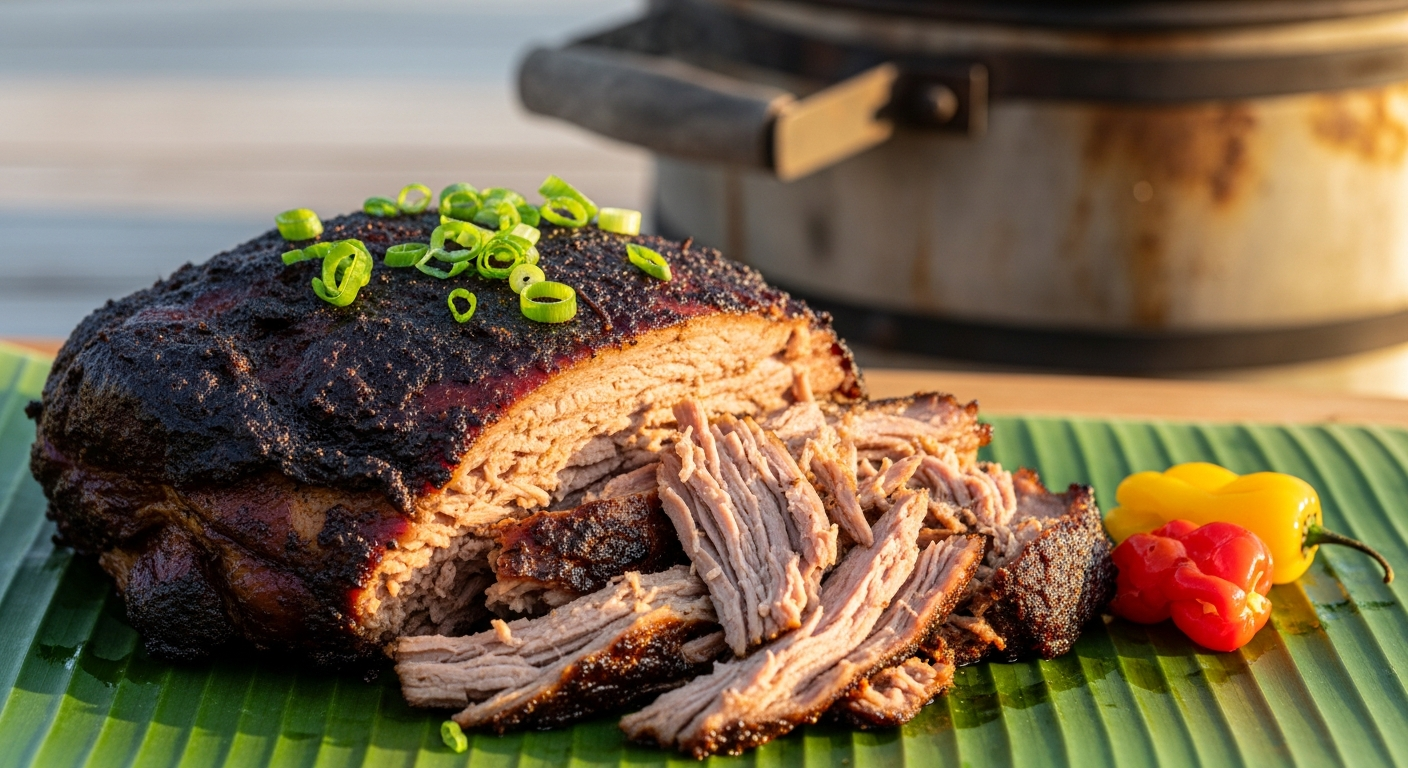
Jerk Pork Chops: Fast, Fiery, and Perfectly Charred
Jerk pork chops are the quickest path to authentic Jamaican jerk pork flavor — bone-in chops marinated 4–12 hours, grilled over high direct heat to 145°F, and rested for 3 minutes. This guide covers everything from marinade depth to avoiding the dryness that plagues most home-grilled pork chops.
Why Pork Chops Work for Jerk
Among the many pork cuts suited to jerk cooking, chops occupy a unique position: they are the fastest to cook and require the least preparation, yet deliver authentic jerk flavor in a single-serving format that is ideal for weeknight dinners and smaller gatherings. A bone-in pork chop marinated in jerk paste for 6 hours and grilled for 12 minutes over direct charcoal heat produces a result that is hard to distinguish from much longer-cooked jerk pork in terms of the marinade flavor — because a 1-inch chop is thin enough for the marinade to penetrate all the way through.
The primary risk with pork chops is overcooking. Unlike shoulder, which only gets better as it climbs from 145°F to 205°F, a chop becomes dry and chalky beyond 155°F. The goal is 145°F internal temperature with a 3-minute rest — at this point, a trace of pink may remain in the thickest part, which is perfectly safe under modern USDA pork guidelines and produces the juiciest possible texture.
Choosing Your Chops
Bone-in rib chops (also called ribeye pork chops) are the best choice for jerk — the bone protects the adjacent meat from drying, adds flavor, and the higher fat marbling of the rib section handles high-heat charcoal grilling without toughening. Aim for chops at least 1 inch thick, ideally 1.25–1.5 inches. Thin chops (under 3/4 inch) overcook before the marinade has any time to caramelize on the surface.
Boneless loin chops are the most widely available but are the least forgiving — they are very lean and dry quickly over high heat. If using boneless loin chops, marinate for the full 12 hours, grill on high heat for no more than 4 minutes per side, and pull at 140°F (they will carry-cook to 145°F during the 3-minute rest).
The Jerk Marinade
For pork chops, the marinade works best as a paste rather than a liquid — it adheres to the surface and creates the characteristic lacquered char layer during grilling. Blend 3–4 scotch bonnets (adjust to heat preference), 4 allspice berries (ground), 3 garlic cloves, 3 green onions, 1 tablespoon fresh thyme leaves, 1 tablespoon soy sauce, 1 tablespoon dark rum or white vinegar, 1 teaspoon brown sugar, juice of 1 lime, ½ teaspoon cinnamon, ¼ teaspoon nutmeg, and 1 teaspoon black pepper. Process to a coarse paste in a food processor or mortar and pestle for the most authentic texture.
Score the chops lightly (3–4 shallow cuts through the surface layer) before marinating. For bone-in chops, score around the bone to the bone itself — this allows the marinade to reach the meat adjacent to the bone where it would otherwise be protected. See the full jerk marinade recipe for additional variations including the scotch bonnet substitute version.
Marinating Time
Pork chops marinating windows: minimum 2 hours for a noticeable flavor impact, 4–8 hours ideal for full marinade penetration, 12 hours maximum before the lime acid begins softening the surface proteins. The 6-hour window (marinate at breakfast, grill at dinner) is the most practical for weeknight cooking. Remove chops from the refrigerator 20 minutes before grilling to reduce the cold-center effect that causes the exterior to overcook before the interior reaches temperature. See our guide on whether you can marinate too long for more detail.
Grilling Technique
Set up your charcoal grill for two-zone cooking — one side with a full chimney of lit coals (high direct heat), one side with no coals (cool indirect zone). See our charcoal grill guide for setup options. Preheat the grill to approximately 450–500°F at the grate. Oil the grate lightly (folded paper towel dipped in vegetable oil, held with tongs).
Place chops directly over the hot coals. Cook 4–5 minutes per side for 1-inch chops without moving them — this allows the grill marks to form and the marinade to caramelize without tearing. If flare-ups occur, move the chops briefly to the cool side, let the flare-up subside, then return to direct heat. Use a reliable instant-read thermometer to check internal temperature at the thickest part, away from the bone. Pull at 145°F and rest 3 minutes before serving.
Oven Alternative
Jerk pork chops in the oven: preheat to 400°F with a cast iron skillet inside. When the oven reaches temperature, add a small amount of neutral oil to the skillet. Sear the marinated chops 2 minutes per side (you should get good color and sizzle — if the cast iron isn't hot enough, the chops will steam rather than sear). Transfer the skillet to the oven and roast 8–12 minutes depending on thickness until internal temperature reaches 145°F. Broil for 2 minutes at the end for additional char. This method produces excellent results year-round regardless of weather.
Serving Jerk Pork Chops
Plate chops over or alongside traditional Jamaican jerk sides: white rice or rice and peas, fried sweet plantain, and festival bread. A simple vinegar coleslaw directly offsets the scotch bonnet heat. For a lighter approach, serve over grilled pineapple slices with lime crema and sliced green onions. A squeeze of fresh lime juice over the chops just before serving brightens all the flavors and is the traditional finishing touch.
Frequently Asked Questions
Frequently Asked Questions
How long do I grill jerk pork chops?
Can pork chops be pink inside after cooking?
Why do my jerk pork chops always dry out on the grill?
Can I use jerk dry rub instead of wet marinade on pork chops?
What is the best side dish for jerk pork chops?
Editorial Selection
Recommended Products
Instant-Read Thermometer
EssentialBest for: Pork chops, all thin cuts
The single most important tool for perfect pork chops — prevents over and undercooking.
Why we recommend it: Pork chops have a narrow 10°F window between perfectly juicy and dry — only a thermometer makes this precise.
Affiliate link coming soonFood Processor or Blender
Best for: Marinade preparation
For making smooth jerk paste marinade that adheres well to the chop surface.
Why we recommend it: A well-blended paste forms a cohesive crust on the chop during grilling. Roughly chopped marinade falls off.
Affiliate link coming soonEditorial note: These are independent recommendations based on quality and usefulness for jerk cooking. We may earn a small commission if you purchase through our links — at no extra cost to you. See our affiliate disclosure for full details.
Free Newsletter
Get Authentic Jerk Recipes Delivered
Authentic Jamaican recipes, cooking tips, and new guides delivered to your inbox. No spam — unsubscribe any time.
No spam. Unsubscribe anytime.
Complete Guide
Jamaican Jerk Pork: Complete Guide
Everything you need to know about this topic in one comprehensive guide.
Read the complete guide →Continue Learning
Authority Guides
Related Topics
Recipes & Techniques
Buying Guides
Written by
Jerk Cuisine Specialist
Marcus Thompson has spent over a decade studying Jamaican culinary traditions, from the jerk pits of Boston Bay to home kitchens across the Caribbean diaspora.
View full bio