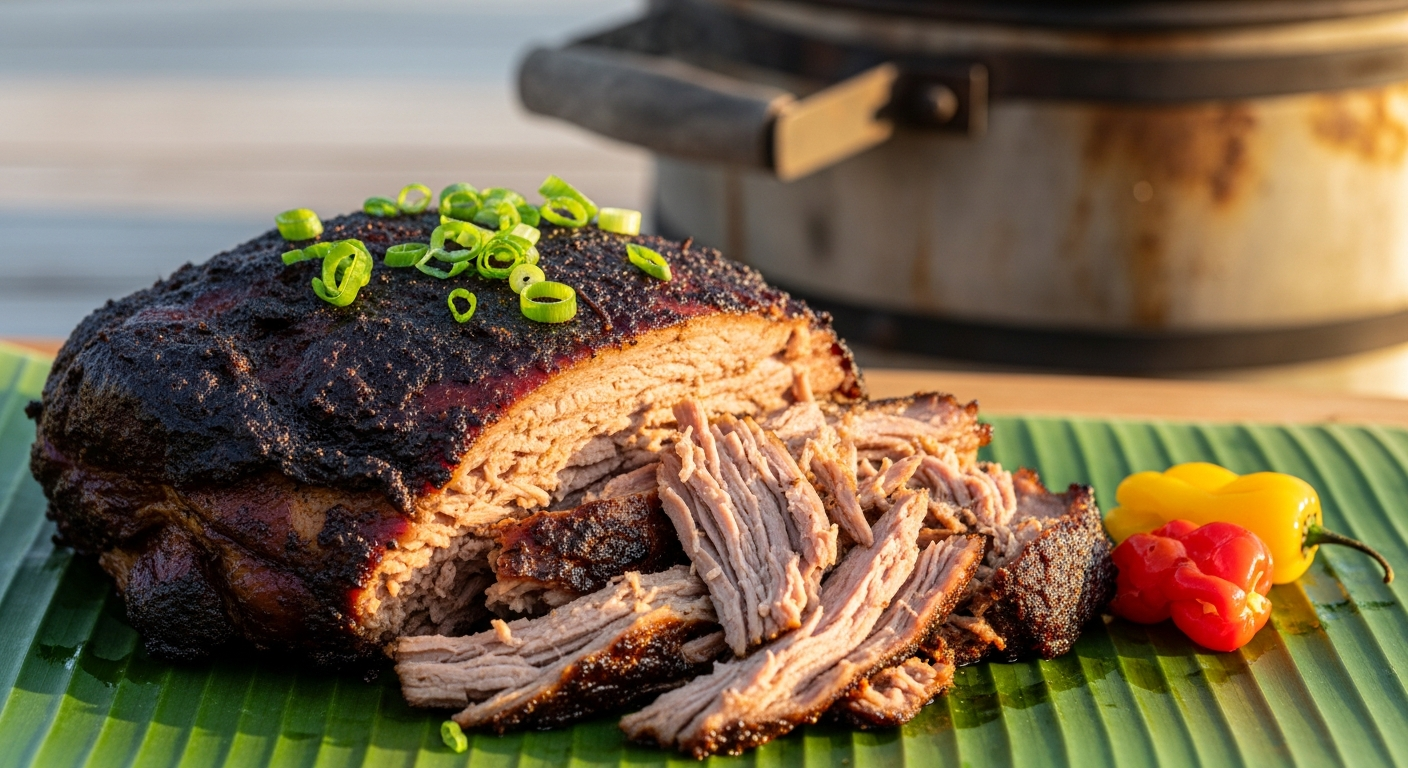
Jerk Pork Tenderloin: The Leanest Cut Done Right
Pork tenderloin is the most delicate jerk pork cut — lean, fast-cooking, and unforgiving of overcooking. At 145°F with a 3-minute rest, jerk tenderloin is extraordinarily juicy and elegantly flavored. This guide covers marinade adhesion, the high-heat sear, and why tenderloin is ideal when you want restaurant-quality jerk in under 30 minutes.
Understanding Pork Tenderloin
Pork tenderloin is the psoas muscle — the least-worked muscle in the pig, running along the spine. Because it does no work, it has almost no fat marbling and no connective tissue, making it the most tender cut on the animal but also the least forgiving to overcook. It is anatomically distinct from pork loin (a wider, fattier cut from the back) — tenderloin is much smaller (typically 1–1.5 lbs per piece) and cooks in under 25 minutes at high heat.
These characteristics make tenderloin a different jerk challenge than shoulder or ribs: the goal is not low-and-slow collagen breakdown, but precise high-heat cooking to a specific temperature window. Done correctly, jerk pork tenderloin is silky, intensely flavored from the marinade, and impressively elegant — suitable for dinner parties in a way that a pulled pork shoulder isn't.
Marinade Adhesion on Lean Meat
Tenderloin's lack of fat means there's nothing for a wet marinade to cling to — without preparation, the marinade slides off the smooth muscle surface during cooking. Two solutions: (1) pat the tenderloin completely dry before marinating — moisture is the enemy of adhesion; (2) score the surface lightly (shallow cuts every inch) to create channels for the paste to anchor in. A slightly thicker jerk paste — made with less liquid — also adheres better than a thin marinade. See the jerk marinade recipe for the right paste consistency.
For marinating time: 2–4 hours minimum, 6 hours ideal, 12 hours maximum. Beyond 12 hours, the lime acid in the marinade begins breaking down the already-delicate surface fibers, producing a slightly mushy outer layer. Tenderloin does not benefit from the 24–48 hour marinating windows suited to shoulder — its thinness means the marinade reaches the center within a few hours.
Cooking Methods
Direct grill + indirect finish: Sear the tenderloin over high direct heat, turning every 2 minutes, until a deep char develops on all sides (6–8 minutes total). Move to the cool indirect zone, cover, and finish until 145°F internal temperature (approximately 8–12 more minutes depending on grill temperature and tenderloin size). This two-stage approach creates excellent char without burning the marinade on the outside before the interior cooks through.
Oven roast: Preheat oven to 425°F. Sear the marinated tenderloin in a cast iron skillet with a small amount of neutral oil over high heat, 2 minutes per side until seared on all surfaces. Transfer the skillet to the oven and roast 12–15 minutes until 145°F. Rest 5 minutes. This method is highly reproducible and excellent year-round.
Air fryer: See our air fryer guide for the technique — while written for chicken, the same temperature principles (375–400°F, 18–22 minutes for a 1-lb tenderloin) apply to pork tenderloin. Turn the tenderloin halfway through cooking.
Temperature Is Everything
For pork tenderloin, temperature management is non-negotiable. The target is 145°F internal temperature, rest 3–5 minutes. At 145°F, the center of the tenderloin may show light pink — this is safe and produces the juiciest possible texture. At 155°F, the muscle fibers have lost significant moisture and the tenderloin becomes noticeably drier. At 160°F, it is dry and disappointing regardless of how good the marinade is. Use a reliable instant-read thermometer and check at the thickest point of the widest part of the tenderloin. The narrow tail end cooks fastest — fold it under the tenderloin and secure with a toothpick if needed to create a more even diameter across the length.
Slicing and Serving
Rest the tenderloin at least 3 minutes (5 minutes is better) before slicing. Cut against the grain in 1/2-inch medallions — tenderloin grain runs lengthwise along the muscle, so cross-cut slices are shorter and more tender than lengthwise cuts. Serve medallions fanned on a platter over a pool of reduced jerk cooking sauce, garnished with sliced green onions and lime wedges. Pairs beautifully with rice and peas, roasted sweet plantain, or a fresh mango salsa.
Frequently Asked Questions
Frequently Asked Questions
What is the best internal temperature for jerk pork tenderloin?
How long to marinate pork tenderloin in jerk marinade?
Can I cook two pork tenderloins at the same time?
Does jerk pork tenderloin work as meal prep?
What is the difference between pork tenderloin and pork loin?
Editorial Selection
Recommended Products
Instant-Read Thermometer
EssentialBest for: Pork tenderloin, thin cuts
Non-negotiable for tenderloin — the margin between juicy and dry is only 10°F.
Why we recommend it: Tenderloin is the least forgiving jerk pork cut. A thermometer is the only reliable way to hit 145°F precisely.
Affiliate link coming soonEditorial note: These are independent recommendations based on quality and usefulness for jerk cooking. We may earn a small commission if you purchase through our links — at no extra cost to you. See our affiliate disclosure for full details.
Free Newsletter
Get Authentic Jerk Recipes Delivered
Authentic Jamaican recipes, cooking tips, and new guides delivered to your inbox. No spam — unsubscribe any time.
No spam. Unsubscribe anytime.
Complete Guide
Jamaican Jerk Pork: Complete Guide
Everything you need to know about this topic in one comprehensive guide.
Read the complete guide →Continue Learning
Authority Guides
Related Topics
Recipes & Techniques
Buying Guides
Written by
Jerk Cuisine Specialist
Marcus Thompson has spent over a decade studying Jamaican culinary traditions, from the jerk pits of Boston Bay to home kitchens across the Caribbean diaspora.
View full bio