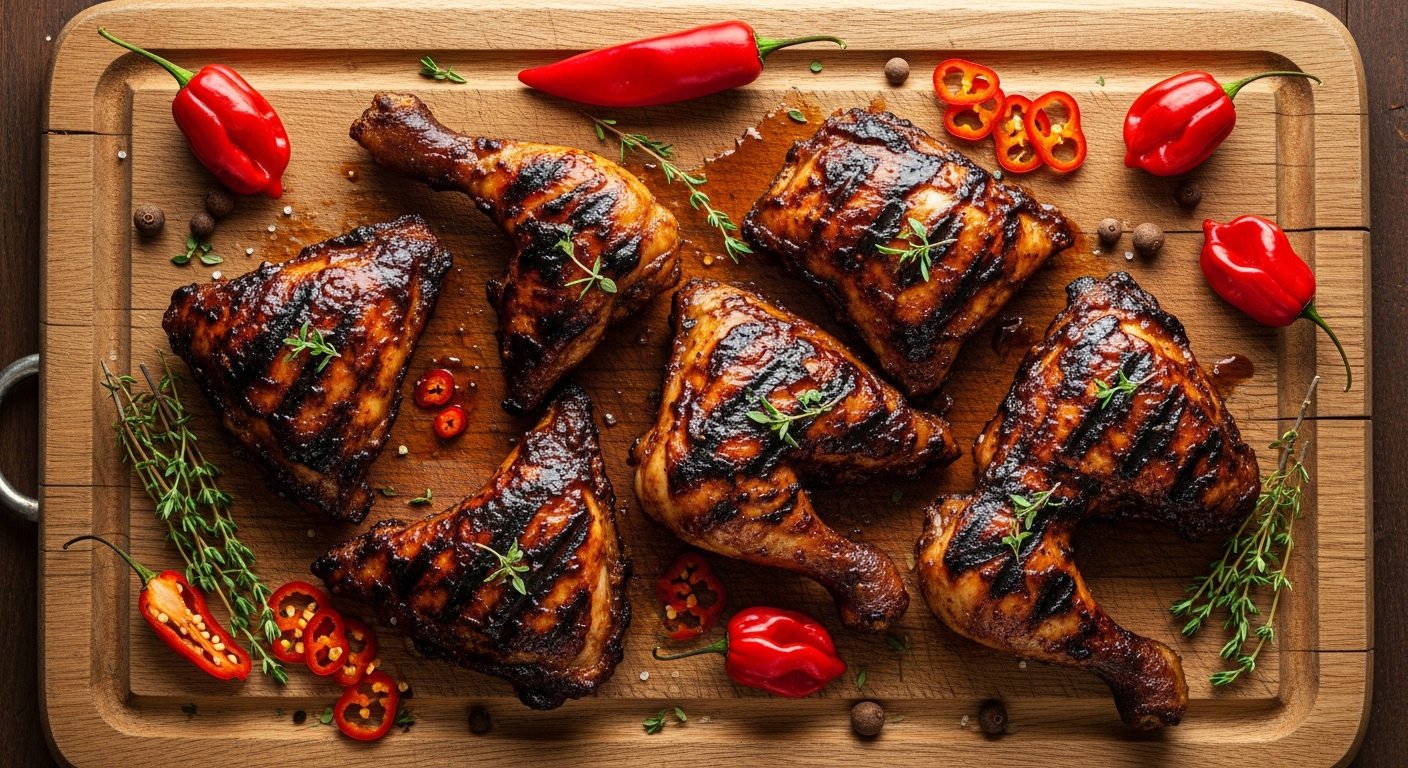
Jerk chicken is Jamaica's most iconic food — and one of the most complex, layered dishes in the entire world of grilled meat. The marinade alone involves a dozen or more ingredients, each essential. The cooking style is specific. The cultural history runs deep. And the result, when done right, is unlike anything else: smoky, fiery, herbal, sweet, and savory in a single bite.
This guide covers everything about jerk chicken — from its Maroon origins in the Jamaican mountains to the exact internal temperature to pull it from the grill. Whether you're making it for the first time or refining a recipe you've cooked for years, this is the reference you'll return to every time.
⚡ Quick Facts — Jerk Chicken
🇯🇲 Why This Guide Matters
Jerk chicken is Jamaica's most globally recognised dish — and one of the most frequently made incorrectly outside the island. Most guides overlook three critical factors: the depth of scoring required, the importance of pimento wood smoke, and the correct temperature range for dark meat. This guide covers all of it, drawing on authentic Jamaican pit cooking traditions alongside practical home-cook adaptations.
The History and Origins of Jerk Chicken
Jerk chicken did not emerge from a recipe book. It emerged from necessity and resistance. The technique was developed by the Maroons — Africans who escaped enslavement in colonial Jamaica and built free communities in the rugged interior of the island, primarily in the Blue Mountains and Cockpit Country regions.
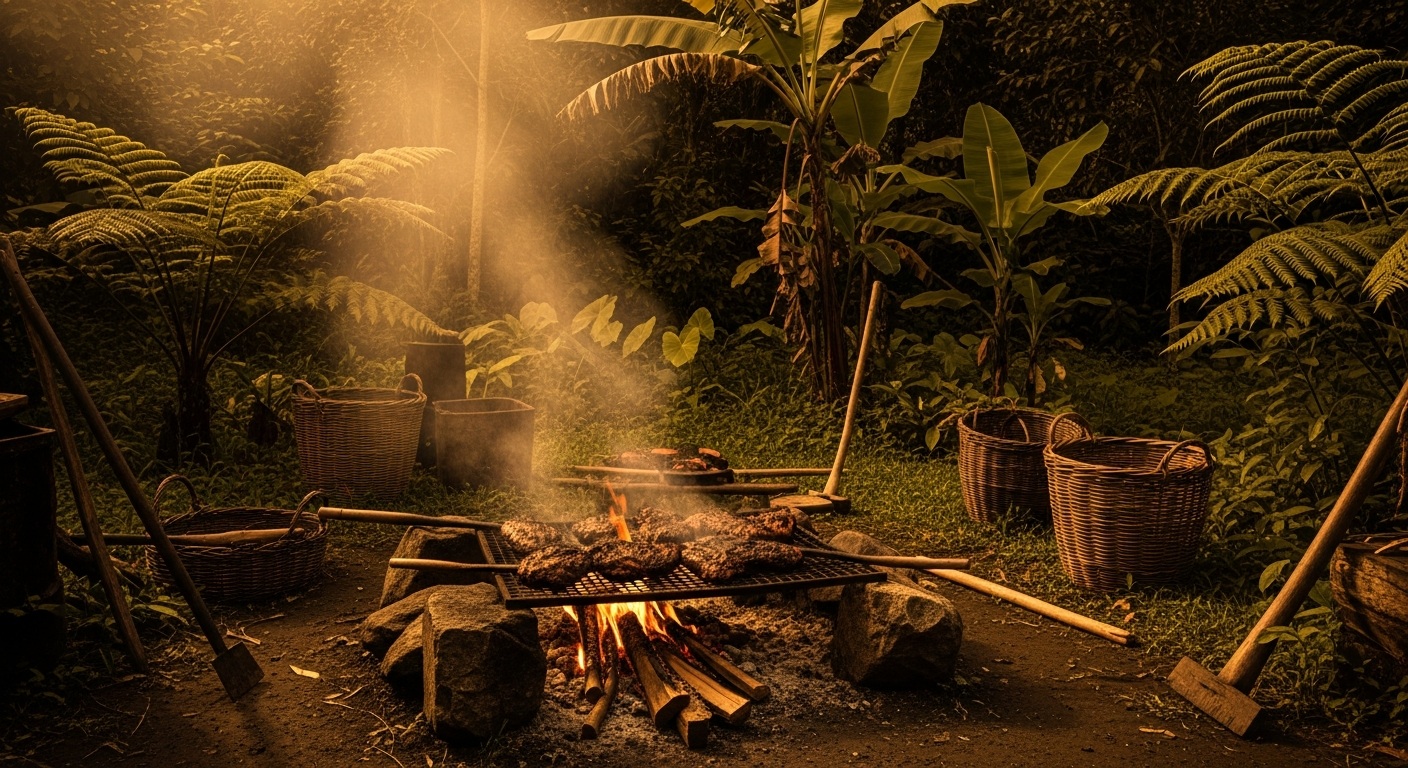
These communities needed to preserve meat, cook without creating visible smoke signals that might attract colonial troops, and sustain themselves on whatever protein was available — primarily wild boar. The solution was a method of heavily spicing the meat (using indigenous allspice berries and local scotch bonnet peppers) and slow-cooking it in pits covered with leaves, or over low pimento wood fires that produced minimal smoke.
The word "jerk" may derive from the Spanish charqui (dried meat), from the Quechua word for dried llama meat that Spanish colonizers brought to the Caribbean, or from the physical action of "jerking" or puncturing the meat to insert spices directly into the muscle. All three theories have historical merit, and the actual etymology remains debated among food historians.
Today, the epicenter of jerk culture is Boston Bay in Portland Parish, on Jamaica's northeastern coast. The roadside jerk stands of Boston Bay are considered by Jamaicans to produce the most authentic jerk — cooked over smoking pimento wood (allspice wood) on open-air grates, sold by the pound, wrapped in foil. Our complete history of Jamaican jerk cooking covers this cultural journey in full detail.
Jerk has since spread globally through Jamaican diaspora communities. Today you'll find jerk chicken in London, Toronto, New York, and Tokyo — though nothing fully replicates the combination of pimento wood smoke, open-air pit cooking, and the specific microclimate aromatics of Jamaican scotch bonnets. Our guide to how jerk cooking spread worldwide traces that journey.
The Essential Ingredients
Jerk chicken is defined by its marinade, and the marinade is defined by a specific set of ingredients — some non-negotiable, some flexible. Here is the complete breakdown:
Non-Negotiable
- Scotch bonnet peppers — The defining heat source. Fruity, floral, intensely hot (100,000–350,000 Scoville). No substitution produces identical flavor, though habanero is the closest. Read our full jerk ingredients guide for sourcing advice.
- Allspice (pimento berries) — The aromatic spine of jerk. Tastes simultaneously like cloves, cinnamon, and black pepper. Use ground allspice or, better, freshly crush whole berries. This is the ingredient that makes jerk taste like nothing else.
- Fresh thyme — Caribbean thyme (smaller-leafed, more pungent than European thyme) is traditional. Use 2–3x as much fresh thyme as dried.
- Scallions (green onions) — Sharp, grassy flavor that forms the aromatic base alongside garlic. Do not substitute white or yellow onion — the flavor is categorically different.
Important but Adjustable
- Garlic — 4–6 fresh cloves. Contributes depth without dominating.
- Fresh ginger — 1-inch piece. Warmth and brightness. Ground ginger (½ tsp) substitutes acceptably.
- Brown sugar — 2 tablespoons. Balances heat, promotes caramelization on the grill. Some recipes use molasses for deeper color.
- Soy sauce — 3 tablespoons. Umami depth and salt. Low-sodium works. Some traditional recipes use browning sauce instead.
- Citrus juice — Lime is classic. Some recipes use orange or a combination for a more complex acid profile.
- Neutral oil — Carries fat-soluble flavor compounds into the meat. Essential for preventing burning on the grill.
- Ground cinnamon and nutmeg — Small amounts of each contribute warmth without being identifiable individually.
For a deep dive into every ingredient — sourcing, substitutions, and storage — see our Essential Jamaican Jerk Ingredients Guide.
Jerk Seasoning and Marinades
There are two distinct ways to apply jerk flavor to chicken: a wet marinade (paste or liquid) or a dry rub (spice blend). They produce meaningfully different results.
Wet Jerk Marinade
A blended paste combining fresh ingredients (scotch bonnet, scallions, garlic, ginger) with the dry spices and wet components (oil, citrus, soy sauce). The wet marinade penetrates deeper into the meat when scored properly and produces a moister result with more complex interior flavor. This is the traditional Jamaican method. See our complete jerk marinade recipe for the full step-by-step.
Dry Jerk Rub
A blend of ground spices rubbed directly onto the meat surface. Produces a drier, crustier bark with a more concentrated spice crust on the exterior. Faster to prepare, better for high-heat grilling where you want maximum crust formation. Our guide on dry rub vs wet marinade covers the technique comparison in depth.
Store-Bought Jerk Seasoning
Several quality commercial jerk seasonings exist — Walkerswood, Grace, and Scotch Bonnet Brand are the most authentic. Store-bought can be a starting point, but most contain more salt and less scotch bonnet than ideal. Our best jerk seasoning brands guide and detailed brand reviews break down every major option.
| Method | Prep Time | Penetration | Crust | Best For |
|---|---|---|---|---|
| Wet marinade (homemade) | 15 min + marinate | Deep | Caramelized, sticky | Bone-in pieces, pork |
| Dry rub (homemade) | 5 min | Surface only | Dry, crusty bark | Quick grilling, ribs |
| Store-bought paste | 2 min + marinate | Medium | Good | Weeknight convenience |
Marinating: Times, Techniques, and Mistakes
How you marinate jerk chicken matters as much as the marinade itself. The Jamaican pit master technique is aggressive and specific — very different from simply coating meat in a bag.
🍴 Chef's Tip — The Overnight Rule
Professional jerk pit cooks in Jamaica marinate overnight as a non-negotiable rule. The window of 12–24 hours is not just a suggestion — it is the minimum for bone-in chicken to develop authentic interior flavor. If you've marinated for only 2–4 hours and the chicken is already cooking, you haven't made jerk chicken. You've made spiced chicken. Plan the day before.
Scoring the Meat (Non-Negotiable)
Use a sharp knife to make deep cuts — 1–2 inches — into the thickest parts of the chicken, cutting down to the bone where possible. Make 3–4 cuts per piece. This is not optional. Without scoring, the marinade sits on the surface no matter how long you marinate. The scoring allows it to penetrate the muscle interior, where it actually flavors the meat.
Applying the Marinade
Don't pour and bag. Press and massage the marinade into every cut, under the skin (carefully separate skin from breast and thigh meat), and into bone joints. Jamaican pit workers coat chicken pieces by hand, working the paste in with their fingers, then stack the pieces in trays or zip-lock bags.
Marinating Time Chart
| Chicken Cut | Minimum | Ideal | Maximum |
|---|---|---|---|
| Bone-in thighs/legs | 4 hours | 12–24 hours | 36 hours |
| Whole chicken (spatchcocked) | 8 hours | 24 hours | 48 hours |
| Boneless breast | 2 hours | 4–8 hours | 12 hours |
| Wings | 2 hours | 6–12 hours | 24 hours |
For more guidance, see our guides on how long to marinate jerk chicken, marinating jerk chicken overnight, and minimum marinating time.
Grilling Jerk Chicken
Grilling is the authentic jerk cooking method, and it produces results that no oven or air fryer can fully replicate. The key is indirect heat, adequate time, and ideally some smoke.
Charcoal Grilling (Recommended)
Set up a two-zone fire: hot coals on one side, no coals on the other. Sear the chicken over direct heat for 3–4 minutes per side to develop a crust, then move to the indirect side, cover the grill, and cook at 325–350°F until the internal temperature hits 165°F (thighs: 175°F). Total time: 35–50 minutes depending on piece size.
Add a handful of allspice berries or wood chips to the coals just before covering for authentic pimento smoke. Our charcoal grilling guide covers the technique in detail.
Gas Grilling
Preheat all burners to medium-high, then turn off the burners on one side. Place chicken skin-side down over direct heat for 4–5 minutes, flip, then move to indirect side and cook covered until done. Gas grills don't produce smoke by default — add a foil pouch of soaked wood chips over the lit burner. See our gas grill jerk chicken guide.
Traditional Pit Method
Boston Bay pit masters cook over pimento wood logs on open concrete or metal grates, weighted down with metal sheets to trap heat and smoke. The temperature is roughly 275–300°F, and the cook time is 45–75 minutes depending on piece size. The result — smoky, deeply caramelized, almost bark-like exterior with moist, deeply seasoned interior — is the gold standard.
Related: tips for traditional jerk grilling and backyard jerk cooking essentials.
Smoking Jerk Chicken
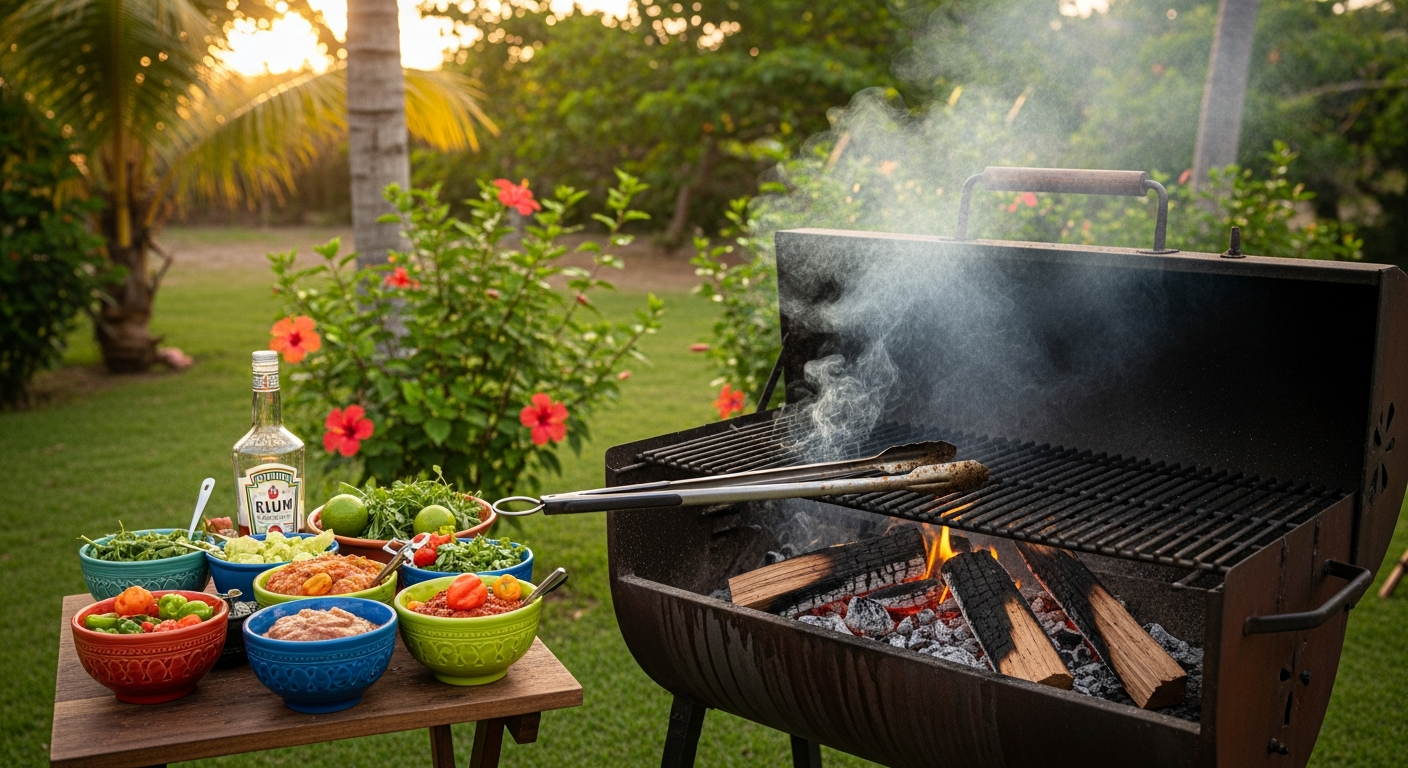
Smoked jerk chicken takes the flavor profile to its deepest expression. The slow application of wood smoke during a long cook amplifies the allspice and scotch bonnet aromatics in a way that quick grilling cannot.
Smoker Setup
Set your smoker to 250–275°F. Use allspice wood chips (available from specialty online retailers), cherry wood (complementary to the fruity scotch bonnet notes), or hickory (stronger, more assertive smoke). Avoid mesquite — too aggressive for the delicate jerk spice profile.
Smoke Time
Bone-in chicken thighs and legs: 1.5–2.5 hours at 250°F. A whole chicken: 3–4 hours. Finish with a 5-minute sear over direct flame or under the broiler to caramelize the jerk crust. Internal temperature must reach 165°F (thighs: 175°F).
Our guide to smoking vs grilling jerk meats covers the full comparison with timing charts.
Oven-Baked Jerk Chicken
Oven jerk chicken is excellent — deeply flavorful, easier to manage, and perfectly suitable for year-round cooking. You sacrifice the smoke but retain full marinade impact.
Method
- Marinate as normal (12–24 hours preferred).
- Preheat oven to 400°F (205°C).
- Line a baking sheet with foil and place a wire rack inside (allows air circulation under the chicken).
- Arrange chicken skin-side up. Do not crowd pieces.
- Roast for 35–45 minutes (bone-in thighs) until internal temp reaches 165°F.
- Switch to broil (high) for 3–5 minutes to char the exterior.
For a dedicated step-by-step, see our oven jerk chicken recipe and baking jerk chicken for beginners. Also: can you bake jerk chicken? (what to expect).
Air Fryer Jerk Chicken
Air fryer jerk chicken delivers remarkably crispy results in a fraction of the time — especially good for bone-in thighs and drumsticks.
Method
- Marinate normally (minimum 4 hours).
- Preheat air fryer to 380°F.
- Pat excess marinade off (reduces spattering).
- Cook skin-side down for 12 minutes, flip, cook another 10–12 minutes.
- Verify internal temp at 165°F. Add 3–4 minutes if needed.
The air fryer creates a genuinely crispy exterior that rivals grilling for crust texture, though without the smoke. Full guide: air fryer jerk chicken recipe.
Internal Temperatures and Doneness
This is the section that separates dry, safe jerk chicken from exceptional, juicy jerk chicken. Color and juice clarity are not reliable indicators — use a thermometer every time.
| Cut | Safe Temperature | Optimal Temperature | Why |
|---|---|---|---|
| Thighs (bone-in) | 165°F (74°C) | 175–185°F (79–85°C) | Higher temp renders collagen, creating juicier, more tender meat |
| Drumsticks | 165°F | 175–180°F | Same as thighs — dark meat benefits from extra cooking |
| Breast (boneless) | 160°F (71°C) | 160–165°F | Breast dries out quickly above 165°F; pull immediately |
| Whole chicken | 165°F in all parts | 175°F in thigh, 165°F in breast | Measure in multiple locations |
| Wings | 165°F | 175–180°F | Higher temp makes skin crispier |
Let the chicken rest for 5–10 minutes after pulling from heat before cutting. The internal temperature will continue to rise 3–5°F during rest (carryover cooking).
Full reference: jerk chicken temperature guide, how to tell when jerk chicken is done, and grill temperature guide for jerk chicken.
🌡️ Food Safety
Never rely on visual cues alone. Jerk marinade contains browning agents and dark spices that make the exterior appear fully cooked well before it is. Dark meat coloring from allspice and soy sauce can mimic doneness. Always use a calibrated instant-read thermometer inserted into the thickest part, avoiding bone. When in doubt, cook longer — undercooked chicken carries significant food safety risk.
Serving Ideas and Traditional Accompaniments
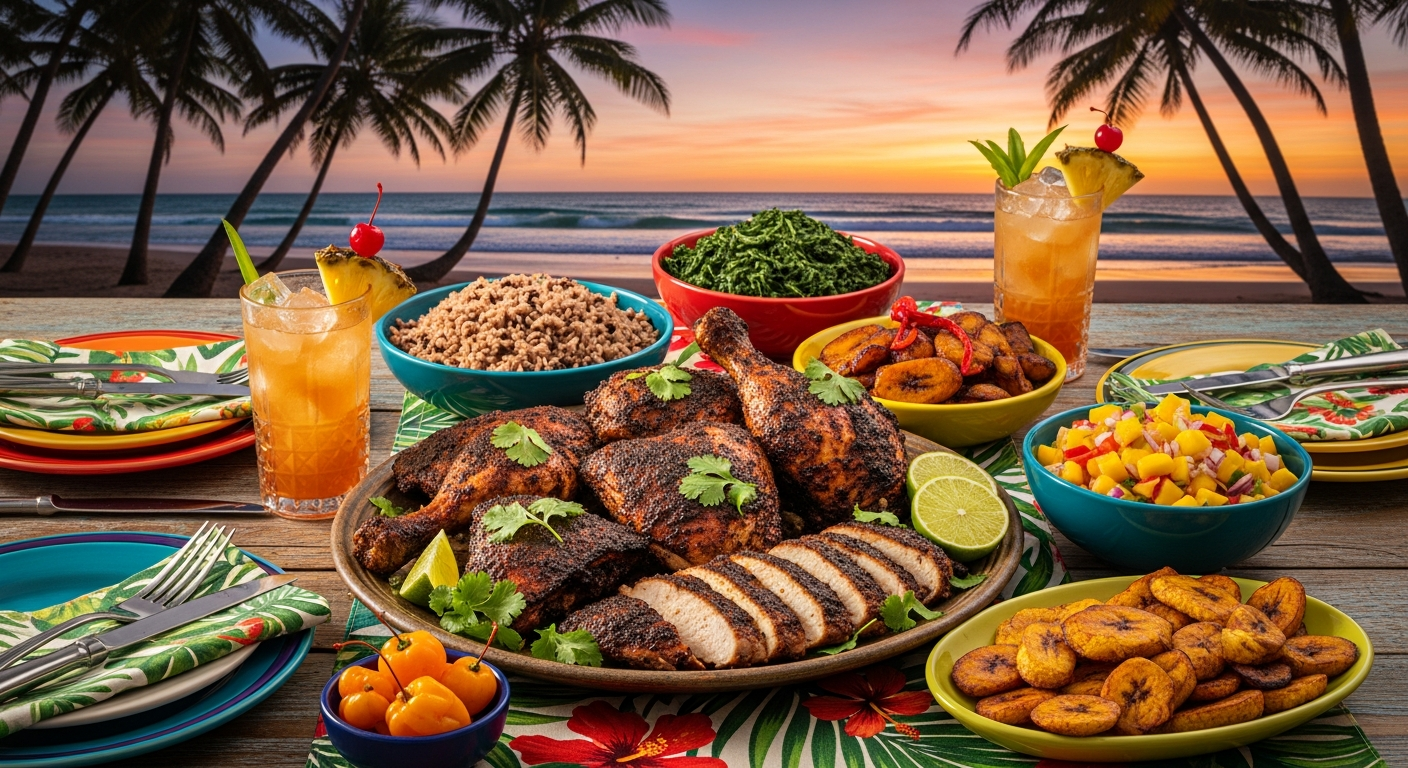
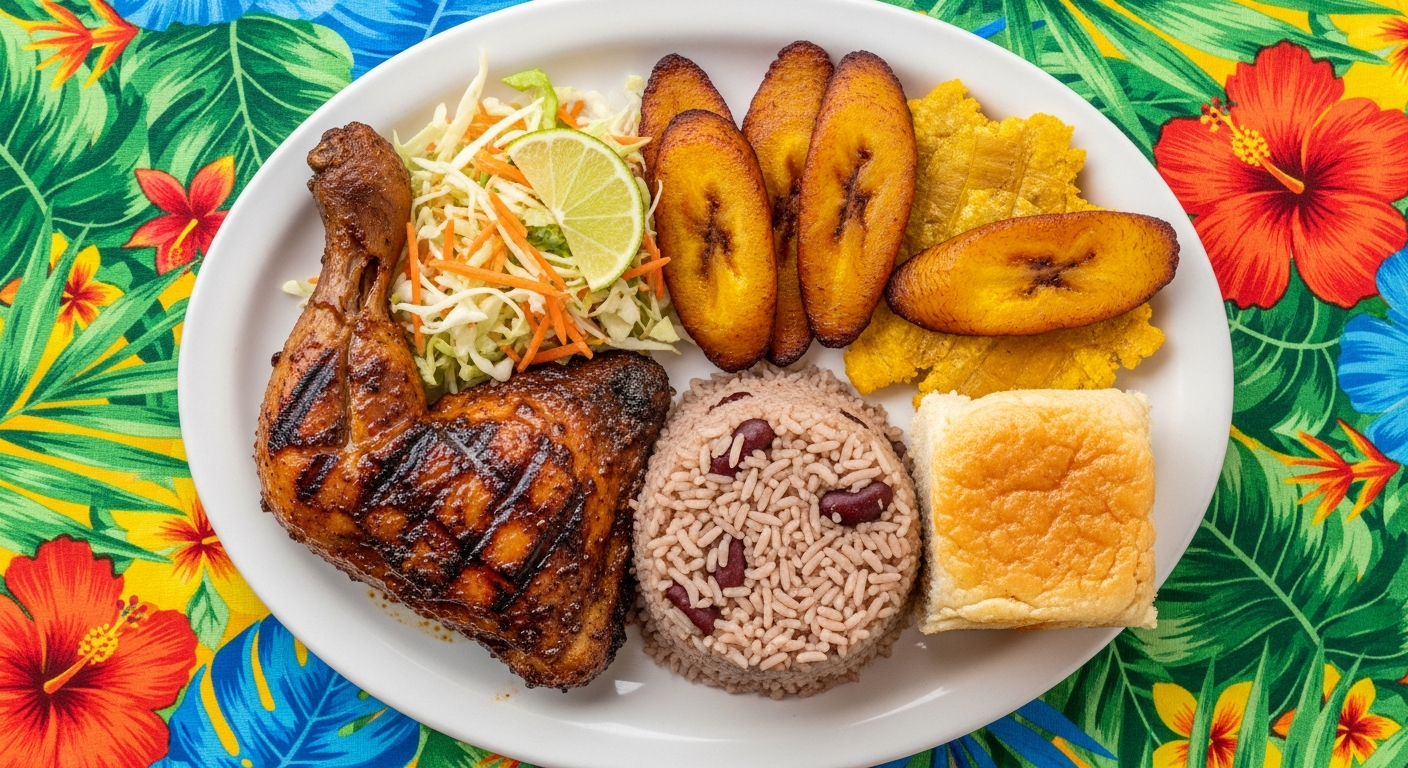
Jerk chicken in Jamaica is never served alone. The traditional spread is as important as the chicken itself, and the sides are chosen deliberately to balance the heat and richness of the jerk.
The Core Jamaican Spread
- Rice and Peas — Rice cooked in coconut milk with kidney beans (called "peas" in Jamaican English), seasoned with thyme, scallion, and allspice. The coconut milk tempers the jerk heat beautifully. Essential.
- Festival — Sweet, slightly crispy fried dough made with cornmeal and flour. The sweetness contrasts the jerk spice directly. Boston Bay stalls always have festival.
- Fried Plantain — Ripe plantain (maduros) fried until caramelized. Tropical sweetness as a counterpoint to scotch bonnet heat.
- Bammy — Traditional Jamaican cassava flatbread, often soaked in coconut milk before frying. Mild, starchy, filling.
- Coleslaw — Cool, creamy, acid. The cooling effect of coleslaw against jerk heat is functional, not incidental.
Our complete what to serve with jerk chicken guide covers 25+ sides with recipes, including drinks. Also see: complete jerk side dishes guide, authentic Jamaican sides, and side dish guide for jerk chicken.
Storage and Reheating
Storing Leftover Jerk Chicken
Cooked jerk chicken keeps in an airtight container in the refrigerator for up to 4 days. The marinade's spices intensify overnight, making day-two jerk chicken arguably better than fresh off the grill. For longer storage, freeze in zip-lock bags for up to 3 months.
Reheating Without Drying Out
The worst way to reheat jerk chicken is in the microwave, which dries it out. Better options:
- Oven (best): 350°F, covered with foil, 15–20 minutes. Uncover for the last 5 minutes to re-crisp the skin. Add a tablespoon of water to the pan to create steam.
- Skillet: Medium-low heat with a splash of water and a lid. Steam-heat for 8–10 minutes. Finish uncovered to crisp the skin.
- Air fryer: 350°F for 5–7 minutes. Excellent for restoring crispy skin.
Nutrition Facts
Jerk chicken is nutritionally excellent — high protein, moderate fat, low carbohydrate when the marinade sugar is the only carb source.
| Per 4 oz (113g) Bone-In Thigh, Cooked | Amount |
|---|---|
| Calories | ~220–260 |
| Protein | 22–26g |
| Fat | 12–16g |
| Carbohydrates | 3–5g (from marinade sugars) |
| Sodium | 350–450mg (from soy sauce) |
For complete nutritional analysis including health benefits of individual spices, see our guide on is jerk chicken healthy? The scotch bonnet and allspice both have documented anti-inflammatory properties. The health insights on Jamaican jerk marinades covers this in depth.
The Most Common Jerk Chicken Mistakes
These are the errors that separate forgettable jerk chicken from the real thing:
1. Not Scoring Deeply Enough
Surface nicks do nothing. You need to cut down to the bone. The marinade only flavors meat it actually contacts — and the center of a chicken thigh is completely out of reach unless you open a path to it.
2. Under-Marinating
A 30-minute marinade is nearly useless for bone-in chicken. Plan ahead. Make the marinade and coat the chicken the morning before (or the night before) the day you plan to cook.
3. Cooking Over Too-High Heat
Jerk chicken burns on the outside long before the inside is cooked at high direct heat. Use indirect heat after the initial sear, or cook at 325–350°F throughout. The jerk marinade contains sugar — it caramelizes beautifully at moderate heat but turns acrid and bitter at high direct heat.
4. Substituting the Wrong Pepper
Using jalapeño, chipotle, or crushed red pepper instead of scotch bonnet produces chicken that tastes nothing like jerk. The fruity, tropical quality of scotch bonnet (or habanero as a second choice) is load-bearing. Other peppers simply bring generic capsaicin heat without the aromatic complexity.
5. Skipping the Rest
Cutting into chicken immediately off the grill causes all the interior juices to run out. Rest for 5–10 minutes. The carryover cooking also brings temperature up safely during rest.
6. Using Only Surface Application
Marinade under the skin. Marinade into the scoring cuts. Marinade on the bone side. Not just on the visible exterior.
For a broader look at common errors, see our article on jerk pit master secrets and the guide to mastering heat in jerk cooking.
All Jerk Chicken Guides on JerkPit.com
Every jerk chicken resource on this site, organized by topic:
Recipes
- Authentic Jamaican Jerk Chicken — Complete Recipe
- Jamaican Jerk Chicken Recipe Guide
- Jerk Chicken In Oven Recipe
- Jerk Chicken On the Grill
- Jerk Chicken for Beginners
- Air Fryer Jerk Chicken
- Slow Cooker Jerk Chicken
- Jerk Chicken Without a Grill
Marinades and Seasoning
- The Complete Jerk Marinade Recipe
- Authentic Jamaican Jerk Marinade Guide
- Homemade Jerk Marinade Guide
- Easy Jerk Marinade Recipe
- Mild Jerk Marinade Recipe
- Adjusting Heat in Jerk Marinades
- Jerk Marinade Without Scotch Bonnet
- Best Jerk Seasoning Brands
- Homemade Jerk Spice Blend
Technique and Temperature
- Jerk Chicken Temperature Guide
- Grill Temperature for Jerk Chicken
- When Is Jerk Chicken Done?
- Charcoal Grill Jerk Chicken
- Gas Grill Jerk Chicken
- Mastering Heat in Jerk Cooking
- How to Get Crispy Jerk Chicken Skin
Sides and Pairings
- What to Serve With Jerk Chicken
- Complete Jerk Side Dishes Guide
- Rice Dishes for Jerk Chicken
- Best Side Dishes for Jerk Chicken
- Drinks That Pair With Jerk Chicken
Spice and Heat
- How Spicy Is Jerk Chicken?
- Is Jerk Chicken Spicy or Mild?
- How to Make Jerk Chicken Less Spicy
- What Does Jerk Chicken Taste Like?
- What Makes Jerk Chicken Taste Like Jerk?