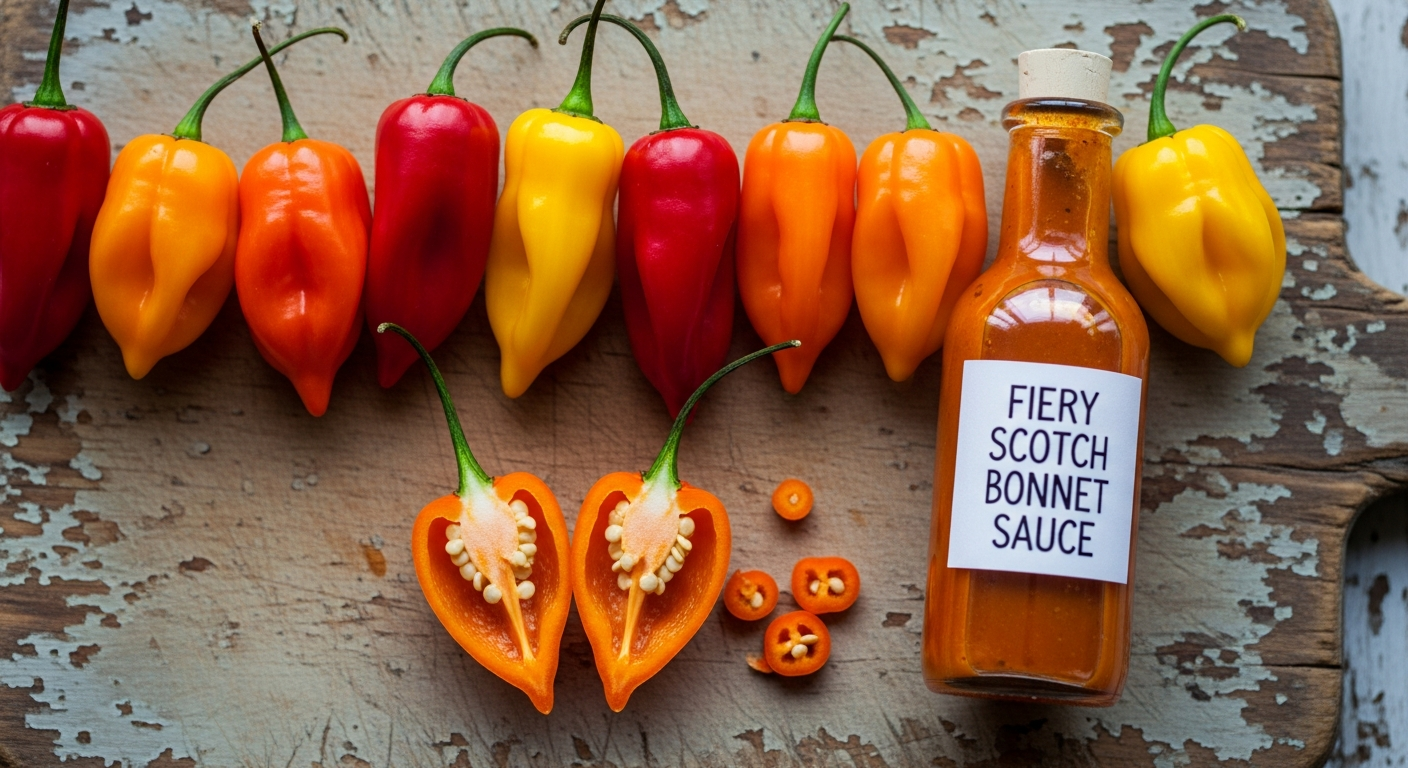
Scotch Bonnet Pepper Sauce: The Essential Jamaican Table Hot Sauce
Scotch bonnet pepper sauce — Jamaican-style hot sauce — is the table condiment of Jamaican cooking. Unlike American hot sauces, Jamaican pepper sauce balances the extreme heat of scotch bonnet with Caribbean mustard, vinegar, and aromatics, producing a complex, fruity-hot condiment that elevates everything it touches.
What Is Jamaican Pepper Sauce?
Jamaican pepper sauce is the table condiment equivalent of what Tabasco is to Louisiana cooking — a liquid heat source applied at the table to adjust each person's preferred heat level. What distinguishes Jamaican pepper sauce from most American hot sauces is its complexity: the base of scotch bonnet provides fruity, tropical heat rather than the vinegar-forward sharpness of most commercial hot sauces; mustard (yellow or Dijon) in many Jamaican pepper sauce recipes provides an emulsifying earthiness; and turmeric gives the sauce its characteristic yellow-orange color. The result is a sauce with genuine flavor depth, not purely heat. The complete jerk sauce guide covers all Jamaican jerk condiments. For commercial buying options, see the scotch bonnet hot sauce buying guide.
Jamaican Pepper Sauce Recipe
For approximately 1½ cups: 8–10 scotch bonnets (adjust for heat level — this quantity produces very hot sauce); ½ cup white vinegar; ¼ cup prepared yellow mustard; 4 garlic cloves; 1 tablespoon ground turmeric; 1 teaspoon salt; 1 teaspoon sugar; 2 tablespoons neutral oil (for emulsification). Optional additions that appear in various Jamaican recipes: 1 carrot (adds sweetness and color), 1 onion (adds depth), fresh thyme, allspice berries. Blend all ingredients in a high-speed blender until completely smooth. Transfer to a saucepan, simmer on low heat 5–10 minutes to meld flavors and slightly reduce. Cool completely before bottling in sterilized glass jars. Refrigerate and use within 3 months.
Regional Variations
Jamaican pepper sauce varies by household and region. Some versions include no mustard — just scotch bonnet, vinegar, garlic, and aromatics. Others incorporate fruit: mango, papaya, or pineapple provide sweetness that moderates the scotch bonnet heat while adding tropical character. Cooked pepper sauce (the recipe above) is more stable and mellow; raw pepper sauce (just blended, no cooking) is more vibrant and fresh-tasting but has a shorter shelf life. For commercial pepper sauce options, Grace and Pickapeppa are the most widely available Jamaican brands internationally — the hot sauce buying guide covers all major brands.
Using Pepper Sauce with Jerk
Apply scotch bonnet pepper sauce at the table — a few drops on jerk chicken, pork chops, rice and peas, festival bread, or any component of a Jamaican meal. It is the final heat adjustment tool for each diner. For those who find the base jerk marinade's heat level sufficient, pepper sauce is additional — for those who want more intensity, it provides additional scotch bonnet heat without affecting the marinade's flavor balance. A drizzle over jerk tofu or jerk cauliflower adds depth to plant-based preparations that sometimes need the additional heat push. See also the guides on how spicy jerk chicken is and scotch bonnet peppers for heat level context.
Frequently Asked Questions
Frequently Asked Questions
What makes Jamaican pepper sauce different from other hot sauces?
How long does homemade scotch bonnet pepper sauce last?
Can I ferment scotch bonnet pepper sauce?
Is Jamaican pepper sauce vegan?
What commercial Jamaican pepper sauce is closest to homemade?
Editorial Selection
Recommended Products
Scotch Bonnet Hot Sauce
Best for: Table service, quick applications
Commercial options for table service when making from scratch isn't practical.
Why we recommend it: A good commercial Jamaican pepper sauce is nearly as good as homemade for table use.
Affiliate link coming soonEditorial note: These are independent recommendations based on quality and usefulness for jerk cooking. We may earn a small commission if you purchase through our links — at no extra cost to you. See our affiliate disclosure for full details.
Free Newsletter
Get Authentic Jerk Recipes Delivered
Authentic Jamaican recipes, cooking tips, and new guides delivered to your inbox. No spam — unsubscribe any time.
No spam. Unsubscribe anytime.
Complete Guide
Complete Jamaican Jerk Sauce Guide
Everything you need to know about this topic in one comprehensive guide.
Read the complete guide →Continue Learning
Authority Guides
Related Topics
Buying Guides
Written by
Jerk Cuisine Specialist
Marcus Thompson has spent over a decade studying Jamaican culinary traditions, from the jerk pits of Boston Bay to home kitchens across the Caribbean diaspora.
View full bio