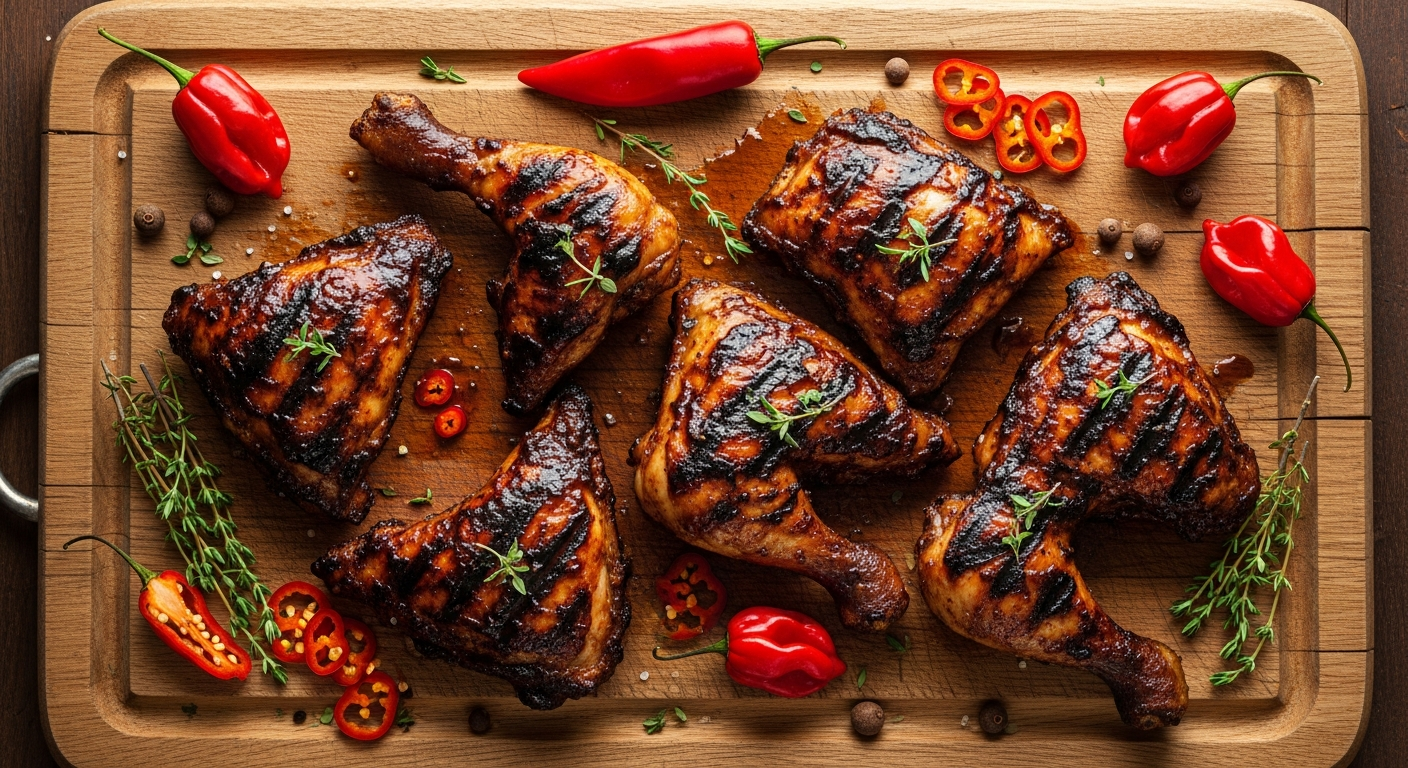
Jerk Cauliflower: Whole Roasted or Florets with Caribbean Fire
A whole jerk cauliflower roasted at high heat is one of the most dramatic plant-based presentations in Caribbean cooking — the florets char and crisp at the edges while the interior steams tender, and the jerk marinade caramelizes into a deep, spiced crust over the entire surface.
Cauliflower Formats for Jerk Cooking
Cauliflower adapts to jerk in three main formats. Whole roasted head: the most dramatic presentation — the entire cauliflower is marinated and roasted intact, producing a stunning showpiece that's tender inside and charred and caramelized on the surface. Takes 60–75 minutes but requires minimal preparation. Cauliflower steaks: 1-inch thick slices cut vertically through the head, grilled or pan-seared for 4–5 minutes per side — quick, elegant, and the best format for grill marks. Florets: the most versatile — broken into bite-sized pieces, tossed in jerk marinade, and roasted at high heat. Best for bowls, tacos, and feeding larger groups. The complete cooking methods guide covers high-heat roasting technique relevant to all three formats.
Jerk Marinade for Cauliflower
Cauliflower's porous, open structure absorbs marinade well — use the standard jerk marinade with additional olive oil (3–4 tablespoons) to promote the caramelization the jerk spice needs to develop a proper crust. Add 1 tablespoon coconut milk or full-fat yogurt (optional) to the marinade for additional richness and a slightly creamier coating that clings to the surface. For whole roasted cauliflower, apply the marinade under the leaves, over all exterior floret surfaces, and into the cuts if you score the surface.
Marinate cauliflower for 30 minutes to 4 hours. Unlike meat, there is no over-marinating concern with vegetables — longer marinating only deepens flavor. A 2-hour marinade (marinate before work, roast at dinner) produces excellent results.
Whole Roasted Jerk Cauliflower
Remove outer leaves but keep the stem intact (it holds the head together during roasting). Score the surface of the head deeply in a cross-hatch pattern — this allows the marinade to reach interior florets and speeds cooking. Apply marinade generously over every surface. Place stem-side-down on a roasting rack or directly on a foil-lined baking sheet. Roast at 400°F for 60–75 minutes until deeply golden-brown and a knife inserted at the base of the stem meets no resistance. Broil the final 5 minutes for additional char on the top surface. A whole head dramatically enough to serve as the centerpiece of a plant-based Jamaican feast — see the side dishes guide for full spread suggestions.
Cauliflower Steaks
Cut the cauliflower into 1-inch thick steaks from the center of the head (you'll get 2–3 usable steaks from a medium head; the outer sections will break into florets). Marinate 30 minutes. For grill: cook over medium-high direct heat, 4–5 minutes per side, using two wide spatulas to support when flipping. For oven/broiler: place on a rack under a hot broiler, 4–5 minutes per side. Steaks are done when tender throughout and deeply charred on both surfaces. Plate over a pool of jerk sauce or pepper sauce for dramatic presentation.
Florets
Break the cauliflower into even-sized florets (roughly 1.5 inches). Toss with jerk marinade in a bowl to coat every surface. Spread in a single layer on a baking sheet (do not crowd — overlapping florets steam rather than caramelize). Roast at 425°F for 25–30 minutes, tossing once at the halfway point, until the floret edges are deeply browned and slightly crispy. These are excellent in bowls, wraps, over rice, or as a side alongside any jerk protein.
Frequently Asked Questions
Frequently Asked Questions
How long to roast a whole jerk cauliflower?
Can I make jerk cauliflower on the grill?
Is jerk cauliflower vegan?
How do I stop jerk cauliflower from getting soggy?
What is the best way to serve jerk cauliflower?
Free Newsletter
Get Authentic Jerk Recipes Delivered
Authentic Jamaican recipes, cooking tips, and new guides delivered to your inbox. No spam — unsubscribe any time.
No spam. Unsubscribe anytime.
Complete Guide
Jerk Cooking Methods: Every Technique Compared
Everything you need to know about this topic in one comprehensive guide.
Read the complete guide →Continue Learning
Authority Guides
Related Topics
Recipes & Techniques
Written by
Jerk Cuisine Specialist
Marcus Thompson has spent over a decade studying Jamaican culinary traditions, from the jerk pits of Boston Bay to home kitchens across the Caribbean diaspora.
View full bio