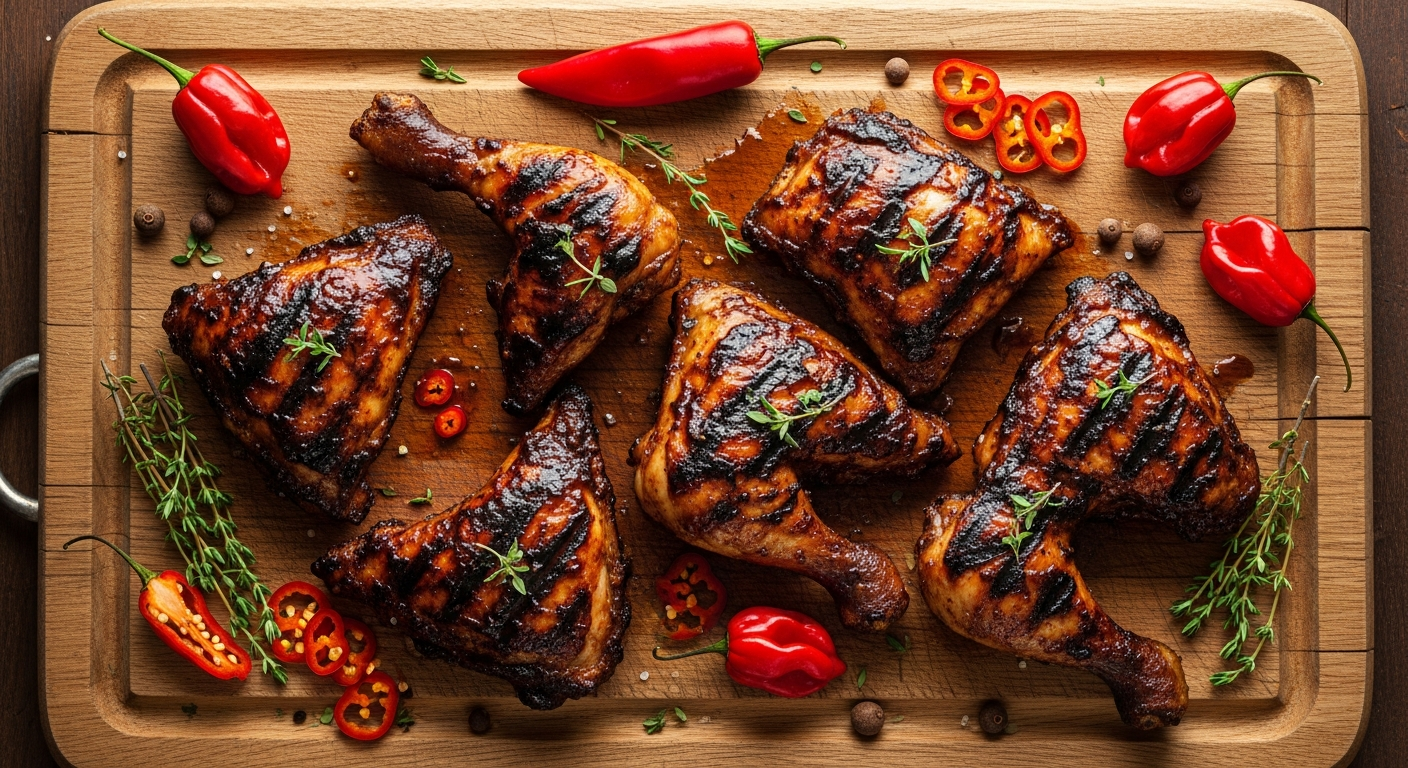
How Spicy Is Jerk Chicken? Scoville Ratings, Heat Levels & Adjustment Guide
Authentic Jamaican jerk chicken is genuinely hot — scotch bonnet peppers at 100,000–350,000 Scoville units produce heat that most non-Caribbean diners find intense. But jerk heat is also uniquely manageable: the allspice, sweetness, and fat in the marinade moderate how the heat is perceived. This guide covers what to expect and how to adjust.
The Actual Heat Level of Authentic Jerk
Authentic Jamaican jerk chicken is made with scotch bonnet peppers — one of the world's hottest commercially used peppers at 100,000–350,000 Scoville Heat Units (SHU). For reference: jalapeño is 2,500–8,000 SHU. Scotch bonnet is 12–140 times hotter than a jalapeño. At a Boston Bay jerk stall in Jamaica, jerk chicken is typically prepared with 4–8 scotch bonnets per batch — producing food that ranges from very hot to extremely hot by most mainstream Western standards. The scotch bonnet guide covers the pepper's full heat profile and the complete jerk chicken guide covers traditional preparation.
However, the heat of jerk chicken is not purely painful — the scotch bonnet's fruity, tropical character, combined with the allspice's warming quality, the sweetness of brown sugar and rum, and the fat content of the chicken all moderate how the heat is perceived. Jerk heat "builds" rather than hitting immediately, and it is accompanied by complex flavor rather than being purely a heat delivery mechanism. Many people who consider themselves unable to eat spicy food find authentic jerk chicken manageable because of this character.
What Affects the Spice Level
Number of scotch bonnets: The most controllable variable. Recipes for 2 lbs of chicken: 2 peppers (mild-medium), 4 peppers (medium-hot), 6 peppers (hot), 8+ peppers (authentic Jamaican restaurant heat). Seeds and pith: Removing seeds and white pith significantly reduces heat — most capsaicin is concentrated there. Seeded scotch bonnets are approximately 50–70% milder than unseeded. Marinade time: Longer marinating distributes capsaicin more evenly but doesn't significantly increase total heat. Cooking method: High-heat grilling causes some capsaicin volatilization — briefly hot from the grill, then slightly lower perceived heat when rested. Slow oven cooking retains more capsaicin in the meat. Resting: A 5-minute rest after cooking allows capsaicin to reabsorb into the meat's fat, which slightly moderates the heat perception.
Restaurant vs Home Jerk
Most Caribbean restaurants outside Jamaica calibrate jerk chicken heat to local preferences — typically using 2–3 scotch bonnets per batch rather than the 6–8 used in Jamaica, producing a medium-hot result that Western diners describe as "spicy but manageable." This is a legitimate adaptation. Jerk chicken you make at home can be calibrated to any preference — see below. For the most authentic experience, a Jamaican-owned restaurant in a city with a significant Caribbean community is the most reliable source of full-heat jerk chicken.
How to Adjust the Heat Level
To increase heat: add more scotch bonnets, leave seeds in, add a small amount of scotch bonnet powder on top of the fresh peppers. To decrease heat: use fewer peppers, remove all seeds and pith, substitute half the scotch bonnet quantity with milder peppers (habanero with seeds removed, or bell pepper). See the jerk without scotch bonnet guide for all substitution options. Serving mango salsa or pineapple salsa alongside provides guests a natural heat moderator — the fruit sweetness directly offsets the capsaicin perception.
Frequently Asked Questions
Frequently Asked Questions
Is jerk chicken supposed to be very spicy?
How hot is jerk chicken compared to Indian curry or Thai food?
Why is my homemade jerk chicken not spicy enough?
Does cooking reduce the spiciness of jerk chicken?
What helps reduce jerk chicken spice when eating?
Free Newsletter
Get Authentic Jerk Recipes Delivered
Authentic Jamaican recipes, cooking tips, and new guides delivered to your inbox. No spam — unsubscribe any time.
No spam. Unsubscribe anytime.
Complete Guide
Ultimate Jamaican Jerk Chicken Guide
Everything you need to know about this topic in one comprehensive guide.
Read the complete guide →Continue Learning
Authority Guides
Recipes & Techniques
Written by
Jerk Cuisine Specialist
Marcus Thompson has spent over a decade studying Jamaican culinary traditions, from the jerk pits of Boston Bay to home kitchens across the Caribbean diaspora.
View full bio