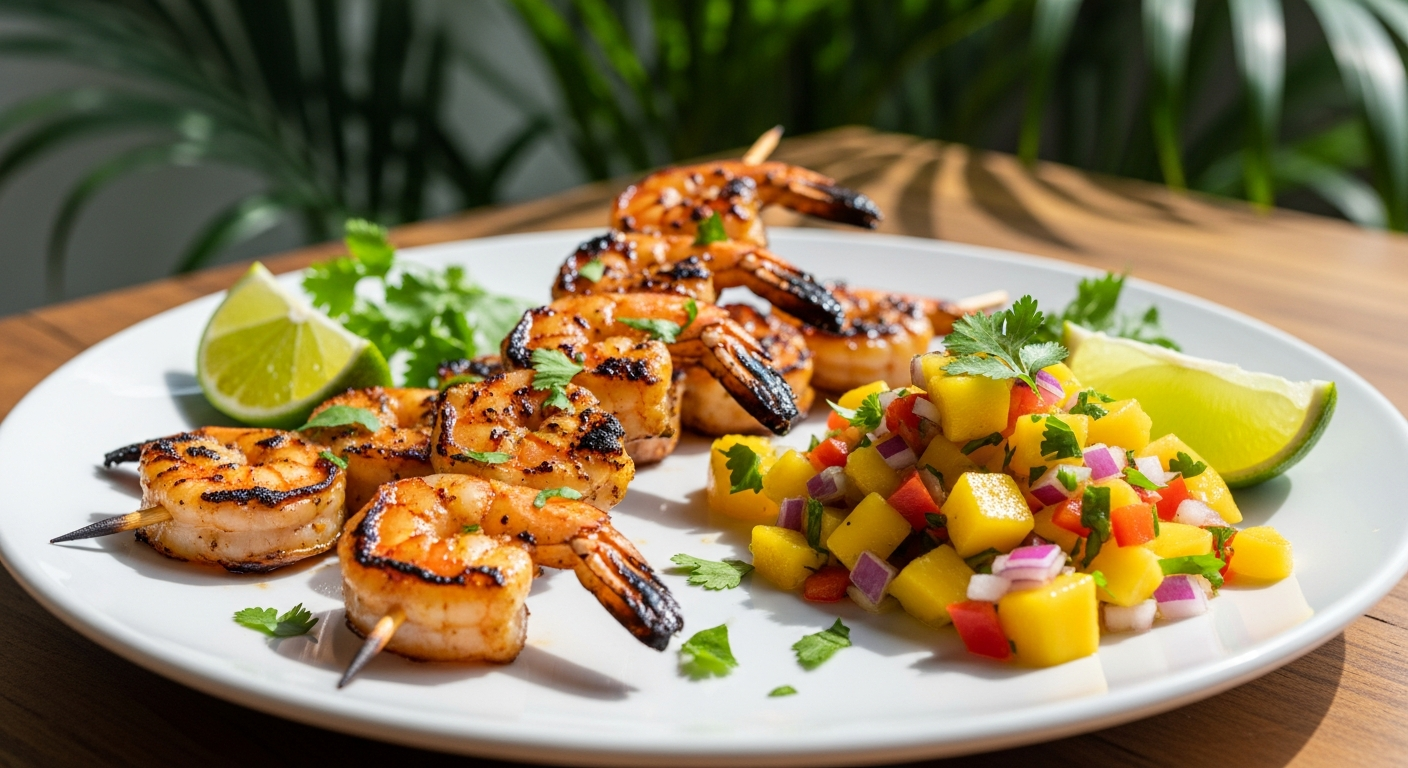
Jerk Lobster: The Ultimate Caribbean Luxury
Jerk lobster — grilled over charcoal with scotch bonnet and allspice marinade — is the premium expression of Jamaican jerk seafood. Caribbean spiny lobster (clawless, sweeter than Maine lobster) is the traditional choice. This guide covers butterfly splitting, marinade application, grill timing, and how to serve this spectacular dish.
Caribbean Spiny Lobster vs Maine Lobster
In Jamaica and throughout the Caribbean, the native lobster is the Caribbean spiny lobster (Panulirus argus) — clawless, with all the edible meat in the tail, and a slightly sweeter, more delicate flavor than the clawed Maine lobster. Caribbean spiny lobster tails are available frozen at specialty seafood markets and online year-round. If spiny lobster is unavailable, Maine or Canadian lobster tails are an excellent substitute — the claw meat can also be grilled or broiled separately with jerk butter.
For jerk cooking, lobster tails (rather than whole lobsters) are the most practical format: they are easier to split, marinate, grill, and serve. Size: 6–8 oz tails are ideal for individual portions; 10–12 oz tails work for sharing. See the jerk seafood guide for general seafood selection principles.
Butterfly Splitting
Butterfly the lobster tail before marinating for maximum marinade surface contact and beautiful presentation. Using kitchen shears, cut lengthwise through the center of the hard shell on the top of the tail. Stop just before the fan. With your thumbs, spread the shell open, revealing the entire length of the tail meat. Gently lift the meat up through the shell split so it rests on top of the shell (the shell acts as a boat and handle during grilling). The butterfly presentation looks stunning on the grill and allows the marinade to contact the full length of the exposed meat.
Jerk Marinade for Lobster
Lobster tail meat is delicate — use a gentler jerk marinade with less citrus to avoid over-tenderizing. For 2 lobster tails: 2 scotch bonnets (seeded for moderation — lobster's delicacy is worth preserving), 3 allspice berries ground, 2 garlic cloves, 1 green onion, 1 teaspoon fresh thyme, 1 tablespoon soy sauce, 1 tablespoon rum, 1 tablespoon butter (melted, for richness), juice of half a lime, pinch cinnamon. Brush the marinade generously over the exposed meat. Marinate 15–20 minutes maximum. Keep refrigerated during marinating.
Grilling Jerk Lobster Tails
Grill meat-side down over direct medium-high heat (375–400°F) for 4–5 minutes until the meat is lightly charred and pulls slightly away from the shell. Flip to shell-side down and cook 4–6 more minutes, basting the exposed meat with jerk butter (2 tablespoons butter, 1 tablespoon jerk marinade, melted together) every 2 minutes. The tail is done when the meat is opaque throughout and firm to the touch, internal temperature approximately 140°F. Do not overcook — overcooked lobster becomes tough and rubbery quickly.
Serve shell-side up on the plate (the shell is the presentation), split meat facing up and glistening with jerk butter. Garnish with lime wedges and fresh thyme. Serve immediately — lobster holds poorly once cooked.
Serving Jerk Lobster
Jerk lobster is a luxury presentation — pair with equally refined accompaniments. Coconut rice, grilled corn with jerk butter, and a fresh mango salsa work beautifully. A cold glass of Jamaican champagne (sparkling fruit drink) or an actual sparkling wine plays well against the butter-rich lobster and scotch bonnet heat. For a full Jamaican feast, add jerk shrimp skewers and jerk salmon for a multi-protein seafood spread.
Frequently Asked Questions
Frequently Asked Questions
How long to cook jerk lobster tails on a grill?
What is the difference between Caribbean and Maine lobster for jerk?
Can I use frozen lobster tails for jerk?
Is jerk lobster too spicy for the lobster's delicate flavor?
What wine or drink pairs with jerk lobster?
Free Newsletter
Get Authentic Jerk Recipes Delivered
Authentic Jamaican recipes, cooking tips, and new guides delivered to your inbox. No spam — unsubscribe any time.
No spam. Unsubscribe anytime.
Complete Guide
Jerk Seafood Guide: Shrimp, Fish, Lobster & More
Everything you need to know about this topic in one comprehensive guide.
Read the complete guide →Continue Learning
Authority Guides
Related Topics
Written by
Jerk Cuisine Specialist
Marcus Thompson has spent over a decade studying Jamaican culinary traditions, from the jerk pits of Boston Bay to home kitchens across the Caribbean diaspora.
View full bio