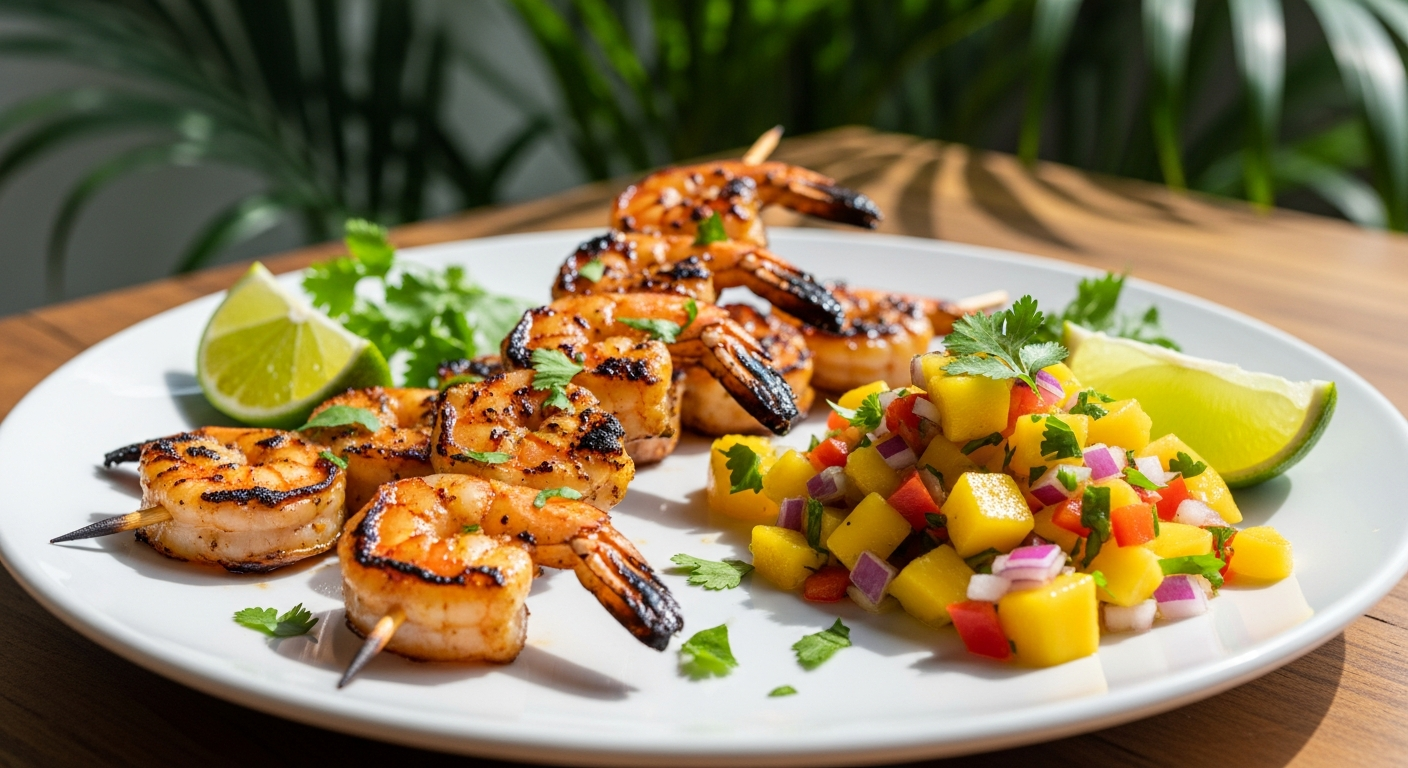
Jerk Salmon: Caribbean Heat Meets Rich Atlantic Fish
Jerk salmon works because the rich fat content of Atlantic salmon carries jerk flavors exactly the way pork shoulder fat does — the scotch bonnet and allspice penetrate the fat layer and distribute throughout the fillet during cooking. Marinate 30–60 minutes, grill skin-on over high heat, and pull at 125–130°F for silky medium-rare that showcases both the salmon and the jerk marinade.
Why Salmon Works for Jerk
Salmon is the best jerk fish for several reasons. Its high fat content (especially in Atlantic farmed salmon and wild king salmon) carries the oil-soluble flavor compounds in jerk marinade — the allspice, scotch bonnet oils, and herb aromatics — throughout the fillet during cooking. Lean fish like snapper or mahi-mahi absorb marinade primarily on the surface; salmon absorbs it into the fat layer and distributes it internally. The result is a more integrated, complex flavor throughout the fillet rather than a surface-only spice coating.
Salmon's pink-orange flesh also presents beautifully against the dark char of jerk marinade — the visual contrast makes it one of the most appealing jerk seafood presentations. The full jerk seafood guide covers all seafood options.
Marinade for Jerk Salmon
Marinating time for salmon: 30–60 minutes maximum for fillets (up to 90 minutes for thick portions over 1.5 inches). Beyond 90 minutes, the lime acid denatures the surface protein and creates a textural change — the exterior becomes slightly mealy and loses the clean, silky salmon texture. Use a marinade with slightly less citrus than you'd use for pork: 1 lime's juice (not 2), with vinegar or rum providing additional acid if needed.
Salmon-specific marinade additions that work well: 1 tablespoon fresh ginger (grated), which complements both the salmon and the scotch bonnet; 1 tablespoon coconut aminos or soy sauce for umami depth; 2 tablespoons neutral oil to promote the caramelization of the marinade on the fish surface. See the complete jerk marinade guide for base recipe.
Cooking Jerk Salmon
Skin-on grill: Oil the grill grate thoroughly. Place salmon skin-side down over direct high heat. Do not move for 4–5 minutes — the skin will crisp and release naturally when it's ready. Flip once, cook 2–3 minutes more. Target 125–130°F for medium-rare (silky, slightly translucent in the center), or 145°F for fully opaque (USDA guideline). The skin absorbs the char and protects the flesh, making skin-on the easier and better method for grilling.
Oven cedar plank: Soak a cedar plank in water for 1 hour. Place salmon skin-side down on the plank. Roast at 400°F for 12–15 minutes until 125–130°F internal. The cedar adds a subtle woodsy note that complements the jerk spice. This method is excellent for presentation — serve directly on the plank.
Sheet pan oven: Line a baking sheet with foil (the marinade will caramelize and burn onto the pan otherwise). Roast at 425°F for 12–15 minutes, or broil at high for 8–10 minutes for more char. Sheet pan is the most reliable indoor method.
Temperature Guide
Salmon internal temperature targets: 125–130°F (medium-rare — translucent, silky, most flavorful), 130–135°F (medium — slightly opaque throughout, still moist), 145°F (USDA guideline — fully opaque, significantly drier). For jerk salmon, 125–130°F is the recommended target — the jerk spice profile benefits from the richness of medium-rare salmon. A reliable instant-read thermometer is essential for hitting this narrow window accurately.
Serving Jerk Salmon
Jerk salmon pairs excellently with fruit-forward accompaniments that offset the heat: mango salsa, pineapple salsa, or a simple lime-dressed cucumber and tomato salad. Traditional Jamaican sides — rice and peas, fried plantain, festival — work equally well. A drizzle of jerk aioli or coconut crema over the salmon completes the presentation. For a lighter approach, serve over a green salad with a jerk vinaigrette and sliced avocado.
Frequently Asked Questions
Frequently Asked Questions
What temperature for jerk salmon?
How long to marinate salmon in jerk seasoning?
Should I cook jerk salmon skin-on or skinless?
Can I use frozen salmon for jerk?
What is the best type of salmon for jerk?
Editorial Selection
Recommended Products
Instant-Read Thermometer
EssentialBest for: Salmon, all delicate fish
Salmon has a 10°F window between perfect and dry — only a thermometer catches this reliably.
Why we recommend it: At 130°F salmon is silky; at 145°F it's significantly drier. A thermometer is the only reliable way to hit the target.
Affiliate link coming soonEditorial note: These are independent recommendations based on quality and usefulness for jerk cooking. We may earn a small commission if you purchase through our links — at no extra cost to you. See our affiliate disclosure for full details.
Free Newsletter
Get Authentic Jerk Recipes Delivered
Authentic Jamaican recipes, cooking tips, and new guides delivered to your inbox. No spam — unsubscribe any time.
No spam. Unsubscribe anytime.
Complete Guide
Jerk Seafood Guide: Shrimp, Fish, Lobster & More
Everything you need to know about this topic in one comprehensive guide.
Read the complete guide →Continue Learning
Authority Guides
Related Topics
Recipes & Techniques
Buying Guides
Written by
Jerk Cuisine Specialist
Marcus Thompson has spent over a decade studying Jamaican culinary traditions, from the jerk pits of Boston Bay to home kitchens across the Caribbean diaspora.
View full bio