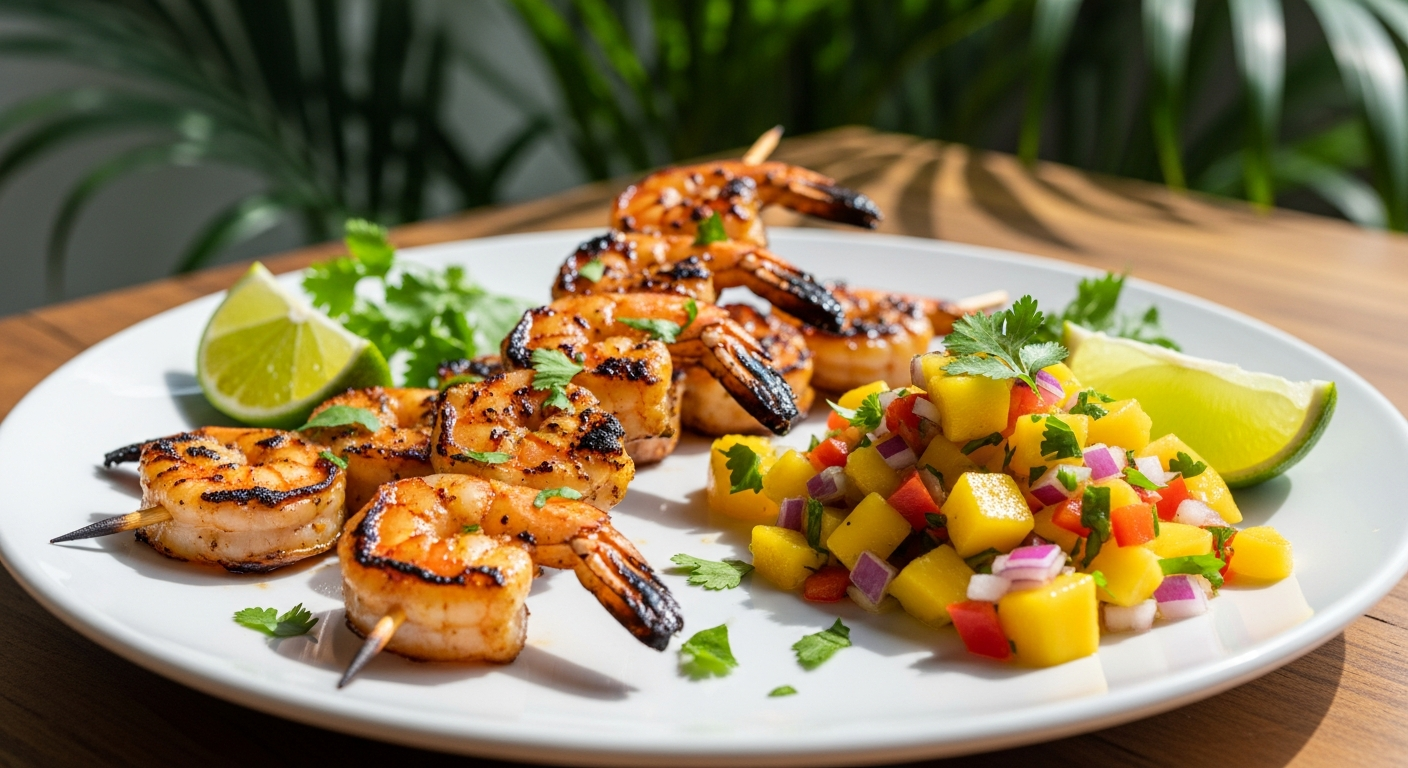
Best Temperature for Jerk Seafood: Complete Internal Temp Guide
Jerk seafood has tighter temperature windows than jerk meat — salmon is best at 125–130°F (medium-rare), shrimp at 120–125°F (just cooked), and lobster at 140°F. The USDA safe minimum for seafood is 145°F, but many seafood types are significantly drier at that temperature. This guide explains the ideal targets and why.
Why Seafood Temperature Is More Sensitive Than Meat
Seafood has less connective tissue than meat — there is no collagen to break down at high temperatures, and the proteins denature (cook) faster and more completely. The narrow window between "perfectly cooked" and "overcooked and dry" is 10–15°F for most seafood — compared to 50–60°F for pork shoulder. This means precision matters far more with jerk seafood than jerk pork, and a good instant-read thermometer is more important for seafood than for any other jerk protein. The full seafood guide is at jerk seafood.
Temperature Guide by Seafood Type
| Seafood | USDA Safe Min | Ideal Target | Notes |
|---|---|---|---|
| Salmon | 145°F | 125–130°F (medium-rare) | Silky, rich; noticeably drier at 145°F |
| Firm white fish (snapper, mahi-mahi) | 145°F | 140–145°F | Less forgiving than salmon; cook to 145°F |
| Shrimp | 145°F | 120–125°F | Loose C-shape; rubbery at 145°F |
| Lobster tail | 145°F | 135–140°F | Becomes tough and rubbery at 150°F+ |
| Scallops | 145°F | 125–130°F | Just-opaque center; hard and rubbery above 140°F |
Visual Doneness Cues
When a thermometer isn't practical for quick-cooking seafood, visual cues provide guidance. Shrimp: cook to a loose "C" shape and pink-opaque throughout — a tight "O" is overcooked. Salmon: the flesh changes from translucent to opaque from the outer edge inward — at 125–130°F, the very center shows a narrow translucent area; at 145°F, fully opaque throughout. Firm white fish: flakes with gentle fork pressure at 145°F. Scallops: opaque on the exterior surfaces with a slightly translucent center at 125–130°F; fully opaque (and overcooked) at 145°F. Lobster: meat changes from translucent grey to opaque white; tail meat curls away from the shell slightly. These visual cues are useful guides but are less precise than a thermometer — especially for salmon, where the difference between ideal and overcooked is invisible on the surface.
Safety Note on Seafood Temperatures
The USDA safe minimum for all seafood is 145°F. Cooking seafood to the ideal culinary temperatures below 145°F (particularly salmon at 125–130°F and shrimp at 120–125°F) carries a small additional food safety risk compared to 145°F — primarily relevant for immunocompromised individuals, pregnant women, young children, and elderly adults. For these groups, cook all seafood to 145°F regardless of texture preference. For healthy adults, the risk at culinary ideal temperatures (from commercially handled, properly stored seafood) is very low — but it exists and should be acknowledged. If in doubt, cook to 145°F. See the full jerk seafood guide for food safety context.
Frequently Asked Questions
Frequently Asked Questions
What temperature should jerk salmon be cooked to?
What temperature should jerk shrimp be cooked to?
How do I know when jerk scallops are done?
Why is seafood better at lower temperatures than meat?
Can I use one thermometer for both jerk pork and jerk seafood?
Editorial Selection
Recommended Products
Fast-Read Instant Thermometer
EssentialBest for: All seafood
Reads in 1–3 seconds — essential for quick-cooking seafood where overcooking happens in seconds.
Why we recommend it: Shrimp go from perfect to rubbery in under 60 seconds at high heat. A 10-second thermometer is too slow. Only a 1–3 second reader catches the window reliably.
Affiliate link coming soonEditorial note: These are independent recommendations based on quality and usefulness for jerk cooking. We may earn a small commission if you purchase through our links — at no extra cost to you. See our affiliate disclosure for full details.
Free Newsletter
Get Authentic Jerk Recipes Delivered
Authentic Jamaican recipes, cooking tips, and new guides delivered to your inbox. No spam — unsubscribe any time.
No spam. Unsubscribe anytime.
Complete Guide
Jerk Seafood Guide: Shrimp, Fish, Lobster & More
Everything you need to know about this topic in one comprehensive guide.
Read the complete guide →Continue Learning
Authority Guides
Related Topics
Buying Guides
Written by
Jerk Cuisine Specialist
Marcus Thompson has spent over a decade studying Jamaican culinary traditions, from the jerk pits of Boston Bay to home kitchens across the Caribbean diaspora.
View full bio