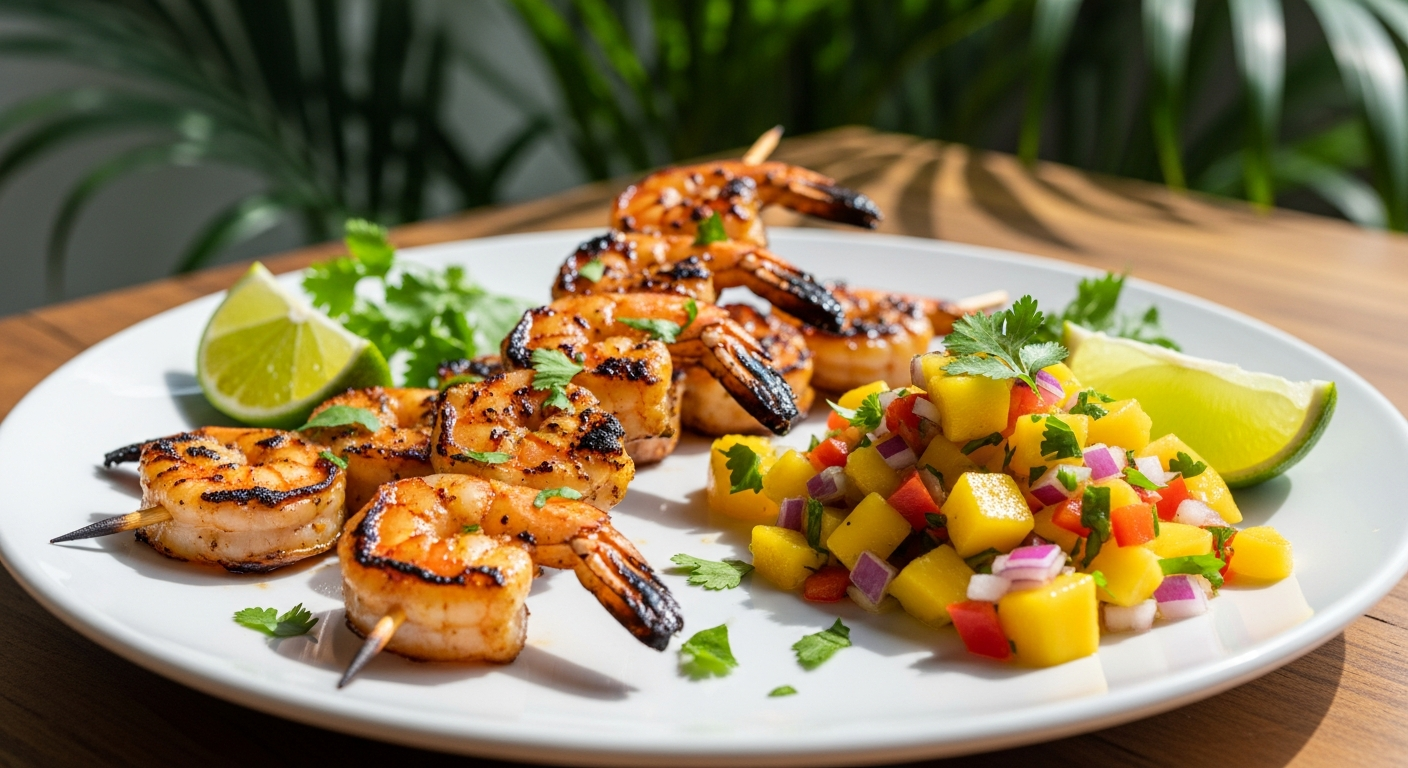
Jerk Scallops: The Perfect Sear with Caribbean Heat
Jerk scallops are one of the most technically precise jerk seafood preparations — the goal is a deep, mahogany sear on both flat sides of the scallop while the interior remains just barely cooked through. The scotch bonnet and allspice in the jerk marinade create an extraordinary crust when the scallop hits a screaming-hot cast iron pan.
Dry vs Wet Scallops — Why It Matters
The most important choice when buying scallops for jerk cooking is dry vs wet. Wet scallops have been treated with sodium tripolyphosphate (STP) — a preservative that causes them to absorb water, increasing weight by 20–30%. When wet scallops hit a hot pan, they release all that water, creating steam and preventing the Maillard reaction that produces a proper sear. You end up with gray, steamed scallops instead of the deep mahogany crust needed for jerk scallops.
Dry scallops (labeled "dry" or "dry-packed" or "chemical-free") have not been treated — they sear immediately on contact with a hot pan. They are typically labeled clearly at specialty seafood counters. Dry scallops are worth paying a premium for — the difference in result is dramatic. Ask specifically if unsure. U10 or U8 scallops (under 10 or under 8 per pound — very large) are ideal for jerk: they have enough surface area for a proper sear and enough interior to remain just cooked through.
Marinade Timing — Minimal Is Better
Scallops require almost no marinating time. Unlike pork (which benefits from 24–48 hours), scallops should be marinated for 10–15 minutes maximum. Beyond 15 minutes, the acid in the marinade begins denaturing the delicate surface protein, causing the exterior to turn opaque white before it even touches the pan — this prevents the sear. More importantly, the acid softens the surface, removing the firm, dry texture needed for a proper crust.
A better approach for scallops: apply a very light coat of jerk paste (thinned with oil) 10 minutes before cooking, or simply use a jerk dry rub (pressed lightly onto both flat surfaces) immediately before cooking. See the best jerk seasonings guide for dry rub options.
The Drying Step
Before cooking, place scallops on a paper towel-lined plate and blot completely dry — including any marinated surfaces. This is the single most important step for a proper sear. Even dry-packed scallops have surface moisture; any moisture that reaches the hot pan creates steam. Dry scallops sear; wet scallops steam. Pat dry, then season or apply jerk paste immediately before cooking.
The Cast Iron Sear
Heat a cast iron skillet or stainless steel pan over the highest heat your stove can produce for 3–4 minutes. Add 1 tablespoon neutral oil with high smoke point (avocado or grape seed oil). The oil should shimmer and smoke immediately. Place scallops flat-side down in the pan — do not crowd, leave 1 inch between each. Do not move them. Cook 2–3 minutes until a deep mahogany crust forms on the contact surface. Flip once with tongs and cook 1–1.5 minutes on the second side. The internal temperature should be approximately 125–130°F — firm on the outside, barely translucent at the center. Total cook time: under 5 minutes.
Add a tablespoon of butter, 1 garlic clove, and a few thyme sprigs in the last 30 seconds and baste the scallops continuously — this produces a glossy, aromatic finish that brings the jerk seasoning together beautifully. See the cast iron guide for pan recommendations.
Serving Jerk Scallops
Serve jerk scallops immediately — they lose their texture within minutes of cooking. Classic presentations: over a smooth Caribbean-style pea purée, on a pool of coconut cream reduction with mango salsa alongside, or over cauliflower rice with a scotch bonnet oil drizzle. The contrast between the caramelized, spiced exterior and the silky barely-cooked interior is the defining quality — present immediately so diners experience it at its best.
Frequently Asked Questions
Frequently Asked Questions
How do I get a sear on jerk scallops?
How long to cook jerk scallops?
Can I grill jerk scallops instead of using a skillet?
How many scallops per person for jerk scallops?
What drink pairs with jerk scallops?
Editorial Selection
Recommended Products
Cast Iron Skillet
EssentialBest for: All seared seafood
The only pan that gets hot enough to produce a proper jerk scallop sear.
Why we recommend it: Cast iron retains heat when cold scallops are added — other pans lose heat and steam the scallop rather than searing it.
Affiliate link coming soonEditorial note: These are independent recommendations based on quality and usefulness for jerk cooking. We may earn a small commission if you purchase through our links — at no extra cost to you. See our affiliate disclosure for full details.
Free Newsletter
Get Authentic Jerk Recipes Delivered
Authentic Jamaican recipes, cooking tips, and new guides delivered to your inbox. No spam — unsubscribe any time.
No spam. Unsubscribe anytime.
Complete Guide
Jerk Seafood Guide: Shrimp, Fish, Lobster & More
Everything you need to know about this topic in one comprehensive guide.
Read the complete guide →Continue Learning
Authority Guides
Buying Guides
Written by
Jerk Cuisine Specialist
Marcus Thompson has spent over a decade studying Jamaican culinary traditions, from the jerk pits of Boston Bay to home kitchens across the Caribbean diaspora.
View full bio