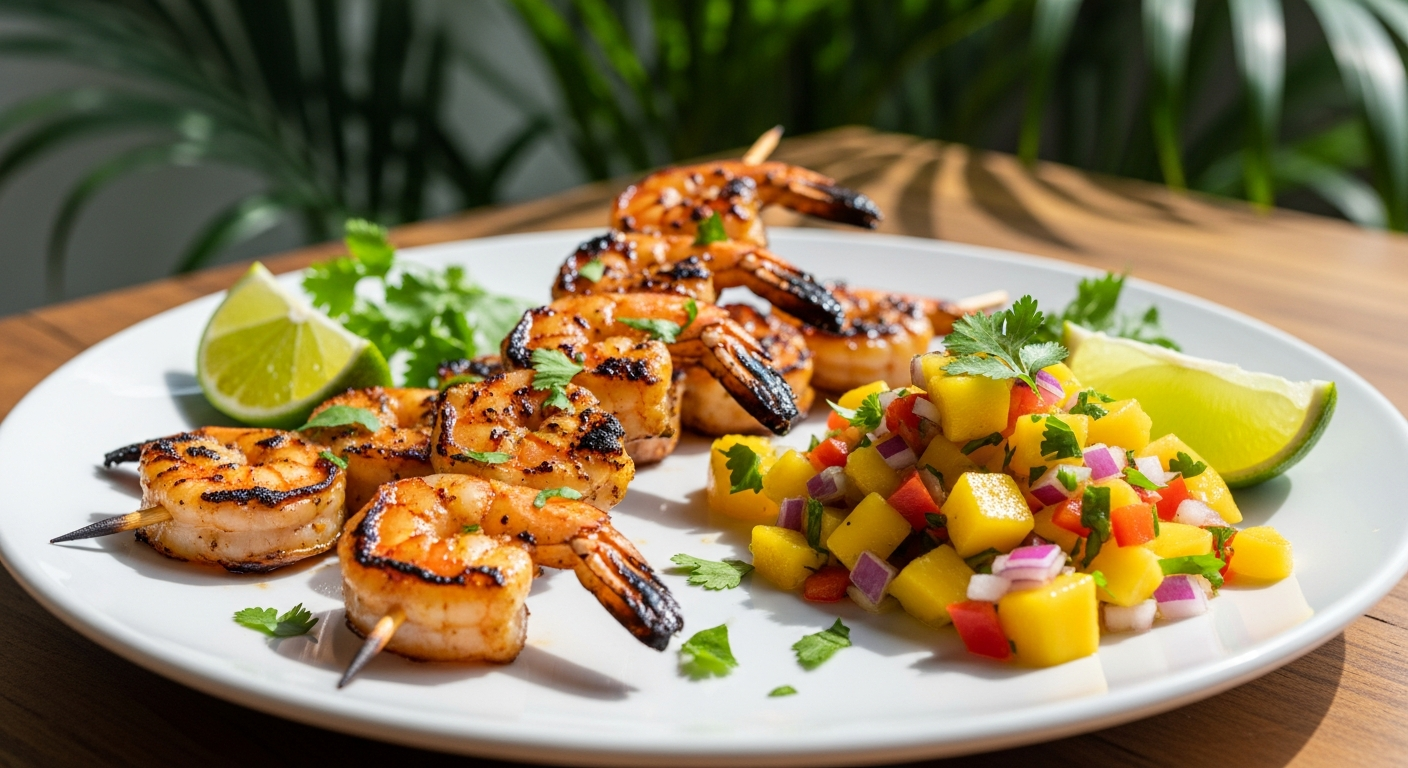
Jerk Shrimp: Bold Caribbean Flavor in Under 15 Minutes
Jerk shrimp is the fastest jerk cooking project — 30 minutes of marinating, 3 minutes per side on a hot grill, and you have intensely spiced, charred shrimp ready for tacos, rice bowls, or skewers. The high surface-area-to-volume ratio of shrimp means jerk marinade penetrates fully in a fraction of the time needed for meat.
Why Shrimp and Jerk Are a Perfect Match
Shrimp's mild, sweet flavor profile is an ideal canvas for jerk seasoning — the scotch bonnet heat and allspice warmth don't need to compete with a strong protein flavor, so they come through immediately and clearly. The natural sweetness of shrimp (from glycine, an amino acid) counterbalances the scotch bonnet fire in a way that makes jerk shrimp more accessible than jerk chicken for heat-sensitive eaters, despite using the same amount of scotch bonnet in the marinade.
Shrimp also cooks in 3–4 minutes total at high heat, making jerk shrimp the fastest jerk cooking project available. The short cook time means the marinade is essentially a flavor coating rather than a penetration marinade — the shrimp surface caramelizes and chars while the marinade itself cooks onto the surface. This is actually ideal for jerk, where the charred, caramelized marinade layer is part of the flavor.
Choosing Your Shrimp
For jerk shrimp, use large or jumbo shrimp (16/20 count per pound, or 21/25) — smaller shrimp cook too fast to develop proper caramelization before the center overcooks. Shell-on or shell-off both work: shell-on adds flavor and protects the shrimp from the high heat, but requires eating around the shell; peeled-and-deveined is more practical for tacos and rice bowls. For grilling, shell-on with the tail left on looks most dramatic on skewers and holds together better on the grill.
Fresh vs frozen: frozen shrimp is often higher quality than "fresh" shrimp at supermarkets — most "fresh" seafood counter shrimp has been previously frozen and thawed, sometimes multiple times. Buy frozen IQF (individually quick-frozen) shrimp and thaw yourself under cold running water immediately before marinating. See the jerk seafood guide for more on seafood selection and sourcing.
Jerk Marinade for Shrimp
Marinating time for shrimp is measured in minutes, not hours. The marinade penetrates the surface of shrimp within 15–30 minutes. Beyond 30–45 minutes, the acid in the lime juice begins chemically "cooking" the shrimp surface (similar to ceviche), making the exterior slightly opaque and changing the texture. For jerk shrimp: 15–30 minutes maximum, refrigerated.
Use a looser jerk marinade than you would for pork — add 1–2 tablespoons of olive oil to help the marinade adhere and promote caramelization. The same scotch bonnet, allspice, garlic, green onion, thyme base applies: 2–3 scotch bonnets, 4 allspice berries ground, 3 garlic cloves, 2 green onions, 1 tablespoon fresh thyme, 1 tablespoon soy sauce, 1 tablespoon rum or coconut vinegar, 2 tablespoons olive oil, juice of 1 lime, ½ teaspoon cinnamon. See the complete jerk marinade recipe for all variations.
Grilling and Skillet Methods
Charcoal grill: Thread shrimp on skewers (2 skewers per shrimp prevents spinning when turning). Grill over direct high heat, 2–3 minutes per side until the shrimp are pink, opaque, and have char marks on the outside. The shrimp should curl into a loose "C" shape — a tight "O" shape means overcooked. Remove immediately when done. See the charcoal grill guide for grill setup.
Cast iron skillet: Heat a cast iron pan over high heat until smoking. Add 1 tablespoon neutral oil. Cook shrimp in a single layer (do not crowd), 2 minutes per side. This method produces excellent char and caramelization indoors, year-round. Work in batches if needed — crowding the pan causes steaming rather than searing.
Air fryer: 375°F, 6–8 minutes total, flipping halfway. Produces good results with no oil needed and easy cleanup. Less char than grill or cast iron but excellent for quick weeknight cooking. See our air fryer guide for timing details.
Serving Jerk Shrimp
Jerk shrimp works across more formats than any other jerk protein. Tacos: in corn tortillas with pickled red onion, avocado crema, and mango salsa — the combination of shrimp heat and mango sweetness is excellent. Rice bowls: over coconut rice with black beans, pineapple salsa, and lime crema. Pasta: tossed with linguine, garlic butter, and wilted spinach — an excellent Caribbean-Italian fusion. Skewers as appetizers: on bamboo skewers with a jerk dipping sauce alongside. Traditional Jamaican: over rice and peas with festival and fried plantain.
Finish with a squeeze of fresh lime and scattered sliced scotch bonnets for heat lovers. A drizzle of jerk aioli or jerk mayo completes the presentation.
Frequently Asked Questions
Frequently Asked Questions
How long to marinate shrimp in jerk marinade?
What temperature for grilling jerk shrimp?
Can I make jerk shrimp without a grill?
How do I know when jerk shrimp are done?
What sauce goes with jerk shrimp?
Editorial Selection
Recommended Products
Cast Iron Grill Pan
Best for: Indoor jerk shrimp
Perfect for indoor jerk shrimp — produces excellent char on a stovetop.
Why we recommend it: A hot cast iron produces the same caramelized marinade crust as an outdoor grill, year-round.
Affiliate link coming soonEditorial note: These are independent recommendations based on quality and usefulness for jerk cooking. We may earn a small commission if you purchase through our links — at no extra cost to you. See our affiliate disclosure for full details.
Free Newsletter
Get Authentic Jerk Recipes Delivered
Authentic Jamaican recipes, cooking tips, and new guides delivered to your inbox. No spam — unsubscribe any time.
No spam. Unsubscribe anytime.
Complete Guide
Jerk Seafood Guide: Shrimp, Fish, Lobster & More
Everything you need to know about this topic in one comprehensive guide.
Read the complete guide →Continue Learning
Authority Guides
Related Topics
Recipes & Techniques
Buying Guides
Written by
Jerk Cuisine Specialist
Marcus Thompson has spent over a decade studying Jamaican culinary traditions, from the jerk pits of Boston Bay to home kitchens across the Caribbean diaspora.
View full bio