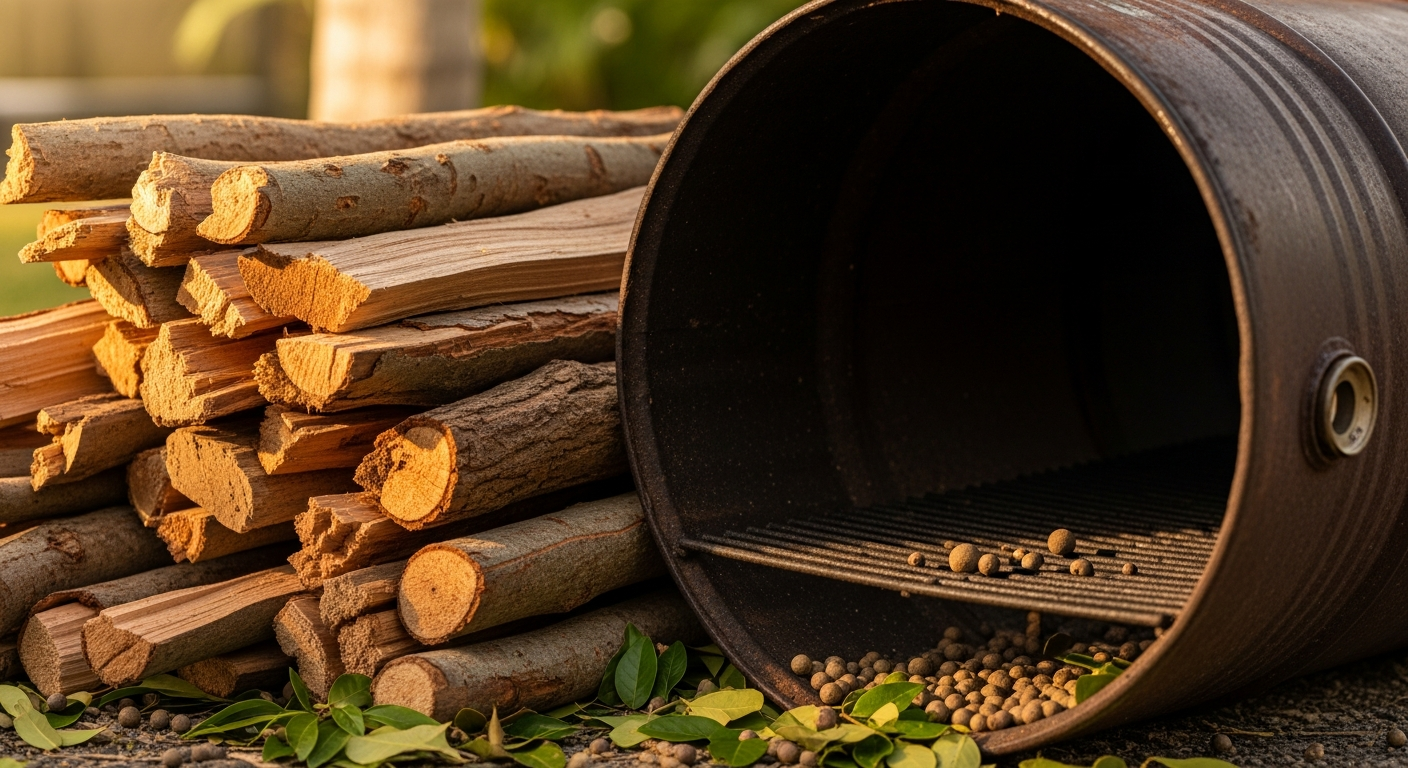
Pimento Wood: The Authentic Jamaican Jerk Smoking Wood
Pimento wood — from the allspice tree — is the traditional Jamaican jerk cooking fuel. Its smoke contains the same eugenol-rich aromatic compounds as allspice berries, producing a smoke that compounds the jerk marinade's flavor rather than competing with it. This guide covers everything about sourcing, using, and substituting pimento wood for authentic jerk smoking.
What Is Pimento Wood?
Pimento wood comes from the allspice tree (Pimenta dioica) — the same tree that produces the allspice (pimento) berries used in jerk marinade. When pimento wood is burned, the smoke produced is rich in eugenol and other volatile aromatic compounds from the allspice tree — the same compounds that give allspice its characteristic clove-cinnamon-nutmeg aroma. In traditional Jamaican jerk cooking at Boston Bay pits, fresh green pimento wood logs are used directly as the primary fuel — the meat is cooked over both the embers and the fragrant smoke of the allspice tree simultaneously. The result is a flavor that cannot be replicated by substituting any other wood. See the allspice berries guide for the allspice tree's full profile, and the history of jerk for how pimento wood became integral to the tradition.
The complete equipment and sourcing guide is at the pimento wood buying guide.
Fresh Green vs Dried Pimento Wood
In Jamaica, fresh green (uncured) pimento wood is the traditional material — it is cut from living trees and used immediately, still green. Fresh green wood burns cooler and produces more fragrant, white smoke than dried wood. Outside Jamaica, fresh green pimento wood is essentially unavailable — it cannot be legally imported to most countries. What is available outside Jamaica: dried pimento wood chips, chunks, and sticks. Dried pimento wood still contains the aromatic oils but at lower concentration than fresh green wood — the result is still significantly more authentic than any substitute, but different from the fresh-wood Boston Bay experience. See the smoked jerk pork guide for the full Boston Bay method context.
Where to Source Pimento Wood
Pimento wood is increasingly available from specialty BBQ suppliers online. Sources include Caribbean food specialty retailers, artisanal smoking wood suppliers, and some BBQ specialty stores. See the pimento wood buying guide for specific suppliers and product recommendations. When purchasing: look for pimento wood from suppliers who specify Jamaican-sourced allspice tree wood — some products labeled "pimento wood" are from unrelated plants. Chunks produce more sustained smoke than chips for longer cooks; chips are suitable for shorter cooks and gas grills with smoker boxes.
Using Pimento Wood
For charcoal grills and offset smokers: add 2–3 pimento wood chunks to the coal bed at the beginning of cooking. Add 1 additional chunk every 45–60 minutes for sustained smoke. No soaking required for chunks — wet wood produces steam rather than fragrant smoke. For chips in a gas grill smoker box: a small amount of soaking (15 minutes) is acceptable — it slows burn time slightly without losing aroma significantly. For pellet grills: pimento wood pellets are rare — a blend of apple and a small amount of allspice powder added to the marinade partially approximates the effect. The smoker guide covers how to set up different equipment types for pimento wood smoking.
Substitutes for Pimento Wood
No wood perfectly substitutes for pimento wood, but these produce the closest results: Apple wood — mild, slightly sweet, clean burn that doesn't compete with jerk marinade; the best single substitute. Cherry wood — slightly sweet, good color, mild smoke. Blend of apple (80%) and hickory (20%) — the hickory adds depth without overwhelming. Avoid pure mesquite and heavy hickory for jerk — their strong smoke character masks rather than complements the allspice and scotch bonnet in the marinade. Adding extra ground allspice to the marinade (50% more) partially compensates for the loss of pimento wood's aromatic smoke — the allspice in the marinade creates internal flavor where pimento wood provides external smoke.
Frequently Asked Questions
Frequently Asked Questions
Can I buy pimento wood outside Jamaica?
Does pimento wood need to be soaked before use?
What is the flavor difference between pimento wood and regular wood smoke?
Is pimento wood sustainable?
Can pimento leaves be used for jerk smoking?
Editorial Selection
Recommended Products
Pimento Wood Chunks
Most AuthenticBest for: All smoked jerk
The most important single ingredient for authentic smoked jerk.
Why we recommend it: The difference between pimento-smoked jerk and apple-wood-smoked jerk is the entire aromatic dimension of allspice smoke — it cannot be replicated otherwise.
Affiliate link coming soonEditorial note: These are independent recommendations based on quality and usefulness for jerk cooking. We may earn a small commission if you purchase through our links — at no extra cost to you. See our affiliate disclosure for full details.
Free Newsletter
Get Authentic Jerk Recipes Delivered
Authentic Jamaican recipes, cooking tips, and new guides delivered to your inbox. No spam — unsubscribe any time.
No spam. Unsubscribe anytime.
Complete Guide
Essential Jamaican Jerk Ingredients Guide
Everything you need to know about this topic in one comprehensive guide.
Read the complete guide →Continue Learning
Authority Guides
Related Topics
Buying Guides
Written by
Jerk Cuisine Specialist
Marcus Thompson has spent over a decade studying Jamaican culinary traditions, from the jerk pits of Boston Bay to home kitchens across the Caribbean diaspora.
View full bio