Why You Should Make Jerk Marinade from Scratch
Learning to make jerk marinade from scratch is the single most impactful thing you can do to improve your jerk cooking. While store-bought seasonings have their place, a freshly made jerk marinade from scratch delivers a depth of flavor, a brightness of aroma, and a complexity of taste that no commercial product can match. The difference is comparable to the gap between fresh-squeezed orange juice and the stuff that comes from a carton. Both are orange juice, but one is alive with flavor while the other is merely adequate.
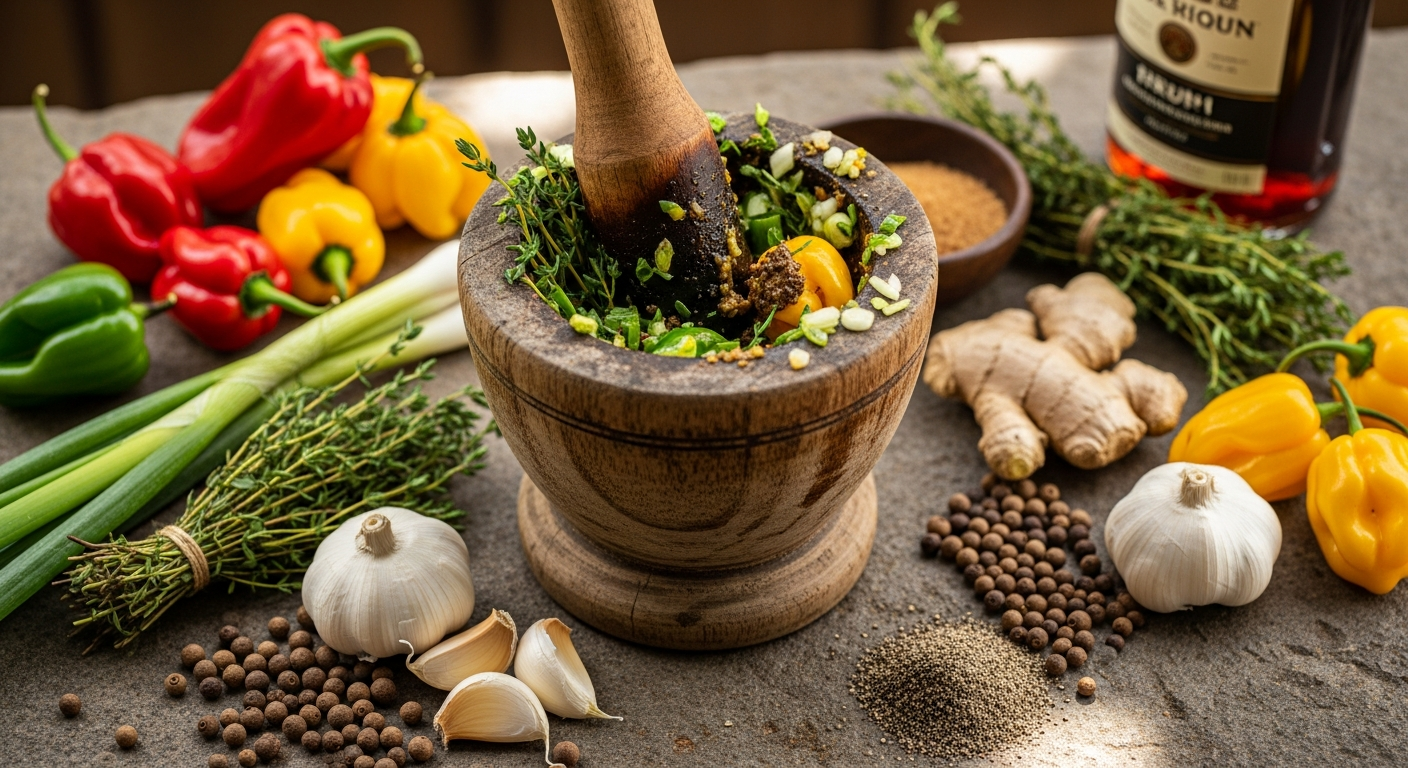
When you make jerk marinade from scratch, you are working with whole, fresh ingredients at the peak of their flavor. Fresh scotch bonnet peppers deliver a fruity, fiery heat that dried pepper flakes cannot replicate. Whole allspice berries, cracked or freshly ground just before use, release aromatic oils that pre-ground allspice lost months ago on a warehouse shelf. Fresh thyme, scallions, garlic, and ginger contribute vibrant, green flavors that dried versions can only hint at.
Essential Ingredients for Authentic Jerk Marinade from Scratch
The ingredient list for an authentic jerk marinade is surprisingly short, relying on quality rather than quantity. Here is everything you need to make enough marinade for approximately four pounds of chicken, pork, or other protein.
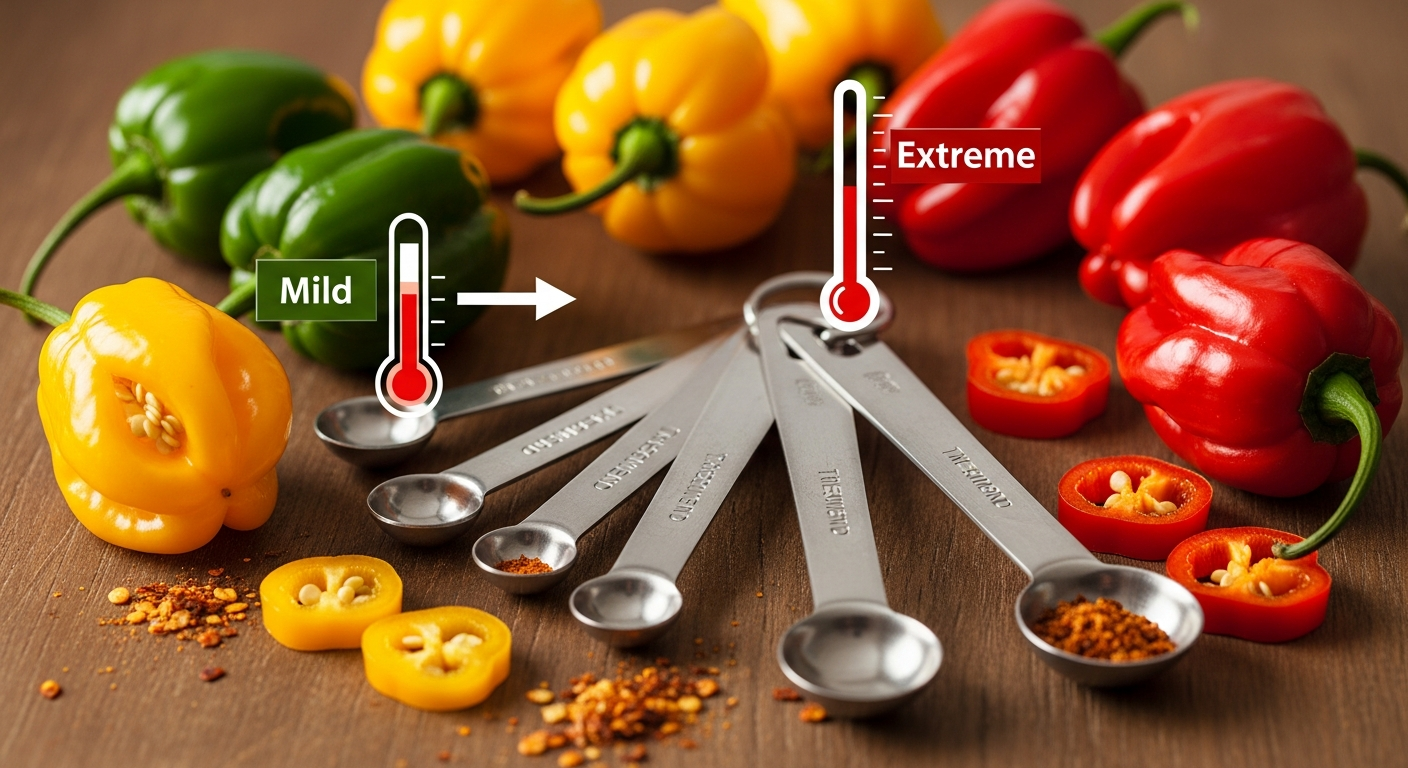
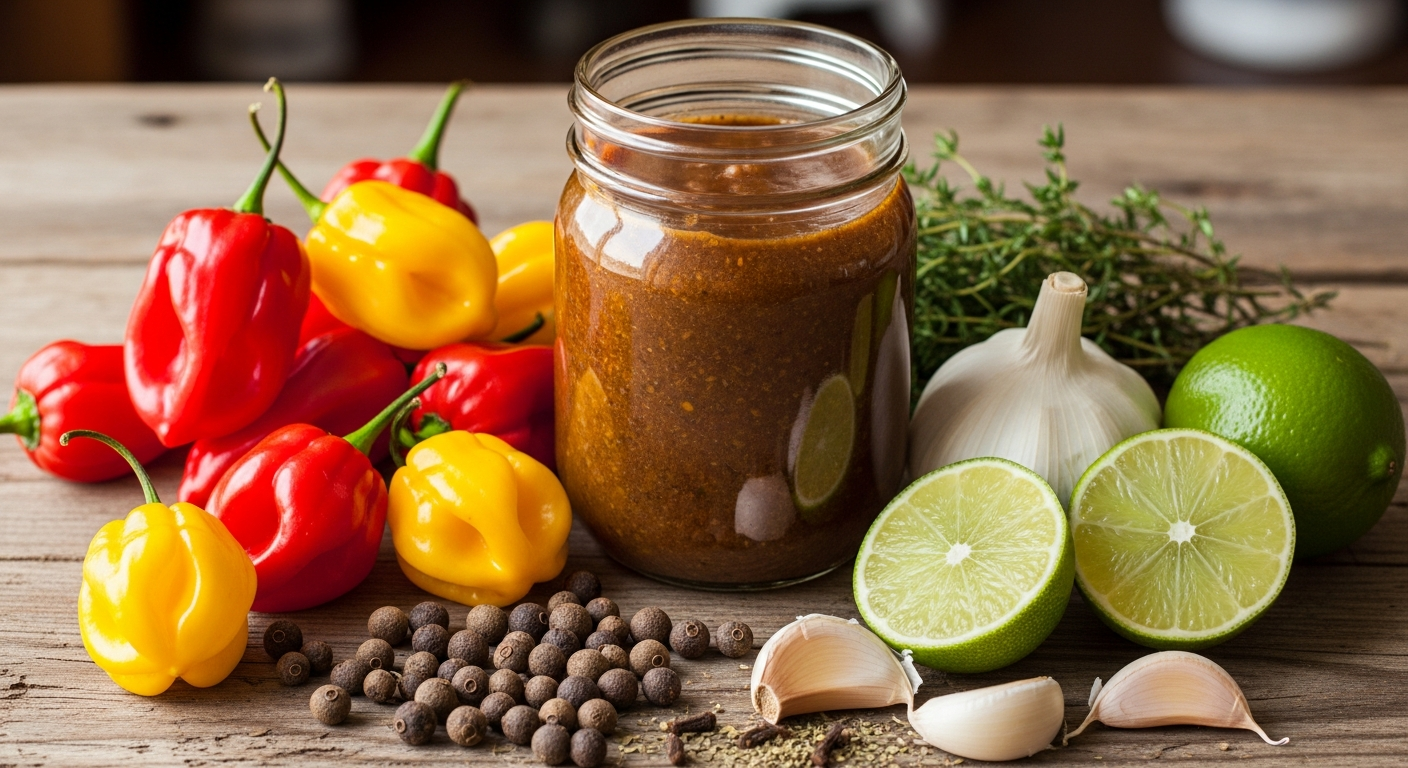
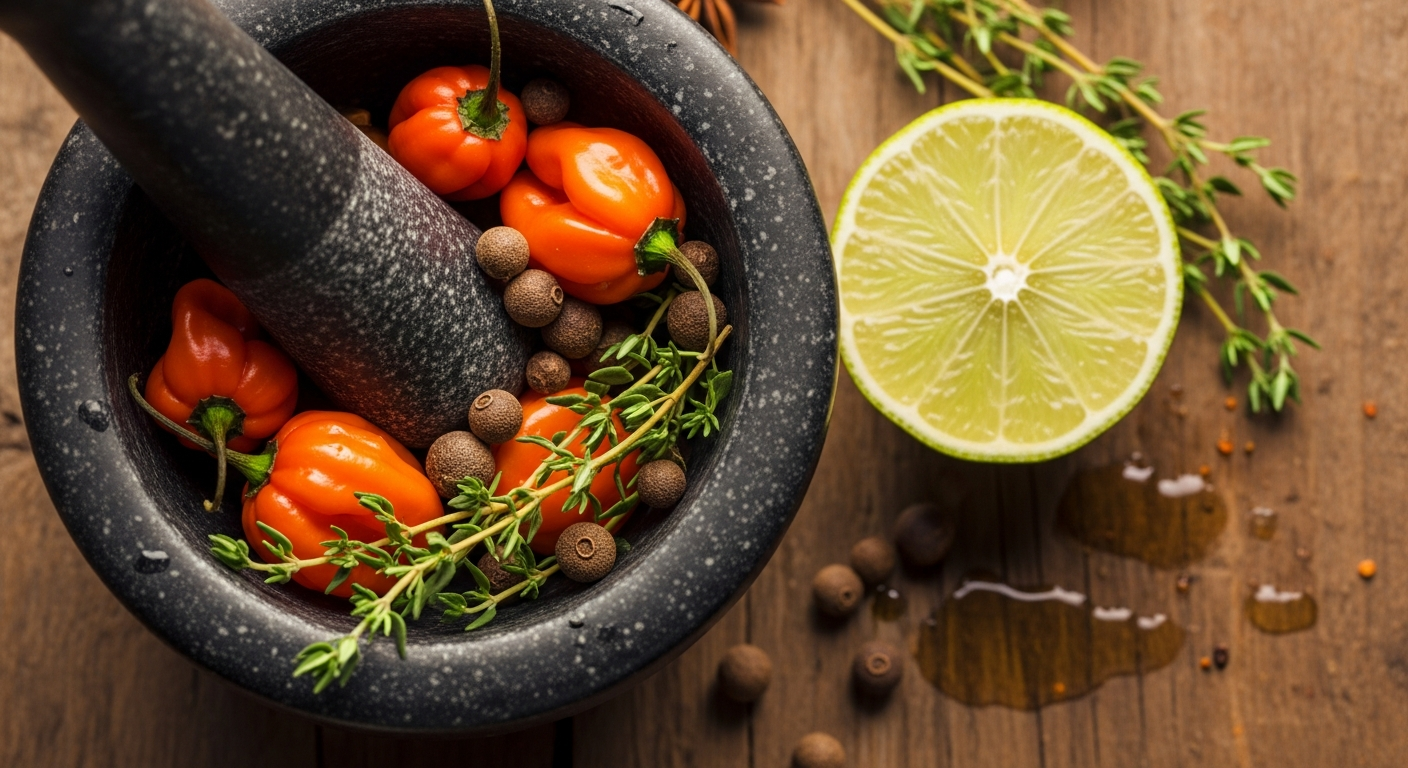
Scotch bonnet peppers are the foundation of the heat component. You need three to six peppers depending on your heat tolerance. Remove the seeds and membranes for milder heat, or include them for full-intensity authentic flavor. If scotch bonnets are unavailable, habanero peppers are the closest substitute, though they lack the fruity sweetness that makes scotch bonnets unique.
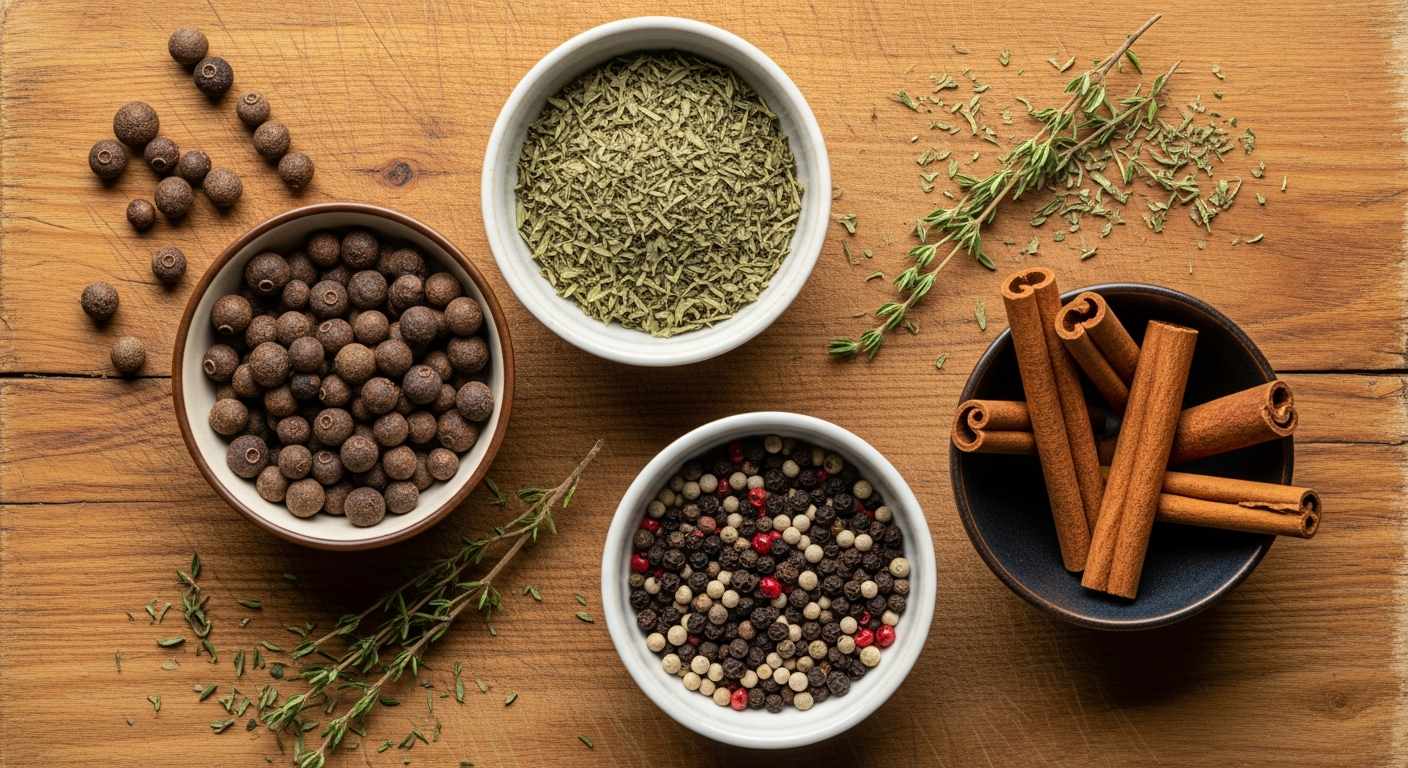
Allspice is the signature spice. Use one and a half tablespoons of whole allspice berries, lightly crushed in a mortar and pestle or measured after grinding. In Jamaica, allspice is called pimento and grows abundantly on the island. Its warm, complex flavor, which hints at cinnamon, nutmeg, and cloves all at once, is what makes jerk taste like jerk.
Fresh thyme provides the herbal backbone. Strip the leaves from about eight to ten sprigs of fresh thyme. Do not substitute dried thyme here because the fresh herb contributes essential oils and a brightness that dried thyme cannot provide. If you absolutely cannot find fresh thyme, use half the amount of dried as a last resort.
Scallions (green onions) contribute a mild, sweet allium flavor. Use six to eight whole scallions, both the white and green parts, roughly chopped. Scallions are preferred over regular onions because they blend more smoothly and provide a gentler flavor that does not overpower the other ingredients.
Garlic and ginger provide aromatic depth. Use six cloves of garlic and a two-inch piece of fresh ginger, both roughly chopped. Together they create a pungent, warming base that supports the allspice and thyme.
Soy sauce adds salt and umami. Use three tablespoons of regular soy sauce. This might seem like an unusual ingredient in a Caribbean recipe, but soy sauce has been a staple in Jamaican cooking since the arrival of Chinese immigrants in the 19th century. It adds a savory depth that plain salt alone cannot achieve.
Lime juice provides acidity. Use the juice of two to three limes. The acid serves multiple purposes: it helps break down the surface proteins of the meat for better marinade penetration, it brightens the overall flavor profile, and it provides a necessary counterbalance to the richness of the allspice and the heat of the scotch bonnets.
Brown sugar or molasses adds sweetness. Use two tablespoons of dark brown sugar or one tablespoon of blackstrap molasses. This sweetness is subtle in the finished dish but essential for caramelization during cooking and for balancing the heat and acid.
Vegetable oil helps emulsify the marinade and carries fat-soluble flavor compounds. Use two tablespoons of a neutral oil like canola or vegetable oil.
Additional ingredients that many Jamaican cooks add include a tablespoon of ground black pepper, a teaspoon of ground cinnamon, half a teaspoon of ground nutmeg, and a splash of white vinegar or Worcestershire sauce.
Step-by-Step Instructions for Making Jerk Marinade from Scratch
The process of making jerk marinade is straightforward and takes about fifteen minutes from start to finish. The key is to blend the ingredients thoroughly enough to create a smooth, cohesive paste while retaining some texture that will create interesting flavor pockets in the finished dish.
Begin by preparing the scotch bonnet peppers. Wear gloves when handling these peppers, as the capsaicin can cause painful burning on your skin that lasts for hours. Remove the stems and, if you want to reduce the heat, cut the peppers in half and scrape out the seeds and white membranes, which contain the highest concentration of capsaicin.
Toast the allspice berries in a dry skillet over medium heat for about two minutes, shaking the pan frequently, until they become fragrant and you can hear them crackle. Transfer immediately to a plate to cool. This toasting step is optional but highly recommended because it activates the essential oils in the allspice and produces a noticeably deeper, more complex flavor.
Add all the ingredients to a food processor or blender. For the best results, add the liquid ingredients first (soy sauce, lime juice, oil), then the garlic, ginger, and scallions, followed by the scotch bonnets, thyme leaves, and finally the toasted allspice and dry spices. This layering helps the blade catch and process everything more efficiently.
Process until you achieve a thick, relatively smooth paste with small visible pieces of herb and pepper throughout. The texture should be similar to a chunky pesto. If the mixture is too thick to process, add a tablespoon of water or additional lime juice to help it along. Avoid making it too smooth because some texture creates flavor variation in the finished dish.
Taste the marinade carefully using a small spoon. It should be intensely flavored, noticeably spicy, salty, and aromatic. Remember that the flavor will mellow significantly when applied to meat and cooked, so it should taste stronger than you want the finished dish to be. Adjust the heat by adding more scotch bonnet, the salt by adding more soy sauce, or the acid by adding more lime juice.
Application and Marination Technique
How you apply the marinade is almost as important as what goes into it. Score the meat first by making shallow cuts about half an inch deep into the thickest parts of the chicken or pork. These cuts create channels that allow the marinade to penetrate deeper and cook more evenly.
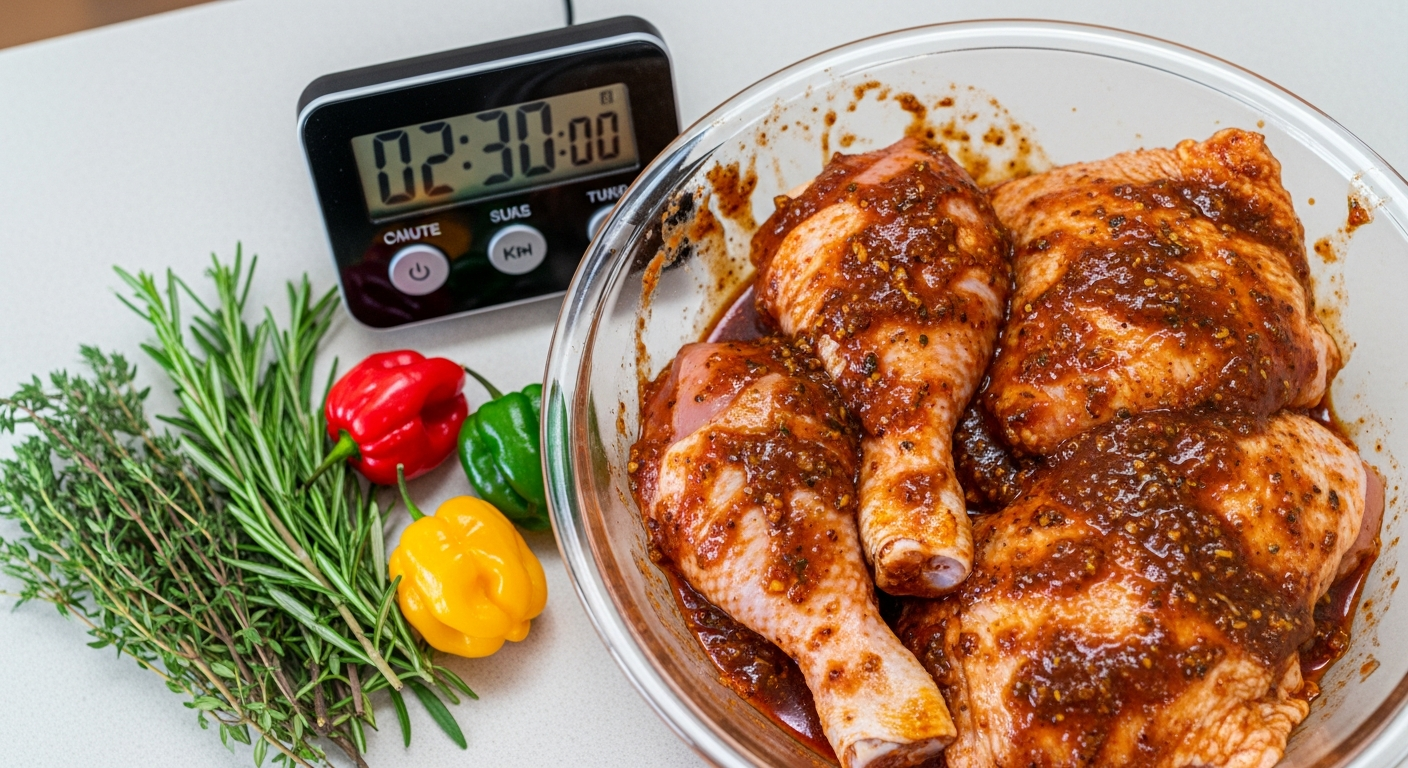
Apply the marinade generously, using your hands (wearing gloves to protect from the scotch bonnet oils) to work it into every score mark, every crevice, and every fold of the meat. The goal is a thick, even coating with extra marinade pressed into the cuts. You want approximately two tablespoons of marinade per pound of meat.
Place the marinated meat in a glass or ceramic container, a food-safe plastic container, or a heavy-duty zip-top bag. Avoid aluminum containers because the acid in the marinade can react with the metal, creating off flavors. Pour any remaining marinade over the top of the meat. Cover tightly and refrigerate.
Storing Your Homemade Jerk Marinade
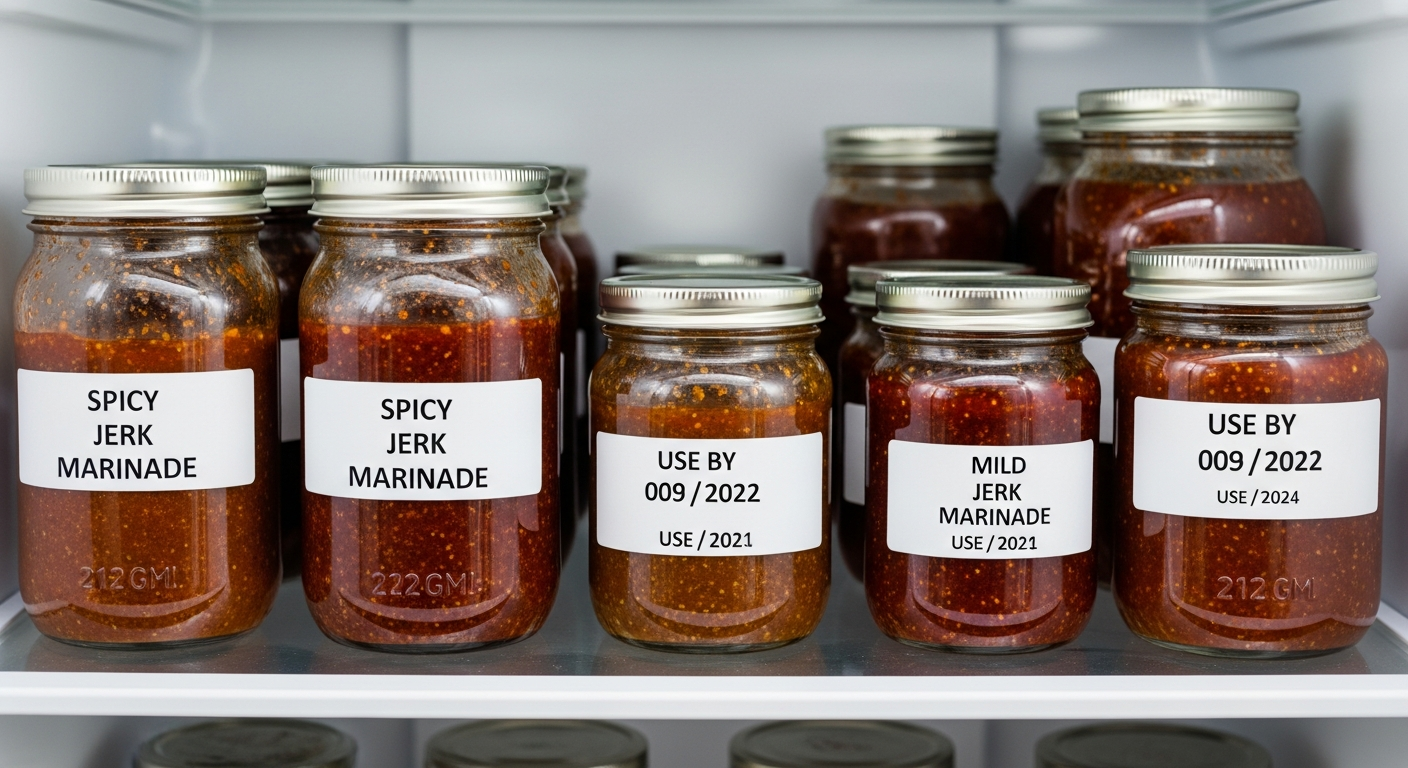
If you want to make the marinade ahead of time or in large batches, it stores exceptionally well. In the refrigerator, the marinade keeps for up to one week in an airtight container. The flavors actually improve over the first two to three days as the ingredients marry and the allspice oils fully infuse into the liquid.
For longer storage, freeze the marinade in ice cube trays for perfectly portioned amounts. Once frozen, transfer the cubes to a freezer-safe bag. Each cube provides approximately one tablespoon of marinade, making it easy to grab exactly the amount you need. Frozen marinade maintains its flavor for up to six months.
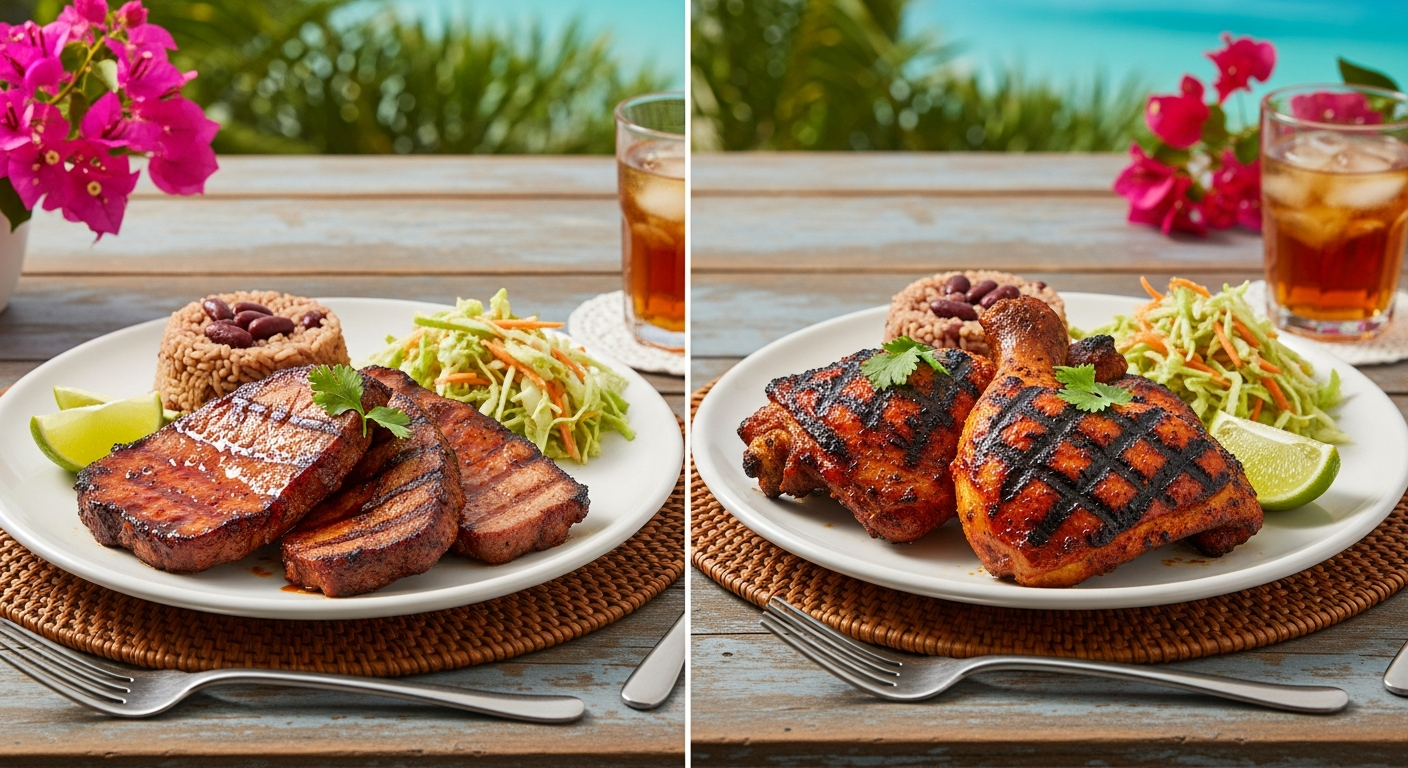
You can also freeze the marinade with the meat already added. Place chicken pieces or pork in a freezer bag, add the marinade, remove the air, and seal. The meat will marinate as it thaws in the refrigerator, combining the thawing and marinating steps into one. This is an excellent meal prep strategy that puts jerk chicken within reach on the busiest weeknights.
Variations and Customizations
Once you have mastered the basic jerk marinade from scratch, you can begin exploring variations that put your personal stamp on the recipe. A tablespoon of dark rum adds depth and complexity. A splash of pineapple juice introduces tropical sweetness that pairs beautifully with pork. Substituting half the scallions with shallots creates a more refined, almost French-inspired version that is elegant without losing its Caribbean soul.
For a smokier marinade, add a teaspoon of smoked paprika or a quarter teaspoon of liquid smoke. For an earthier version, include a tablespoon of ground cumin. For a more herbaceous blend, double the thyme and add a handful of fresh cilantro leaves. Each variation produces a distinctly different but equally delicious result, and experimenting with these additions is one of the great pleasures of making your own marinade.
The most important thing is to keep allspice and scotch bonnet as the dominant flavors. These two ingredients define jerk and should never be overshadowed by additions, no matter how creative. Every variation should taste unmistakably like jerk first and foremost, with the additional flavors providing subtle accents rather than taking over the profile.