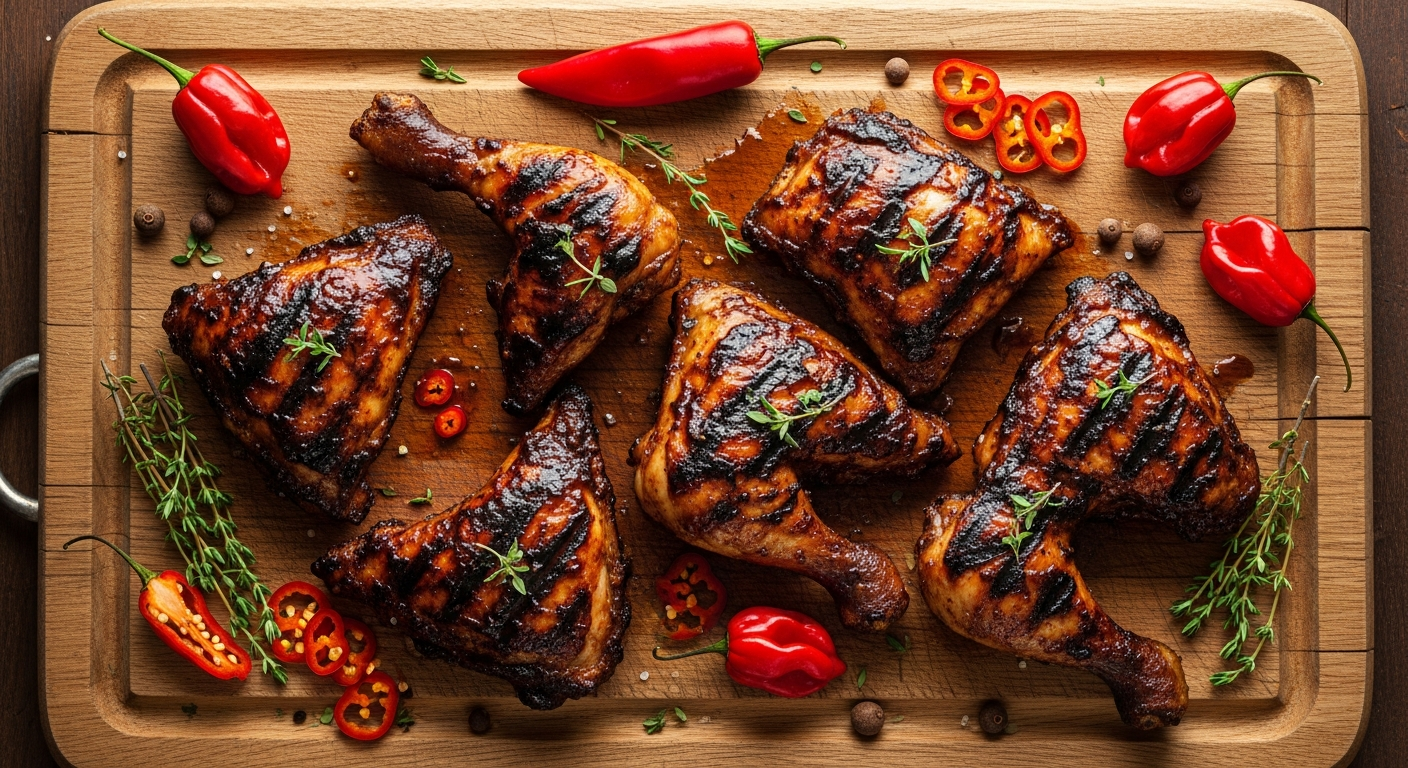
Jerk Mushrooms: Umami-Rich Plant-Based Jerk
Mushrooms and jerk seasoning are a natural pairing — mushrooms contribute their own umami depth that mirrors the savory complexity of the scotch bonnet and allspice marinade. Portobello caps grilled whole make the most satisfying jerk mushroom steak; king oyster mushrooms torn into pieces mimic pulled pork remarkably well.
Best Mushroom Varieties for Jerk
Portobello: The best whole-cap jerk mushroom — large enough to serve as an individual main course, with a dense, meaty texture that holds up to grill heat and a deep, savory flavor that plays well with scotch bonnet and allspice. King Oyster (Trumpet Royale): When torn lengthwise into strips, king oyster mushrooms develop a texture strikingly similar to pulled pork — excellent for jerk bowls and sandwiches. Shiitake: Intense, smoky umami — pairs particularly well with the scotch bonnet in jerk marinade, producing a very savory, complex result. Remove the tough stems (save for broth). Mixed mushrooms: A blend of cremini, shiitake, and oyster mushrooms for varied texture. The jerk ingredients guide covers the mushroom as an ingredient in jerk cooking more broadly.
Preparing Mushrooms for Jerk
Clean mushrooms with a damp cloth (don't wash in water — they absorb water and steam instead of searing). For portobello caps: remove the stem, scrape out the gills with a spoon (optional — the gills contribute bitterness but also flavor; most jerk cooks leave them in). Score the cap surface lightly in a cross-hatch pattern for better marinade penetration. For king oyster: tear lengthwise into thick strips, 1/2 inch wide. For shiitake: remove stems, leave caps whole or halve for very large caps.
Marinade and Timing
Marinate mushrooms for 30 minutes to 2 hours. Mushrooms have a porous structure that absorbs liquid readily — they don't need as long as meat, but longer marinating produces deeper flavor. Use the full jerk marinade recipe with 2 tablespoons olive oil added. Apply marinade generously to all surfaces including the gill side of portobello caps and the scored cut surfaces.
Cooking Jerk Mushrooms
Portobello grill: Place caps gill-side-up on an oiled hot grill over medium-high direct heat. Cook 4–5 minutes, then flip and cook gill-side-down 4–5 minutes more. The caps will release liquid during cooking — this is normal. Finish with a baste of reduced jerk sauce in the last minute. The result should be tender throughout, charred on the exterior, and deeply flavored with the jerk marinade. See our charcoal grill guide for setup.
Cast iron skillet: Heat a cast iron pan until very hot. Add oil. Place mushrooms without crowding (work in batches). Cook 3–4 minutes per side for portobello. For strips and small caps: cook 5–6 minutes total, tossing occasionally, until deeply browned and slightly crispy at the edges. The cast iron heat produces excellent caramelization of the jerk marinade sugar.
Serving Jerk Mushrooms
Portobello jerk steaks: serve whole on a plate with a pool of jerk cooking sauce, alongside coconut rice, fried plantain, and a lime wedge. King oyster strips: pile on a sandwich bun with jerk mayo and coleslaw for a jerk mushroom "pulled pork" sandwich. Mixed mushrooms: serve over rice and peas with sliced avocado and mango salsa.
Frequently Asked Questions
Frequently Asked Questions
Are portobello mushrooms good for jerk cooking?
How do I prevent mushrooms from becoming soggy in jerk marinade?
Do I need to remove the gills from portobello mushrooms?
Can I substitute mushrooms for chicken in a jerk chicken recipe?
Which mushroom is best for a jerk mushroom sandwich?
Free Newsletter
Get Authentic Jerk Recipes Delivered
Authentic Jamaican recipes, cooking tips, and new guides delivered to your inbox. No spam — unsubscribe any time.
No spam. Unsubscribe anytime.
Complete Guide
Jerk Cooking Methods: Every Technique Compared
Everything you need to know about this topic in one comprehensive guide.
Read the complete guide →Continue Learning
Authority Guides
Related Topics
Recipes & Techniques
Buying Guides
Written by
Jerk Cuisine Specialist
Marcus Thompson has spent over a decade studying Jamaican culinary traditions, from the jerk pits of Boston Bay to home kitchens across the Caribbean diaspora.
View full bio