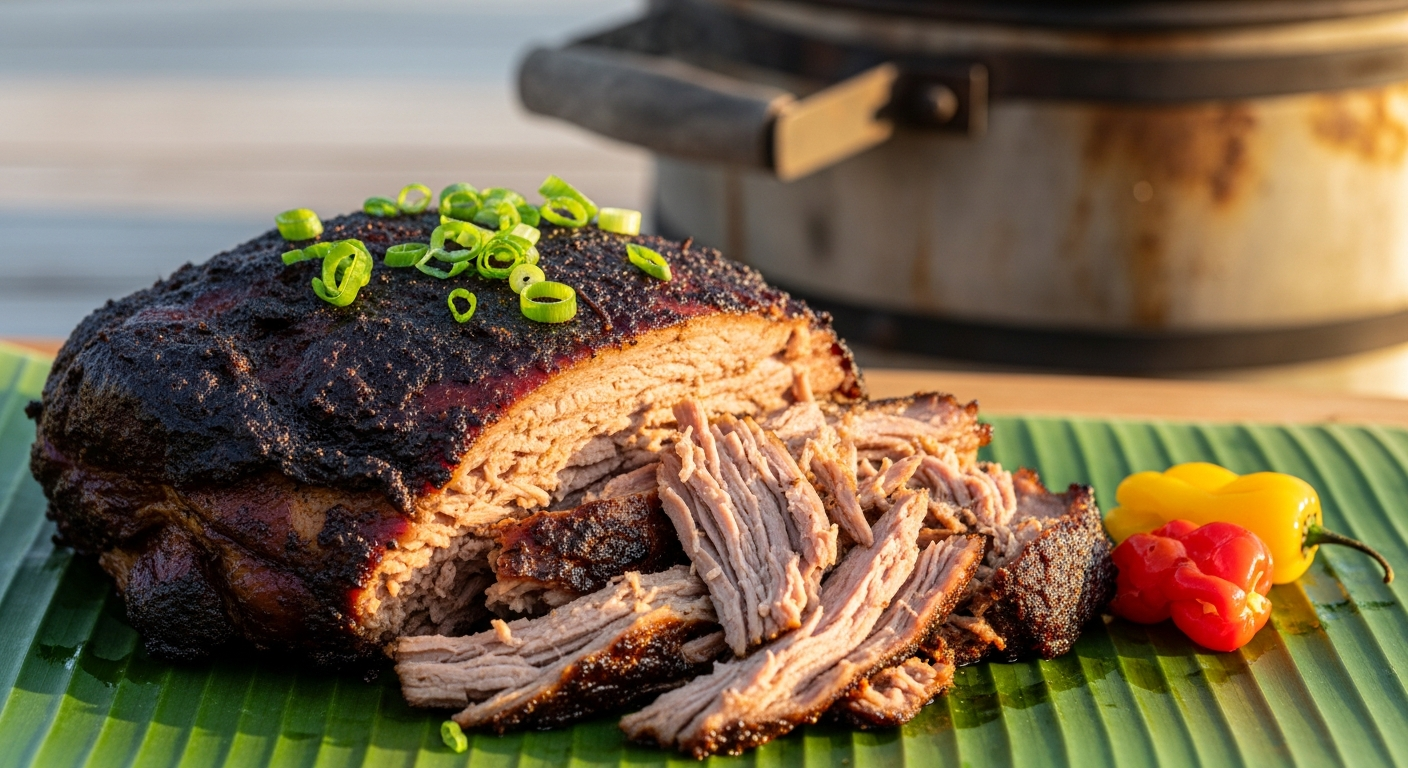
Pulled Jerk Pork: The Ultimate Jamaican Sandwich and Bowl Guide
Pulled jerk pork is authentic Jamaican shoulder cooked to 195–205°F until it falls apart with two forks, then served in formats ranging from traditional rice-and-peas plates to loaded Jamaican sandwiches. This guide covers the slow cook method, pull technique, batch cooking, and the best formats for feeding a crowd.
The Foundation: Low, Slow, and Deep
Pulled jerk pork begins with pork shoulder — specifically a cut that has been marinated for 24–48 hours in jerk paste, then cooked at 225–275°F until the internal temperature reaches 195–205°F. At this temperature, collagen has converted to gelatin and the meat separates naturally into long, moist fibers with two forks or bare hands. The jerk marinade — scotch bonnet, allspice, fresh herbs, soy sauce, rum — permeates every fiber during the long cook, producing a depth of flavor impossible to achieve with quick-cooking methods.
This is, in essence, what Jamaican jerk cooks at Boston Bay roadside stalls have been doing for generations: whole pork shoulders cooked over wood fire for 6–10 hours, then hand-pulled and piled onto plates with rice and peas and festival. The only modern adaptation is precision temperature monitoring with a probe thermometer and the option to cook indoors when outdoor conditions don't allow.
Slow Cooker Method
The slow cooker method produces extraordinary pulled jerk pork with minimal active work. Marinate a 4–6 lb boneless shoulder for 24 hours. Place in a 6-qt slow cooker. Add ½ cup jerk cooking sauce and ¼ cup pineapple juice or chicken stock. Cook on low 8–10 hours (or high 5–6 hours, though low is strongly preferred for texture). The shoulder is ready when it shreds easily with two forks and internal temperature reaches 195°F. Pull the meat directly in the slow cooker, discarding large fat pieces. Taste and adjust salt. The cooking liquid left in the pot is liquid gold — it's a concentrated jerk sauce. Reduce it in a saucepan over medium-high heat for 5–10 minutes and toss with the pulled pork for maximum flavor.
The one limitation of slow cooker pulled jerk pork is the lack of exterior char. To solve this: after pulling, spread the meat in a single layer on a foil-lined baking sheet and broil at 500°F for 5–7 minutes until the edges char and crisp. This produces a textural contrast between the crispy edge pieces and the interior pulled meat — the best of both worlds.
Smoker Method
The smoker produces the most authentic pulled jerk pork — charred exterior bark, deep smoke ring, and smoke character that slow cookers cannot replicate. Smoke marinated shoulder at 250°F over pimento wood (see pimento wood guide) for 6–10 hours until 205°F internal. Wrap in butcher paper at 165°F to push through the stall. Rest 45–60 minutes before pulling. The smoking method is worth the additional time for gatherings where the full Jamaican experience is the goal.
Pulling Technique and Texture
Good pulled pork should have three textures: long fibers from the lean muscle sections, moist shredded pieces from the marbled interior, and crispy bark bits from the heavily charred exterior. To achieve this, pull the shoulder by hand (use heat-resistant gloves — the shoulder should be hot) rather than two forks, which produces too uniform a texture. Hand-pulling produces natural variation in fiber length and texture. Discard the bone (if bone-in) and any large fat deposits that did not render. Season the pulled meat with the reduced cooking liquid and taste for salt and heat before serving.
Serving Formats
Traditional Jamaican plate: pulled pork over rice and peas with fried sweet plantain, festival bread, and vinegar coleslaw. Jamaican sandwich: pile pulled pork on a brioche or coco bread bun with Jamaican coleslaw (creamy or vinegar), sliced jalapeño, and a drizzle of jerk cooking sauce. Rice bowl: pulled pork over coconut rice with black beans, mango or pineapple salsa, lime crema, and sliced scallions. Jerk pork tacos: pulled pork in corn tortillas with pickled red onion, scotch bonnet hot sauce, and cilantro. All formats work at parties — the pulled pork holds in a slow cooker on warm for 2–3 hours during service.
Batch Cooking and Storage
Pulled jerk pork freezes exceptionally well. Cook a large shoulder (8–10 lbs), pull, and freeze in 1-lb portions in zip-lock bags with some cooking liquid. Reheat from frozen by placing the bag in warm water for 20 minutes, then finish in a hot skillet. Refrigerated pulled pork keeps 4 days. Reheat with a splash of jerk cooking sauce to restore moisture. This batch approach makes weeknight jerk dinners a matter of reheating rather than cooking — an excellent meal-prep strategy.
Frequently Asked Questions
Frequently Asked Questions
What temperature for pulled jerk pork?
Can I make pulled jerk pork ahead for a party?
How much pulled jerk pork per person?
What is coco bread and how is it served with jerk pork?
Can I freeze pulled jerk pork?
Editorial Selection
Recommended Products
Marinade Injector
Best for: Large pork shoulder
Push jerk paste into the center of the shoulder for flavor throughout.
Why we recommend it: Surface-only marinade doesn't reach the interior of a 6-lb shoulder regardless of time. Injection solves this.
Affiliate link coming soonEditorial note: These are independent recommendations based on quality and usefulness for jerk cooking. We may earn a small commission if you purchase through our links — at no extra cost to you. See our affiliate disclosure for full details.
Free Newsletter
Get Authentic Jerk Recipes Delivered
Authentic Jamaican recipes, cooking tips, and new guides delivered to your inbox. No spam — unsubscribe any time.
No spam. Unsubscribe anytime.
Complete Guide
Jamaican Jerk Pork: Complete Guide
Everything you need to know about this topic in one comprehensive guide.
Read the complete guide →Continue Learning
Authority Guides
Related Topics
Buying Guides
Written by
Jerk Cuisine Specialist
Marcus Thompson has spent over a decade studying Jamaican culinary traditions, from the jerk pits of Boston Bay to home kitchens across the Caribbean diaspora.
View full bio