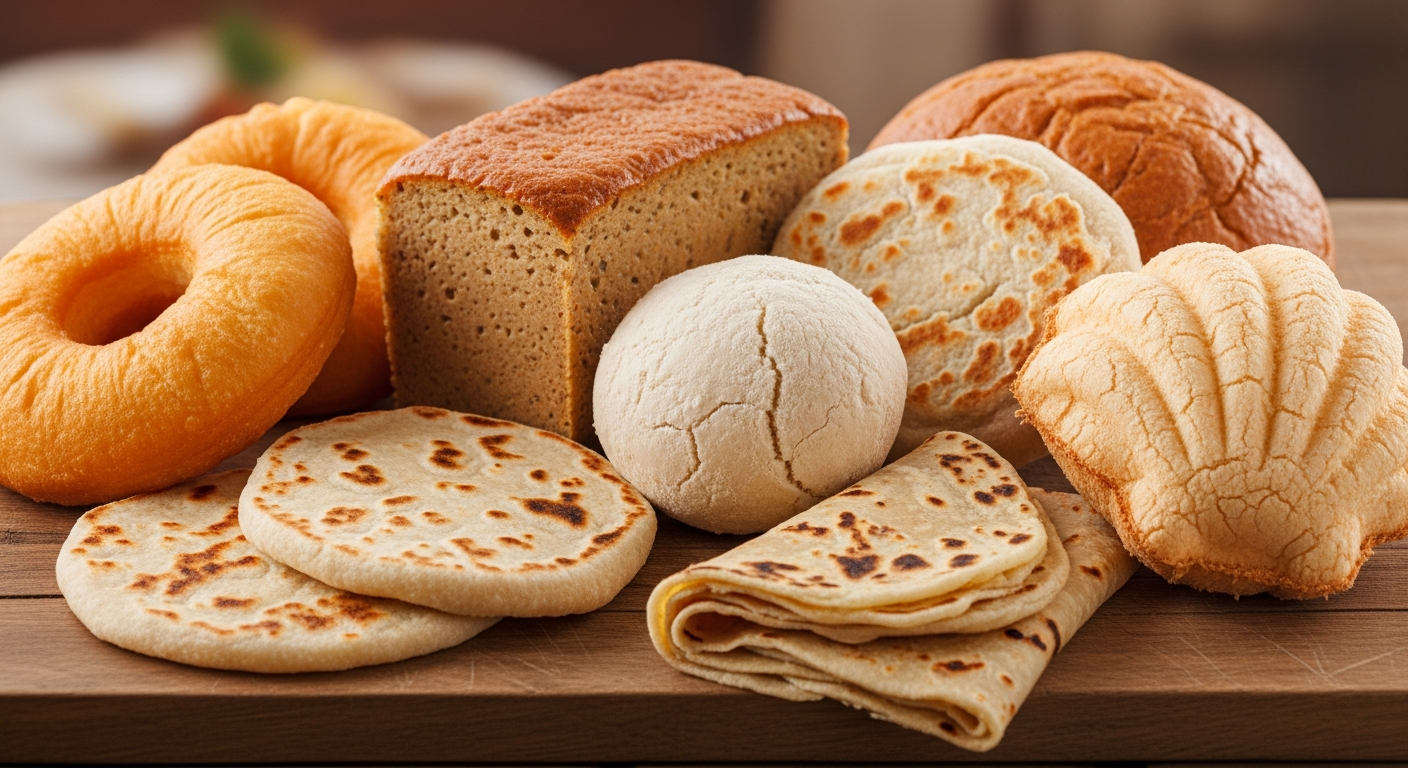
Pairing jerk meat with Caribbean breads is a tradition as old as jerk cooking itself. Long before rice and peas became the default accompaniment, breads and flatbreads were the primary vehicles for consuming jerk — torn, wrapped, dipped, and soaked in the flavorful juices that run from freshly grilled meat. Understanding the diverse world of Caribbean breads opens up new dimensions of flavor and texture for your jerk meals.
Festival Bread: The Quintessential Jerk Companion
Festival bread holds a special place in the Caribbean bread tradition. These sweet, golden cornmeal dumplings are the most beloved bread accompaniment for jerk chicken at roadside stands across Jamaica. The name itself evokes celebration, and eating festival alongside jerk is indeed a festive experience.
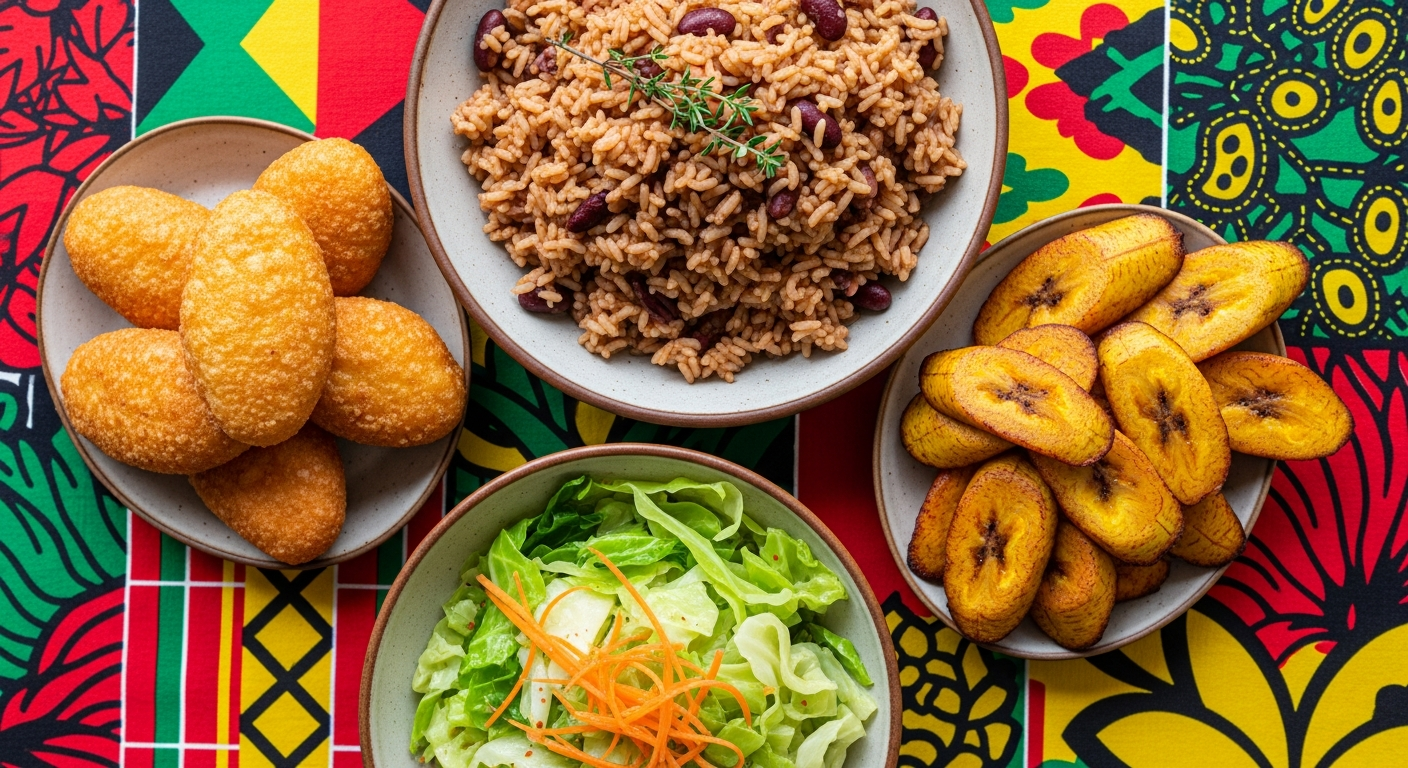
The recipe is deceptively simple: cornmeal, all-purpose flour, sugar, salt, a pinch of nutmeg or vanilla extract, and just enough water to form a pliable dough. The magic happens during frying, when the exterior develops a shatteringly crisp crust while the interior remains soft and slightly cakey. The contrast between the sweet, crunchy festival and the spicy, smoky jerk meat is the foundation of one of the Caribbean's most iconic food pairings.
There is an art to shaping festival. The traditional shape is an elongated oval, pointed at both ends, about four to five inches long and an inch thick. This shape maximizes the ratio of crispy exterior to soft interior. Roll the dough between your palms, applying gentle pressure at the ends to create the tapered points. Fry at 325 to 350 degrees Fahrenheit, turning occasionally, until deep golden brown all over.
Hard Dough Bread: Jamaica's Daily Bread
Hard dough bread is the everyday bread of Jamaica, found in virtually every bakery and grocery store on the island. It is a dense, slightly sweet white bread with a tight crumb and a firm crust that stands up well to the robust flavors of jerk seasoning. Unlike soft sandwich bread, hard dough bread has enough structure to absorb jerk juices without falling apart.
Slice hard dough bread thick — about three-quarters of an inch — and lightly toast it. The toasting creates a surface that is just firm enough to hold up as a base for pulled jerk chicken or pork, while the interior remains soft enough to soak up the flavorful liquid. A thick slice of hard dough bread topped with shredded jerk chicken, a drizzle of pepper sauce, and a few pickled onions makes one of the most satisfying sandwiches in Caribbean cuisine.
Hard dough bread is also excellent for "mopping" — tearing off pieces and using them to scoop up the last bits of jerk seasoning and rendered fat from your plate. This is how many Jamaicans eat their bread, and it ensures not a drop of precious jerk flavor goes to waste.
Bammy: Ancient Cassava Flatbread
Bammy predates European contact in the Caribbean. This dense flatbread made from grated, pressed, and dried cassava root was a staple of the Taino people and remains an important part of Jamaican cuisine today. Pairing jerk meat with bammy connects your meal to a culinary tradition that stretches back centuries.
The traditional preparation involves soaking dried bammy rounds in coconut milk for about thirty minutes, then frying them in a skillet until golden on both sides. The coconut milk soak softens the bammy and infuses it with subtle tropical sweetness that harmonizes with jerk spices. The result is a round, slightly chewy flatbread with a mild, nutty flavor and a golden, lightly crisp exterior.
Bammy is especially wonderful with jerk fish. In Portland, Jamaica, where jerk cooking originated, bammy and escovitch fish (fried fish in a pickled vegetable sauce) is a classic combination. But it works equally well with jerk chicken and pork. Its neutral flavor profile makes it the perfect supporting player, absorbing and carrying the bold jerk flavors without adding competing ones.
Roti: The Indo-Caribbean Connection
Roti came to the Caribbean with indentured workers from India in the 19th century and has since become an integral part of the region's culinary landscape, especially in Trinidad, Guyana, and Jamaica. This thin, flaky flatbread is perfect for wrapping jerk meat into a portable, handheld meal.
There are several varieties of roti used in Caribbean cooking. Plain roti, also called sada roti, is a simple unleavened flatbread that puffs up during cooking. Paratha roti (buss up shut) is layered and flaky, beaten after cooking to separate the layers into a soft, shredded texture. Dhalpuri roti is stuffed with seasoned ground split peas, adding a layer of earthy, protein-rich flavor.
For jerk pairings, paratha roti is the standout. Its flaky, layered texture provides multiple surfaces for jerk juices and sauces to cling to, and each bite delivers a new combination of tender bread, spicy meat, and aromatic seasonings. Tear off a piece, load it with jerk chicken, add a spoonful of mango chutney, and roll it up for one of the most satisfying bites in Caribbean cuisine.
Johnny Cakes and Fried Dumplings
Johnny cakes — also called journey cakes, reflecting their origins as portable food for travelers — are round, fried dough balls that are crispy on the outside and fluffy on the inside. Unlike festival, they are not sweet, making them a more neutral bread option that lets the jerk seasoning take center stage.
Fried dumplings are the Jamaican version of this concept, typically larger and denser than johnny cakes. Made from flour, cornmeal, butter, and water, they are fried until deeply golden and served hot. The dense, slightly chewy texture provides substantial bulk to a jerk meal, and their mild flavor absorbs sauces and juices beautifully.
Both johnny cakes and fried dumplings are traditionally served as part of a Jamaican breakfast, alongside ackee and saltfish. But they cross easily into dinner territory when paired with jerk. Their portability also makes them ideal for cookouts and street food settings where plates and utensils may not be practical.
Coco Bread: The Folding Bread
Coco bread is a soft, slightly sweet bread enriched with coconut milk and butter. It is baked in a folded shape, creating a pocket that is perfect for stuffing with jerk meat. In Jamaica, the combination of a beef patty tucked inside coco bread is iconic street food. The same concept works brilliantly with jerk chicken.
Pull apart a warm coco bread along its fold, pile in sliced or shredded jerk chicken, add your choice of condiments — pepper sauce, pickled vegetables, or a squeeze of lime — and press it closed. The soft, pillowy bread contrasts beautifully with the charred, crispy exterior of jerk meat, while the coconut flavor in the bread echoes the coconut milk often used in Caribbean side dishes.
Choosing the Right Bread for Your Jerk Protein
Different jerk proteins pair best with different breads. Jerk chicken, with its balance of lean meat and crispy skin, works with virtually any Caribbean bread. Jerk pork, being richer and fattier, pairs especially well with absorbent breads like hard dough or bammy that can soak up rendered fat without becoming greasy. Jerk fish and shrimp, being more delicate, are best with lighter options like roti or simple warm flour tortillas.
For a jerk feast or party, offer multiple bread options and let your guests experiment. Set out a basket of warm festival, a stack of roti, sliced hard dough bread, and some coco bread, alongside your jerk meats and sauces. This interactive approach turns the meal into an experience and guarantees everyone finds their perfect combination.
Making Caribbean Breads at Home
Most Caribbean breads are remarkably simple to make at home with basic pantry ingredients. Festival bread requires nothing more than cornmeal, flour, sugar, salt, and oil for frying. Hard dough bread uses standard bread ingredients plus a touch of sugar. Roti needs only flour, water, salt, and oil. The techniques are straightforward and forgiving, making these breads accessible even for novice bakers.
The biggest tip for home preparation is temperature control during frying. Too hot, and the exterior burns before the interior cooks. Too cool, and the bread absorbs excess oil and becomes heavy and greasy. Maintain your oil at a steady 325 to 350 degrees Fahrenheit, frying in small batches to avoid dropping the temperature, and your Caribbean breads will rival anything from a Jamaican bakery.