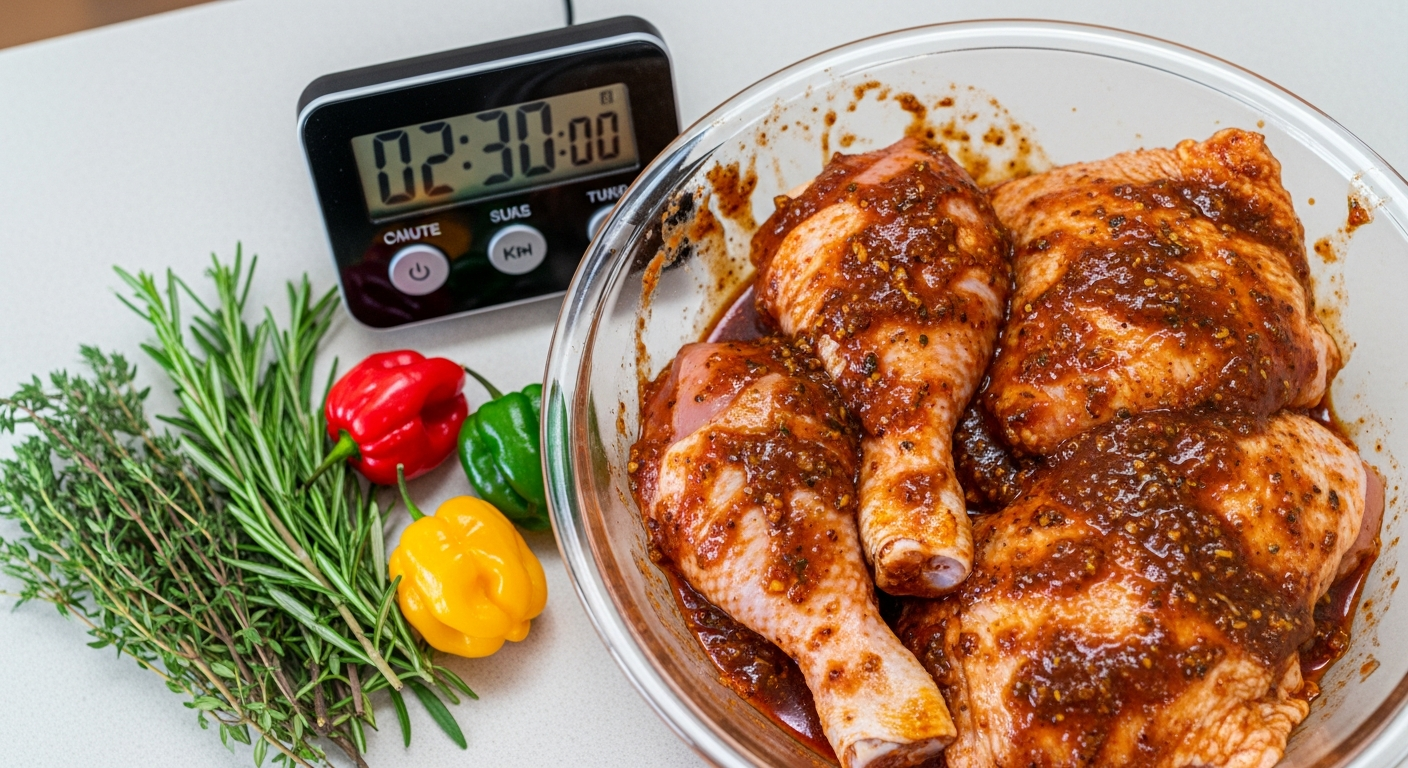
Finding the Optimal Jerk Chicken Marinade Time for Perfect Results
The optimal jerk chicken marinade time is one of the most frequently debated topics among Caribbean cooks, and for good reason. Whether you are using a fiery traditional blend or a mild jerk chicken marinade, marination time has a profound impact on the finished dish, affecting everything from how deep the flavors penetrate into the meat to how tender or tough the texture becomes. Get the timing right, and you produce jerk chicken with flavors that reach all the way to the bone. Get it wrong, and you end up with either a bland, under-seasoned piece of chicken or a mushy, over-marinated one that falls apart on the grill.
Understanding the optimal jerk chicken marinade time requires knowing what happens at a molecular level when meat sits in a jerk marinade. The process involves three simultaneous mechanisms: acid penetration, salt diffusion, and spice infusion. Each operates on a different timeline, and the ideal marination window is the period where all three have done their work without any of them going too far.
The Science Behind Jerk Marination
Acid penetration is the fastest-acting mechanism. The lime juice, vinegar, and other acidic components in jerk marinade begin denaturing the surface proteins of the chicken within minutes of contact. This denaturation loosens the protein structure, creating channels that allow other flavor compounds to enter. However, acid penetration is largely a surface phenomenon. Even after twenty-four hours of marination, the acid effect rarely reaches more than a quarter inch into the meat.
Salt diffusion is the mechanism that carries flavor deepest into the meat. Salt molecules are small enough to travel through the muscle fibers over time, drawing moisture out initially (which is why you see liquid accumulate in the marinating container) and then being reabsorbed along with dissolved flavor compounds from the marinade. This process works slowly but steadily, and given enough time, salt can penetrate all the way to the bone of a chicken thigh.
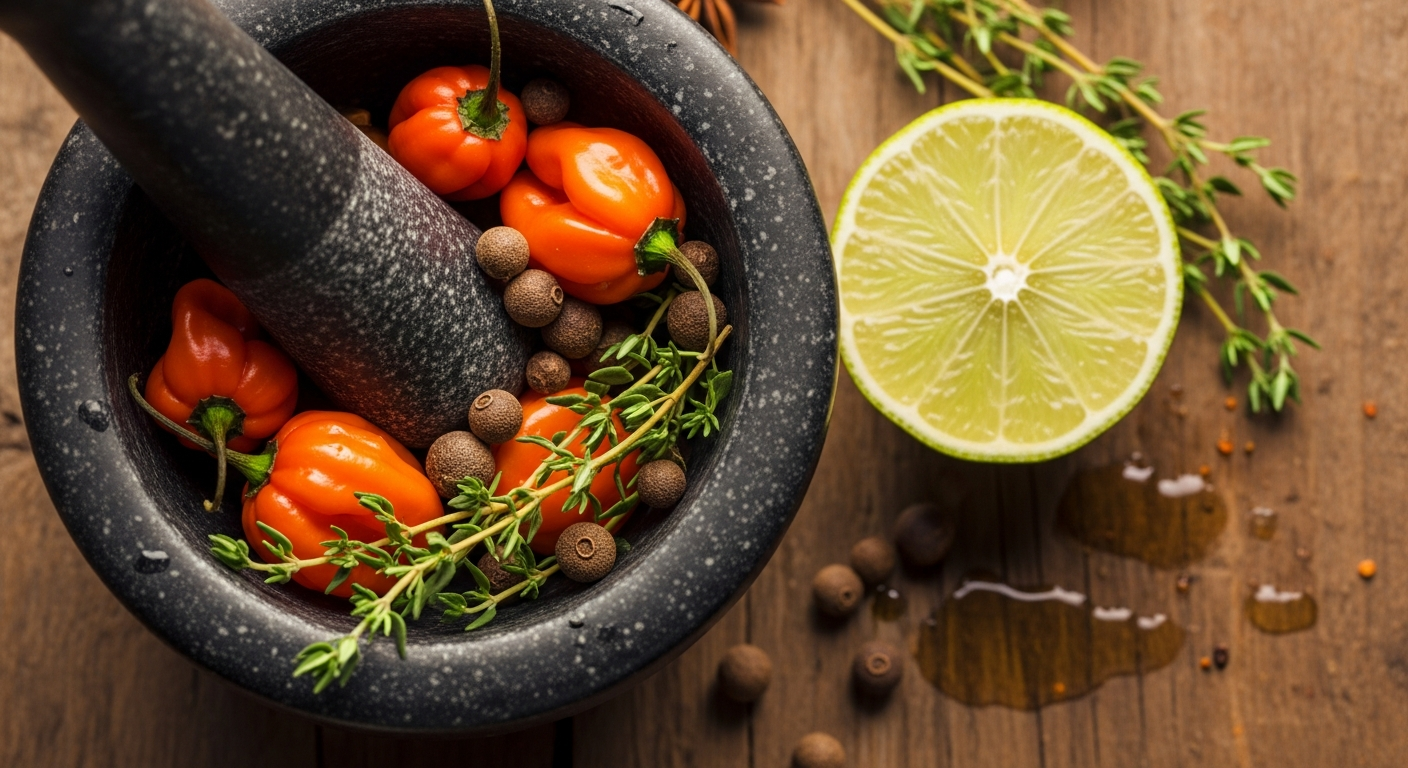
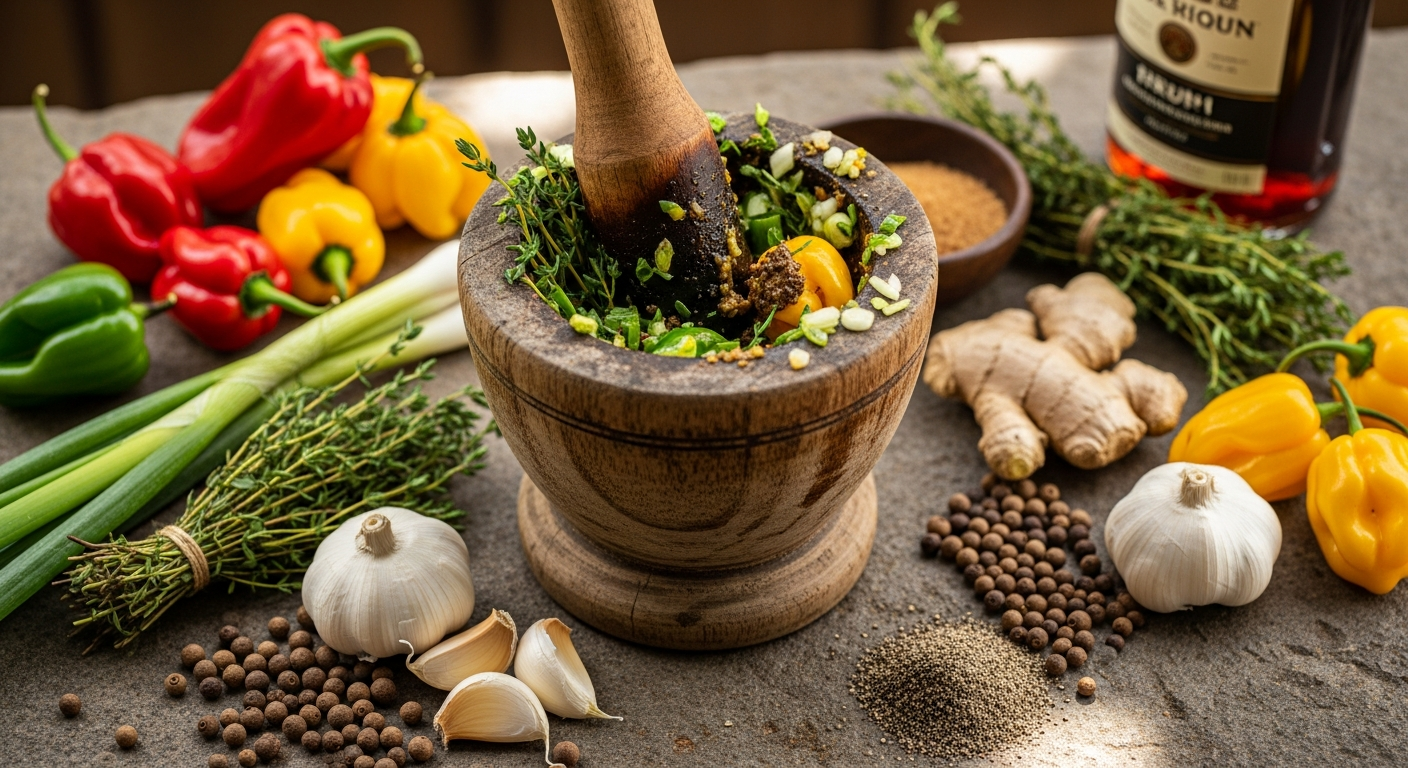
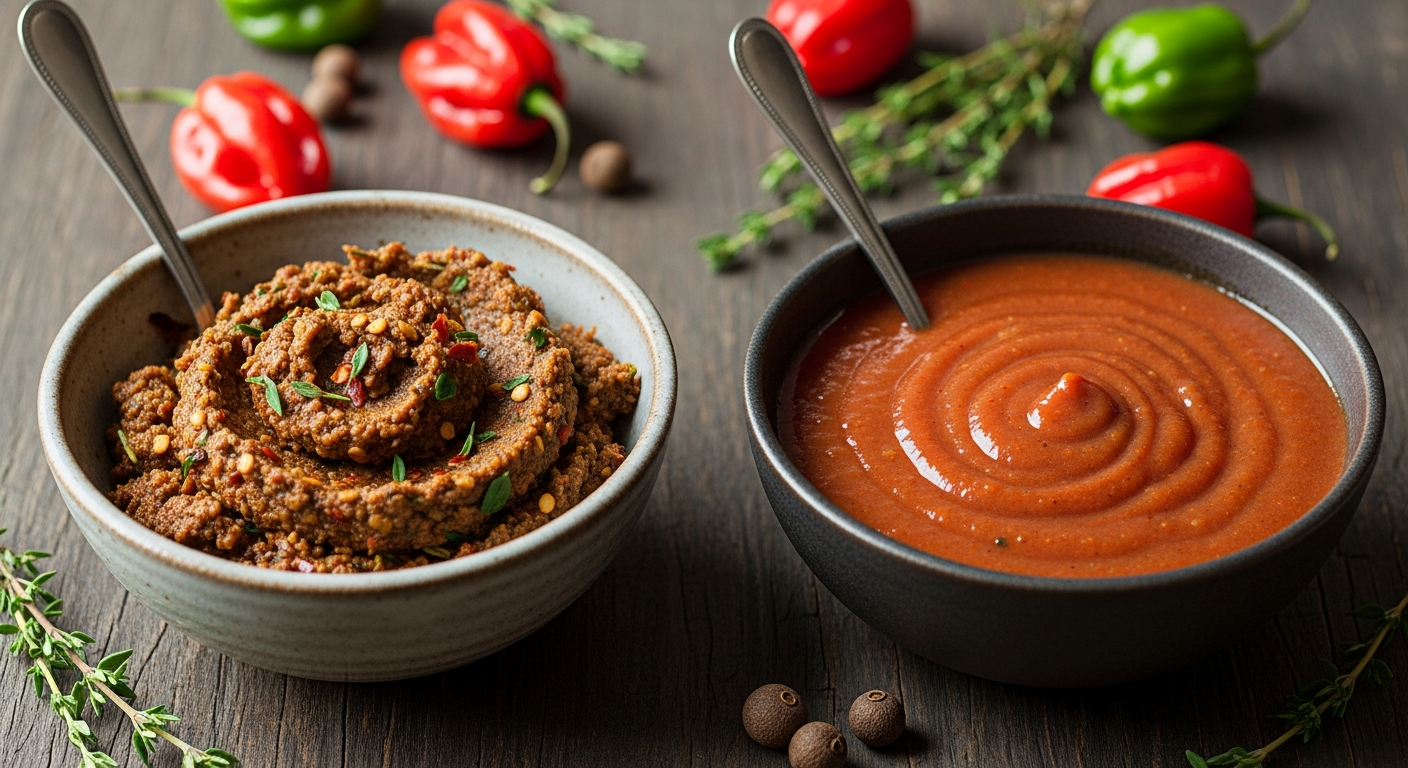
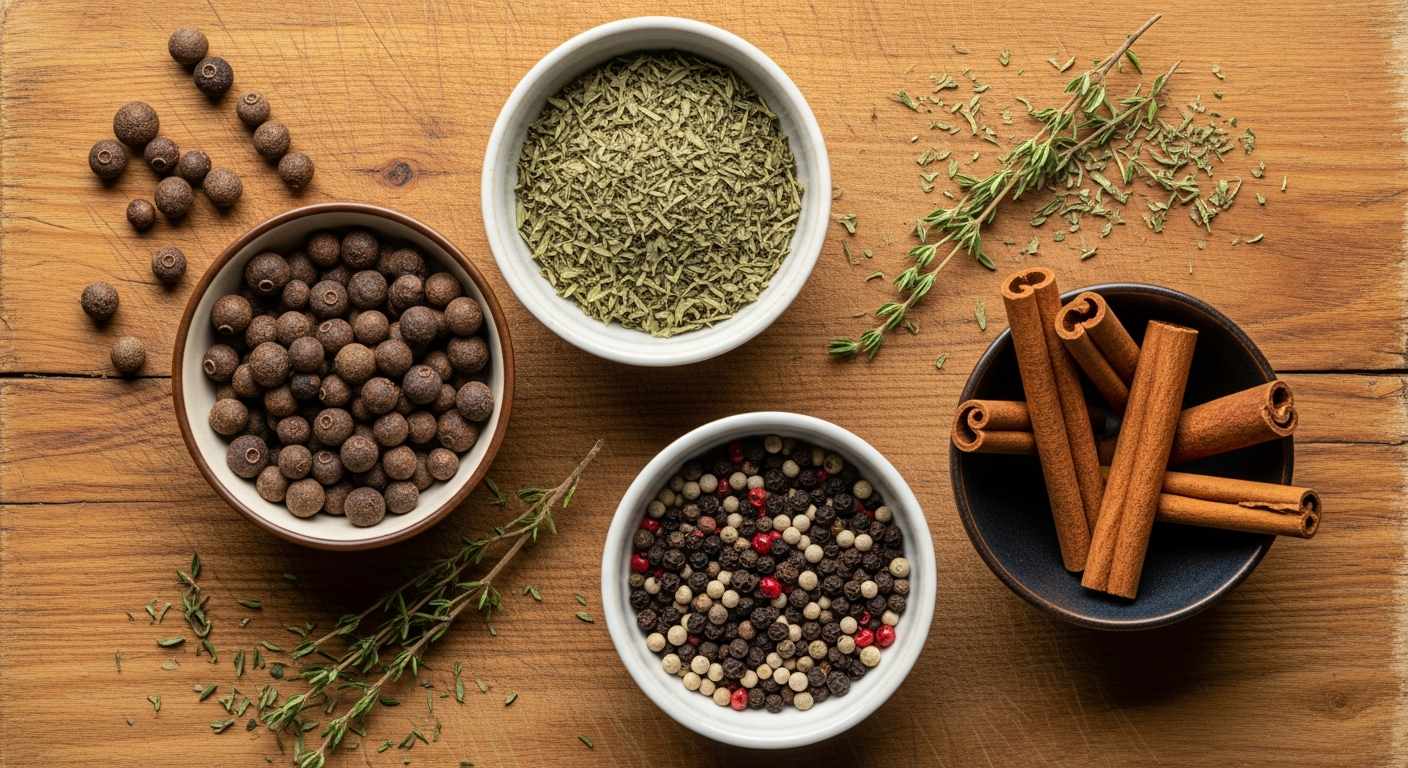
Spice infusion refers to the absorption of larger flavor molecules from allspice, thyme, scotch bonnet, garlic, and other marinade ingredients. These compounds are carried into the meat partly by the water drawn in by salt diffusion and partly by the oil in the marinade, which carries fat-soluble flavor compounds. This process is the slowest of the three and benefits most from extended marination times.
Optimal Jerk Chicken Marinade Time by Cut
Different cuts of chicken require different marination times because their thickness, density, and fat content all affect how quickly the marinade can penetrate. Here is a detailed guide to the optimal marination window for each common cut.
Bone-in, skin-on chicken thighs are the traditional cut for jerk and benefit from the longest marination time. The optimal window is twelve to twenty-four hours. The bone creates a barrier that prevents over-marination of the surrounding meat, while the skin helps protect the surface from becoming too soft. At twelve hours, the flavors will have penetrated about halfway through the thickest part of the thigh. At twenty-four hours, the seasoning reaches nearly to the bone, producing the most flavorful possible result.
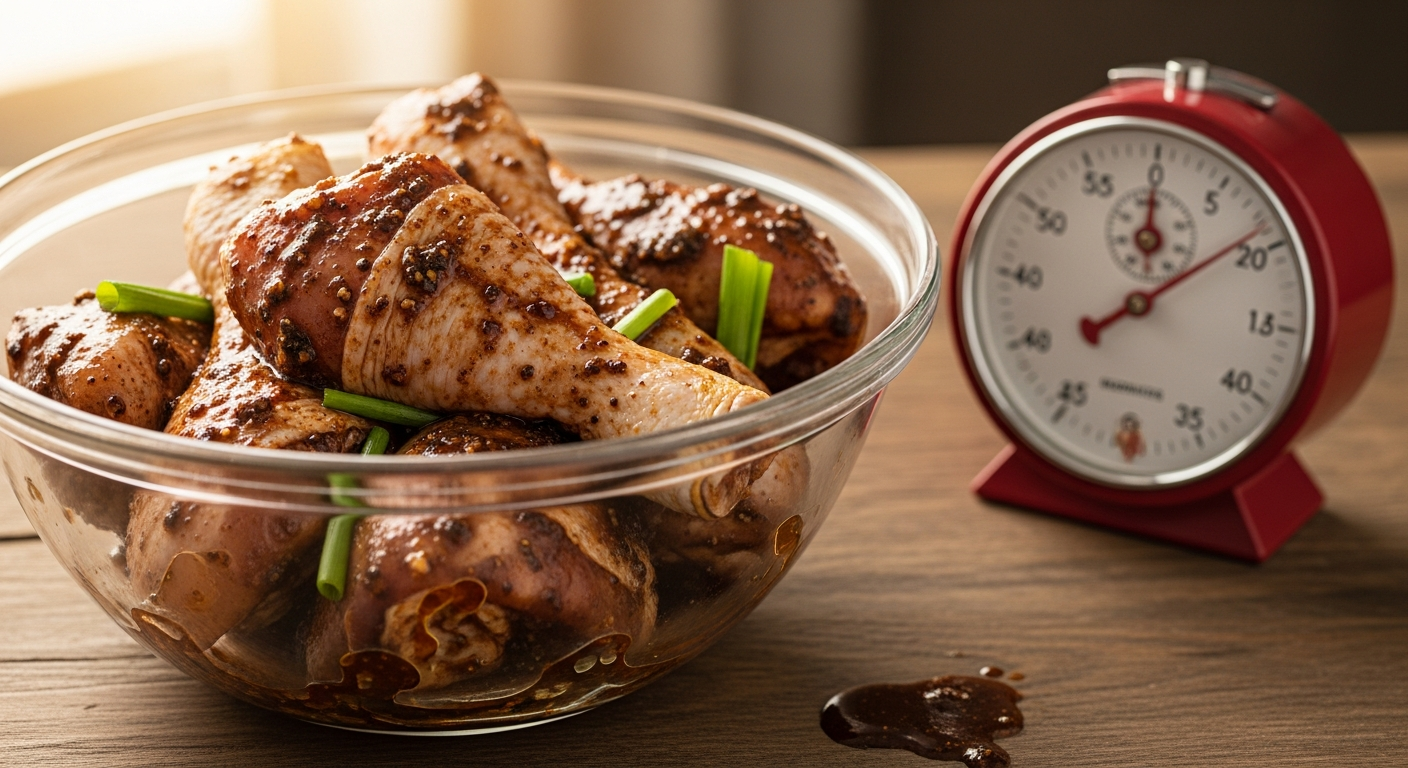
Bone-in chicken drumsticks follow a similar timeline to thighs, with an optimal window of eight to twenty-four hours. Drumsticks are generally thinner than thighs, so the marinade reaches the bone faster. Score the drumsticks in two or three places before marinating to help the flavors penetrate the thicker parts of the meat.
Boneless, skinless chicken thighs marinate faster because there is no bone to slow diffusion and no skin to block surface absorption. The optimal window is six to twelve hours. Beyond twelve hours, the texture may begin to become overly soft, particularly if the marinade is highly acidic.
Boneless, skinless chicken breast is the most delicate cut and requires the shortest marination time. The optimal window is four to eight hours. Breast meat has less fat and a tighter protein structure than thigh meat, making it more susceptible to acid-induced mushiness. Exceeding eight hours will often produce a mealy, unpleasant texture, even if the flavor is good.
Whole chicken, butterflied or spatchcocked, benefits from the longest marination time of any preparation. The optimal window is eighteen to thirty-six hours. The varying thicknesses of a whole chicken mean that the breast, thigh, and drumstick sections all marinate at different rates. A longer total time ensures that even the thickest parts receive adequate seasoning.
The Minimum and Maximum Boundaries
The absolute minimum marination time for any cut of chicken in jerk marinade is two hours. Anything less than this produces only surface-level seasoning that sits on top of the meat rather than becoming part of it. In a pinch, you can marinate for as little as two hours and still produce an acceptable result, particularly if you score the meat deeply and use a slightly thinner marinade that penetrates more quickly.
The absolute maximum depends on the acidity of your marinade. With a standard jerk marinade containing lime juice and vinegar, the maximum safe marination time is about forty-eight hours for bone-in pieces and twenty-four hours for boneless pieces. Beyond these limits, the acid will have broken down the protein structure to the point where the meat becomes mushy and unpleasantly soft.
If you want to extend the marination time beyond these windows, you can reduce the acid content of your marinade. Replace half the lime juice with lime zest, which provides citrus flavor without the protein-denaturing acid. Similarly, reduce the vinegar and compensate with soy sauce, which adds salt and umami without significant acidity. This adjusted marinade can safely remain on chicken for up to seventy-two hours.
Techniques for Faster Flavor Penetration
When time is limited, several techniques can accelerate the marination process without extending the clock. Scoring the meat is the most effective technique. Cut parallel slashes about half an inch deep into the thickest parts of the chicken, spaced about an inch apart. This dramatically increases the surface area exposed to the marinade and creates channels for the liquid to reach the interior.
Injection is another technique borrowed from barbecue tradition that works beautifully with jerk. Using a culinary syringe, inject small amounts of a strained, thinned version of the jerk marinade directly into the thickest parts of the meat. This bypasses the slow diffusion process entirely, delivering flavor compounds directly to the interior of the chicken. Combined with surface marination, injection can produce deeply flavored jerk chicken in as little as two hours.
Vacuum marination, achievable at home with a zip-top bag and a bowl of water, removes air from around the meat and creates slight pressure that pushes the marinade into the surface more quickly. Place the chicken and marinade in a zip-top bag, submerge the bag in water up to but not past the zipper to force out the air, then seal. This technique can reduce effective marination time by roughly thirty percent.
Temperature During Marination
Always marinate chicken in the refrigerator at 40 degrees Fahrenheit or below. This is a food safety requirement that should never be compromised. Some cooks believe that marinating at room temperature speeds up the process, and while this is technically true, it also creates dangerous conditions for bacterial growth. The risk of foodborne illness far outweighs any marginal improvement in marination speed.
Take the marinated chicken out of the refrigerator thirty minutes before cooking. This allows the meat to approach room temperature, which ensures more even cooking. Chicken that goes directly from the refrigerator to the grill or oven will cook unevenly, with the exterior overcooking before the interior reaches safe temperatures.
If you are marinating for the longer recommended times, turn or flip the chicken in its container every eight to twelve hours to ensure even exposure to the marinade. The pieces at the bottom of the container will receive more marinade contact than those on top, so periodic rotation helps achieve uniform flavor throughout the batch.
Signs of Perfect Marination
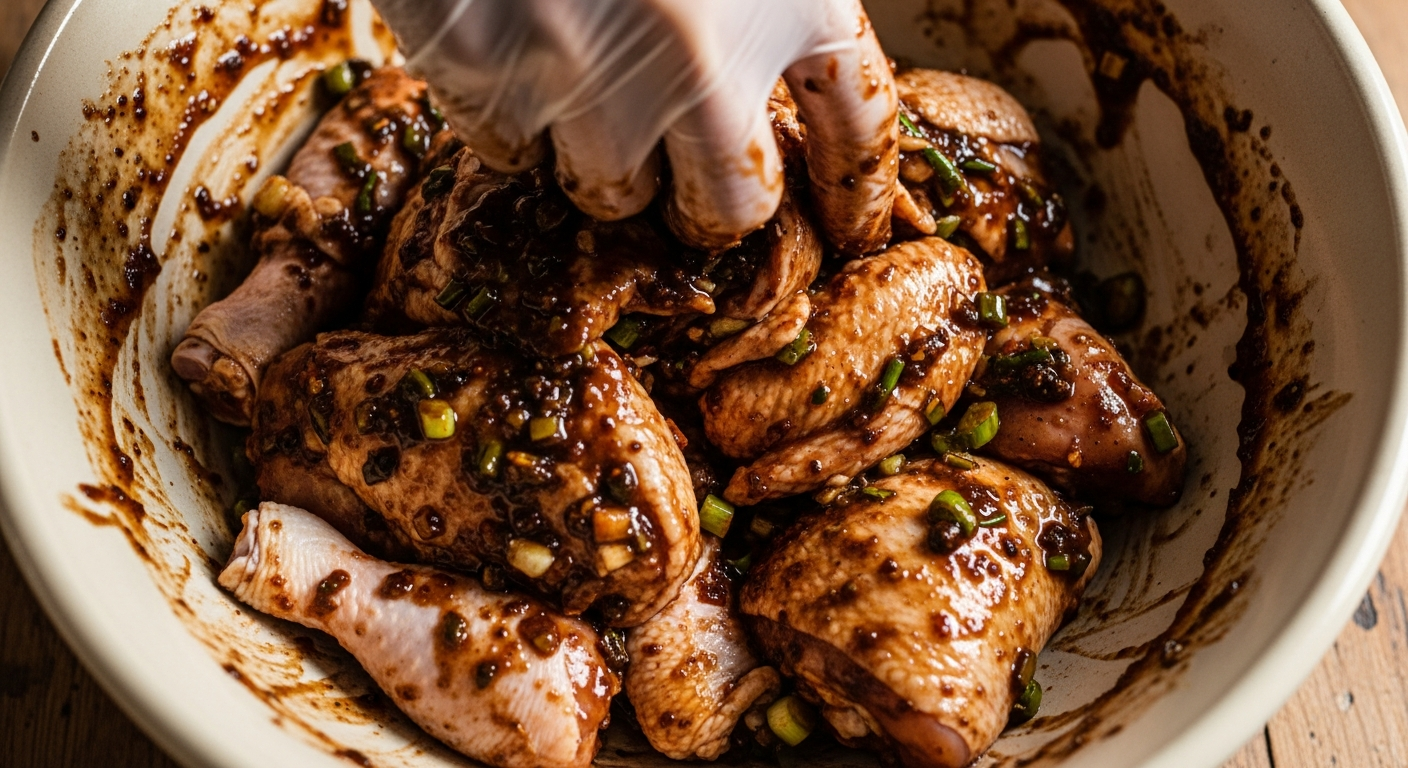
When your jerk chicken has reached optimal marination, several visual and tactile cues will confirm it. The surface of the chicken will have changed color, taking on the dark brown-green hue of the marinade. The flesh will feel slightly firmer than raw chicken but still springy when pressed. The aroma will have shifted from raw-chicken-with-seasoning-on-it to a unified, cohesive jerk scent where the individual spices are no longer distinguishable as separate elements.
When you cut into a properly marinated piece of chicken, you should see a color gradient. The outer quarter inch will be deeply colored by the marinade. The next quarter inch will show a lighter tint. And the center will still be the pale pink of raw chicken but will smell distinctly of jerk spices. This gradient indicates that the salt and flavor compounds have penetrated well into the meat while the center retains its natural texture and will cook up tender and juicy.
Mild Jerk Chicken Marinade: Adjusting Heat Without Losing Flavor
A mild jerk chicken marinade is the perfect solution for families with children, guests who are sensitive to heat, or anyone who wants to enjoy the complex, aromatic flavors of jerk seasoning without the intense scotch bonnet burn. Making a mild jerk chicken marinade does not mean making a bland one — it means strategically reducing the capsaicin while preserving or even enhancing the other flavor dimensions.
The simplest way to create a mild jerk chicken marinade is to reduce the number of scotch bonnet peppers from the standard three or four down to one, and to remove the seeds and white membranes before adding the pepper to the blender. The seeds and membranes contain the highest concentration of capsaicin, so removing them reduces the heat by roughly seventy percent while preserving the fruity, floral flavor that scotch bonnets contribute.
Another approach for a mild jerk chicken marinade is to substitute half or all of the scotch bonnets with milder alternatives. A single habanero (slightly less heat than scotch bonnet but similar flavor) or two to three bird's eye chilis provide noticeable warmth without overwhelming intensity. Some cooks use a combination of sweet bell peppers for the fruity flavor and a single scotch bonnet for authentic character at manageable heat levels.
When using a mild jerk chicken marinade, you can afford to marinate slightly longer than with a full-heat version. The reduced acid from using fewer peppers means the protein structure stays intact longer. A mild marinade can safely marinate bone-in chicken for up to thirty-six hours, allowing the allspice, thyme, and garlic flavors to penetrate deeply and compensate for the reduced pepper intensity.