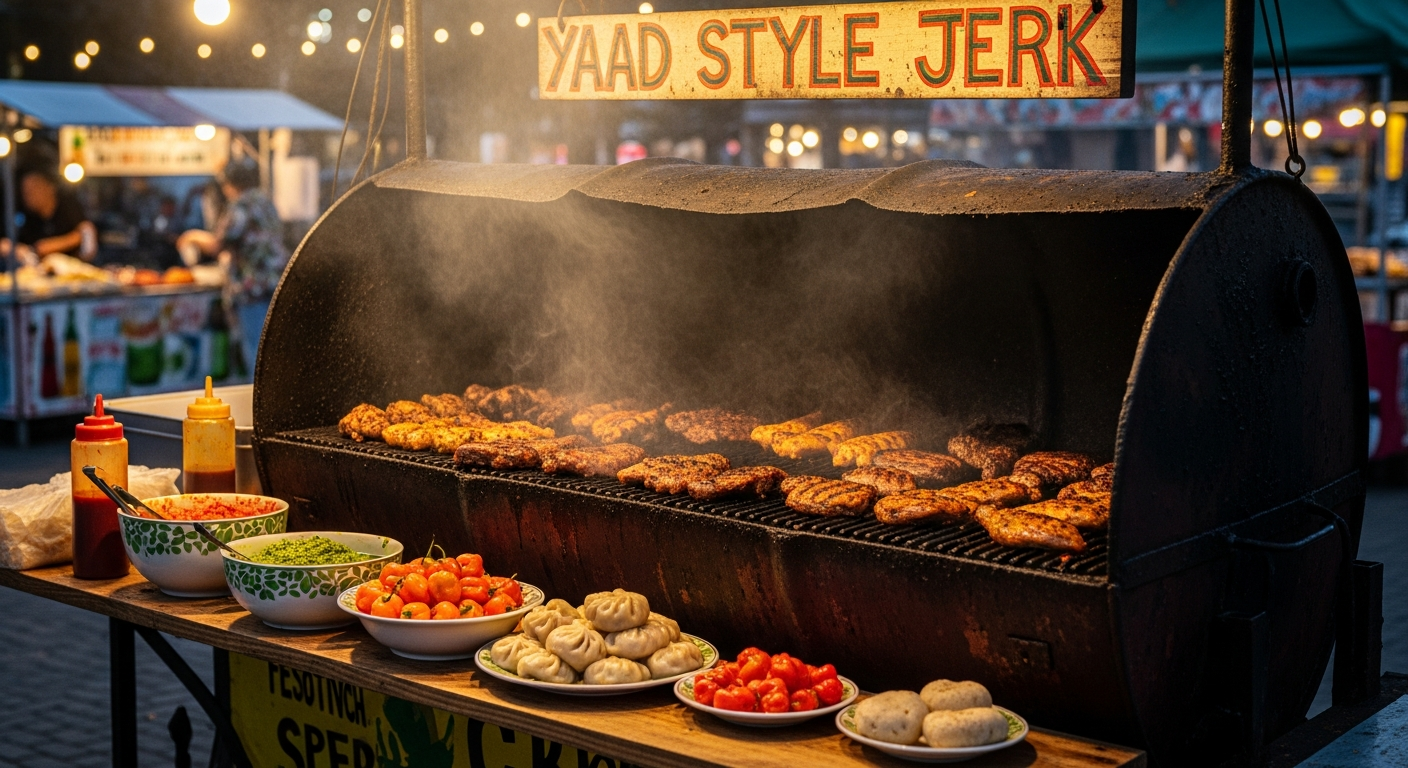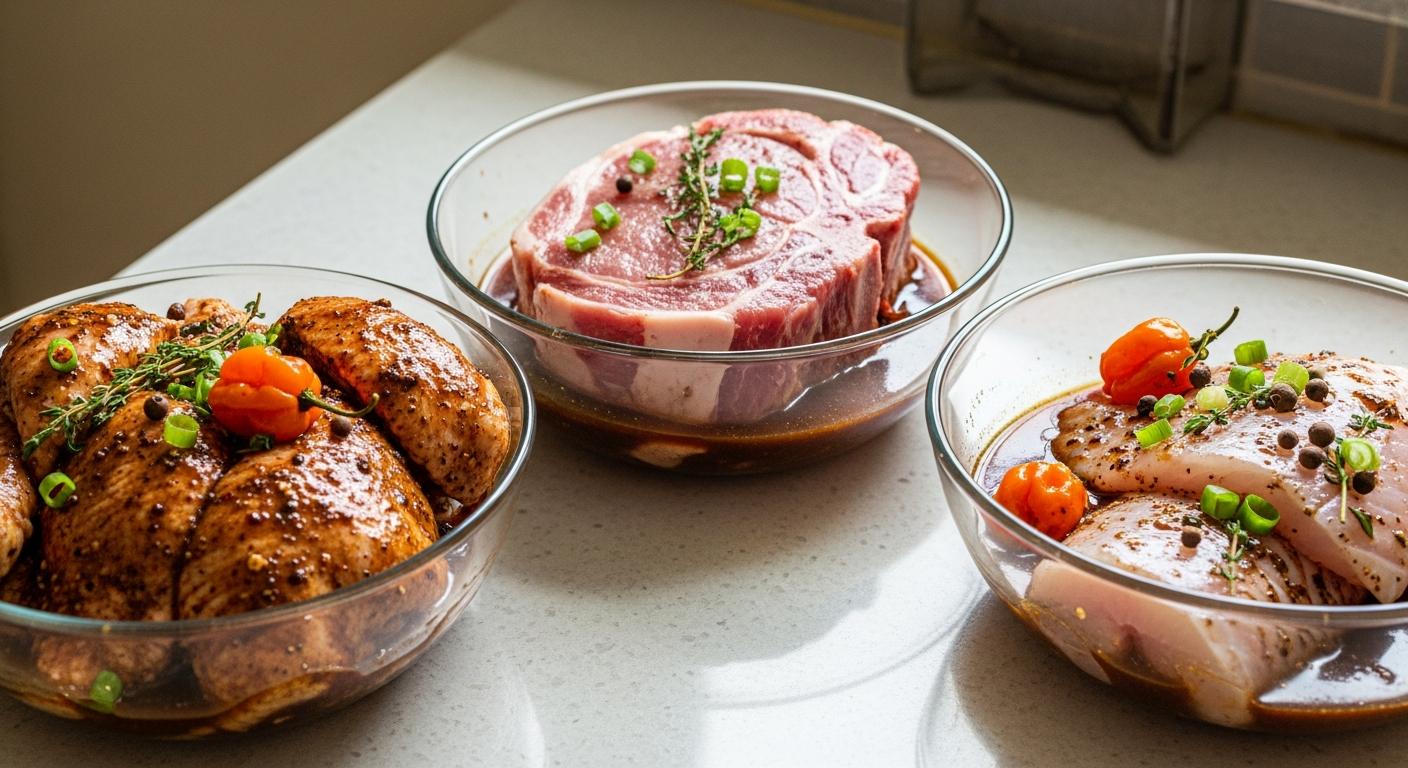
Jerk marinades for chicken, pork, and fish each require subtle but important adjustments to the base recipe. While the core flavors of scotch bonnet, allspice, and thyme remain constant, the way you balance the marinade components and apply them varies significantly based on the protein you are cooking. Understanding these differences will help you achieve the best possible results with every protein.
The Universal Base
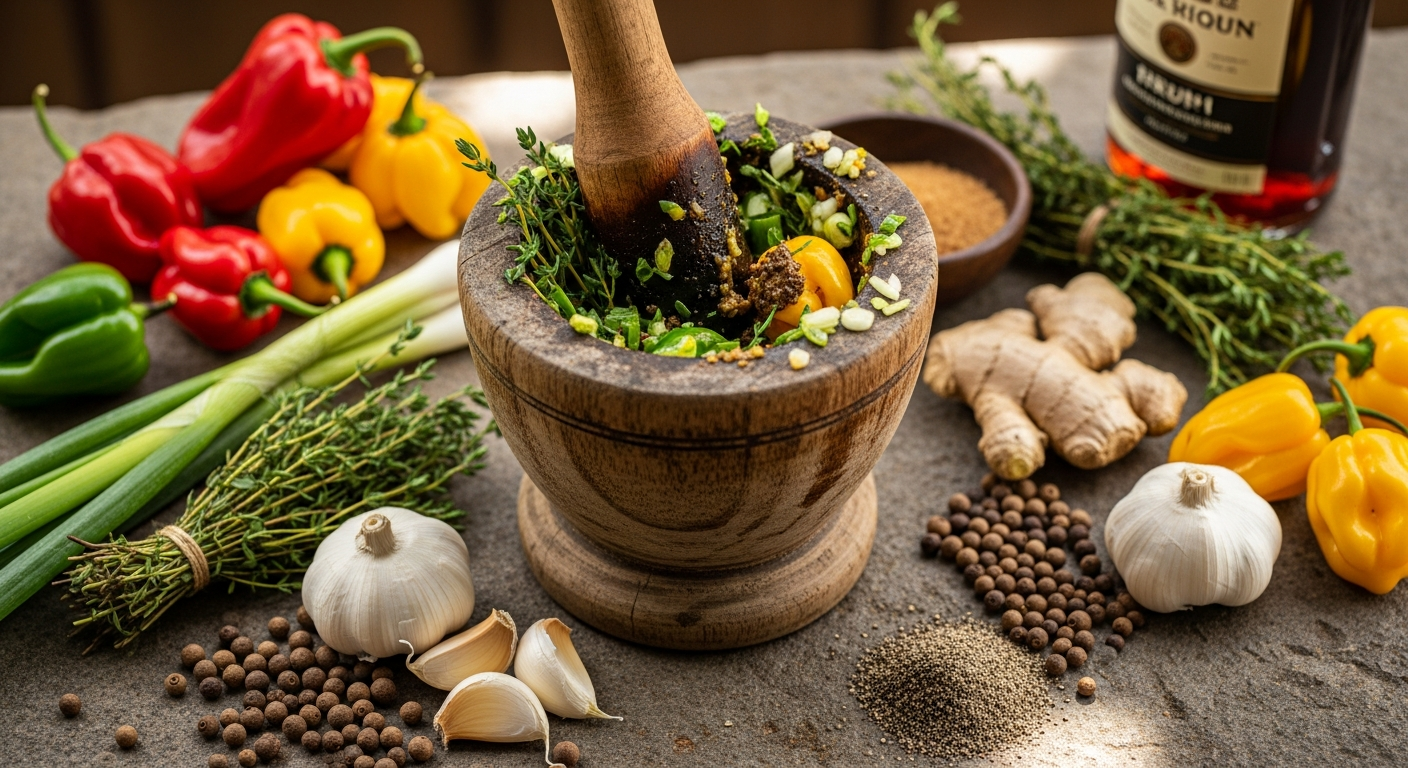
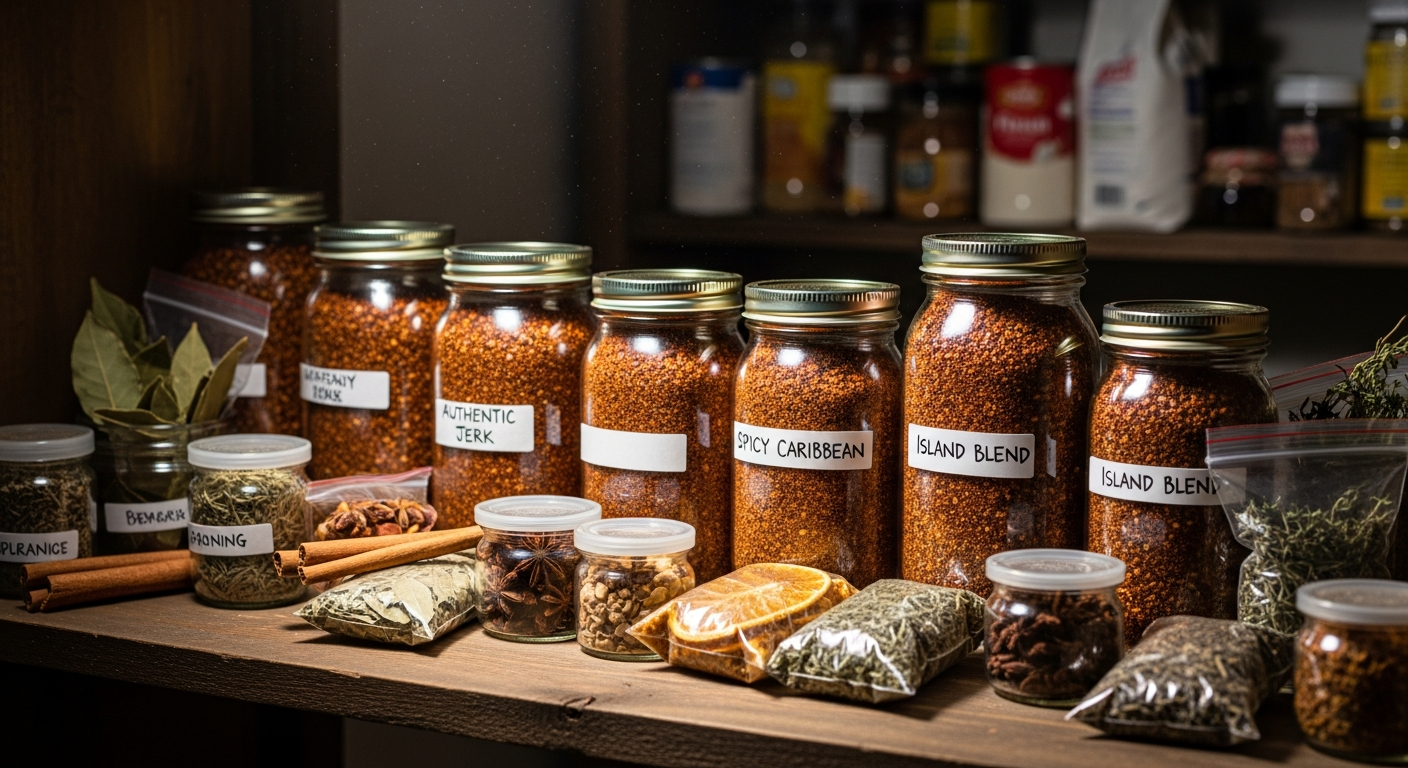
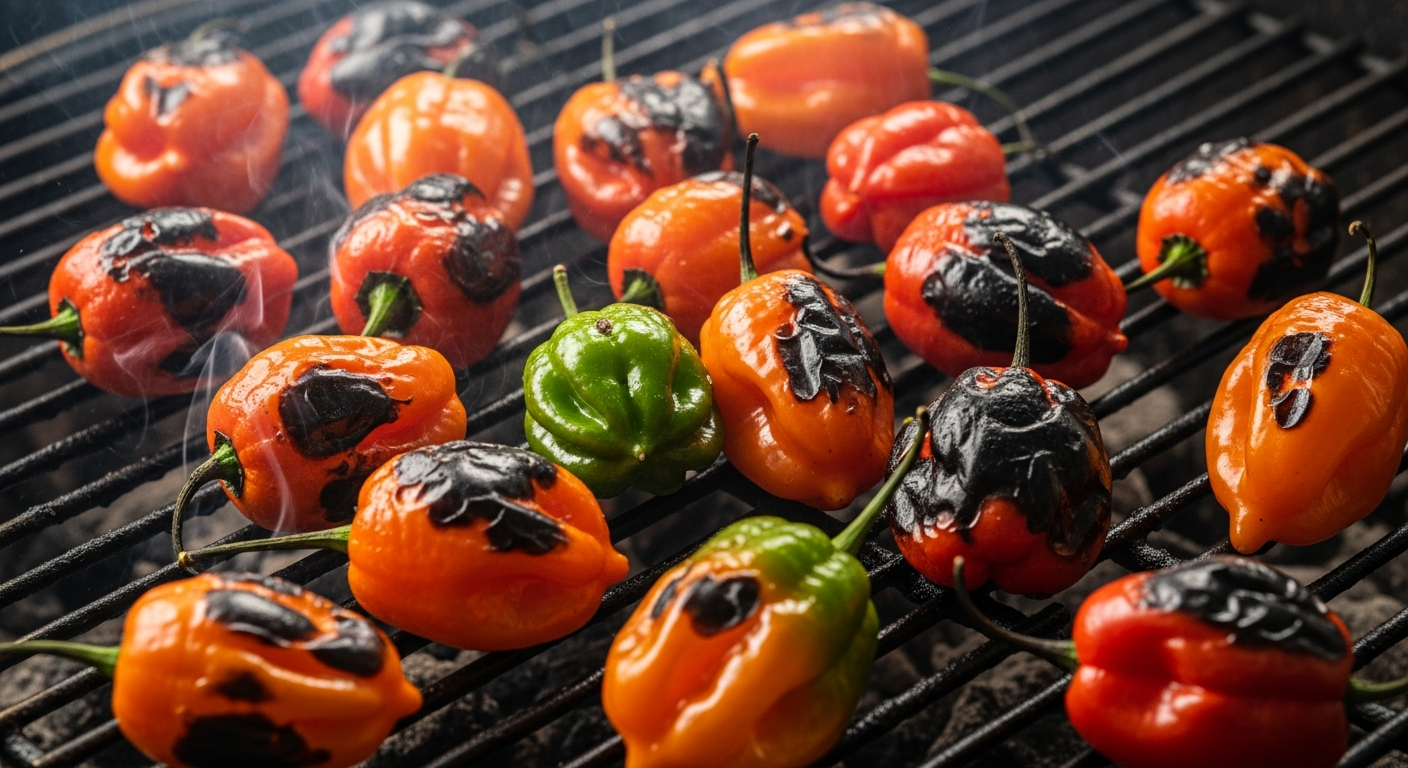
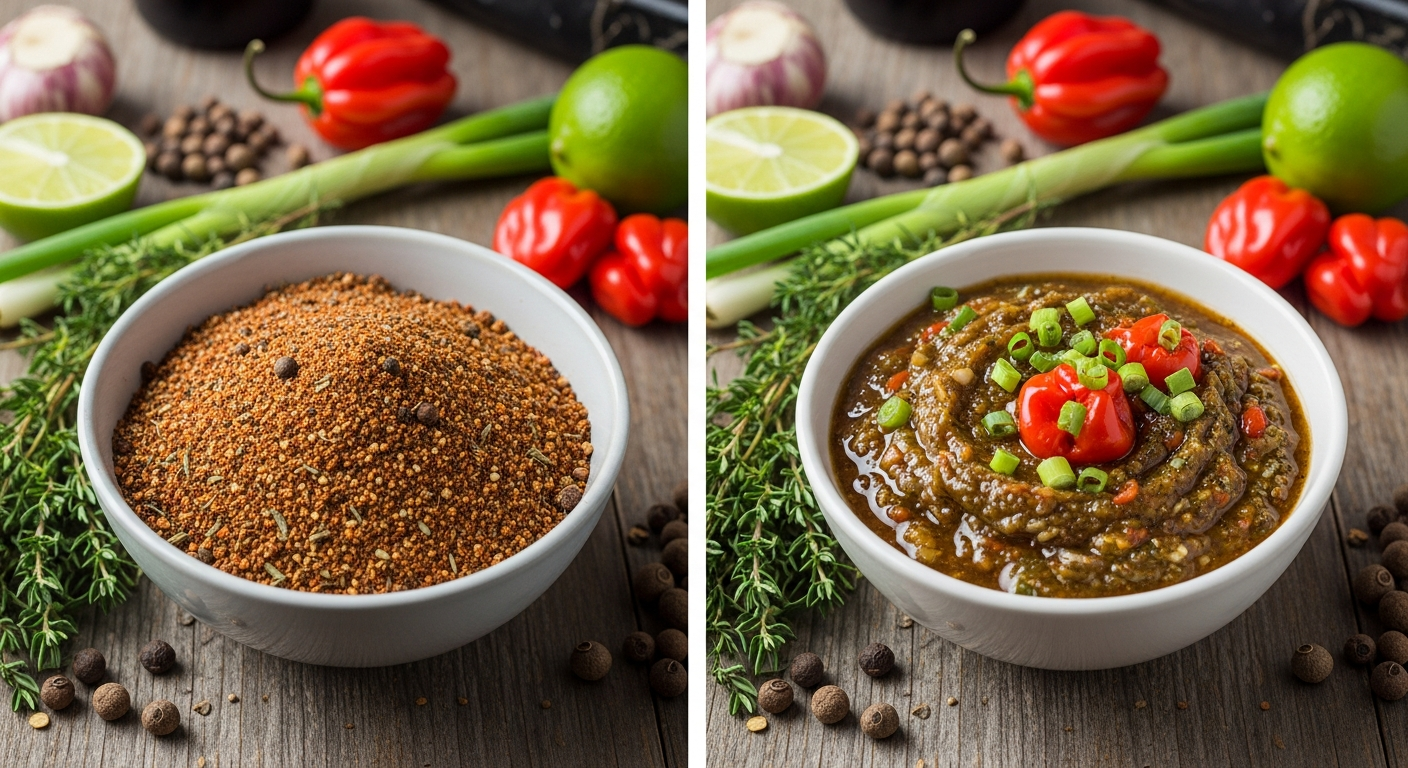
Every great jerk marinade starts with the same foundation: scotch bonnet peppers for heat, allspice for warmth and complexity, fresh thyme for herbaceous depth, scallions for aromatic sweetness, garlic for pungency, and ginger for sharp warmth. These six ingredients are non-negotiable regardless of the protein.
The variables are the liquid components — the acid, the salt source, the sweetener, and the fat — which should be adjusted based on the protein's characteristics. Think of the base as a concentrate that gets diluted and balanced differently for each application.
Optimizing for Chicken
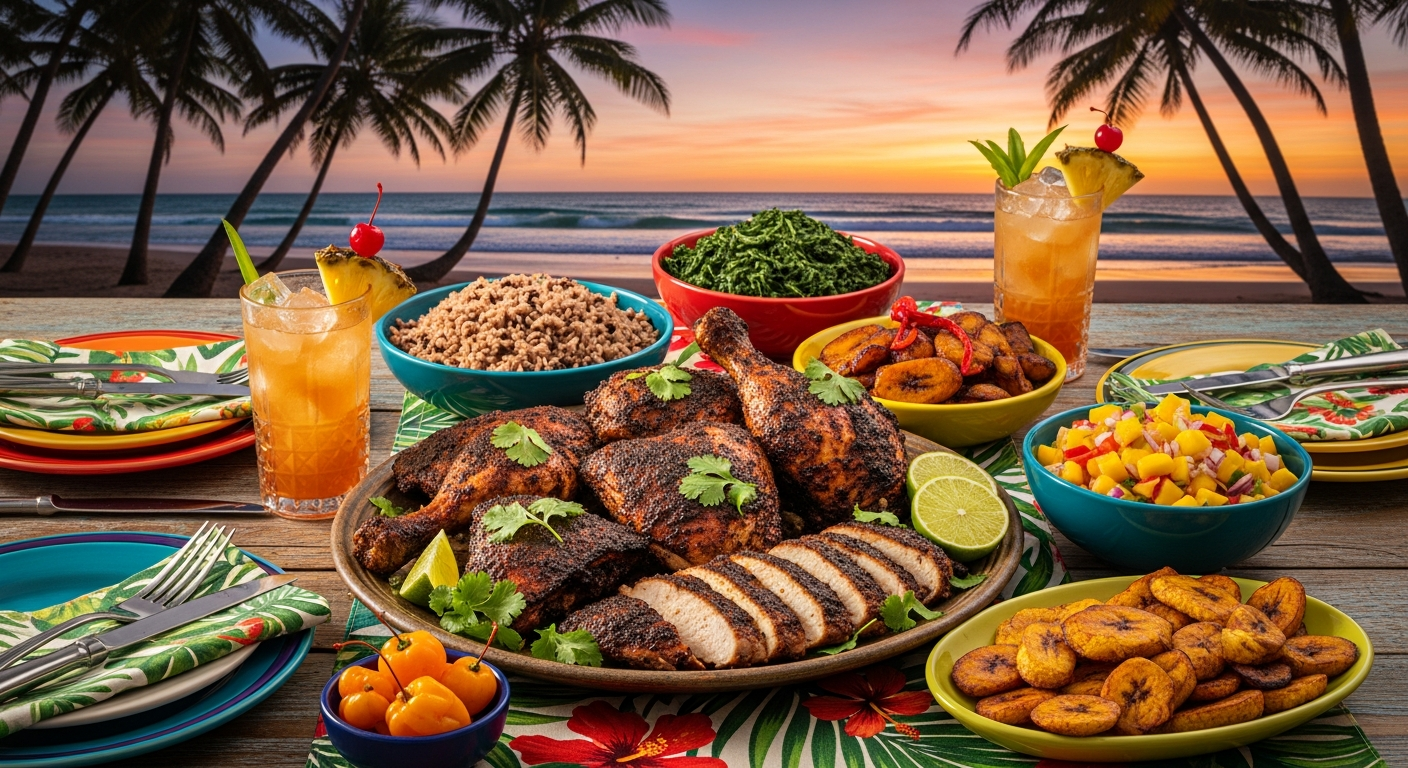
Chicken is the most forgiving protein for jerk marination and the most traditional application after wild boar. Bone-in, skin-on chicken pieces — thighs, drumsticks, and quarters — are the ideal cuts. The skin protects the meat from drying out during cooking, the bones add flavor and moisture, and the dark meat's higher fat content absorbs and carries the jerk flavors beautifully.
For chicken, use a balanced marinade with equal parts acid and fat. The standard ratio is the juice of two limes plus one tablespoon of vinegar for acid, balanced by two tablespoons of oil. Soy sauce provides salt and umami — half a cup per batch. Brown sugar (three tablespoons) enables caramelization on the grill.
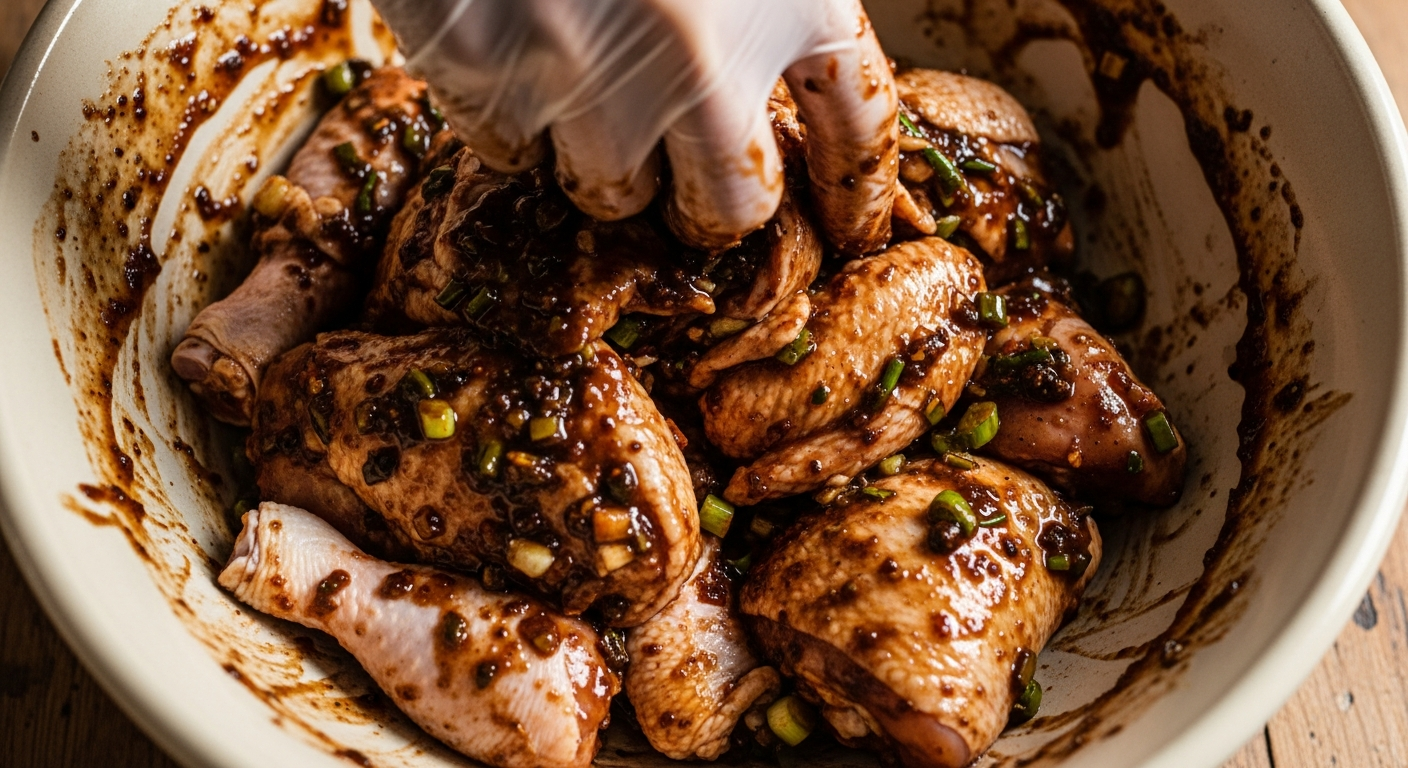
Score the chicken deeply before marinating. Make three to four cuts on each side, slicing down to the bone. This allows the marinade to penetrate the thickest parts of the meat and ensures even seasoning throughout. Work the marinade into every cut with gloved hands.
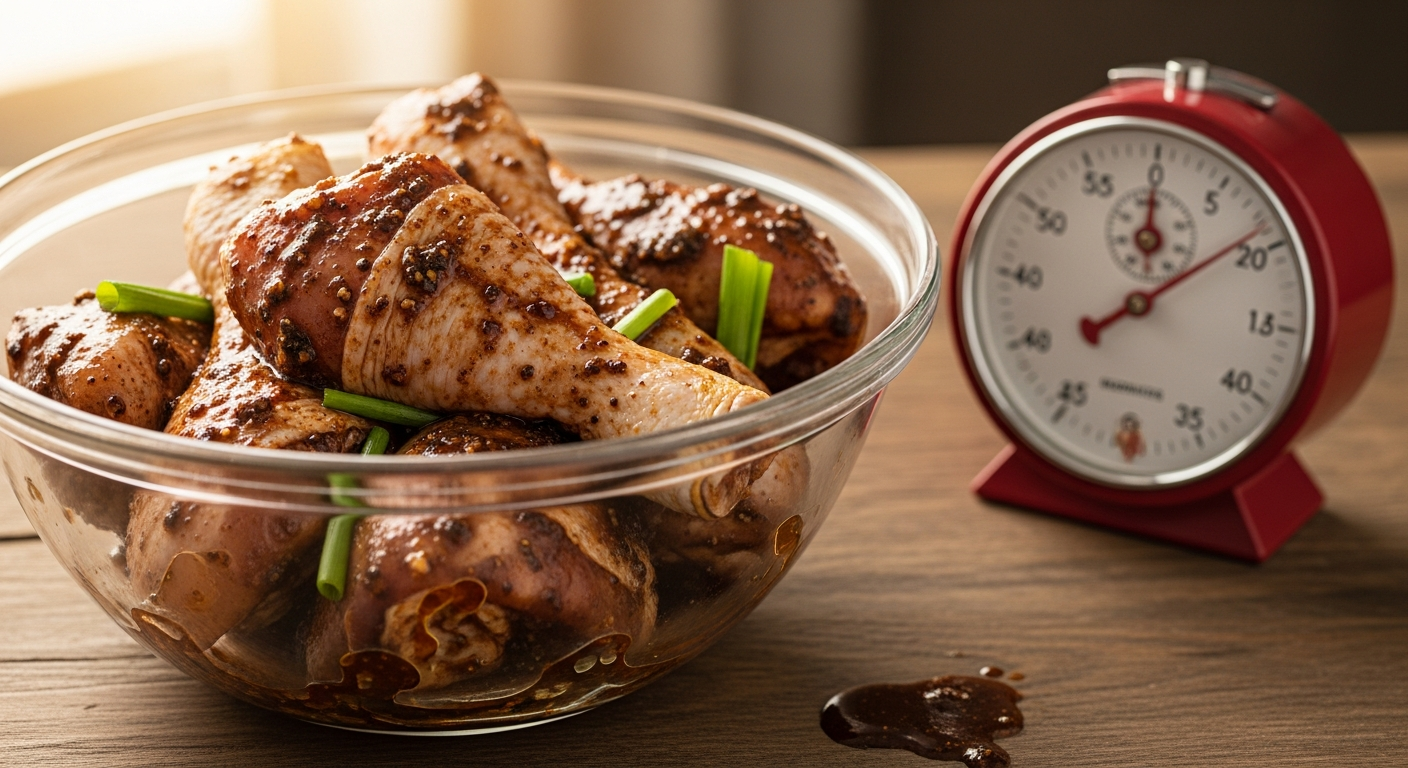
Marinate chicken for a minimum of four hours and an ideal maximum of twenty-four hours. Beyond twenty-four hours, the acid begins to break down surface proteins excessively, creating a chalky texture on the outer layer.
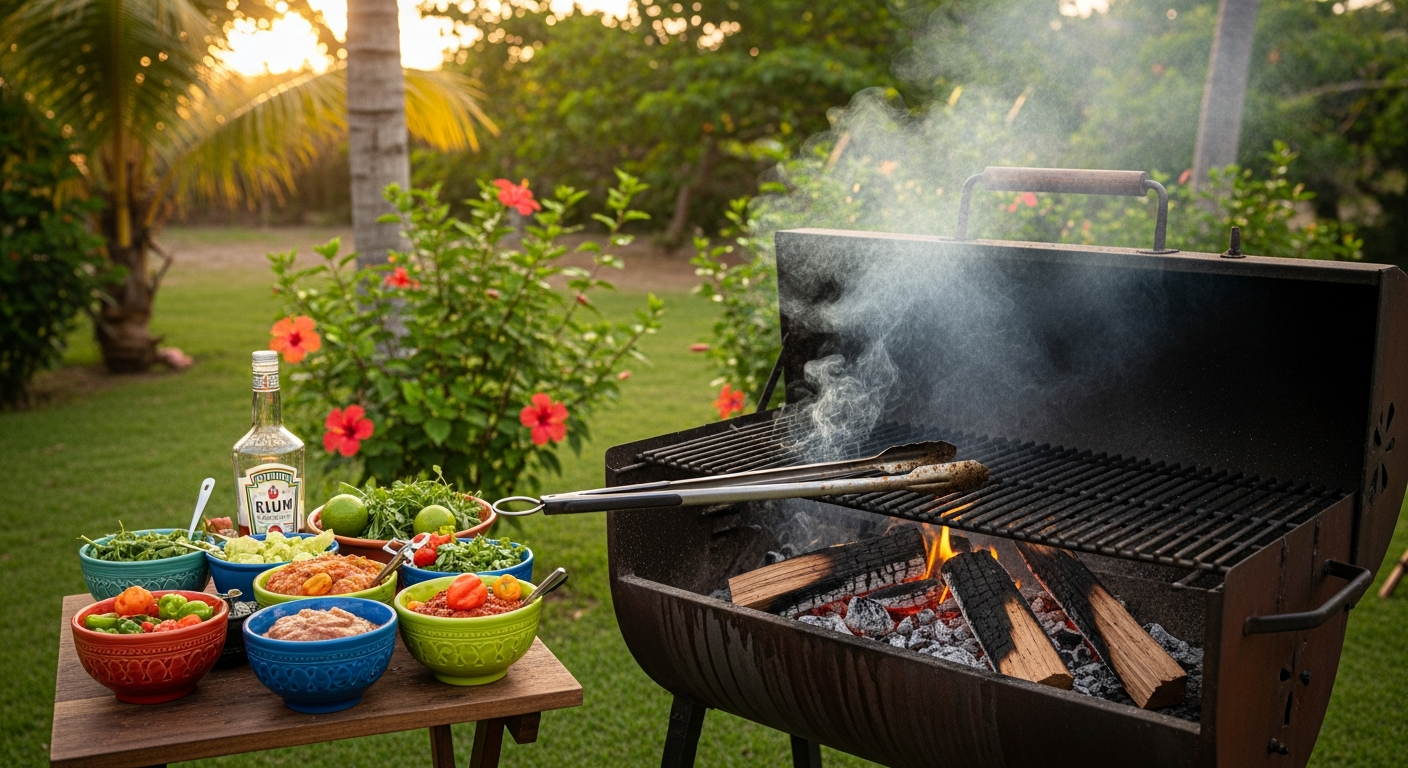
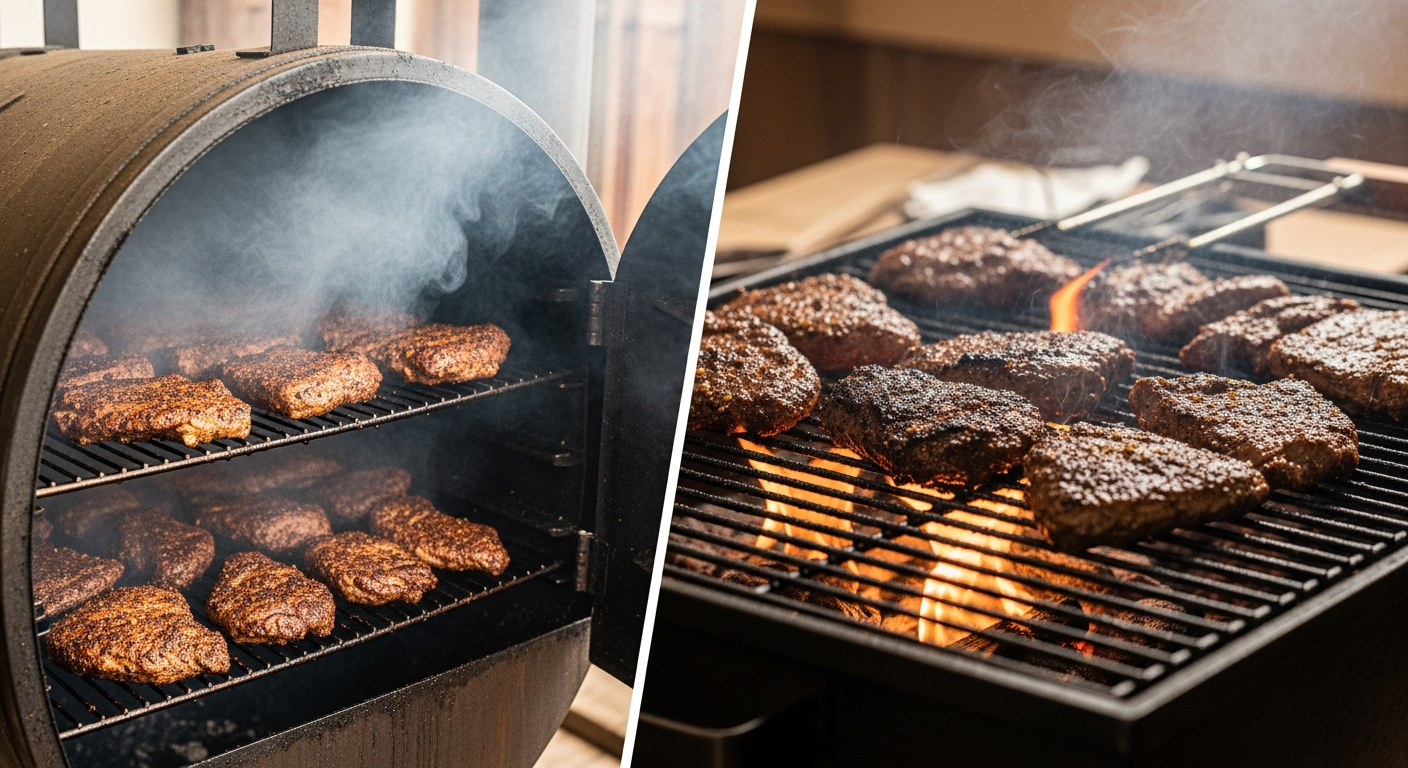
Cook chicken over indirect heat at three hundred to three hundred twenty-five degrees for sixty to ninety minutes, turning every fifteen minutes. The internal temperature should reach one hundred sixty-five degrees. For the last five minutes, move the pieces over direct heat to char and crisp the exterior.
Optimizing for Pork
Pork requires a richer, sweeter marinade than chicken. The natural sweetness of pork pairs beautifully with increased brown sugar and the addition of molasses or dark rum. Pork's heavier fat content also means it can handle — and benefits from — more allspice, which a leaner protein might find overwhelming.
For pork, increase the brown sugar to four tablespoons and add one tablespoon of dark molasses. Add a quarter cup of dark rum if available. Increase the allspice by fifty percent compared to the chicken version. These adjustments create a marinade that caramelizes into a glossy, dark crust during cooking while penetrating deep into the dense muscle tissue.
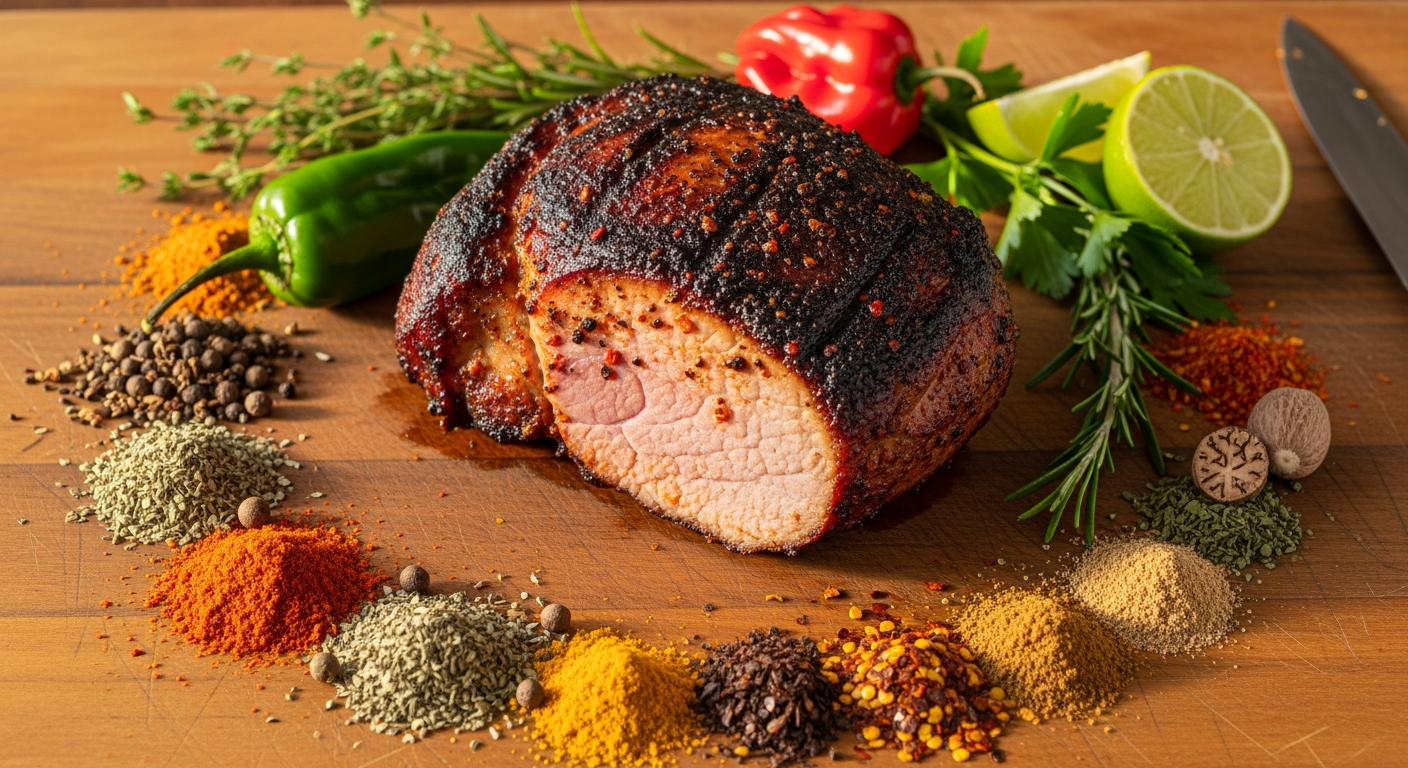
Pork shoulder is the premium cut for jerk. Its extensive marbling and connective tissue make it ideal for low-and-slow cooking. Score the fat cap in a crosshatch pattern and rub the marinade into every cut. Marinate for twenty-four to forty-eight hours.
Cook pork shoulder at two hundred twenty-five to two hundred fifty degrees for six to eight hours until the internal temperature reaches two hundred to two hundred five degrees. At this temperature, the collagen has fully converted to gelatin, creating meat that falls apart at the touch of a fork.
Pork chops and tenderloin need shorter marination (four to eight hours) and higher-heat cooking. Grill chops over medium-high heat for five to six minutes per side. Sear tenderloin in a hot pan, then finish in a four-hundred-degree oven for twelve minutes.
Optimizing for Fish
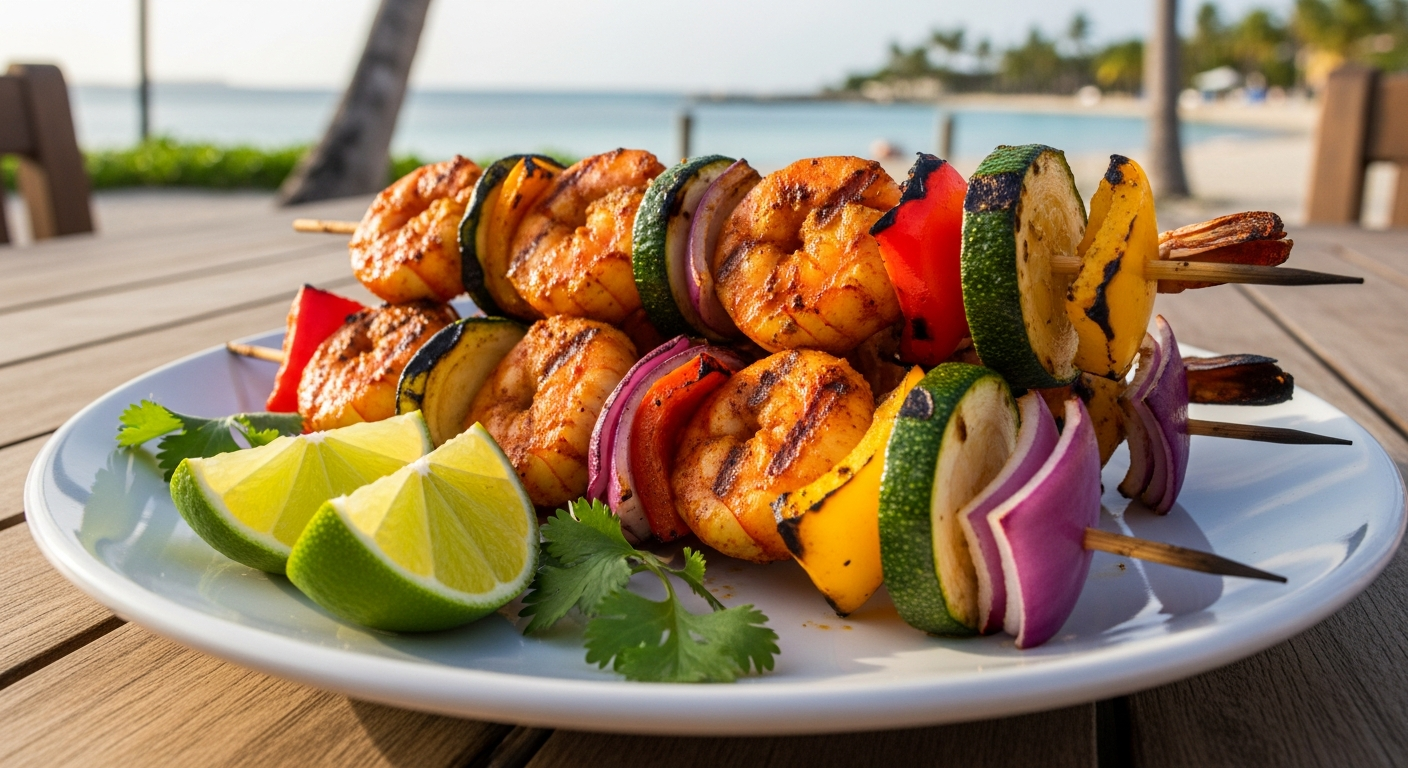
Fish demands the most significant departure from the standard jerk marinade. The delicate proteins in fish denature rapidly in acidic environments, so the acid must be reduced dramatically. Replace half the lime juice with lime zest — this provides the citrus aroma without the tenderizing acid. Reduce vinegar to a teaspoon and increase the oil to three tablespoons.
Fish also benefits from a lighter overall spice load. While the scotch bonnet should remain (fish and scotch bonnet are a classic Caribbean pairing), reduce the allspice by about a third. The warm, heavy notes of allspice can overwhelm the delicate flavors of fish if used in the same proportions as for chicken or pork.
Add coconut milk to the fish marinade — two to three tablespoons — for richness that complements the seafood without adding acid. Coconut and fish are natural partners in Caribbean cuisine, and the fat in the coconut milk carries the jerk flavors into the fish protein effectively.
Firm fish like snapper, mahi-mahi, and swordfish handle jerk marinade best. Marinate for fifteen to thirty minutes — no longer. Cook over high heat on a well-oiled grill for three to four minutes per side, or broil on a sheet pan for the same time.
Whole fish is a spectacular presentation. Score the sides deeply, rub the marinade into the cuts and cavity, and grill over medium heat for seven to eight minutes per side. The skin protects the flesh and crisps beautifully.
Comparative Cooking Guide
Understanding the differences across proteins at a glance makes meal planning easier. Chicken: balanced marinade, four to twenty-four hour marination, three hundred degrees indirect heat, sixty to ninety minutes cooking time. Pork: rich and sweet marinade, twenty-four to forty-eight hours marination, two hundred twenty-five degrees low-and-slow, six to eight hours cooking time. Fish: light and reduced-acid marinade, fifteen to thirty minutes marination, high heat direct cooking, six to eight minutes total.
Each protein brings something different to the jerk experience. Chicken delivers the most familiar, crowd-pleasing result. Pork provides the deepest, richest flavor with the most tender texture. Fish offers the lightest, freshest expression of jerk seasoning, ideal for warm-weather meals and health-conscious diners.