Storing homemade jerk seasoning tips are essential knowledge for anyone who takes their Caribbean cooking seriously. The difference between freshly made jerk seasoning and a jar that has been sitting in the pantry for months is staggering. Proper storage preserves the volatile aromatic compounds in allspice, the capsaicin potency in scotch bonnet, and the bright herbaceous notes of thyme — the very elements that make jerk seasoning extraordinary.
Understanding What Degrades Jerk Seasoning
Before discussing storage solutions, it helps to understand what causes jerk seasoning to lose its punch. Four environmental factors are responsible for nearly all flavor degradation: light, heat, moisture, and oxygen.
Light — particularly ultraviolet light — breaks down the chemical bonds in aromatic compounds. This is why spices stored in clear glass jars on a sunny windowsill lose their flavor fastest. The scotch bonnet's capsaicin is relatively light-stable, but the eugenol in allspice and the thymol in thyme are highly photosensitive.
Heat accelerates all chemical reactions, including the oxidation that degrades flavor compounds. Every ten-degree increase in storage temperature roughly doubles the rate of flavor loss. A jar of jerk seasoning stored near the stove at eighty-five degrees will lose flavor twice as fast as one stored in a cool pantry at seventy-five degrees.
Moisture promotes mold growth and causes dry spice blends to clump and cake. In humid environments, this is the primary enemy of stored jerk seasoning. Moisture also creates conditions for enzymatic reactions that break down the more delicate flavor compounds.
Oxygen drives oxidation, the same process that causes iron to rust. When aromatic compounds in spices oxidize, they produce flat, stale flavors and lose their characteristic brightness. Minimizing oxygen exposure is one of the most effective things you can do to extend shelf life.
Storing Dry Jerk Rub Blends
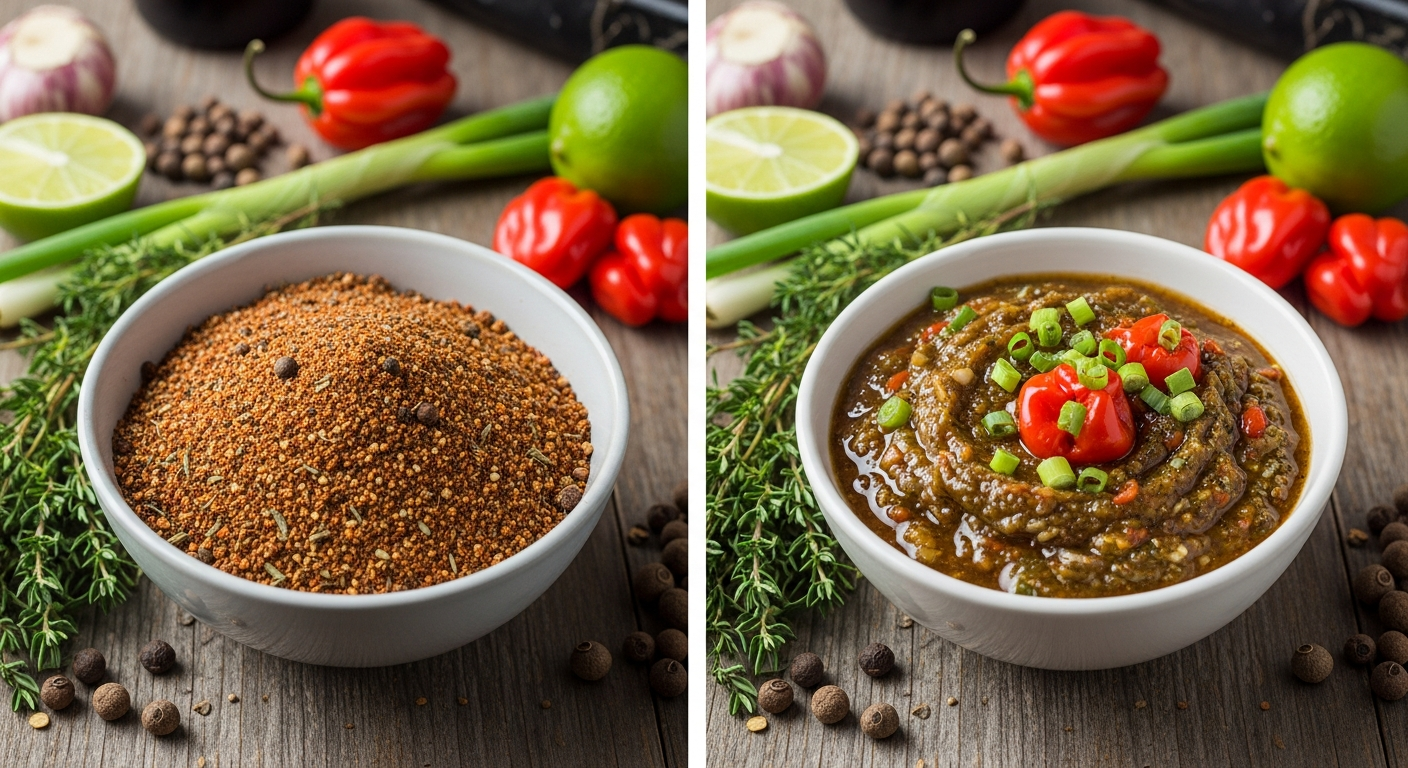
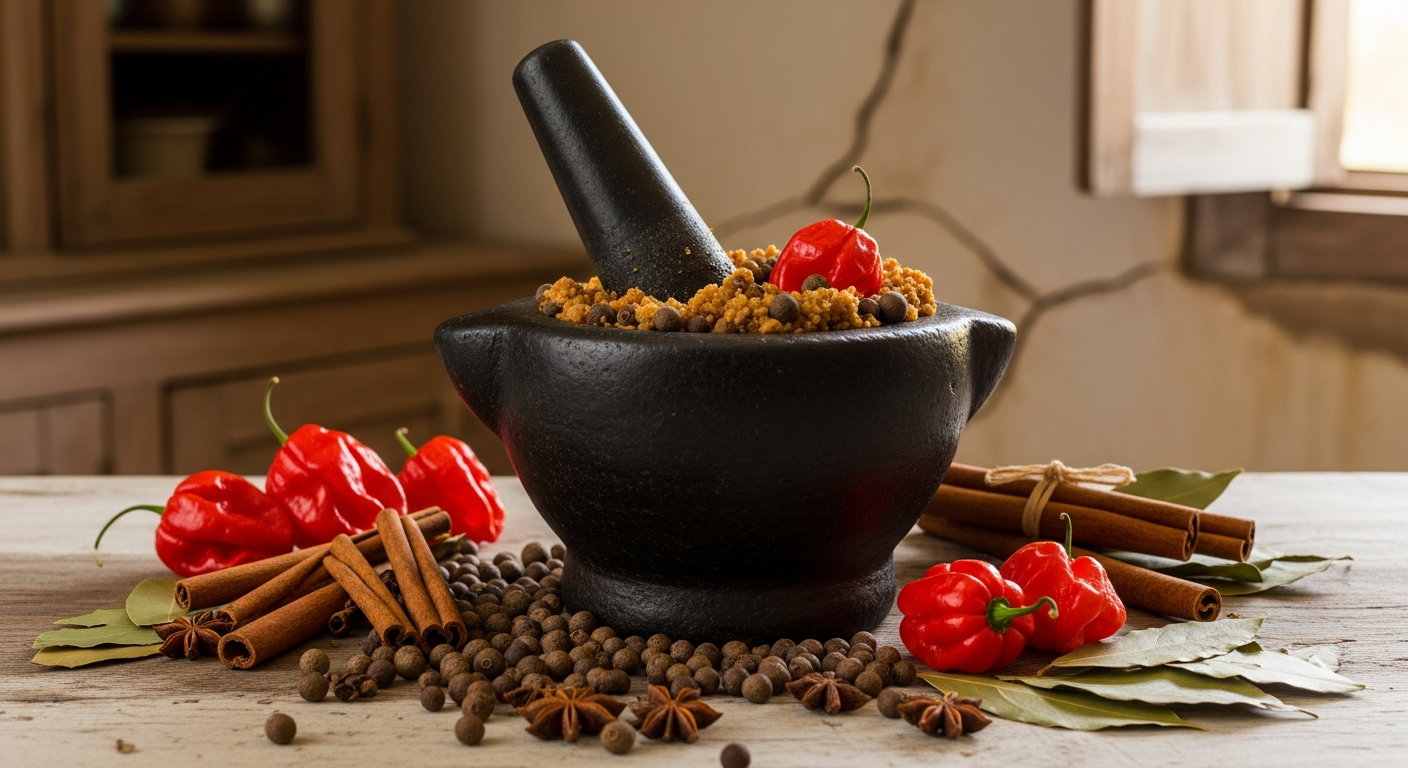
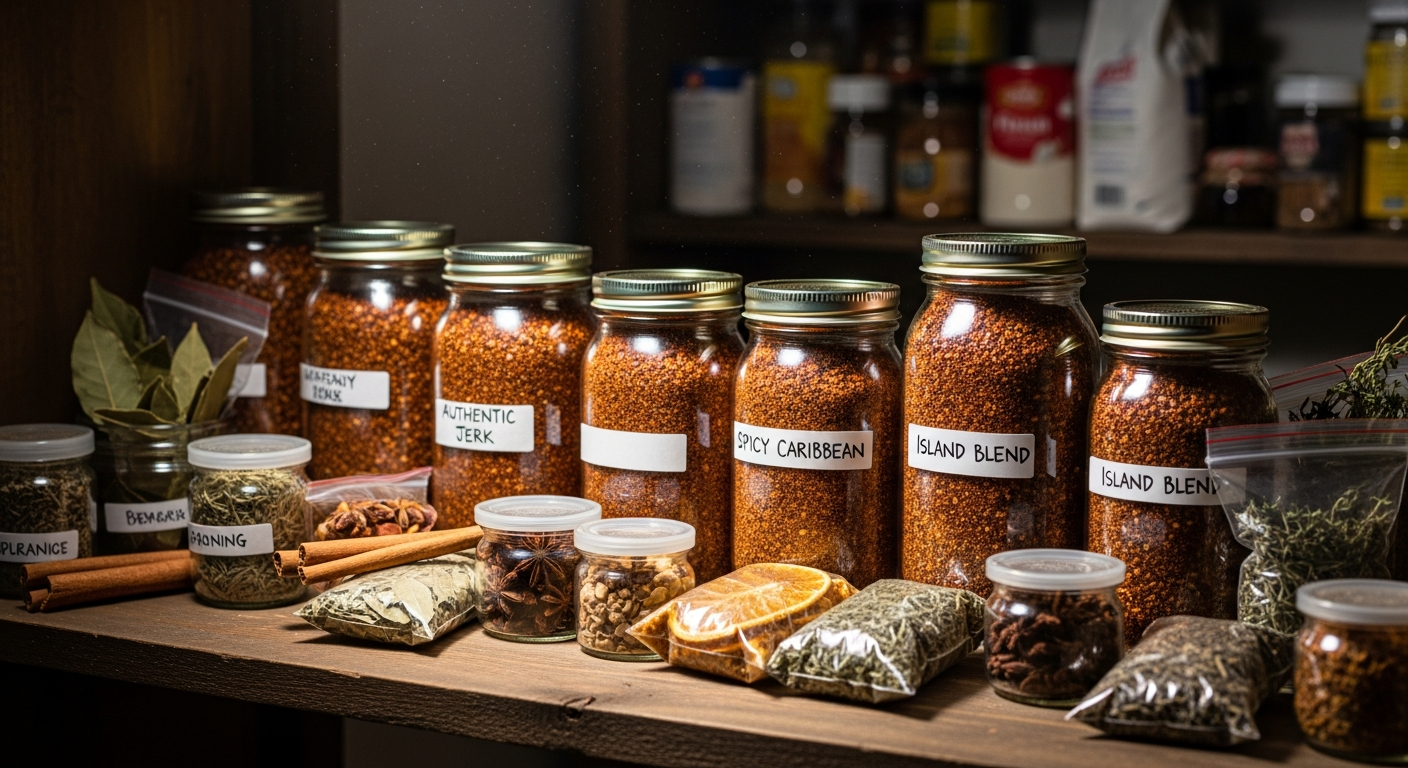
Dry jerk rub — a blend of ground allspice, dried thyme, black pepper, garlic powder, onion powder, cayenne, sugar, salt, and other dried spices — has the longest shelf life of any jerk seasoning format. When stored properly, a dry rub maintains excellent quality for six months and acceptable quality for up to a year.
The ideal container for dry jerk rub is an opaque, airtight jar with a tight-fitting lid. Dark glass or food-grade tin both work well. Avoid clear glass unless you store it inside a closed cabinet. Fill the container as full as possible — less headspace means less oxygen in contact with the spices.
Add a small food-safe desiccant packet to the container if you live in a humid climate. These silica gel packets absorb excess moisture and prevent clumping. You can find them online or save them from vitamin bottles and other products.
Store the container in a cool, dark location — a closed cabinet away from the stove is ideal. The temperature should be consistent; avoid locations that experience temperature swings, such as above the dishwasher or near a heating vent.
Storing Wet Jerk Marinade
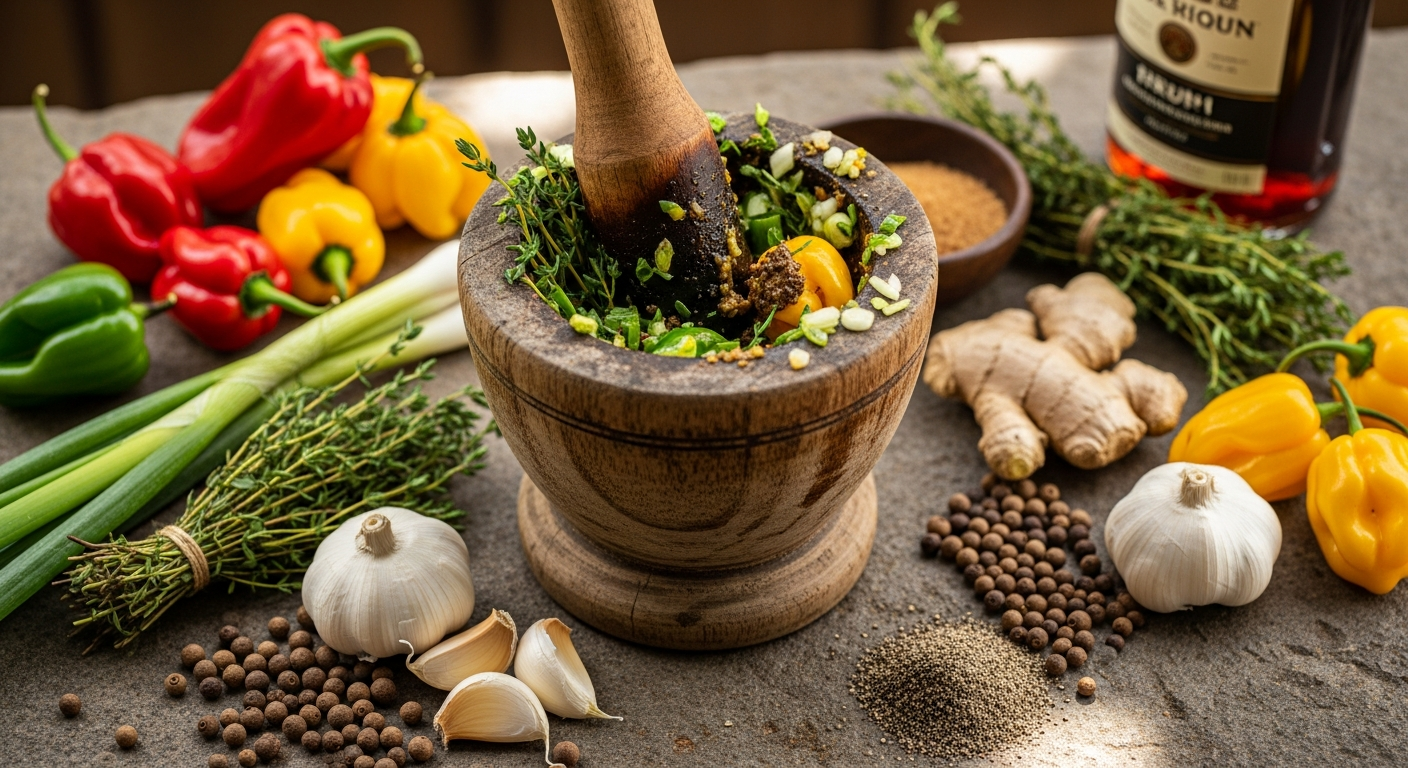
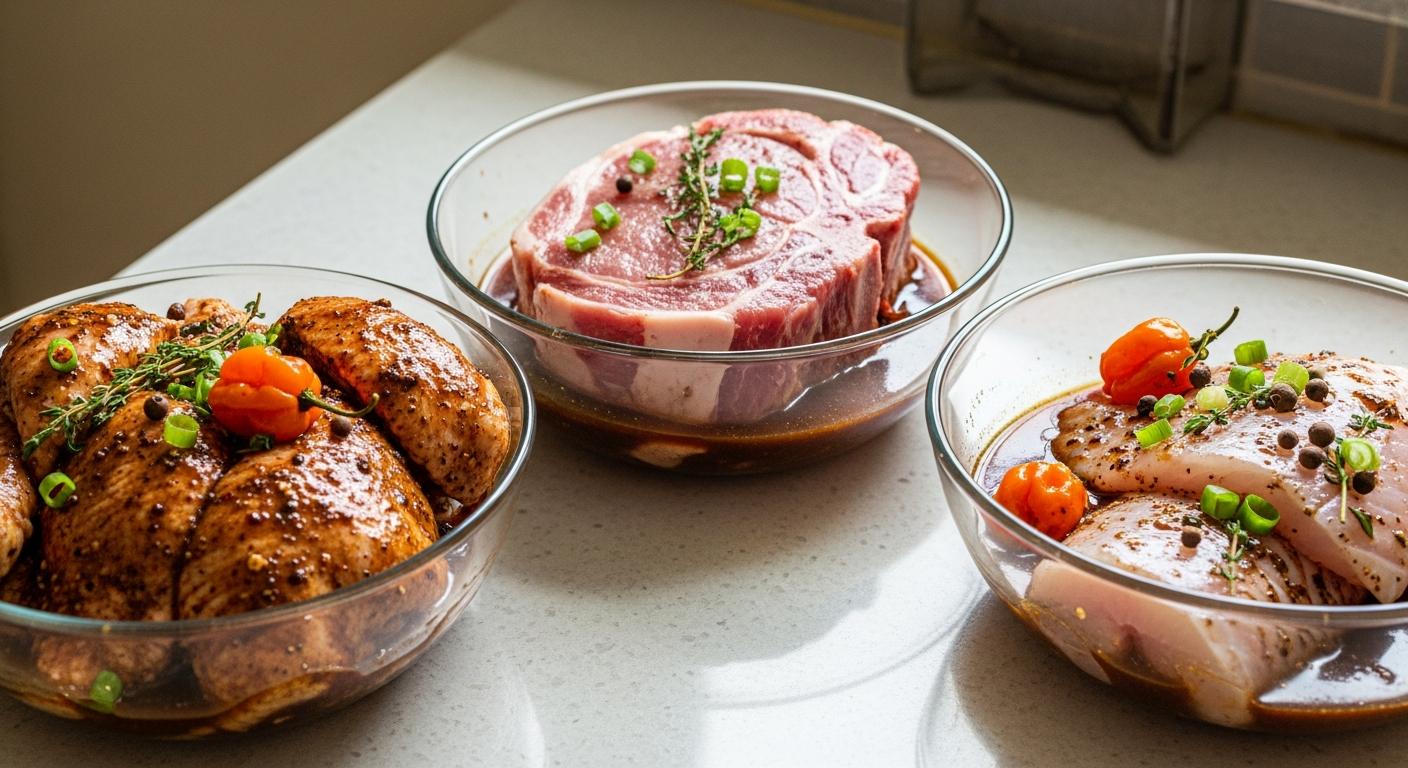
Wet jerk marinade — the blended paste of fresh peppers, herbs, garlic, and liquid ingredients — is more perishable than dry rub because it contains fresh ingredients with active enzymes and moisture that supports microbial growth.
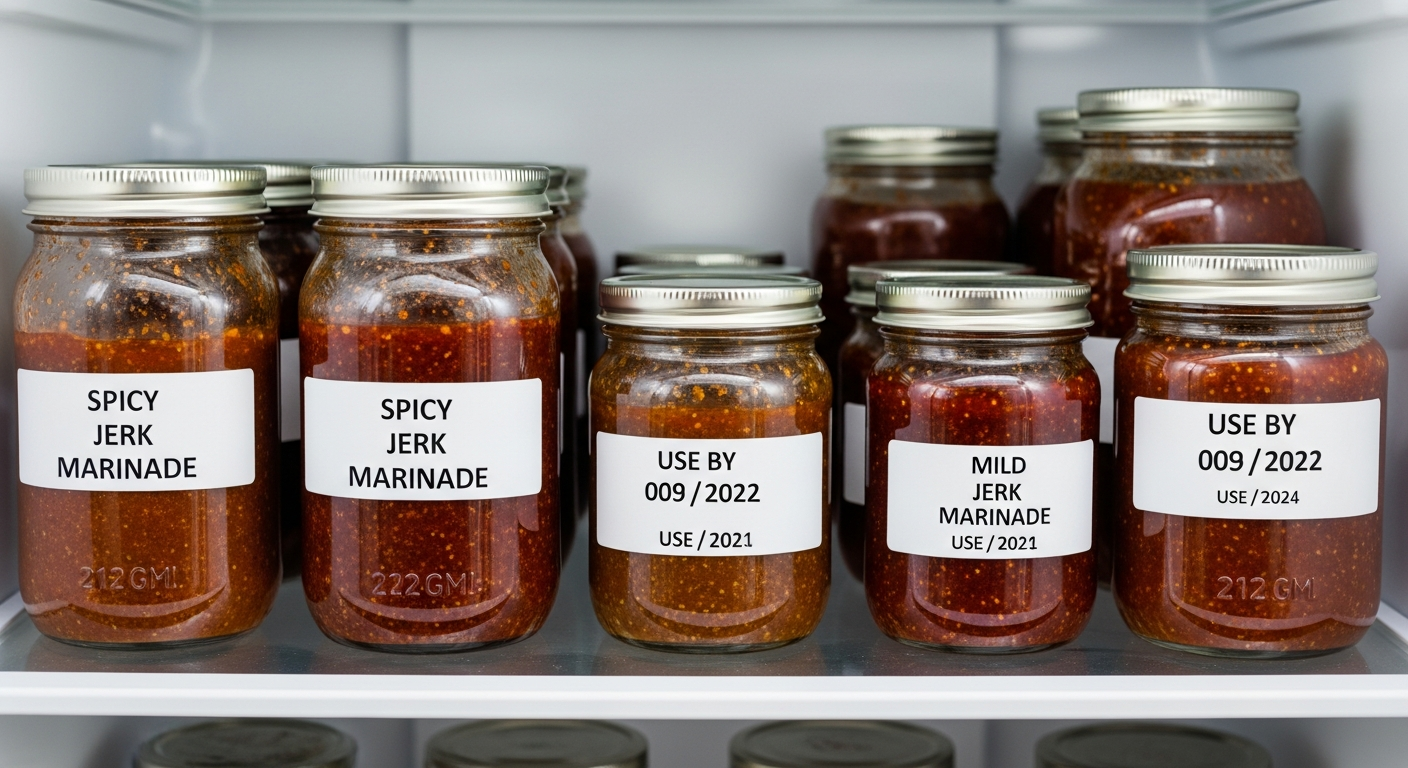
Freshly made wet marinade stores well in the refrigerator for five to seven days. Use glass jars with screw-top lids — the oil in the marinade can interact with some plastics over time, and glass does not absorb the powerful colors and aromas. Fill the jar to the very top, minimizing the air gap.
For longer storage, freeze the marinade. Ice cube trays produce perfectly portioned units — each cube yields about two tablespoons. Once frozen solid, transfer the cubes to a labeled freezer bag and press out all air before sealing. Frozen marinade maintains peak quality for three months and remains safe indefinitely.
The Concentrated Base Method
For the most efficient long-term storage, prepare a concentrated jerk seasoning base by combining only the shelf-stable ingredients: ground allspice, black pepper, cinnamon, nutmeg, garlic (dried or roasted to paste), ginger (dried or roasted), soy sauce, vinegar, and browning sauce. This concentrated base stores in the refrigerator for up to three weeks or in the freezer for six months.
When ready to cook, combine the base with fresh scotch bonnet peppers, scallions, thyme, and lime juice. This hybrid approach gives you the convenience of having a base ready to go while ensuring the most perishable, flavor-critical ingredients are always fresh.
Grinding and Toasting for Storage
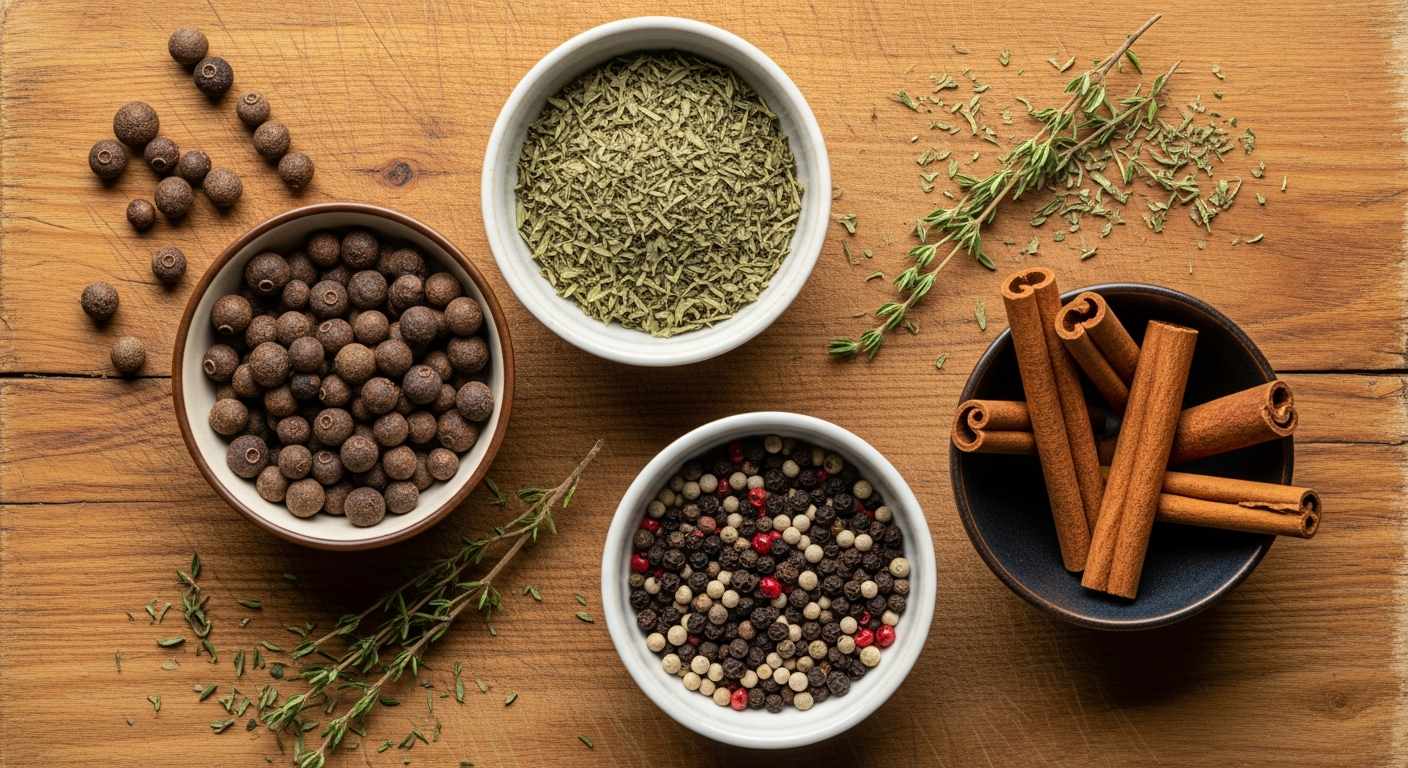
If you buy whole allspice berries and other whole spices (recommended for the freshest flavor), you face a choice: grind fresh each time or grind in batches for convenience. The compromise is to toast and grind a batch sufficient for two to three weeks of cooking. Toasting the spices in a dry skillet before grinding drives off surface moisture, which improves both flavor and shelf life.
Store freshly ground spices in airtight containers immediately after grinding. The moment spices are ground, the clock starts ticking on flavor degradation — the increased surface area exposed to air dramatically accelerates oxidation. Whole spices, by contrast, retain their essential oils behind a protective outer layer and stay fresh for years.
Signs Your Seasoning Has Lost Its Edge
Even with perfect storage, jerk seasoning eventually loses its potency. The first sign is diminished aroma — open the container and sniff. Fresh jerk seasoning should be aggressively aromatic, filling the room with the warm scent of allspice and the sharp bite of pepper. If you have to bring the jar close to your nose and sniff hard, the seasoning is past its prime.
The second indicator is flavor intensity. Taste a small amount on a cracker. The flavors should be bright, distinct, and layered. If the overall impression is flat, dusty, or one-dimensional, it is time to make a fresh batch.
The third sign is visual: loss of vibrant color. Fresh jerk dry rub should be a warm brown with reddish tones from the cayenne and paprika. As it ages, the color fades to a uniform dull brown. Wet marinade should be dark green-brown with visible herb flecks. If it has turned uniformly dark with no distinguishable ingredients, it has oxidized beyond usefulness.