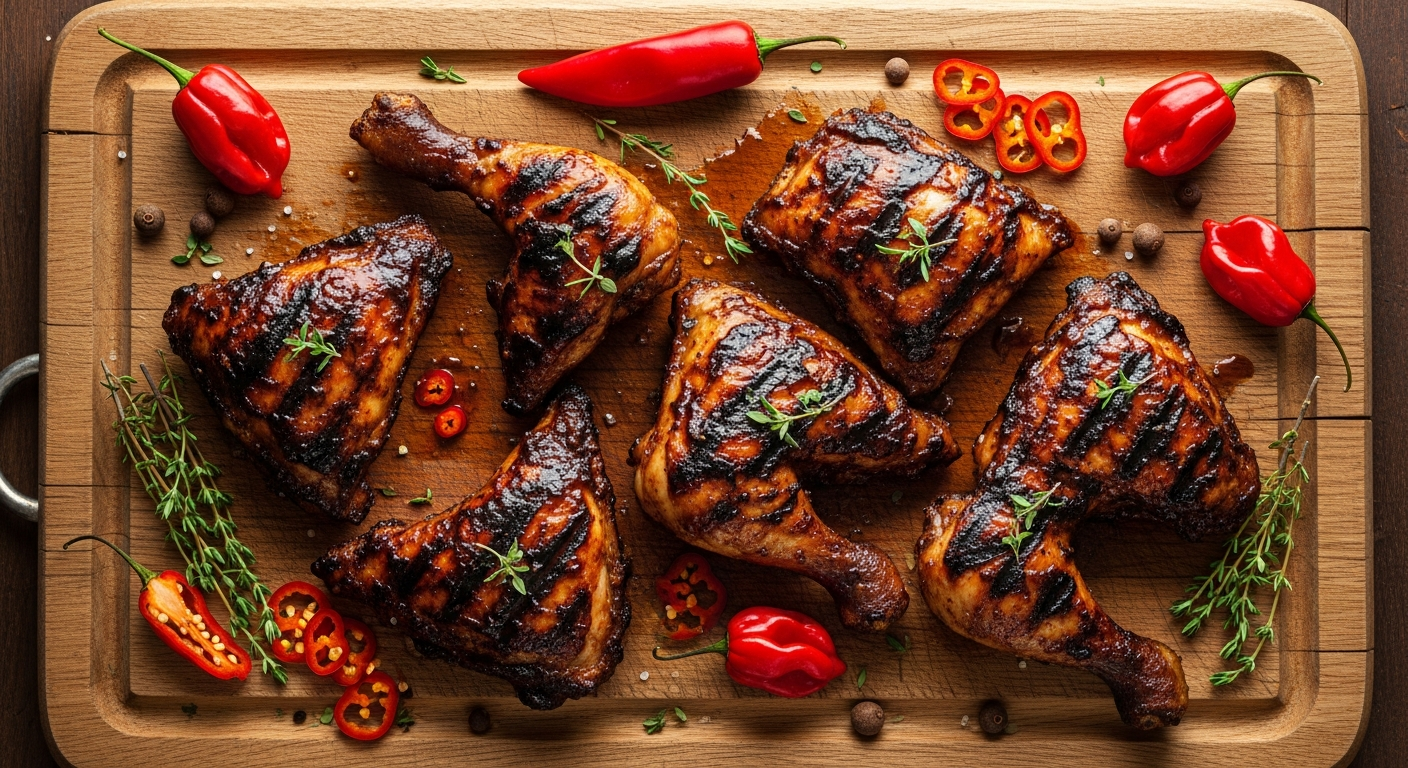
Why Is Jerk Chicken Black? The Science of Jerk's Dark Color
Authentic jerk chicken turns black on the exterior from three simultaneous reactions: the Maillard reaction (protein browning), caramelization of sugars in the marinade, and actual char from high heat. This dark color is not burnt chicken — it is the signature of properly cooked Jamaican jerk, and it is safe to eat.
Three Reactions Create the Black Color
The characteristic dark exterior of authentic Jamaican jerk chicken is produced by three simultaneous and sequential chemical reactions. Understanding them explains both why the color occurs and why it indicates properly cooked jerk rather than burnt food. The complete jerk chicken guide and cooking methods guide cover the technique in detail.
The Maillard Reaction
The Maillard reaction occurs when amino acids (from protein) and reducing sugars react at high temperature (typically above 280°F). The result is hundreds of complex flavor and color compounds — the same reaction responsible for the brown crust on bread, the color of coffee, and the sear on a steak. On jerk chicken, the Maillard reaction produces the first layer of dark color from the chicken's own protein and from the sugars in the marinade (brown sugar, rum, soy sauce all contain reducing sugars). This layer is deeply flavored — the Maillard products include pyrazines, furans, and melanoidins that contribute the complex, nutty-roasted character of jerk's exterior.
Sugar Caramelization
The brown sugar and rum in jerk marinade caramelize at high heat — pure sucrose caramelizes at approximately 320°F, producing a range of flavored compounds from butterscotch-like caramels at lower temperatures to bitter, complex caramelans at higher temperatures. On a grill, the surface of jerk chicken can exceed 400–500°F, taking caramelization through its full range. The dark, sticky coating on properly grilled jerk chicken is largely caramelized marinade sugar — it contributes both the color and a complex sweet-bitter flavor layer in the exterior that is absent in oven-roasted jerk.
Actual Char
At the highest heat points — particularly in authentic Jamaican jerk preparation over wood fire — the exterior of the chicken reaches temperatures that produce actual char: incomplete combustion of the marinade's organic compounds produces carbon deposits on the surface. This is the defining characteristic of Boston Bay jerk chicken: the exterior is sometimes visibly carbonized. This is not the same as uniformly burnt food. The char is limited to the outermost 1–2mm of the exterior while the interior remains fully cooked but not charred. The carbon char layer is safe to eat in the quantities found in properly cooked jerk — the amount of polycyclic aromatic hydrocarbons (PAHs) in a few grams of jerk exterior char is within safe limits per mainstream food safety standards.
Black vs Burnt — How to Tell the Difference
Properly charred jerk chicken exterior is dark-to-black, slightly crispy, and deeply aromatic. The interior (when cut) should show fully cooked, juicy meat — a slight pink at the bone of bone-in pieces at 165°F internal temperature (carryover myoglobin reaction) is safe. Signs of actually burnt chicken (which is different and should be avoided): uniformly grey-black throughout the flesh, not just the exterior; noticeably bitter or acrid flavor throughout the entire piece; dry, fibrous interior. If only the exterior is dark while the interior is juicy and fully cooked at 165°F, the chicken is correct.
How to Achieve the Right Color
Use a charcoal grill with high direct heat for the best jerk char — gas grills produce less char due to lower peak temperatures at the grate surface. Apply sufficient marinade (especially the sugar and rum components) for maximum Maillard and caramelization. Don't move the chicken too frequently — let the marinade caramelize on each surface before turning. See the charcoal grill guide for the right equipment and temperature guide for internal temperature targets.
Frequently Asked Questions
Frequently Asked Questions
Is burnt jerk chicken safe to eat?
Why is my jerk chicken black on the outside but raw inside?
What makes jerk chicken darker than regular grilled chicken?
Does the dark color mean jerk chicken is overcooked?
Can I get the dark jerk color in an oven?
Editorial Selection
Recommended Products
Charcoal Grill
Best for ColorBest for: Authentic jerk char color
Produces the deepest char and darkest exterior on jerk chicken.
Why we recommend it: The direct radiant heat of charcoal at the grate surface produces the Maillard reaction, caramelization, and char simultaneously — gas grills and ovens can't match this.
Affiliate link coming soonEditorial note: These are independent recommendations based on quality and usefulness for jerk cooking. We may earn a small commission if you purchase through our links — at no extra cost to you. See our affiliate disclosure for full details.
Free Newsletter
Get Authentic Jerk Recipes Delivered
Authentic Jamaican recipes, cooking tips, and new guides delivered to your inbox. No spam — unsubscribe any time.
No spam. Unsubscribe anytime.
Complete Guide
Ultimate Jamaican Jerk Chicken Guide
Everything you need to know about this topic in one comprehensive guide.
Read the complete guide →Continue Learning
Authority Guides
Related Topics
Recipes & Techniques
Buying Guides
Written by
Jerk Cuisine Specialist
Marcus Thompson has spent over a decade studying Jamaican culinary traditions, from the jerk pits of Boston Bay to home kitchens across the Caribbean diaspora.
View full bio