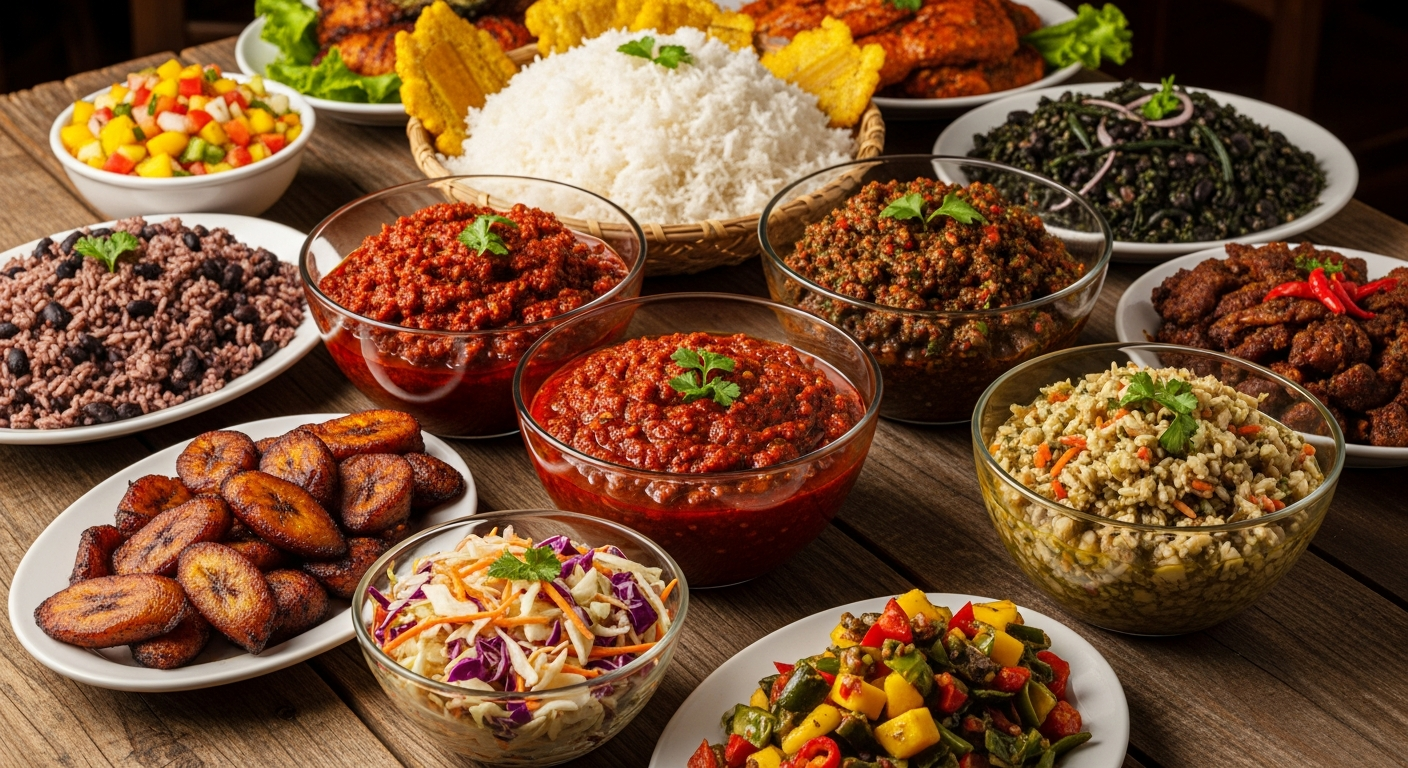
Jerk marinades with Caribbean sides form the backbone of any memorable Caribbean meal. The relationship between your marinade and your sides is not just about the protein in between — it is about creating a cohesive plate where every element works in harmony. Understanding how different jerk marinades interact with traditional Caribbean accompaniments will elevate your cooking from simply good to authentically great.
Why Marinade Choice Matters for Your Sides
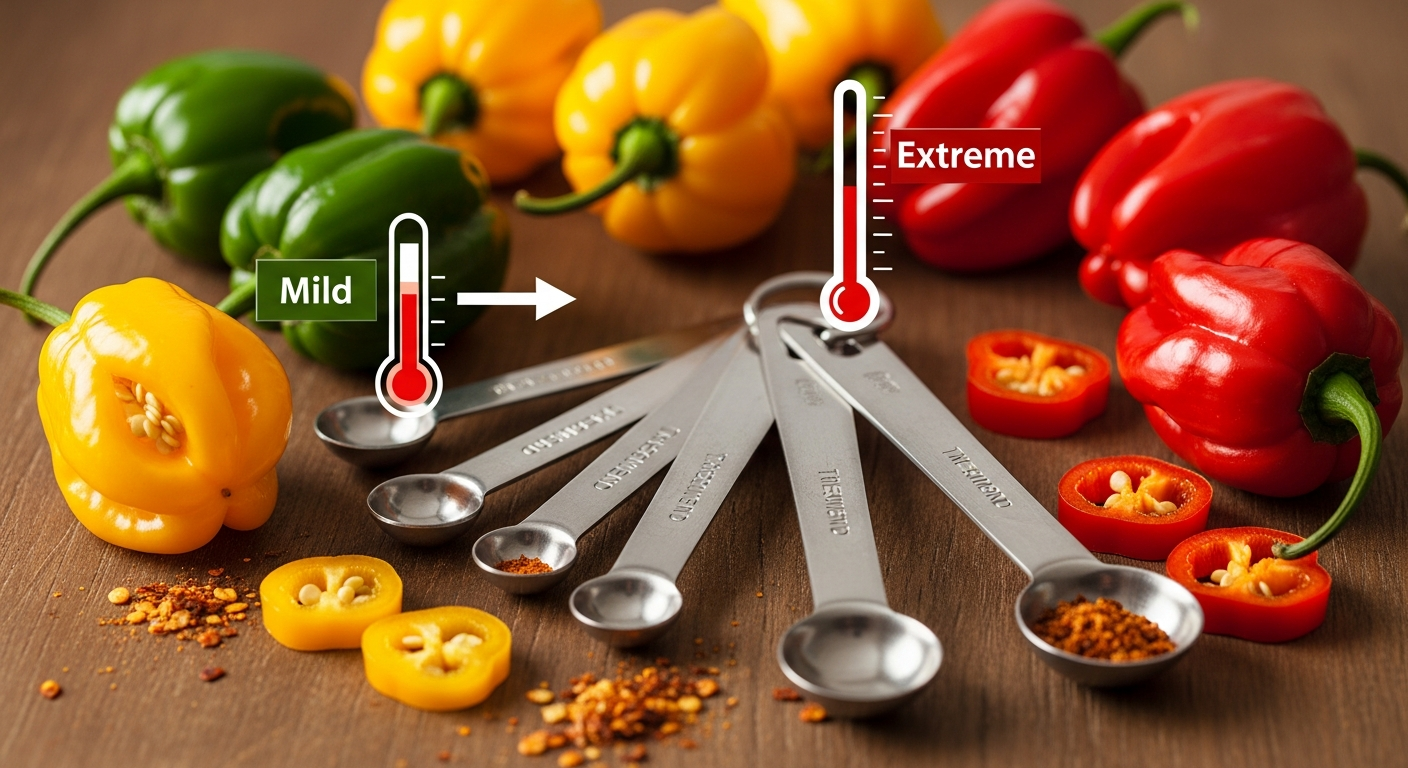
When you select a jerk marinade, you are setting the tone for the entire meal. A fiery, scotch bonnet-heavy marinade demands cooling sides like coconut rice or cucumber salad. A sweeter, allspice-forward blend pairs naturally with starchy accompaniments like festival bread or roasted breadfruit. The key is thinking about the complete plate rather than treating the marinade as an isolated decision.
Traditional Jamaican cooks have always understood this balance instinctively. At jerk stands across Portland Parish, the marinade recipe and the sides served alongside it are considered a unified offering, developed together over years of refinement.
Coconut-Based Marinades and Their Best Companions
Coconut milk-based jerk marinades bring a rich, creamy quality that mellows the heat of scotch bonnet peppers while adding tropical sweetness. These marinades work exceptionally well with protein that will be served alongside rice and peas, because the coconut notes in both the marinade and the rice create a harmonious echo across the plate.
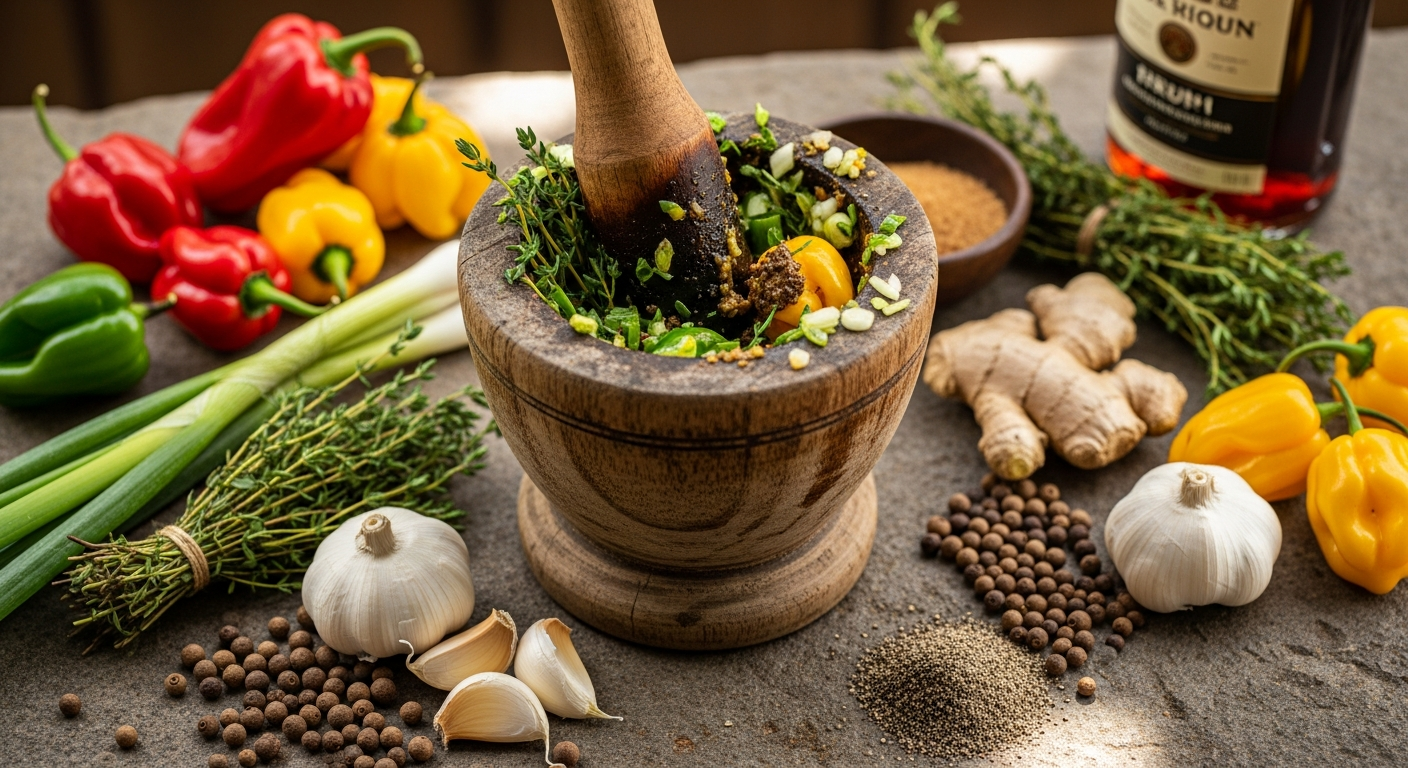
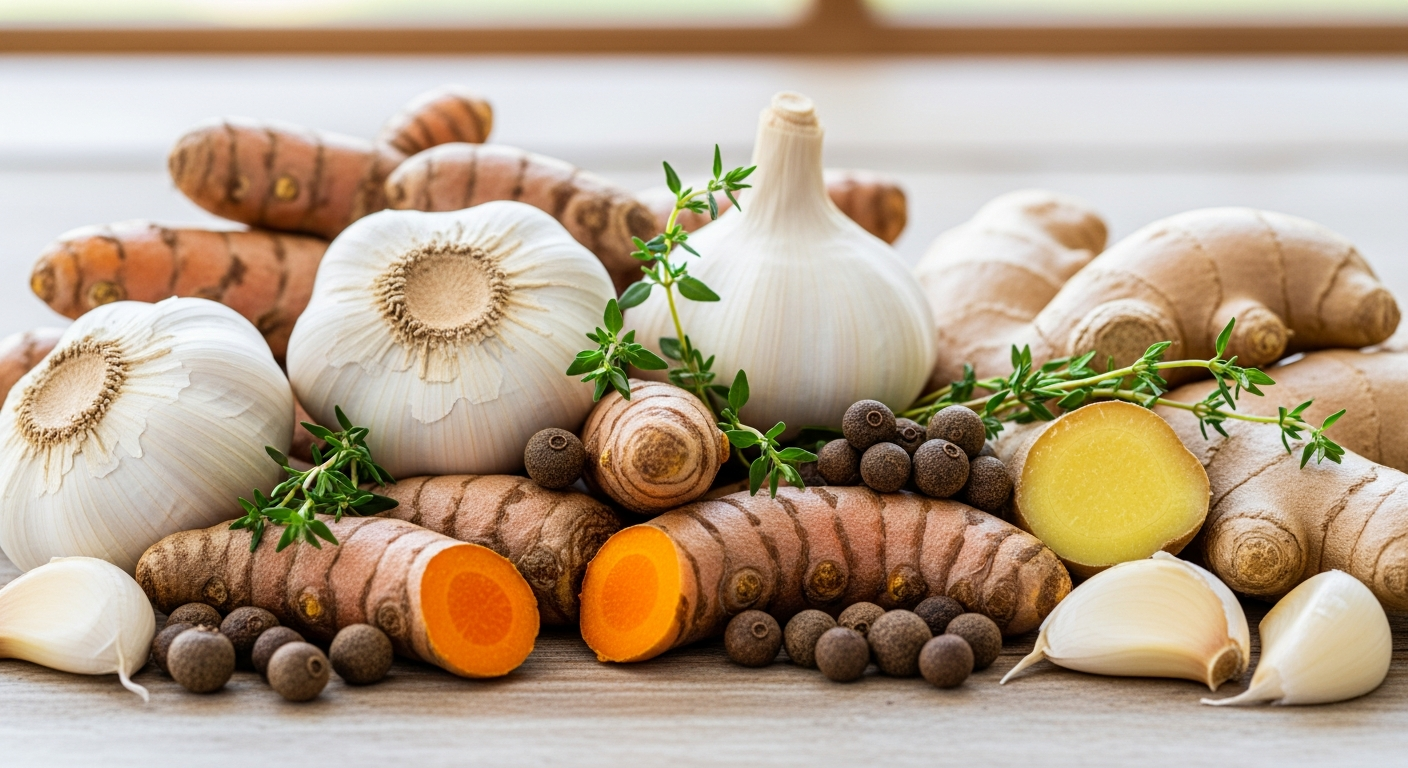
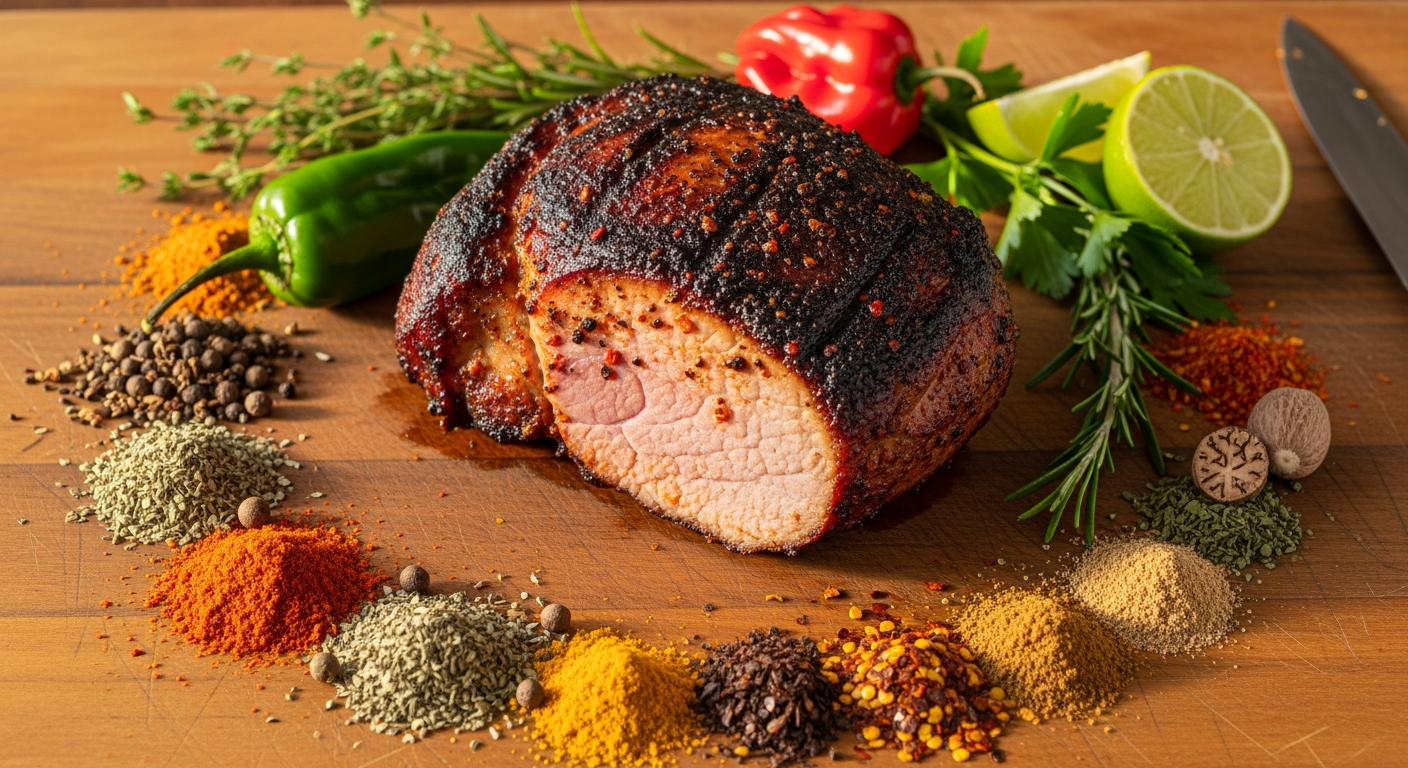
To build a coconut jerk marinade, blend coconut milk with traditional jerk spices: scotch bonnet peppers, allspice berries, fresh thyme, garlic, ginger, and scallions. Add a splash of dark rum for depth. This marinade is particularly effective on chicken thighs and pork shoulder, where the fat content in the meat works with the coconut to create a rich, complex sauce during cooking.
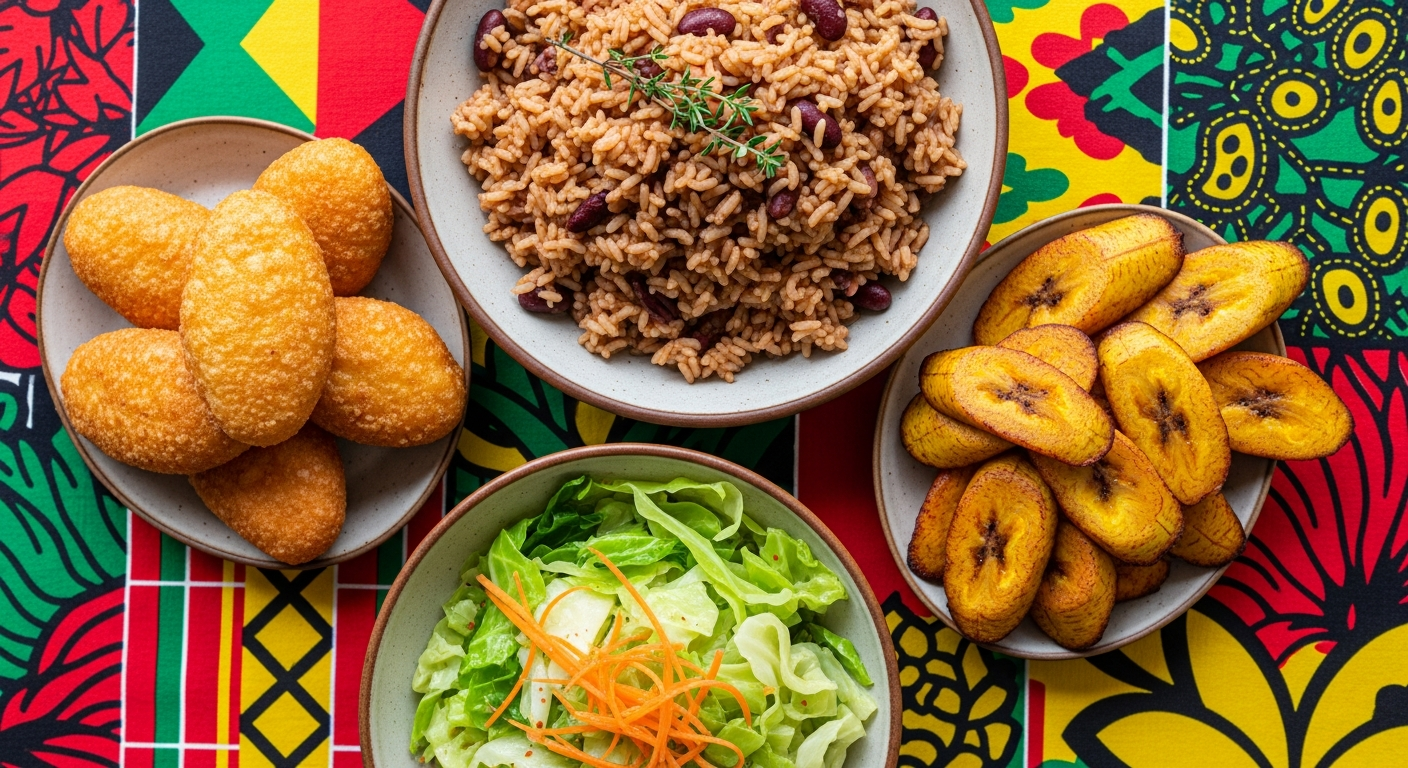
The best sides for coconut-based jerk include steamed callaloo, which provides a bitter green contrast, and fried plantains, whose caramelized sweetness plays off the coconut beautifully. Festival bread is another excellent choice — its subtle sweetness and dense, chewy texture absorbs the coconut-tinged juices from the meat.
Citrus-Forward Marinades for Lighter Sides
When your meal features lighter sides like Caribbean coleslaw or fresh mango salsa, reach for a citrus-forward jerk marinade. Lime juice, sour orange, and grapefruit juice provide acid that tenderizes meat while adding brightness that complements fresh, uncooked accompaniments.
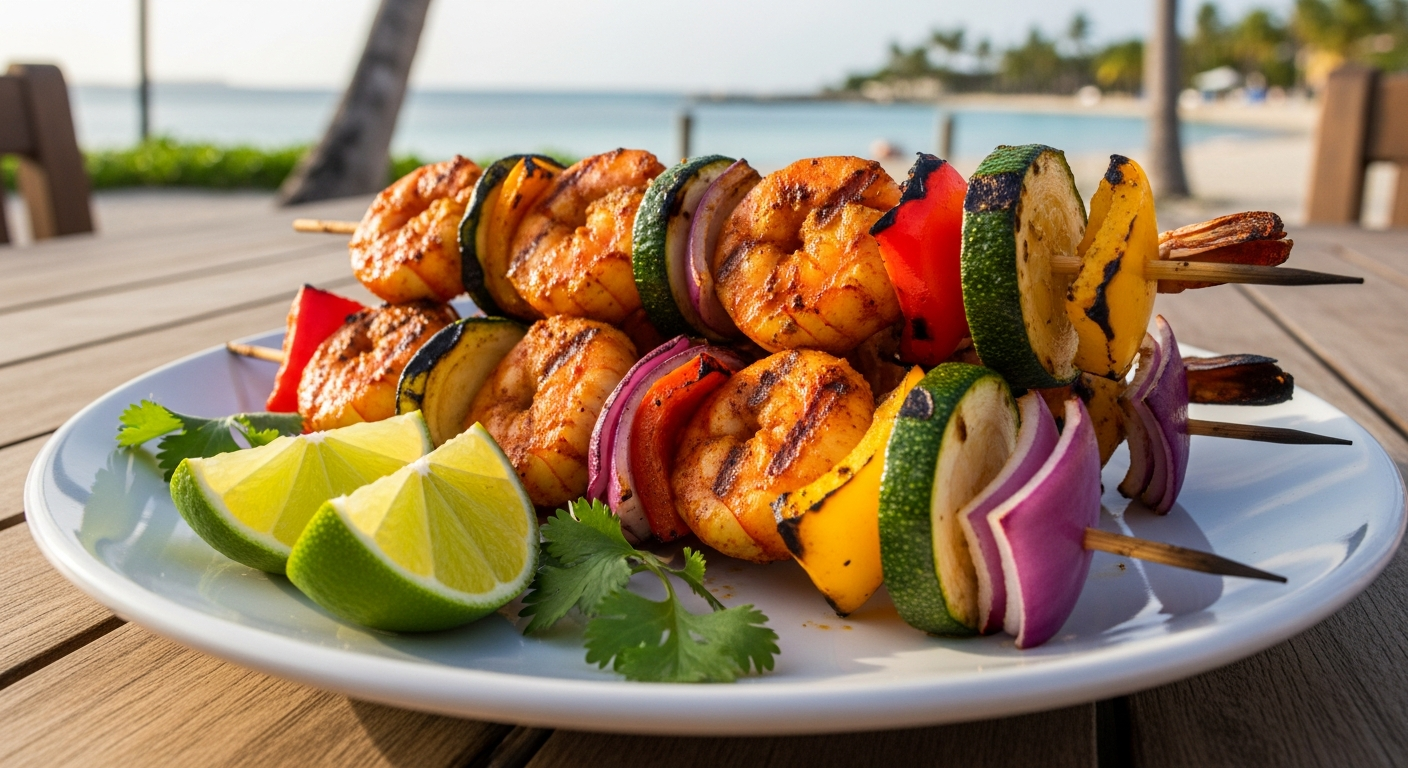
A citrus jerk marinade starts with fresh lime juice and sour orange (or a mix of orange and lime if sour orange is unavailable). The acid is balanced by brown sugar and soy sauce, with the standard jerk aromatics layered in. This marinade excels on seafood — shrimp, snapper, and mahi-mahi all respond beautifully to the citrus treatment.
Soy and Browning Sauce Marinades
One of the lesser-known secrets of Jamaican jerk marinades is the use of browning sauce — a concentrated caramel seasoning that adds deep color and savory complexity. Combined with soy sauce, it creates a marinade that produces an almost lacquered finish on grilled meat, with rich umami depth underneath the heat and spice.
This style of marinade pairs brilliantly with starchy sides that can soak up its complex flavors. Hard dough bread, bammy (cassava flatbread), and boiled green bananas are traditional choices that absorb the dark, savory juices and become vehicles for the concentrated flavor.
Building a Complete Caribbean Plate
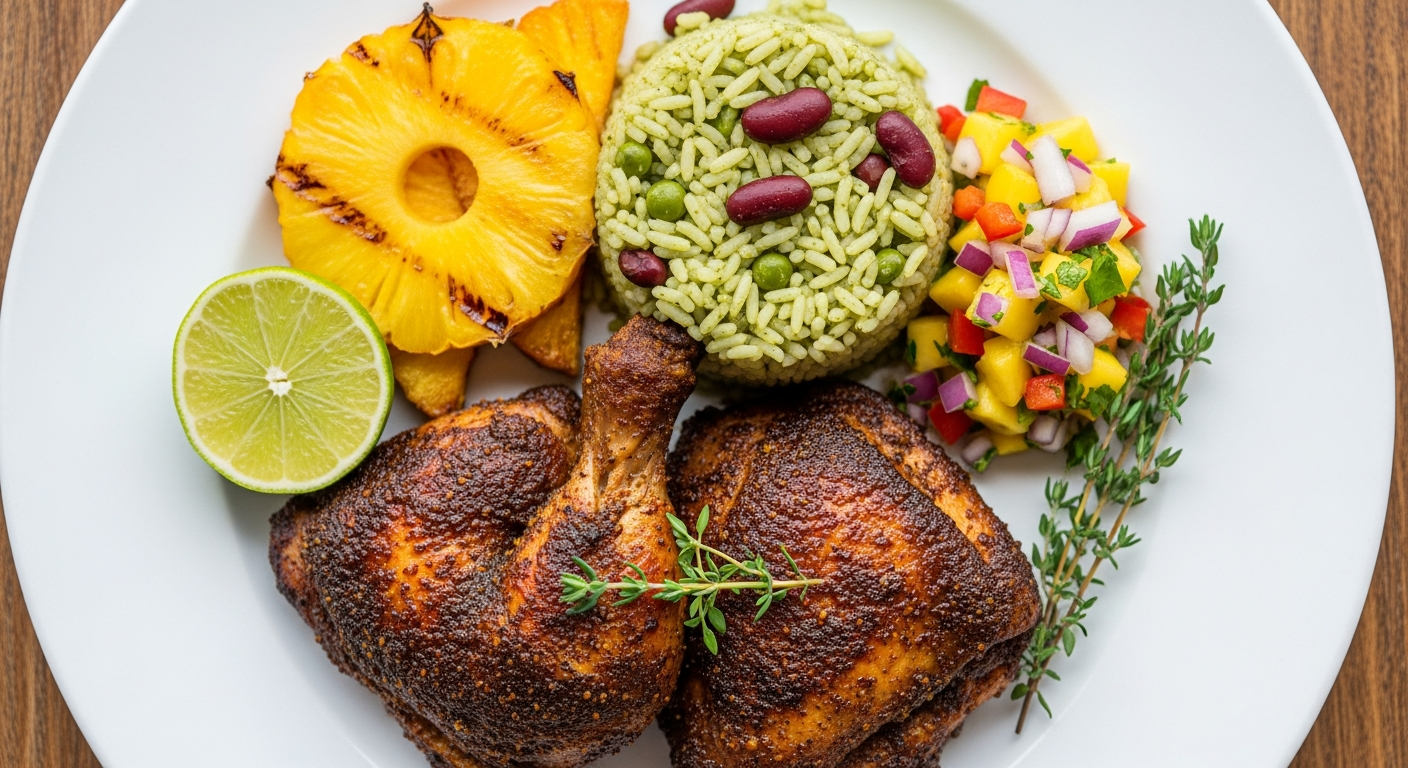
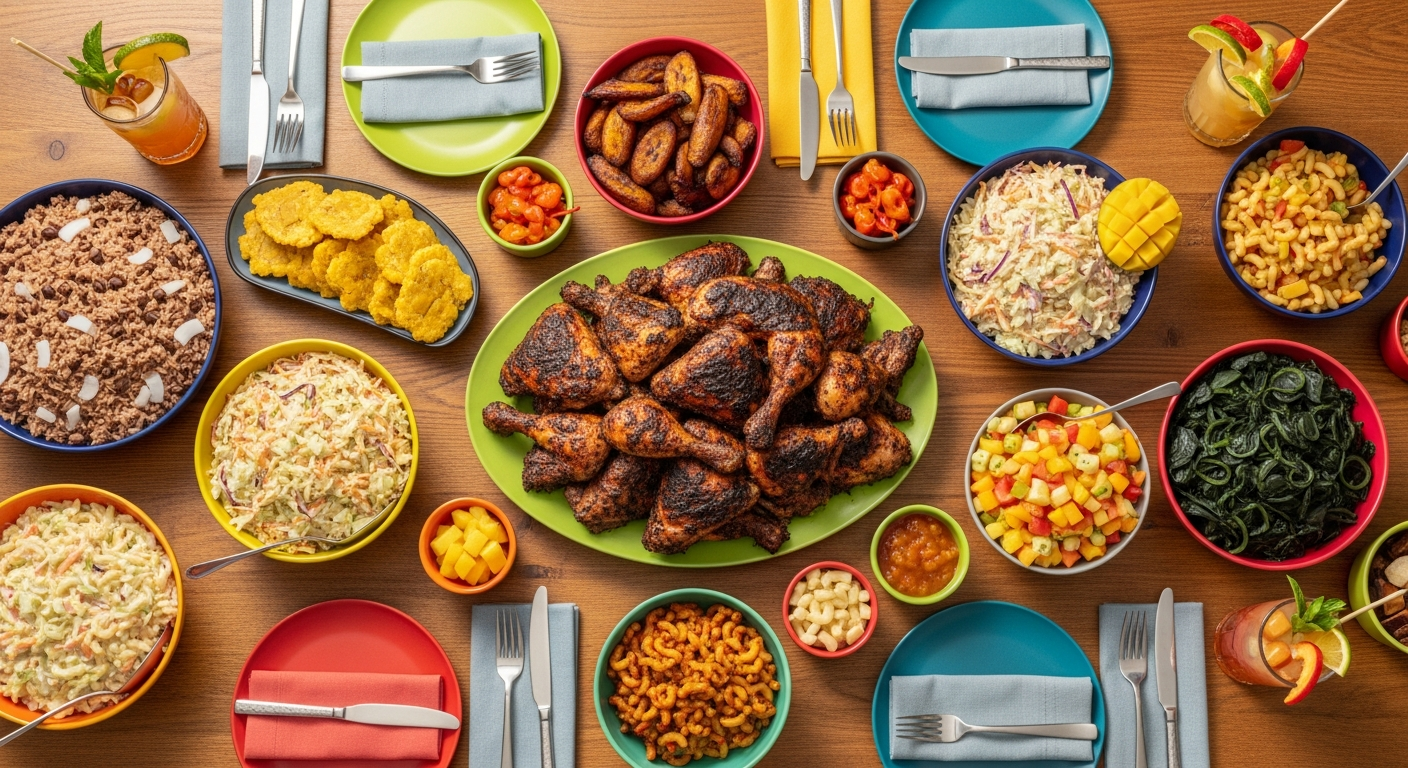
The art of pairing jerk marinades with sides is really about contrast and complement. Every successful Caribbean plate contains elements of heat, sweetness, starch, freshness, and richness in careful balance. Your marinade choice determines which of those elements the protein contributes, and the sides fill in the gaps.
For a fiery jerk marinade, choose cooling sides: coconut rice, cucumber salad, avocado slices. For a sweeter marinade, add something savory and crunchy: pickled onions, fried bammy, roasted breadfruit. For an herby, thyme-heavy marinade, pair with bold, spiced sides like curried chickpeas or pepper sauce-dressed callaloo.
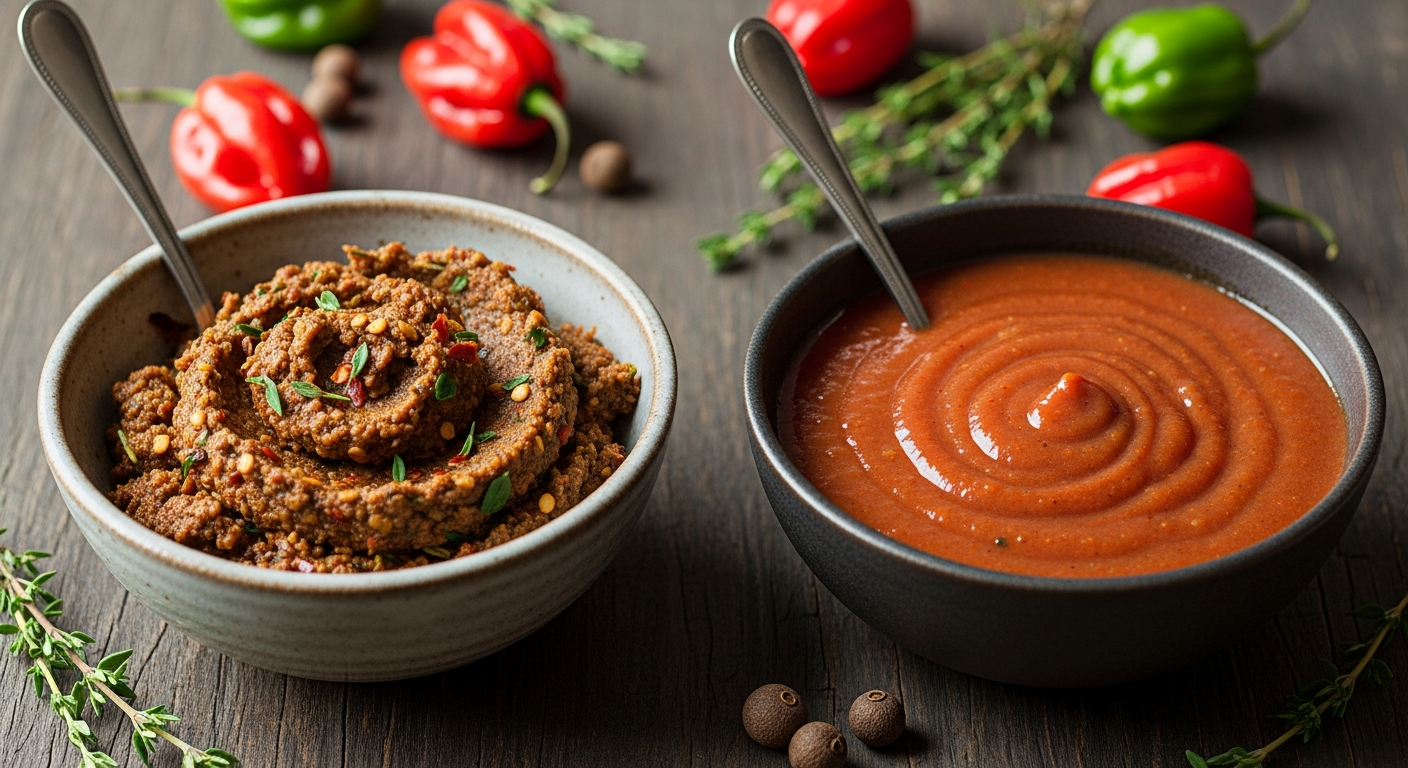
Start by choosing your marinade based on your protein and cooking method. Then select two to three sides that provide contrast. Finally, add a condiment — pepper sauce, mango chutney, or tamarind glaze — that bridges the gap between the marinade flavor and the sides.
Marinating Tips for the Best Results
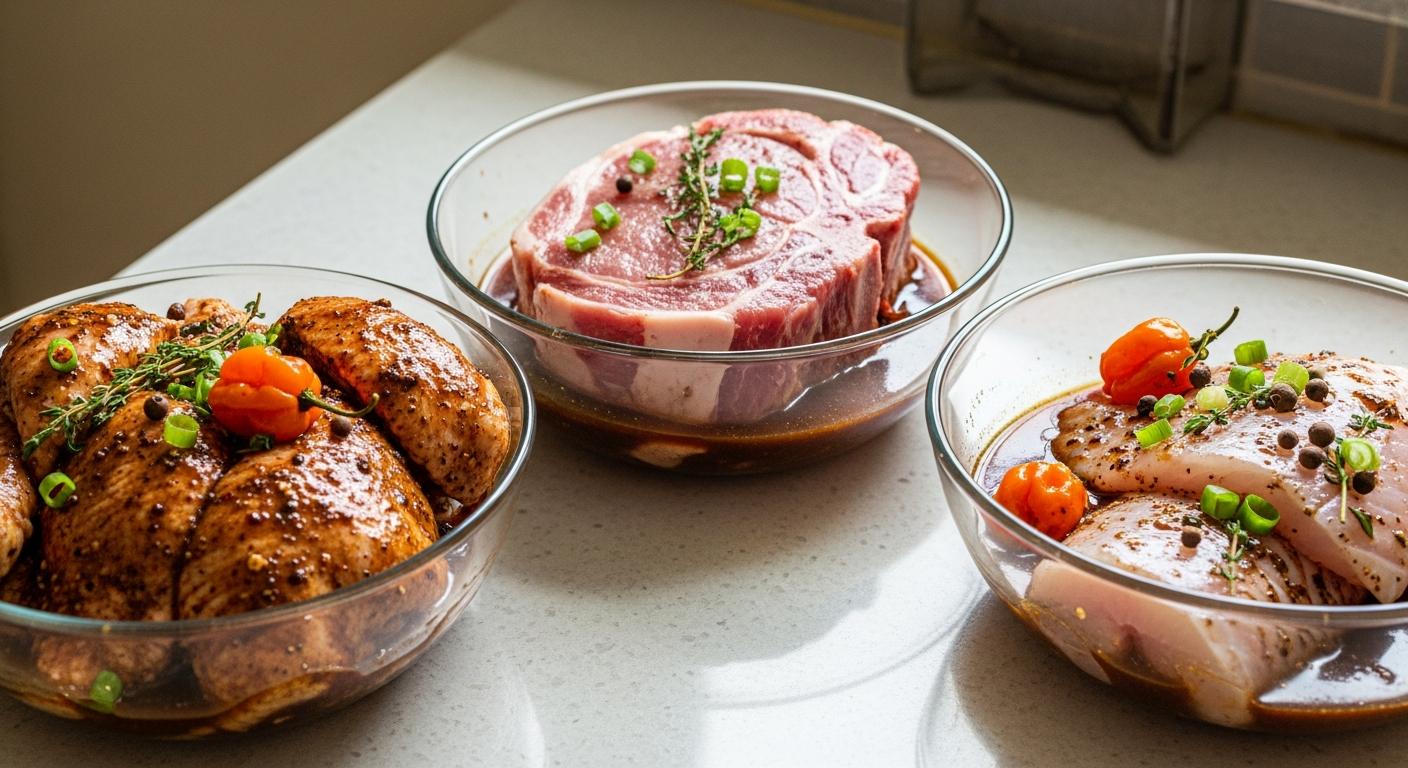
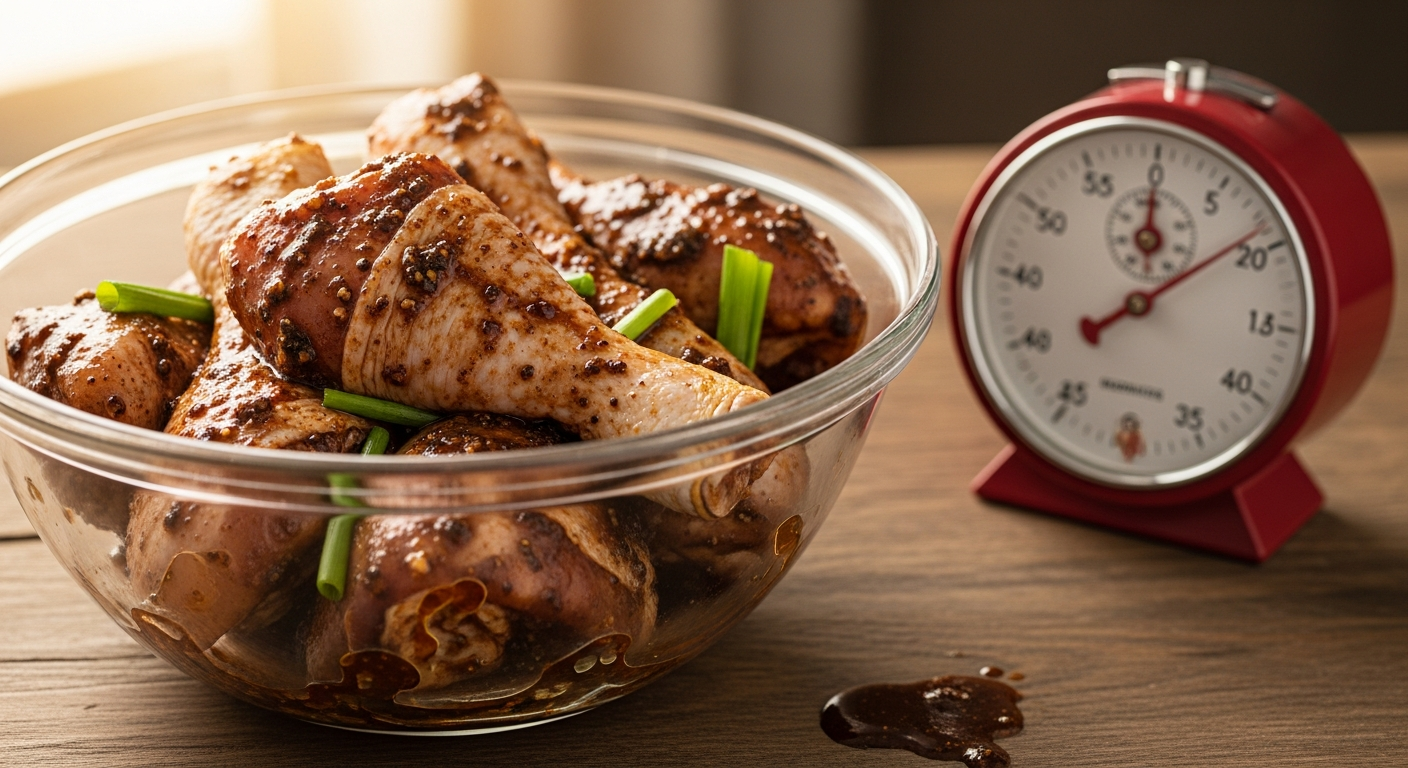
Regardless of which marinade you choose, certain fundamentals apply. Always score your protein deeply to allow penetration. Marinate chicken for at least four hours, pork for eight to twelve hours, and seafood for no more than two hours. Use glass, ceramic, or food-grade plastic containers — never reactive metals like aluminum, which can interact with the acid in your marinade and create off flavors.
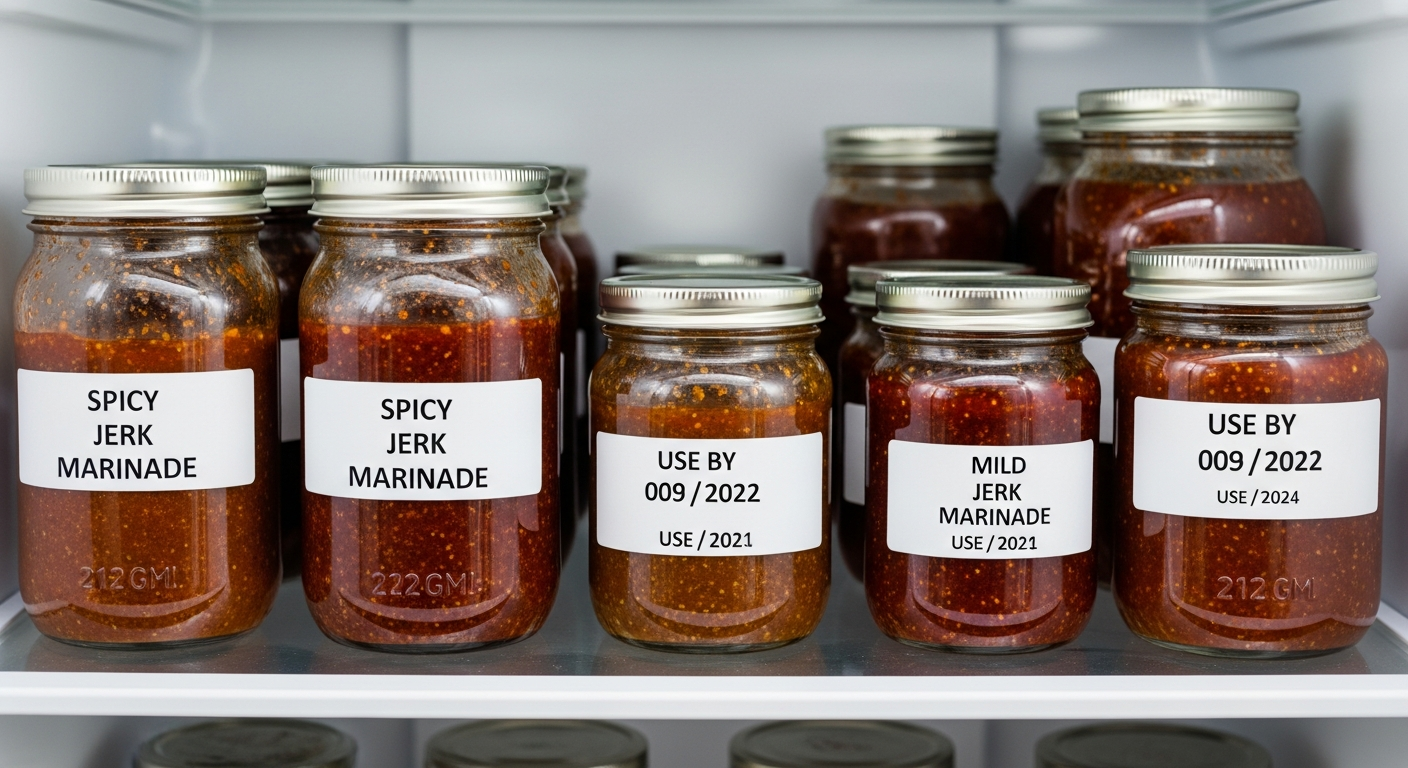
Reserve a portion of fresh marinade before adding it to raw protein. This reserved batch becomes a finishing sauce or can be reduced into a glaze that ties the protein directly to the sides on the plate. It is a simple technique that professional Caribbean chefs use to create plates with remarkable flavor cohesion.