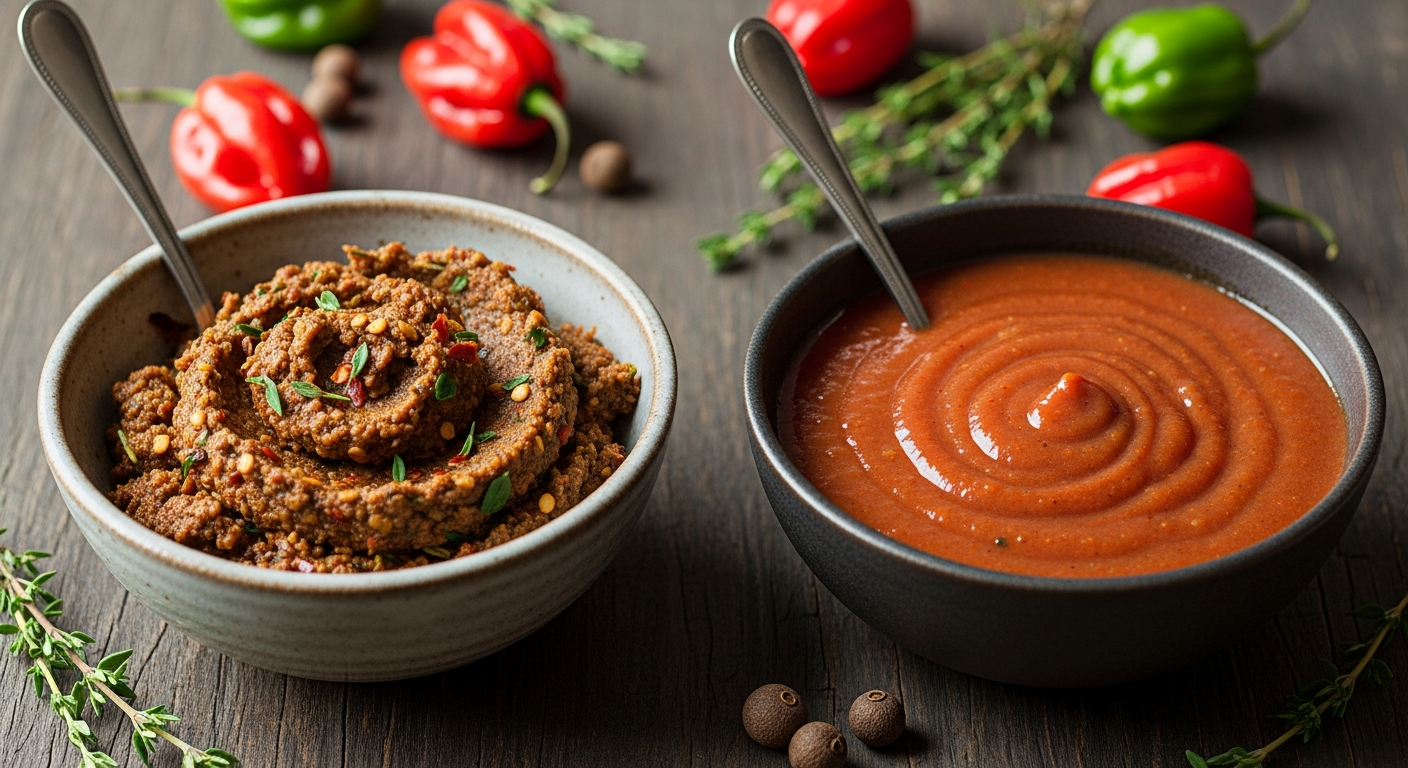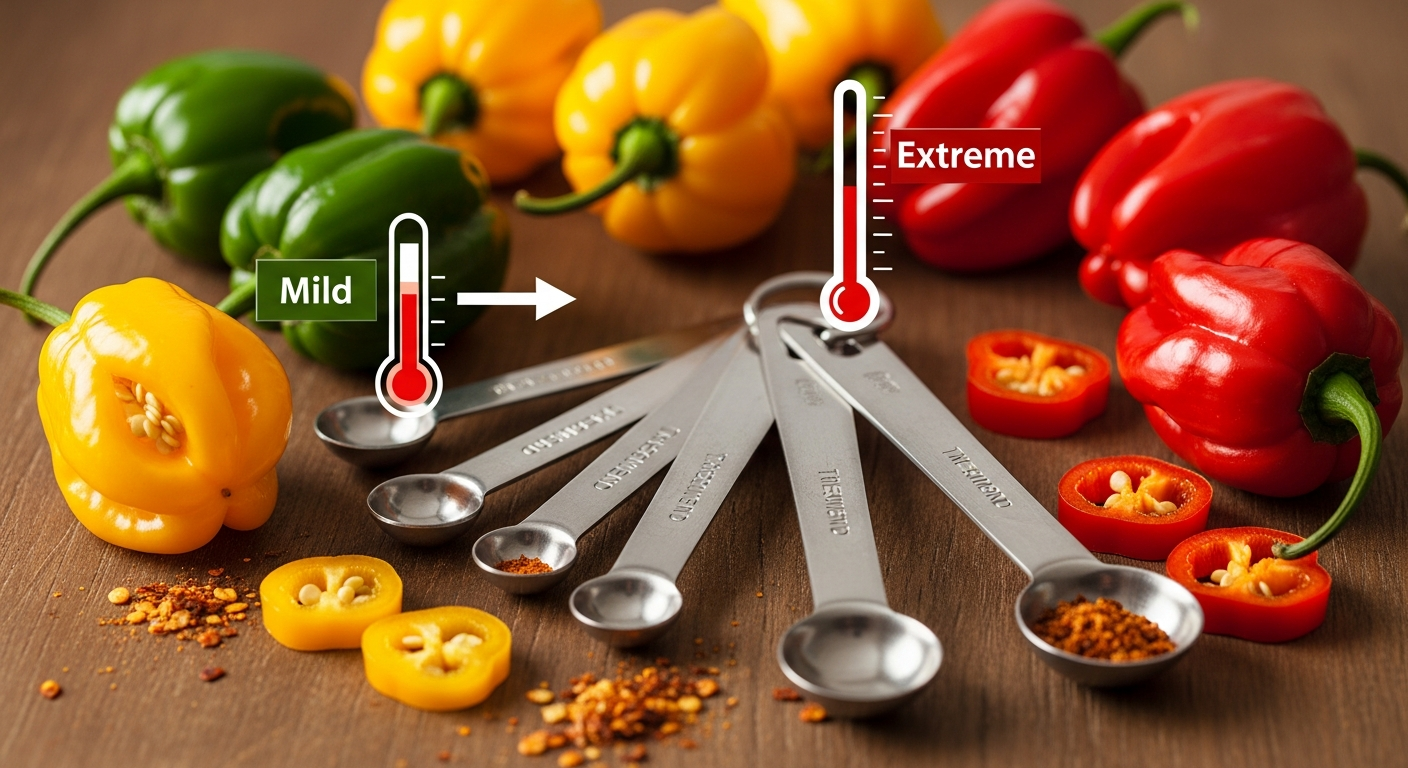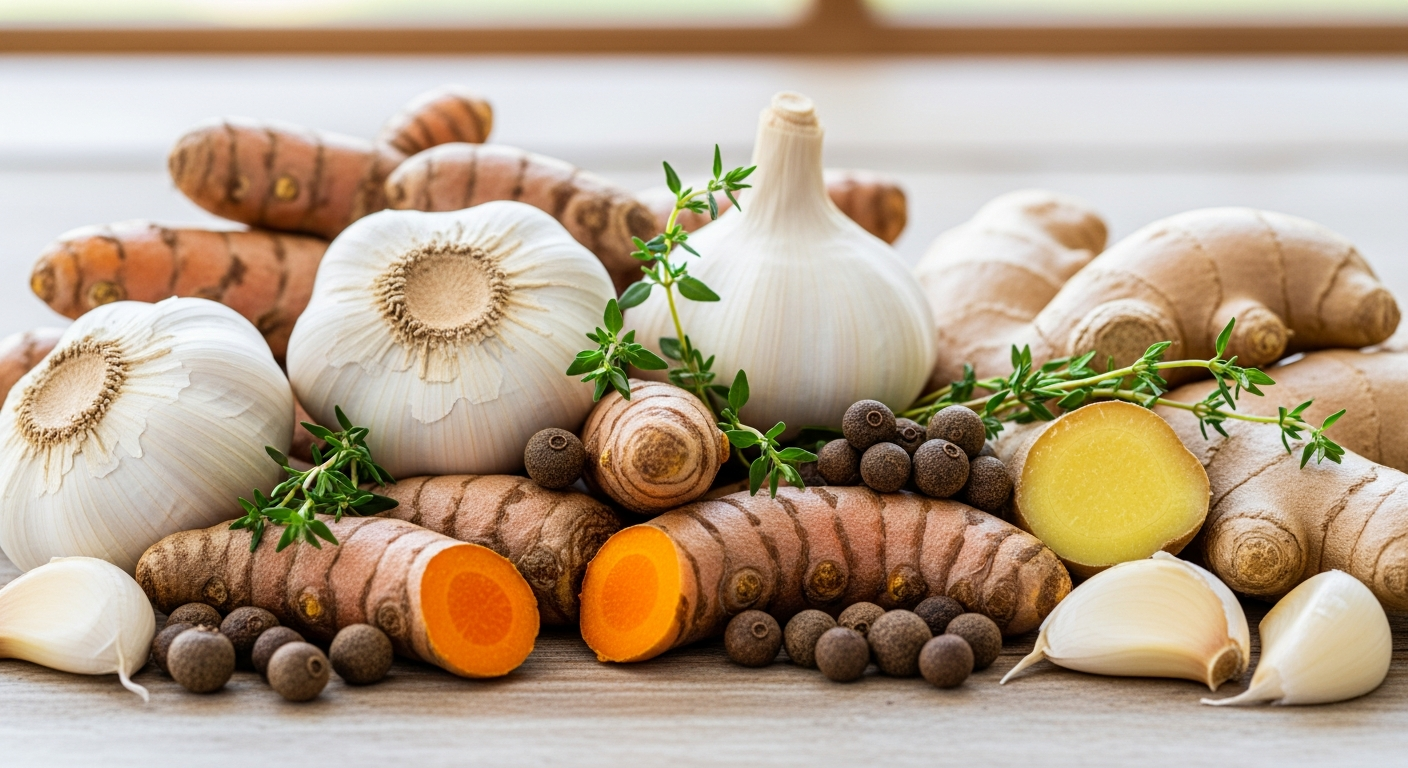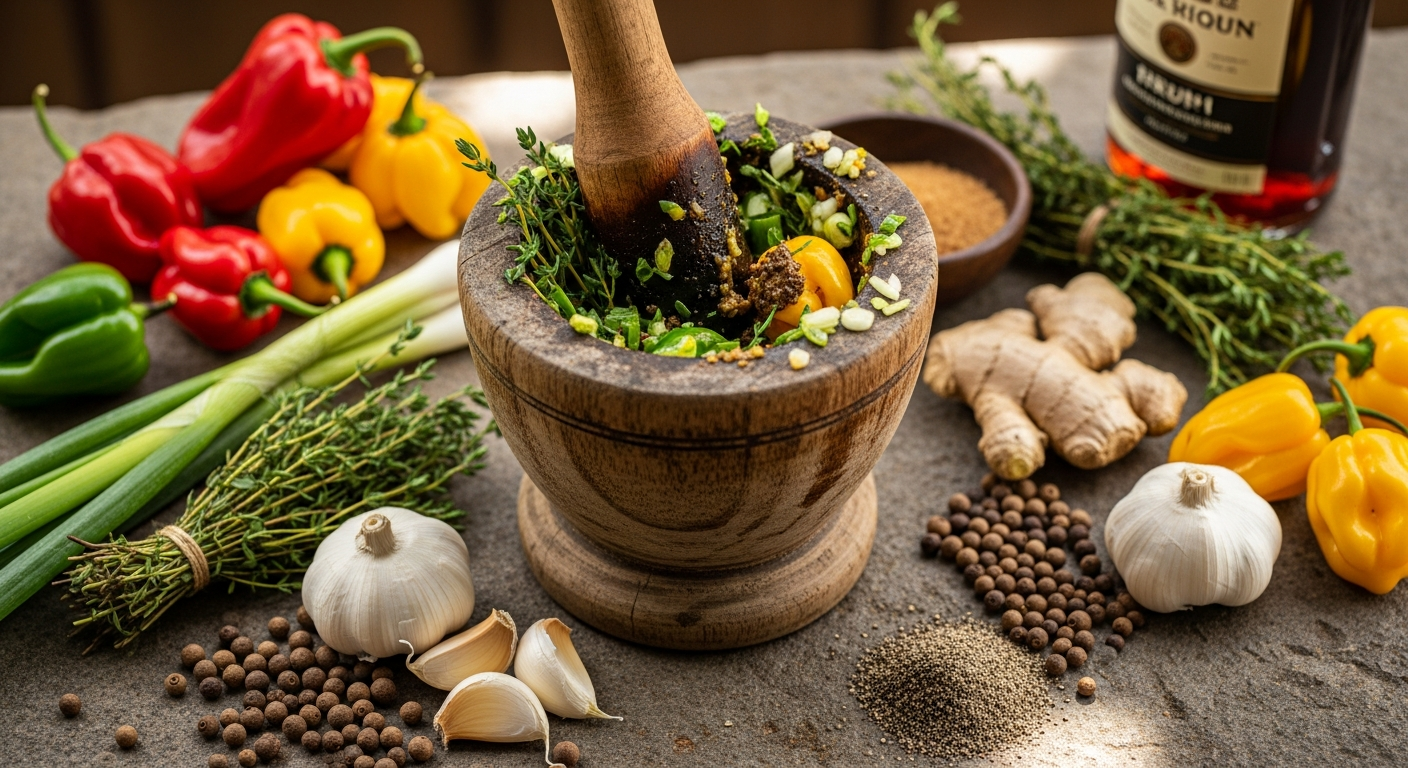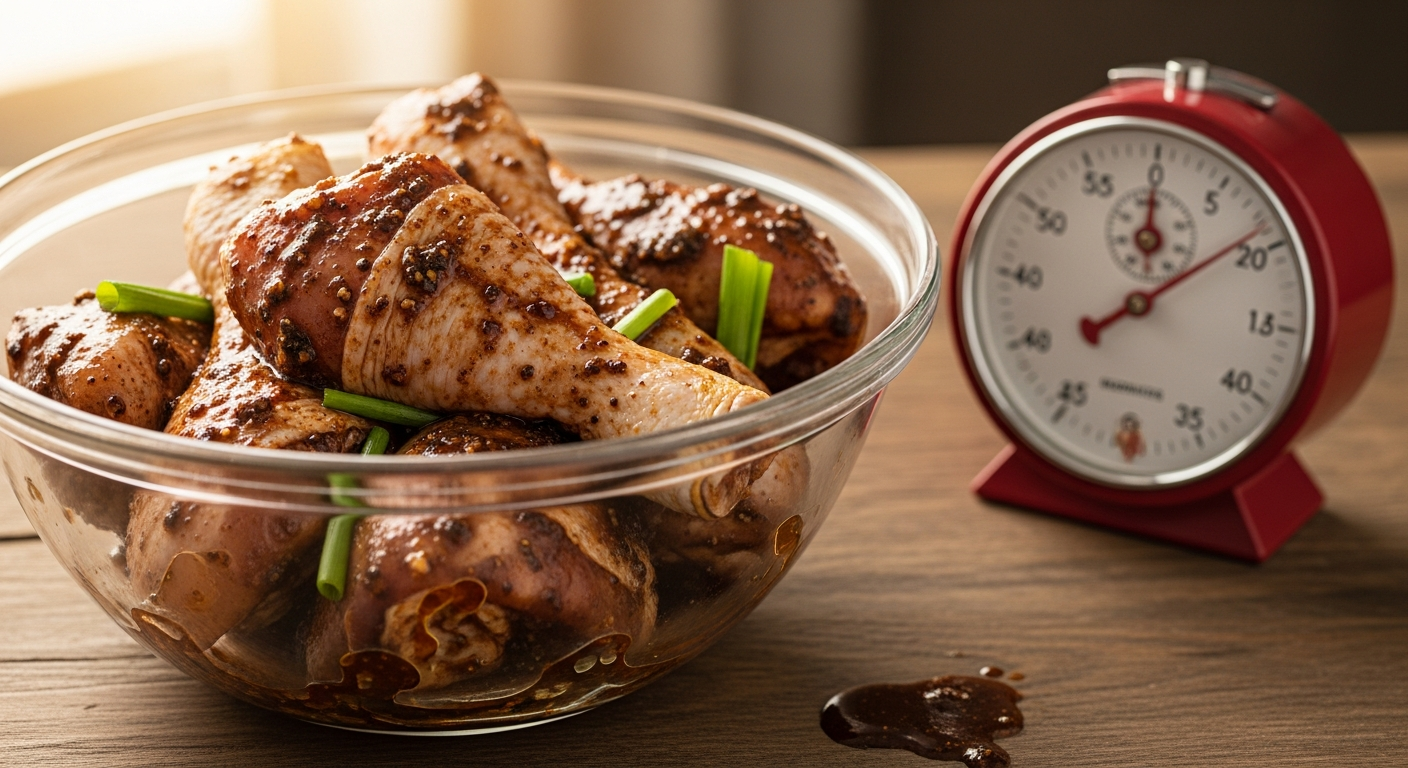
Jerk marinade is a thick, spiced wet paste that is applied to meat, poultry, or seafood before jerk cooking. It is built on two defining ingredients — allspice (pimento) and scotch bonnet peppers — along with fresh herbs (thyme, scallion), aromatics (garlic, ginger), liquid elements (soy sauce, lime juice, vegetable oil), and sweeteners (brown sugar). When applied to meat and allowed to marinate for several hours, the acidic and enzymatic components begin to tenderize the meat while the spices and herbs penetrate into the fibers, creating the complex layered flavor that defines jerk cooking.
What Jerk Marinade Is (and Is Not)
Jerk marinade is a wet seasoning paste applied before cooking. It is not:
- A table sauce or dipping sauce served alongside the finished dish (that would be jerk sauce)
- A dry rub (jerk seasoning powder is the dry version)
- A basting sauce applied during cooking (though some cooks do brush more marinade during cooking)
- A condiment
It is specifically the preparation applied to raw protein before the cooking process begins, designed to season deeply, tenderize the meat, and create the characteristic caramelized exterior during cooking. See our detailed guide on jerk marinade for the full recipe.
Jerk Marinade Ingredients and Their Functions
| Ingredient | Role in Marinade |
|---|---|
| Allspice (pimento) | Primary flavor; warm, complex spice depth |
| Scotch bonnet pepper | Heat; distinctive fruity Jamaican hot pepper character |
| Scallions | Aromatic freshness; mild allium flavor |
| Garlic | Savory depth; classic allium base |
| Fresh thyme | Herbal brightness and freshness |
| Ginger | Warming citrus-spice note |
| Soy sauce | Umami, salt, and protein surface seasoning |
| Brown sugar | Sweetness and caramelization during cooking |
| Lime juice | Acid for tenderizing and flavor brightening |
| Vegetable oil | Flavor carrier; helps marinade adhere; conducts heat |
| Salt | Protein osmosis — draws moisture to carry seasoning in |
How Jerk Marinade Works Scientifically
The marinade works on the protein on three levels: osmosis (salt draws moisture out of the meat surface, which then carries dissolved seasoning molecules back in), acid tenderizing (lime juice partially denatures surface proteins, creating a more receptive texture), and lipid penetration (the oil carries fat-soluble flavor compounds — allspice eugenol, scotch bonnet capsaicin — beyond the surface layer). Together these mechanisms move the flavor from the marinade into the meat rather than just coating the exterior. This is why longer marinating time produces dramatically better flavor than short marinating.
For the best results, see our how to make Jamaican jerk marinade guide. For top-rated store-bought alternatives, see our jerk seasoning guide. For what to serve with the finished dish, see our pairing guide.