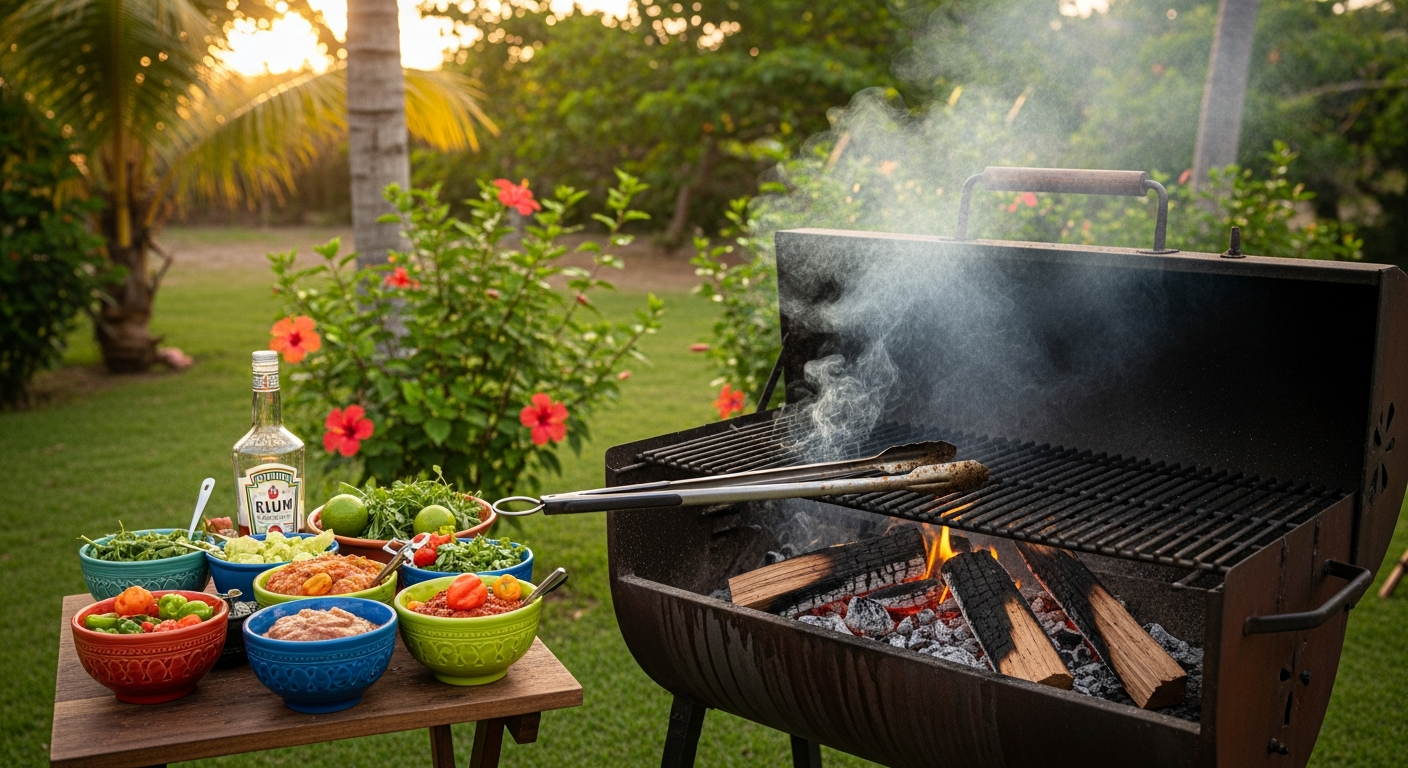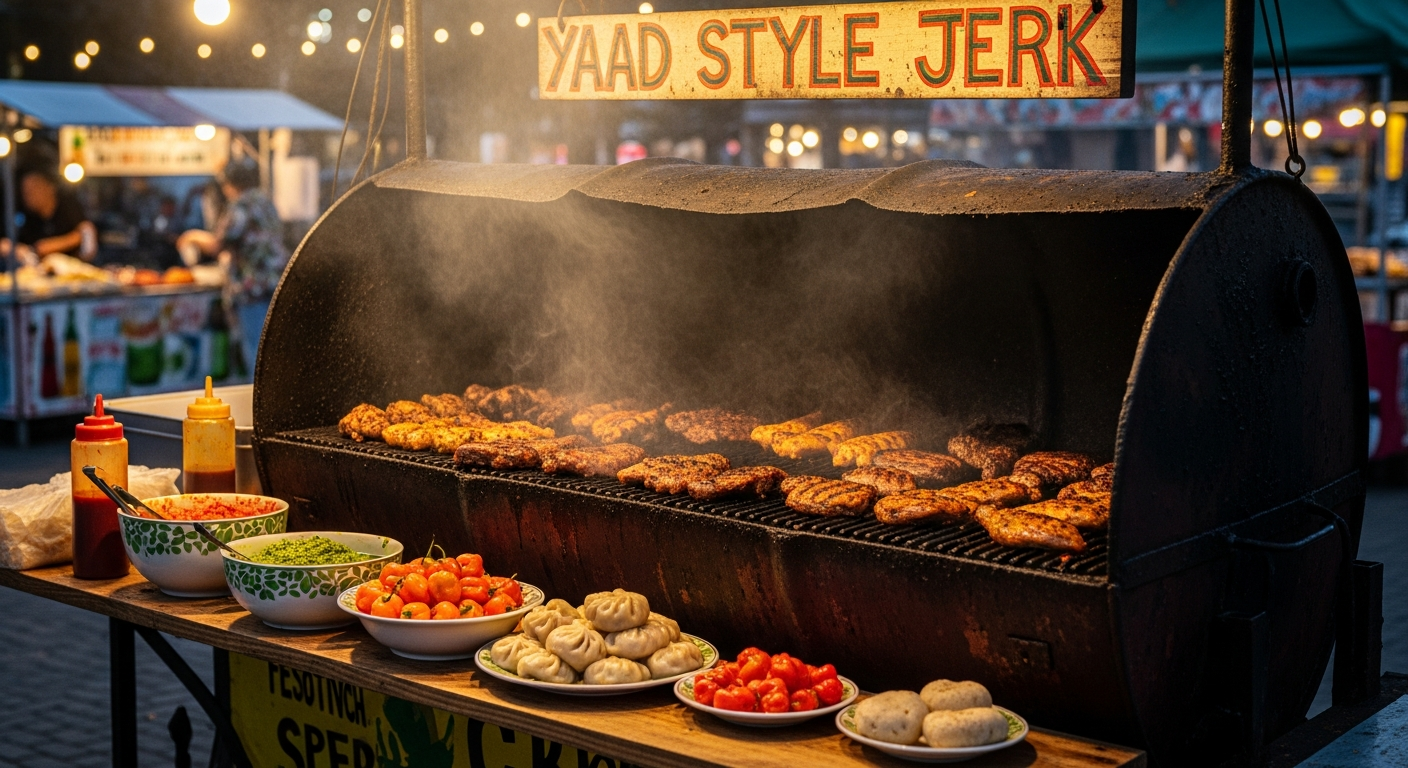
Charcoal grill with jerk chicken over glowing coals with pimento wood smoke rising from the coals
Cooking Techniques

How to Cook Jerk Chicken on a Charcoal Grill

· Reviewed by Audrey Clarke Updated March 29, 2026 3 min read

A charcoal grill is the most authentic way to cook jerk chicken. Traditional Jamaican jerk pits use pimento (allspice) wood over charcoal, but a standard charcoal kettle grill with a two-zone setup produces results closer to authentic than any gas or oven method. The key techniques are: two-zone coal setup (coals banked to one side), lid on throughout, wood chip smoke (pimento wood, apple, or cherry), and cooking low and slow at 325–375°F for 45–60 minutes before a brief direct-heat finish.

Setting Up the Charcoal

  1. Fill a chimney starter with briquettes (about 80–100 briquettes for a 22-inch kettle grill).
  2. Light the chimney starter with a fire starter cube or crumpled newspaper under the bottom. Wait 15–20 minutes until the top briquettes are ashed over and glowing.
  3. Pour the lit coals onto one side of the grill. Use the tongs to pile them in a mound on the left side, leaving the right side completely empty. This is your two-zone setup: direct heat on the left, indirect heat on the right.
  4. Add a few chunks of pimento wood (or soaked wood chips in a foil packet) on top of the coals.
  5. Put the cooking grate in place. Close the lid with vents half-open. Allow temperature to stabilize at 350–375°F (5–8 minutes).
Charcoal kettle grill interior showing two-zone setup with coals on left side for indirect jerk chicken cooking

Cooking the Chicken

  1. Place marinated chicken pieces skin-side up on the indirect (right) side of the grill.
  2. Close the lid. Position the top vents directly over the chicken — this draws smoke across the meat from the coals and wood on the other side.
  3. Cook for 35–45 minutes without opening the lid (resist the urge — every time you open the lid, you lose temperature and smoke).
  4. After 35–45 minutes, check internal temperature. When chicken reaches 155–160°F, move it to the direct heat side for the charring finish.
  5. Cook over direct heat for 3–5 minutes per side, rotating to develop char marks and caramelization on all surfaces.
  6. Remove when internal temperature reaches 165°F. Rest 5 minutes.

Managing Charcoal Temperature

Control temperature by adjusting the bottom vents (more open = hotter) and top vents (control smoke and heat retention). For jerk chicken at 350–375°F, both vents should be about half-open. If temperature climbs over 400°F, close the vents slightly. If it drops below 325°F, open them more or add more lit coals. Use a reliable thermometer on the grill's cooking surface level, not just the lid thermometer, which often reads significantly higher or lower than actual cooking temperature. For the best marinade to use with charcoal grilling, see our jerk marinade guide.
Recommended Reading

The marinade is where authentic jerk flavor is built.

complete jerk marinade guide →

Full ingredient ratios, overnight timing chart, and the technique used at Boston Bay jerk stands.

Frequently Asked Questions

How much charcoal do I need for jerk chicken?
For a 22-inch kettle grill cooking 3–4 pounds of jerk chicken, one full chimney starter of briquettes (about 80–100 briquettes) is sufficient. For longer cooks (whole chicken, large pork shoulder), add another half-chimney of lit coals after the first hour to maintain temperature.
Should I use briquettes or lump charcoal for jerk chicken?
Both work well. Lump charcoal burns hotter and faster, with a slightly more natural smoke flavor. Briquettes burn more consistently and evenly, making temperature management easier. For jerk chicken beginners, briquettes are more forgiving. For experienced cooks wanting the most authentic flavor, a combination of lump charcoal with pimento wood chunks is the traditional method.
Where can I find pimento wood for authentic jerk chicken?
Pimento (allspice) wood for smoking is available online from specialty smoking wood suppliers. Search for pimento wood chips or pimento wood for jerk cooking. It can also be sourced at Jamaican specialty stores in cities with large Caribbean communities. Apple or cherry wood are the best substitute for home cooks who cannot find pimento wood.
How do I know when to add the chicken to a charcoal grill?
Add chicken when the coals are ashed over (covered in grey ash, not still glowing orange without ash coating), a wood chunk or chip packet is starting to smoke, and the grill thermometer reads 350–375°F. This typically happens 10–15 minutes after pouring the lit coals into the grill.

Written by

Marcus Thompson

Jerk Cuisine Specialist

Marcus Thompson grew up in Portland Parish, Jamaica — home to the original Boston Bay jerk stands — and has spent over a decade studying Jamaican jerk cooking techniques, marinade science, and the Maroon cultural history behind the world's most iconic grilled dish.

View full bio

Reviewed by

Audrey Clarke

Caribbean Food Editor

Food editor and recipe developer specializing in Caribbean and African-diaspora cuisines. Contributor to food publications in the UK and North America.

Related Articles

More from JerkPit on Jamaican jerk cooking

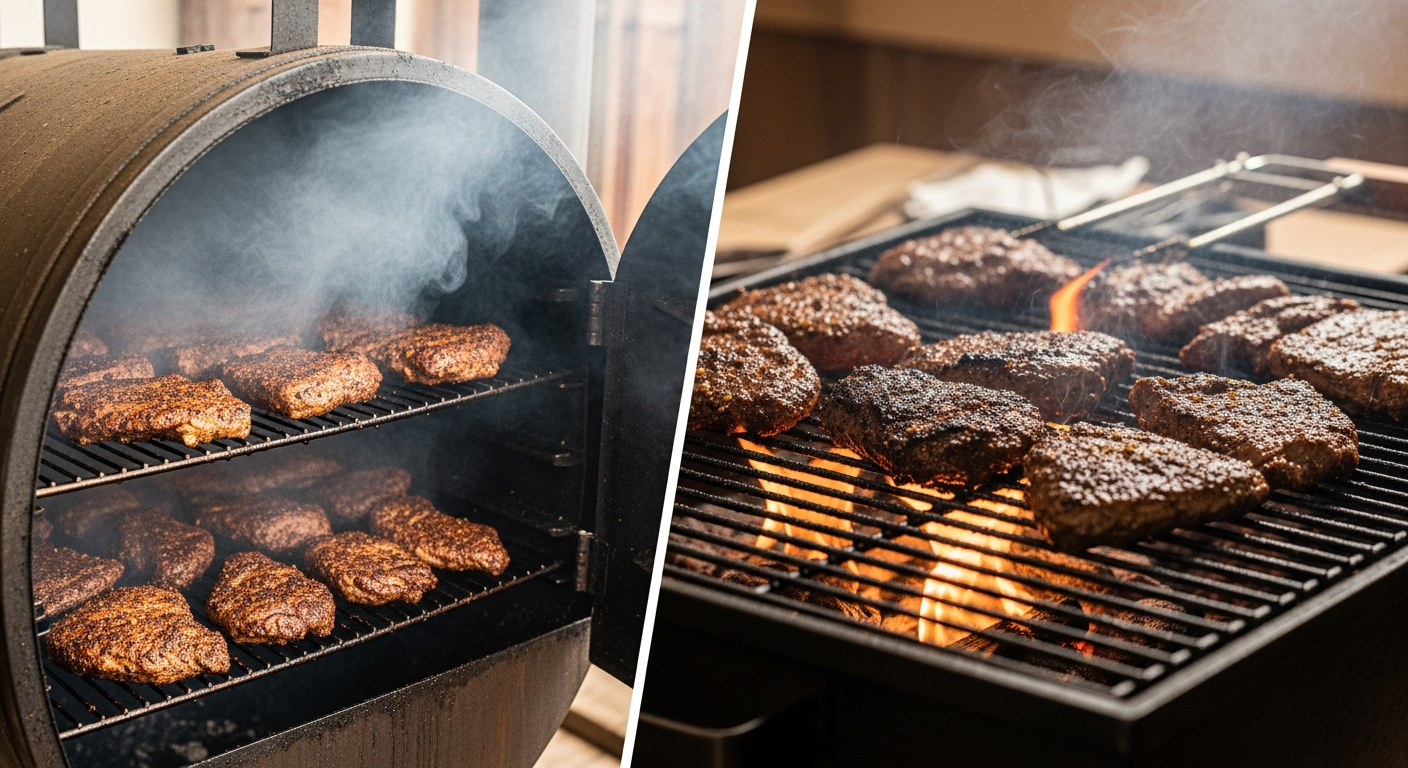
Split image comparing smoky low-and-slow jerk and high-heat grilled jerk chicken
Cooking Techniques

Jerk Meats: Smoking vs Grilling — Which Is Better?

Smoking and grilling produce distinctly different jerk results. Learn the advantages of each method and when to choose one over the other.

5 min read · Updated March 10, 2026
Traditional jerk grill with pimento wood smoke and chicken pieces over hot coals
Cooking Techniques

Tips for Traditional Jerk Grilling: Authentic Techniques

Learn the authentic grilling techniques used at Jamaican jerk stands. From fire building to turning and basting, these tips deliver genuine Caribbean results.

6 min read · Updated December 20, 2025
Jerk chicken cooking on a gas grill with the lid closed over indirect heat zone with visible char marks
Cooking Techniques

How to Cook Jerk Chicken on a Gas Grill

Gas grill jerk chicken requires indirect heat setup, consistent 375°F temperature, and optional wood chip smoke to approximate authentic Jamaican results.

3 min read · Updated March 28, 2026
Grill thermometer showing 375 degrees Fahrenheit ideal temperature for cooking jerk chicken over indirect heat
Cooking Techniques

What Temperature Should Jerk Chicken Be on the Grill?

Grill temperature for jerk chicken: 350–375°F on the cooking surface. Internal doneness: 165°F minimum, 175–180°F for bone-in dark meat.

3 min read · Updated April 3, 2026
Caribbean food side dishes including rice and peas, festival bread, and plantains alongside jerk chicken
Cooking Techniques

Jerk Dishes with Caribbean Food Side Dishes: Complete Guide

Master the art of cooking jerk dishes alongside Caribbean food side dishes with proper timing, temperature, and technique.

6 min read · Updated December 15, 2025
Glass jars of homemade jerk seasoning and dry rub stored in a spice cabinet
Cooking Techniques

Storing Homemade Jerk Seasoning: Tips for Maximum Freshness

Maximize the shelf life and flavor of your homemade jerk seasoning with proper storage techniques for both wet marinades and dry rub blends.

6 min read · Updated March 6, 2026
Backyard jerk cooking setup with charcoal grill, pimento wood chips, and tools
Cooking Techniques

Backyard Jamaican Jerk Cooking Essentials

Transform your backyard into a Caribbean jerk station with the right equipment, fuel, and techniques. Your complete guide to outdoor jerk cooking at home.

6 min read · Updated March 15, 2026
Three plates showing jerk chicken, jerk pork, and jerk fish with different marinades
Cooking Techniques

Jerk Marinades for Chicken, Pork, and Fish

One base marinade, three proteins, three different approaches. Learn how to optimize your jerk marinade for chicken, pork, and fish.

5 min read · Updated January 14, 2026
Close-up of a grill thermometer showing ideal jerk cooking temperature range
Cooking Techniques

Mastering Heat in Jerk Cooking: Temperature Control Guide

Temperature control separates good jerk from great jerk. Master the heat variables — from charcoal management to internal temperatures — for perfect results every time.

6 min read · Updated February 15, 2026
Side-by-side bowls of dry jerk rub and wet jerk marinade paste
Cooking Techniques

Dry Rub or Wet Marinade for Jerk: Which Should You Choose?

Dry rub or wet marinade — two paths to jerk perfection. Compare the techniques, flavors, and practical advantages of each approach.

6 min read · Updated March 15, 2026
Hands working jerk marinade into scored chicken pieces in a glass bowl
Cooking Techniques

How to Marinade Jerk Chicken for Maximum Flavor

Maximize flavor in your jerk chicken with proper marination technique. From scoring and timing to container choice and application method, every detail matters.

6 min read · Updated January 8, 2026
Whole spices being toasted and ground for homemade jerk seasoning
Cooking Techniques

Homemade Authentic Jamaican Jerk Seasoning from Scratch

Create authentic Jamaican jerk seasoning from whole spices with this detailed guide. Toasting, grinding, and blending techniques for maximum freshness and flavor.

6 min read · Updated March 1, 2026

Recommended Guides

The most important resources on JerkPit.com for authentic Jamaican jerk cooking