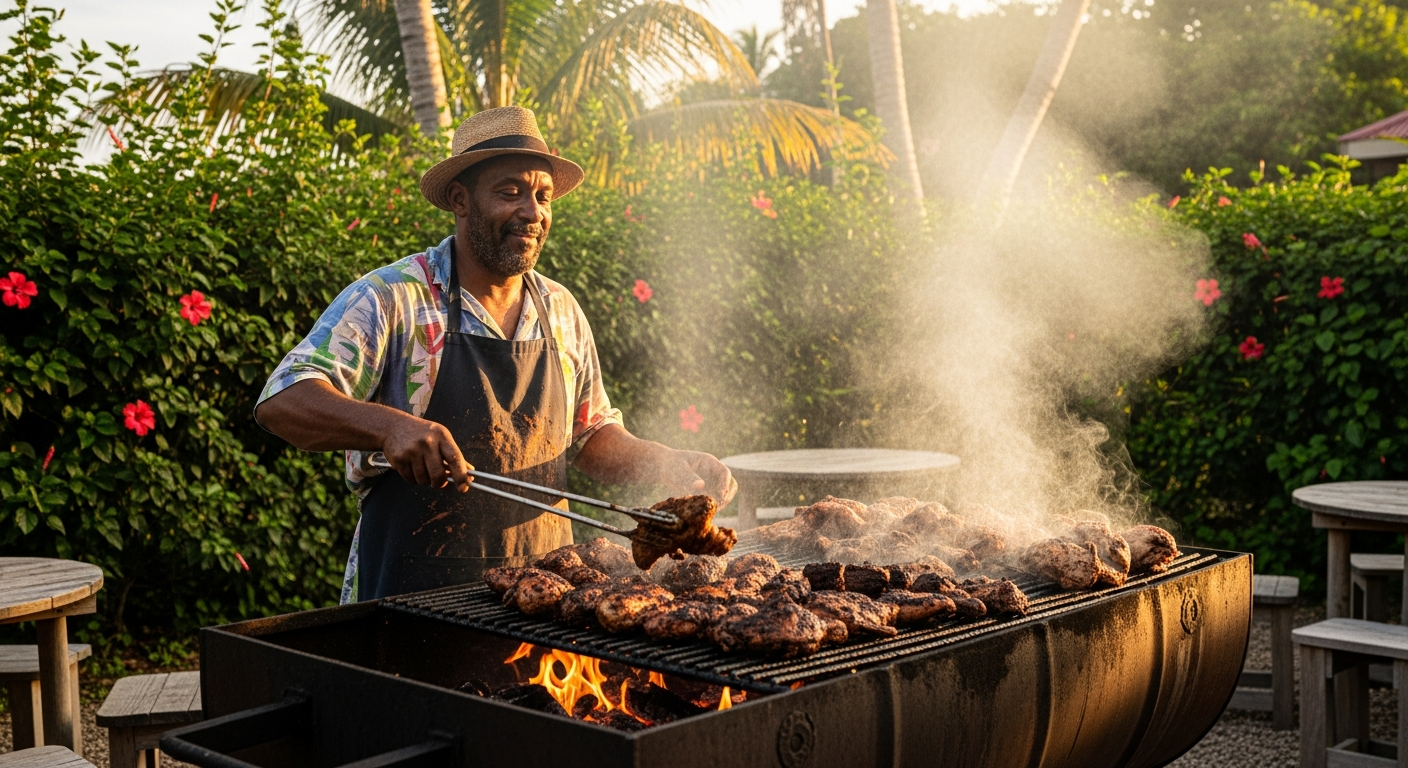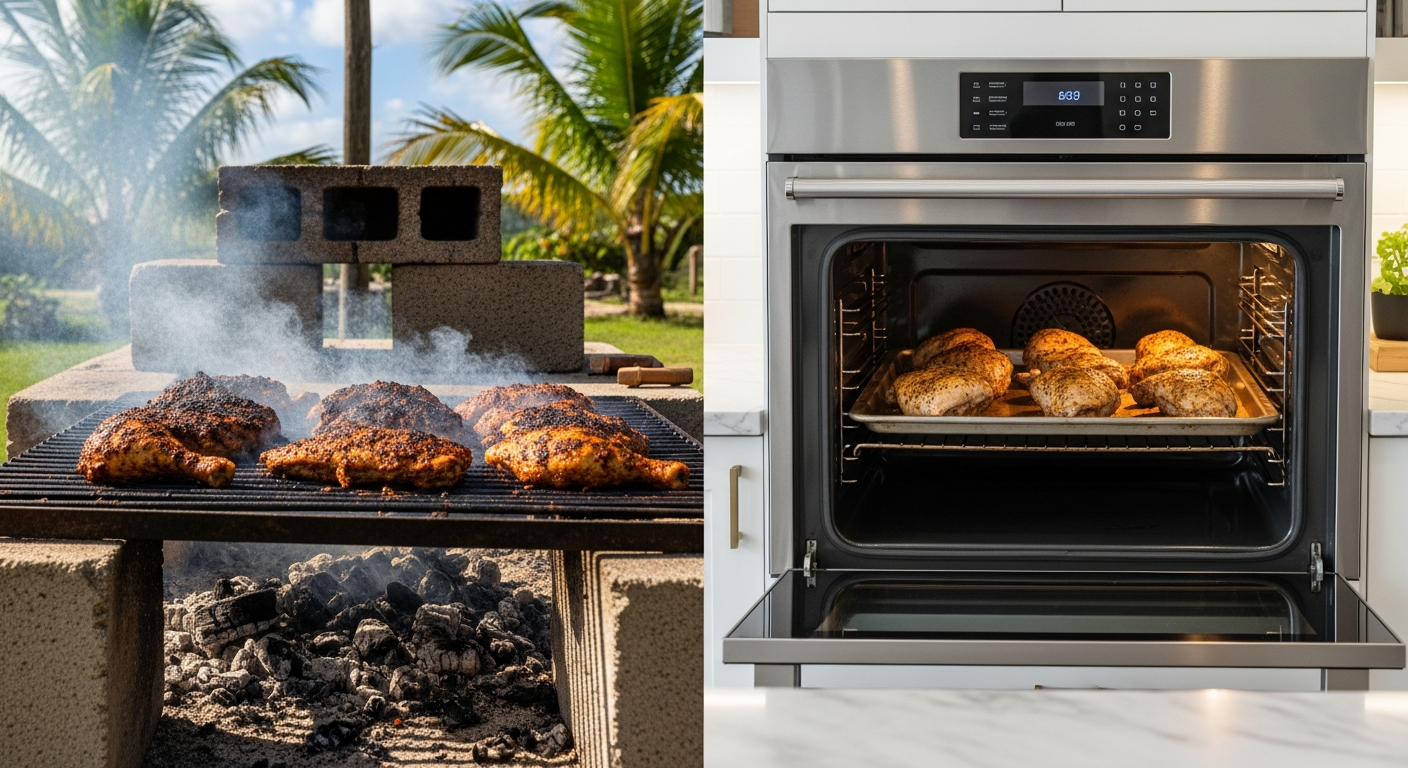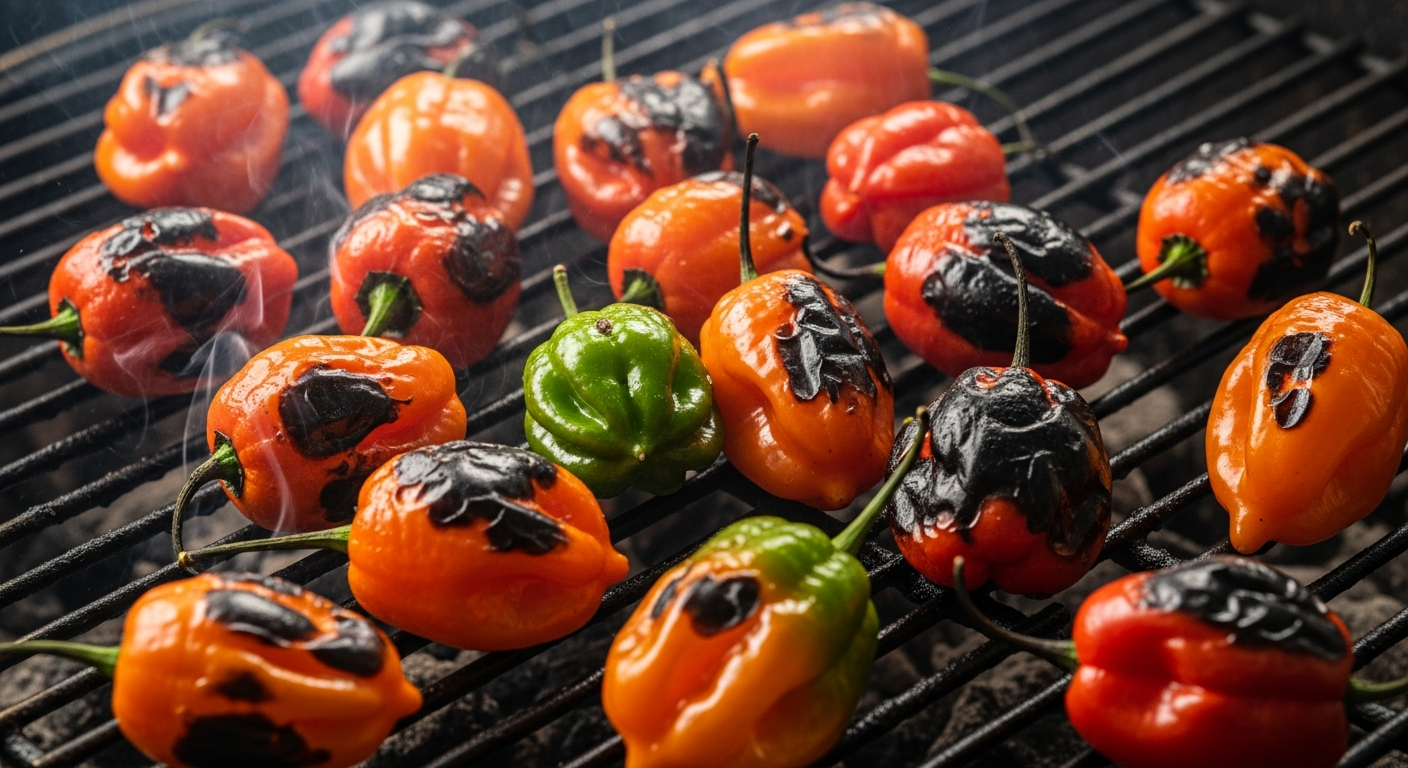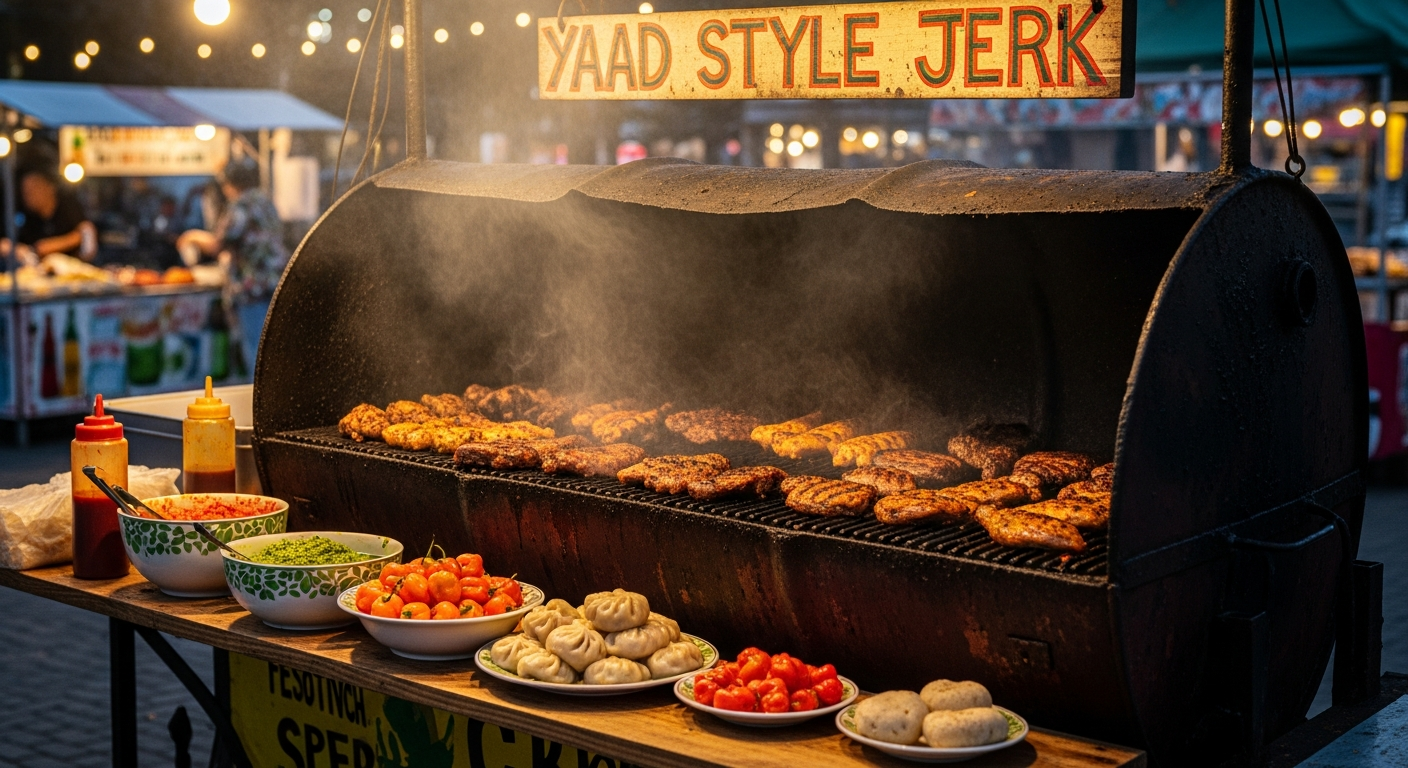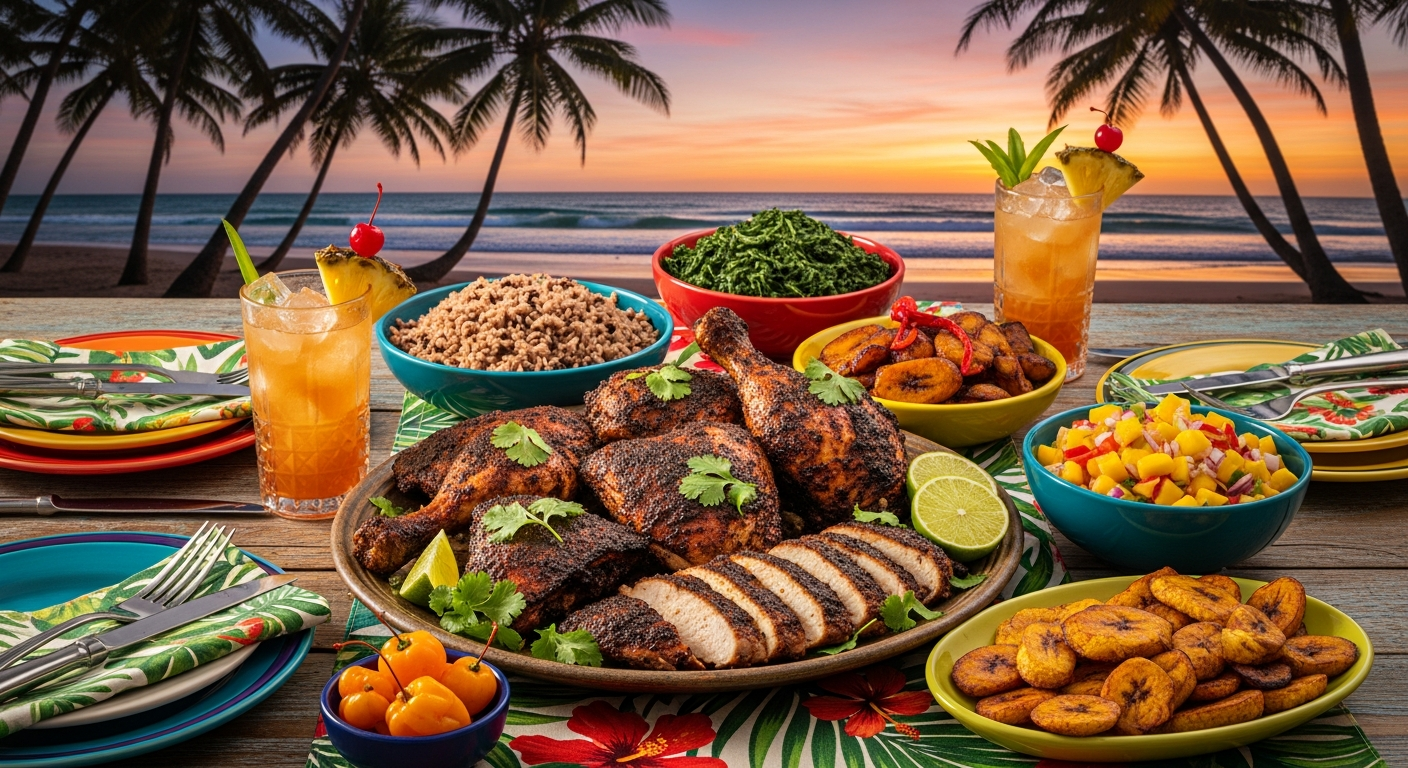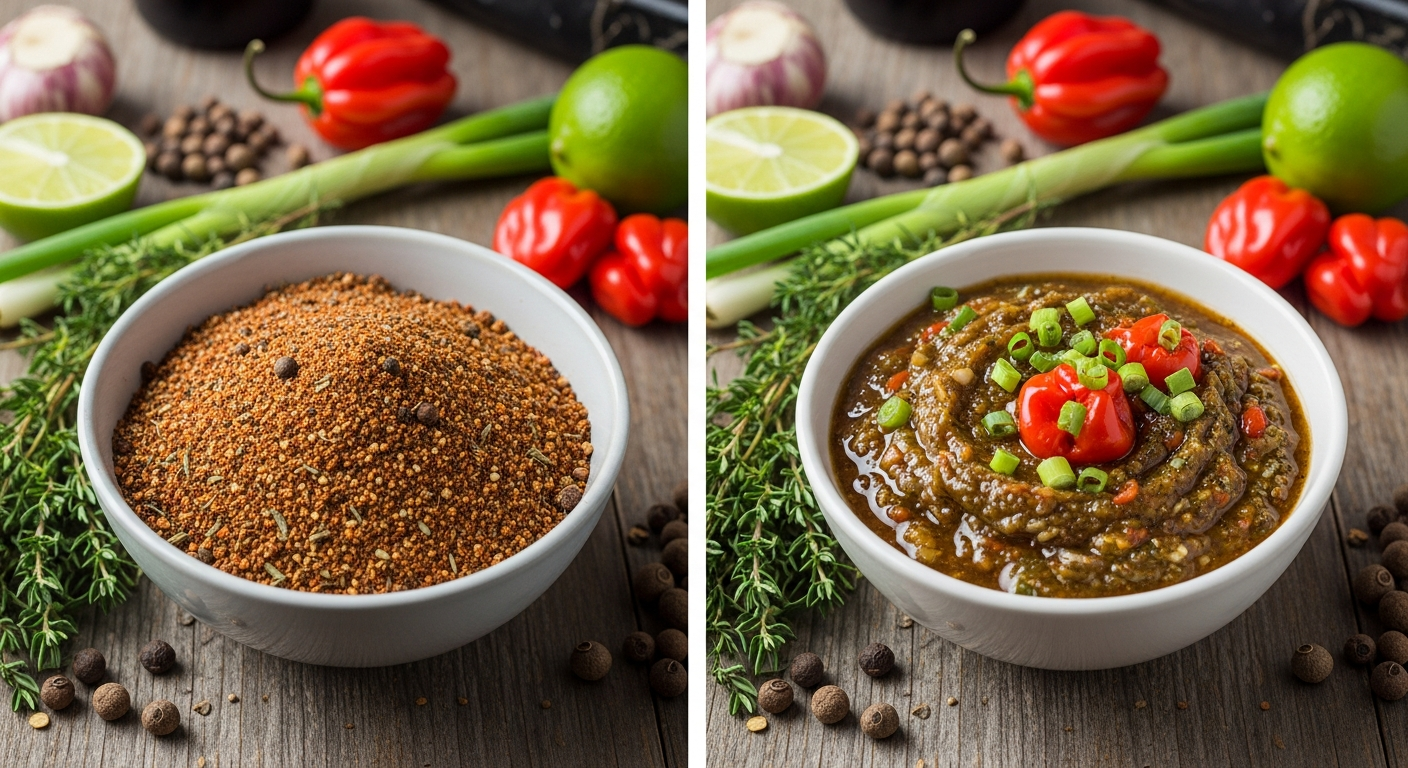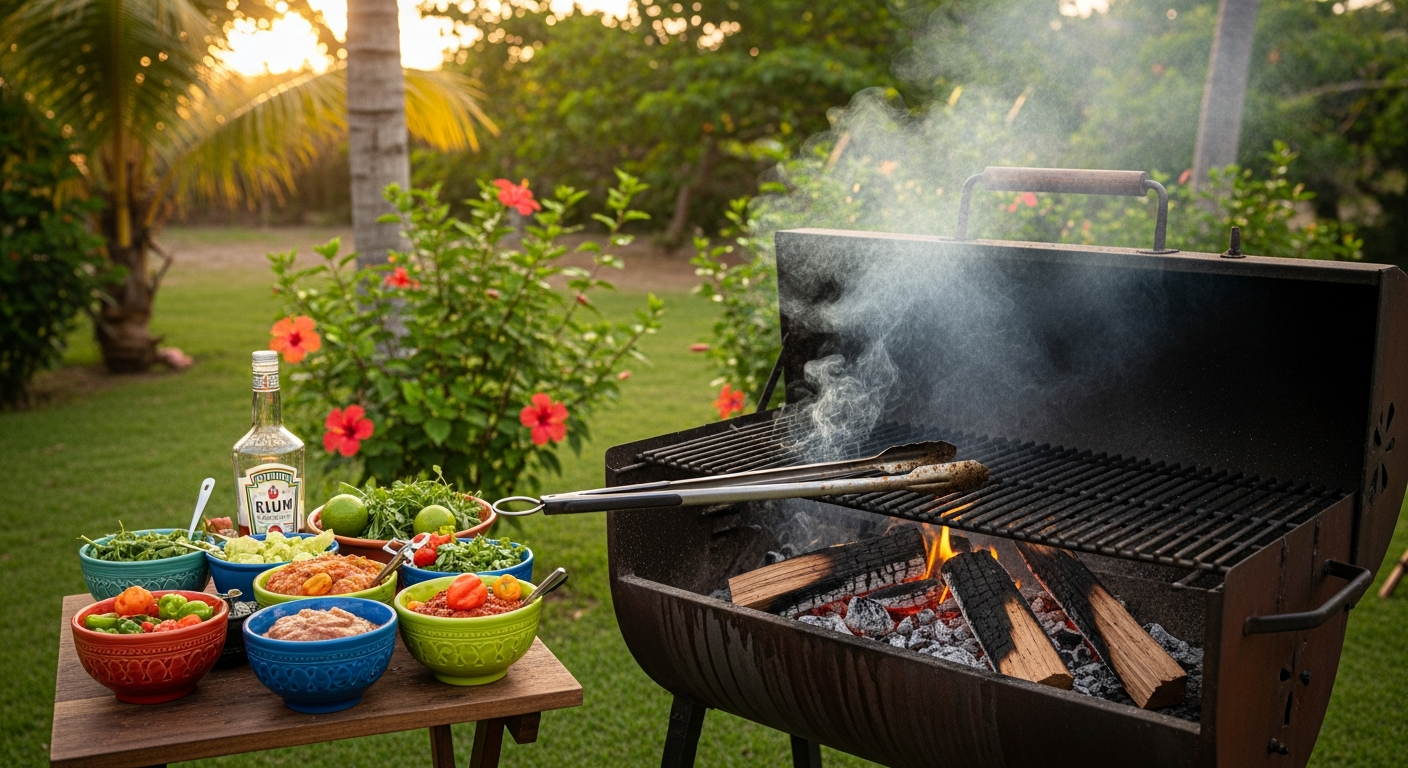
Backyard Jamaican jerk cooking essentials begin with understanding that authentic jerk is fundamentally an outdoor cooking tradition. From the original Maroon pits in Jamaica's Blue Mountains to the roadside jerk stands that line the coastal highways, jerk has always been cooked over open fire and wood smoke. Bringing this tradition to your backyard is not just possible — it is one of the most rewarding outdoor cooking experiences you can have.
Choosing Your Grill or Smoker
The first essential is your cooking vessel. While any grill can produce jerk, some setups work dramatically better than others for achieving authentic results.
A charcoal grill is the most versatile and authentic option for backyard jerk cooking. The Weber Kettle, in its various sizes, is the most popular choice and for good reason — its dome shape circulates heat and smoke efficiently, its vents allow precise temperature control, and its size accommodates everything from a few chicken thighs to a full family spread.
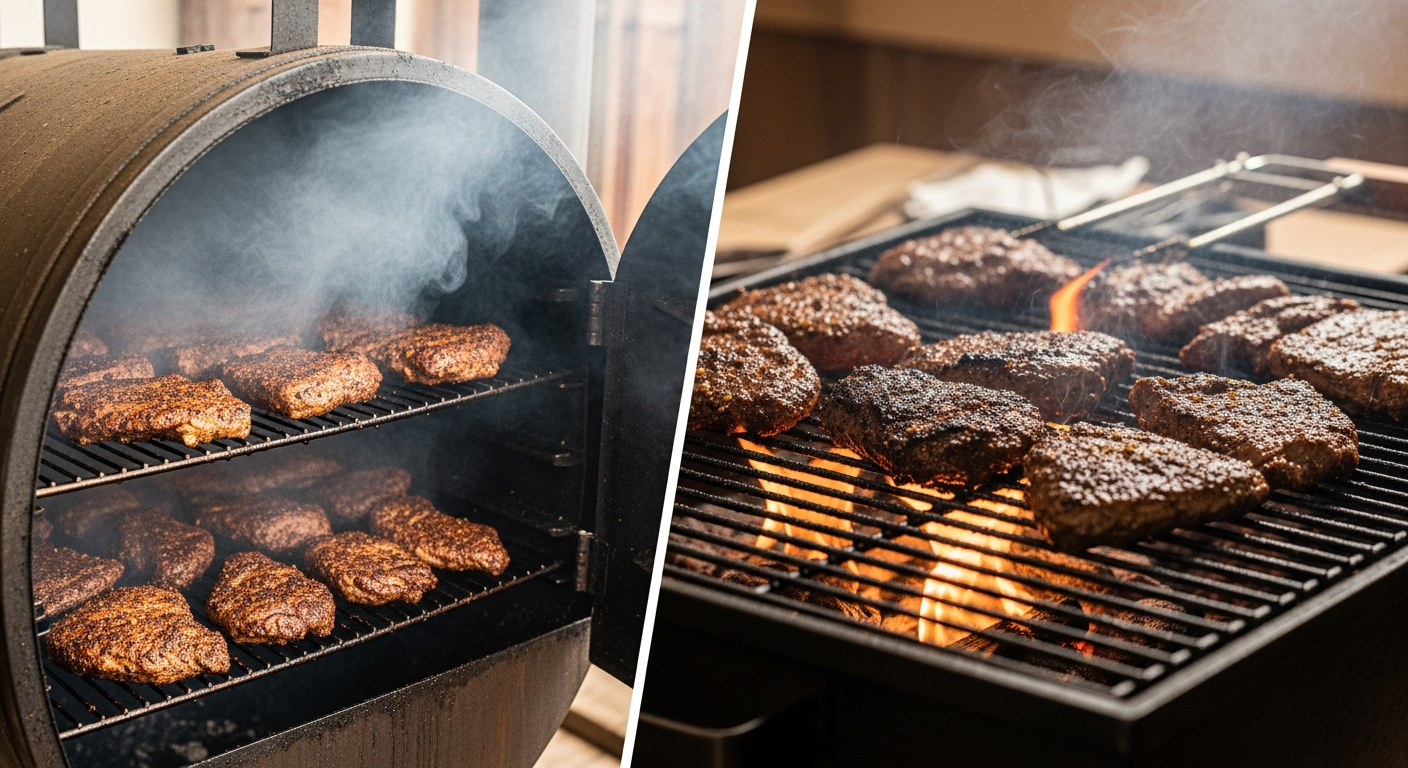
A dedicated smoker takes jerk cooking to the next level. Offset smokers, bullet smokers (like the Weber Smokey Mountain), and kamado-style grills (like the Big Green Egg) all produce excellent jerk. The key advantage of a smoker is consistent low-temperature cooking with heavy smoke — exactly what traditional jerk demands.
A gas grill can produce good jerk with modifications. You will need a smoker box or aluminum foil pouch for wood chips, and you will need to cook with indirect heat by only lighting burners on one side. Gas grills lack the base layer of charcoal flavor that makes charcoal-grilled jerk special, but the convenience is hard to argue with for weeknight cooking.
Essential Fuel: Charcoal and Wood
For the most authentic flavor, use natural lump charcoal rather than briquettes. Lump charcoal is made from real wood, burns cleaner, and produces less ash. It also reaches higher temperatures faster and responds more quickly to airflow adjustments. Brands made from tropical hardwoods — mesquite, oak, or tropical mixes — provide the best base flavor.
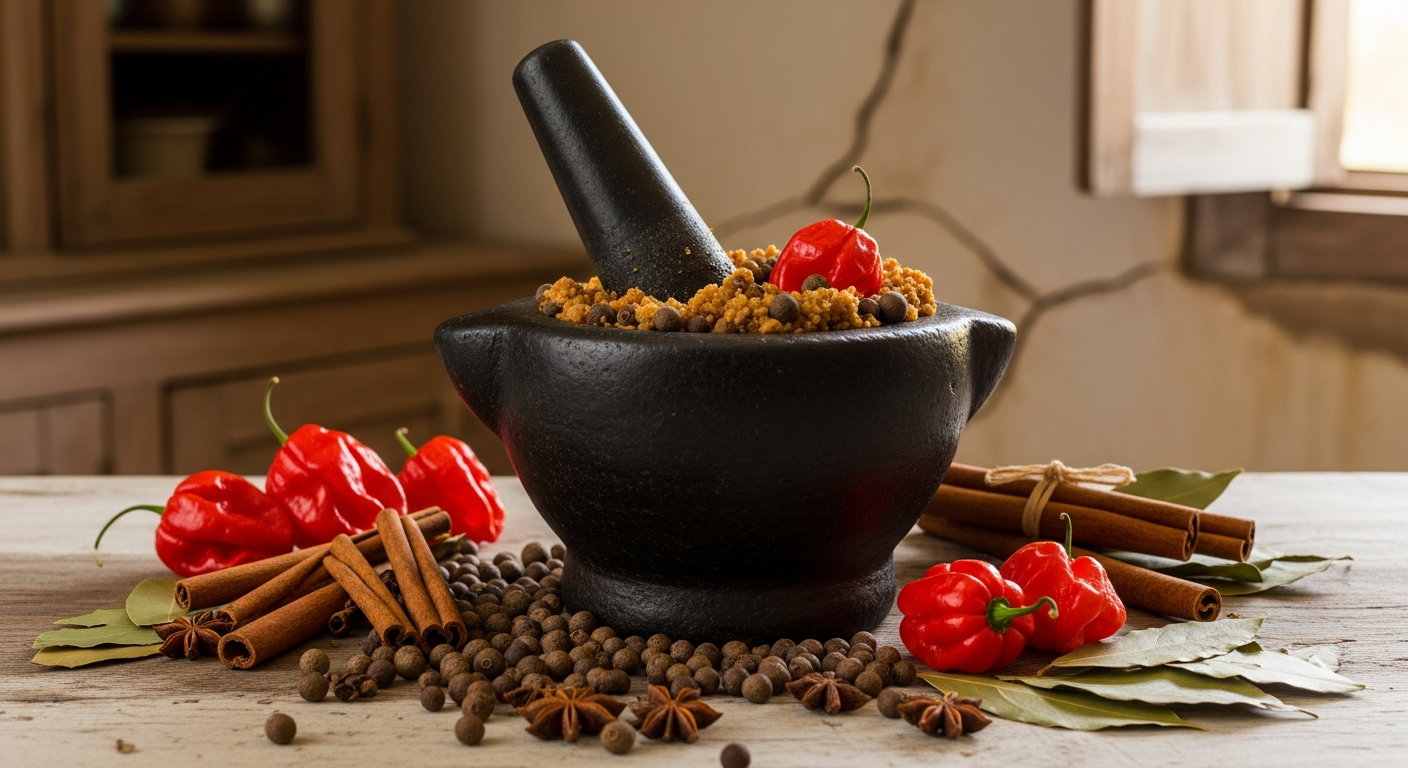
Wood chips or chunks are essential for smoke flavor. Pimento wood (allspice wood) is the traditional choice and produces an unmistakable sweet, aromatic smoke. Pimento wood chips can be ordered online from Caribbean specialty suppliers. If pimento wood is unavailable, a mix of apple wood and cherry wood provides a sweet smoke that approximates the pimento flavor. Add a handful of whole allspice berries directly to the coals for an additional layer of pimento aroma.
Soak wood chips in water for thirty minutes before adding to the coals. This slows their combustion, producing more smoke over a longer period. Wood chunks do not need soaking — their larger mass means they smolder naturally rather than catching fire.
Essential Equipment
Beyond the grill itself, several pieces of equipment are essential for successful backyard jerk cooking.
A reliable instant-read thermometer is non-negotiable. Jerk chicken must reach an internal temperature of one hundred sixty-five degrees Fahrenheit for food safety, while jerk pork shoulder needs to hit two hundred to two hundred five degrees for the collagen to fully break down. Guessing temperatures leads to undercooked or overcooked meat — neither is acceptable.
Long-handled tongs and a sturdy spatula are essential for managing food over hot coals. Choose stainless steel tools with heat-resistant handles. Spring-loaded tongs provide the best control for turning chicken pieces without dropping them.
A chimney starter is the best way to light charcoal. Fill the chimney, place a crumpled newspaper or fire starter beneath it, and light. In fifteen to twenty minutes, you will have evenly lit coals ready to spread in your grill. Chimney starters eliminate the need for lighter fluid, which can impart chemical flavors to the meat.
Heavy-duty aluminum foil is invaluable for creating smoker pouches, wrapping resting meat, and shielding delicate items from direct heat. Keep a full roll near the grill at all times.
Setting Up for Indirect Heat
The most important technique for backyard jerk cooking is indirect heat setup. Rather than placing food directly over the coals, arrange the coals on one side of the grill (or in a ring around the edges) and place the food on the opposite side (or in the center). This creates an environment similar to an oven, where the food cooks by convection rather than direct radiant heat.
For a standard Weber Kettle, bank the coals against one side and place a drip pan filled with water on the opposite side. The water pan serves double duty: it catches dripping fat (preventing flare-ups) and maintains humidity inside the grill, which helps keep the meat moist during long cooking.
Place your jerk chicken on the grate above the water pan, close the lid, and adjust the vents. The bottom vent controls oxygen supply to the coals; opening it increases temperature. The top vent controls smoke ventilation; keep it at least partially open to prevent bitter, stale smoke from accumulating.
Temperature Control
Maintaining a steady temperature of three hundred to three hundred twenty-five degrees Fahrenheit is the target for most jerk cooking. In a charcoal grill, this requires periodic attention: checking the temperature every fifteen minutes and adjusting vents as needed.
When the temperature drops below your target, open the bottom vent wider to increase airflow. If it rises too high, close the bottom vent partially. Resist the urge to add more charcoal unless the temperature has dropped significantly and vent adjustment alone cannot recover it.
For extended cooks (jerk pork shoulder over six to eight hours), you will need to add charcoal periodically. Light a fresh chimney of coals and add them to the existing fire every sixty to ninety minutes. This maintains consistent heat without the temperature swings that raw charcoal produces.
Safety Considerations
Backyard jerk cooking involves high heat, open flame, and hot oil (if frying festival bread or plantains). Position your grill on a stable, level surface away from structures, overhanging branches, and foot traffic. Keep a fire extinguisher or a bucket of sand within reach.
When adding wood chips or adjusting coals, use heat-resistant gloves — standard oven mitts are inadequate for reaching into a hot grill. Long-handled tools keep your hands away from the heat source.
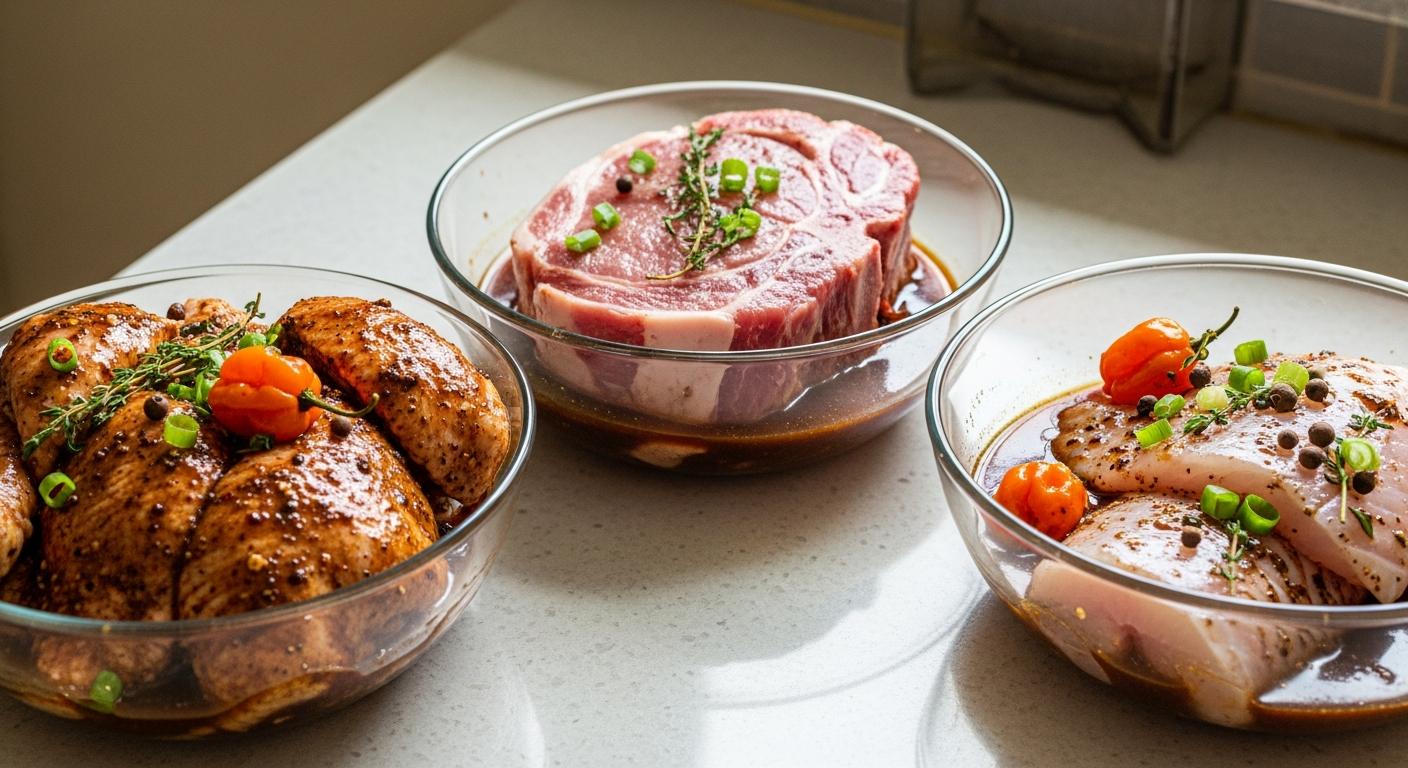
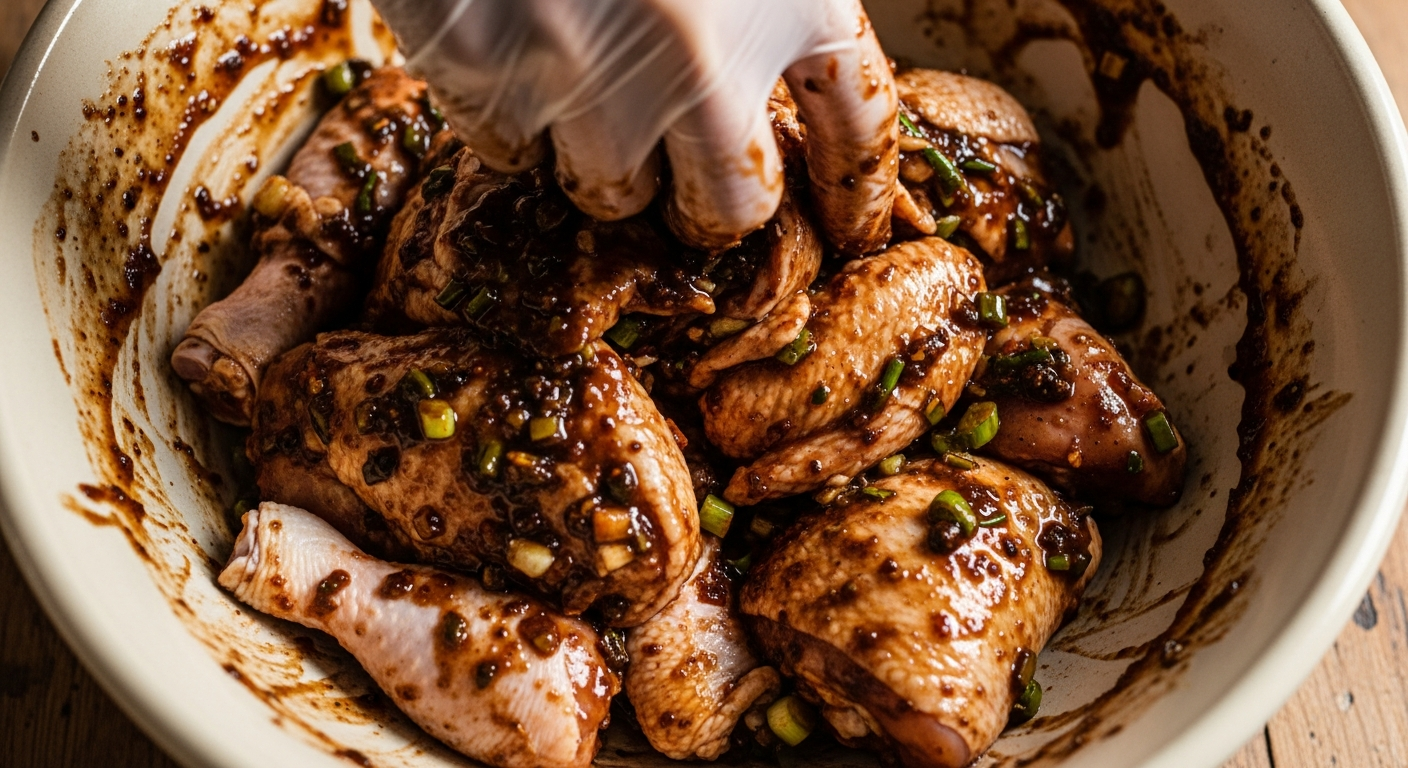
Handle the marinade safely. Any marinade that has contacted raw meat must be discarded or boiled for five minutes before use as a finishing sauce. Keep raw and cooked foods on separate platters and use separate utensils.