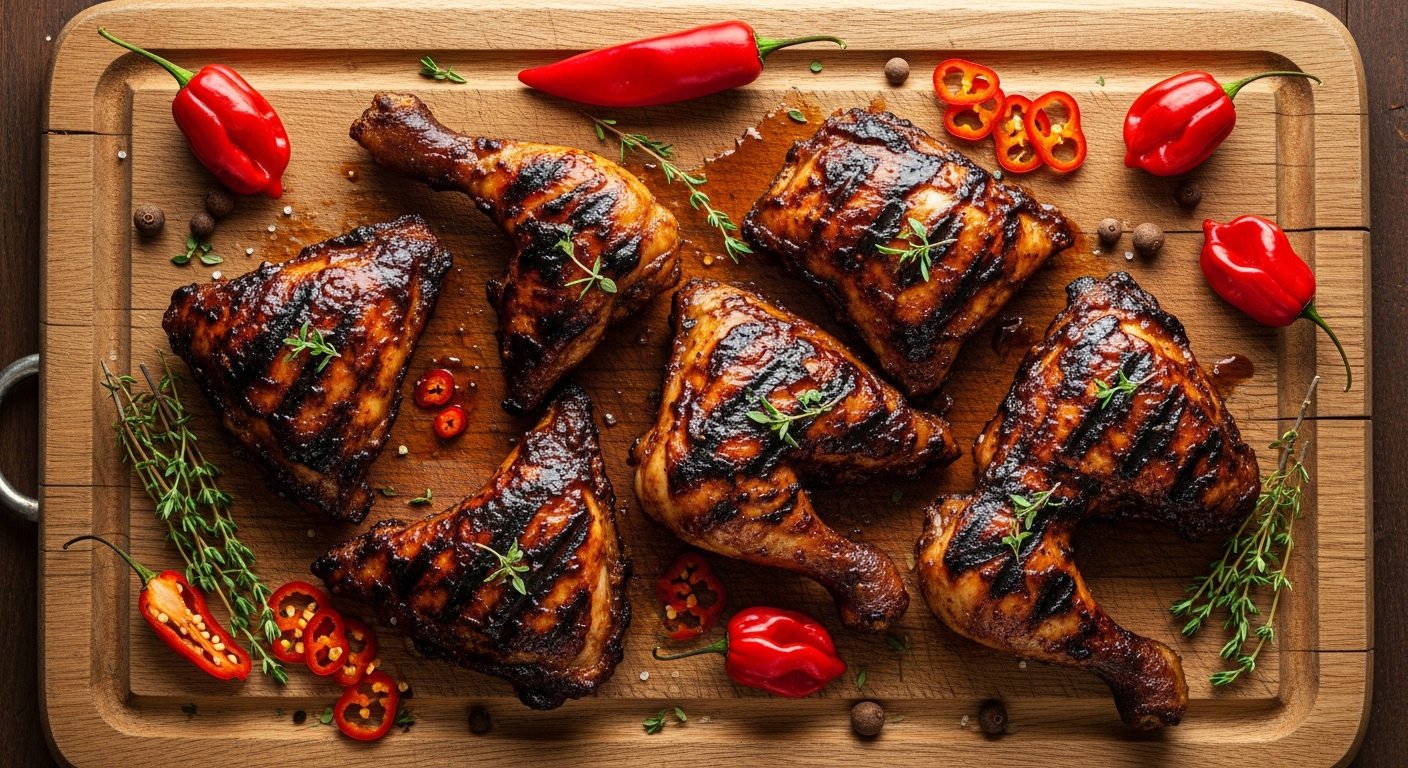
Authentic Jamaican jerk chicken is one of the most deeply developed flavor experiences in the culinary world — fiery, complex, smoky, sweet, and deeply aromatic all at once. It is also one of the most misunderstood dishes outside the Caribbean, where countless imitators use a brush of store-bought sauce and call it jerk. This guide explains the authentic method in full: where it comes from, what goes in it, how to prepare and cook it, and how to know when you've done it right.
Whether you're cooking for a dinner party or trying to recreate the flavors of a Boston Bay roadside stand from your backyard in Birmingham or Brooklyn, this guide takes you all the way.
The History of Jamaican Jerk Chicken
The story of jerk chicken cannot be separated from the story of Jamaica's Maroon people. When the British took Jamaica from Spain in 1655, hundreds of enslaved Africans escaped into the island's rugged interior — the Blue Mountains and the Cockpit Country — where they established independent communities and successfully resisted British colonialism for nearly a century.
In the forests of Jamaica's interior, the Maroons preserved and developed cooking techniques that combined African traditions with indigenous Taino knowledge. They hunted wild boar, which they preserved by coating in a blend of allspice (the native pimento berry, which grew abundantly), scotch bonnet pepper, and aromatic herbs, then smoked low and slow over pimento wood fires. This technique — jerk — allowed them to preserve meat without refrigeration while developing a flavor that was uniquely Jamaican.
The word "jerk" likely derives from the Spanish "charqui" (dried meat, the origin of "jerky") or possibly from the Quechua word for the preservation technique. The cooking method spread from the Maroon communities to all of Jamaica, and from Jamaica to the Caribbean diaspora worldwide. Today, Boston Bay in Portland Parish on the northeast coast of Jamaica is considered the spiritual home of jerk, where roadside vendors have been cooking the dish for generations.
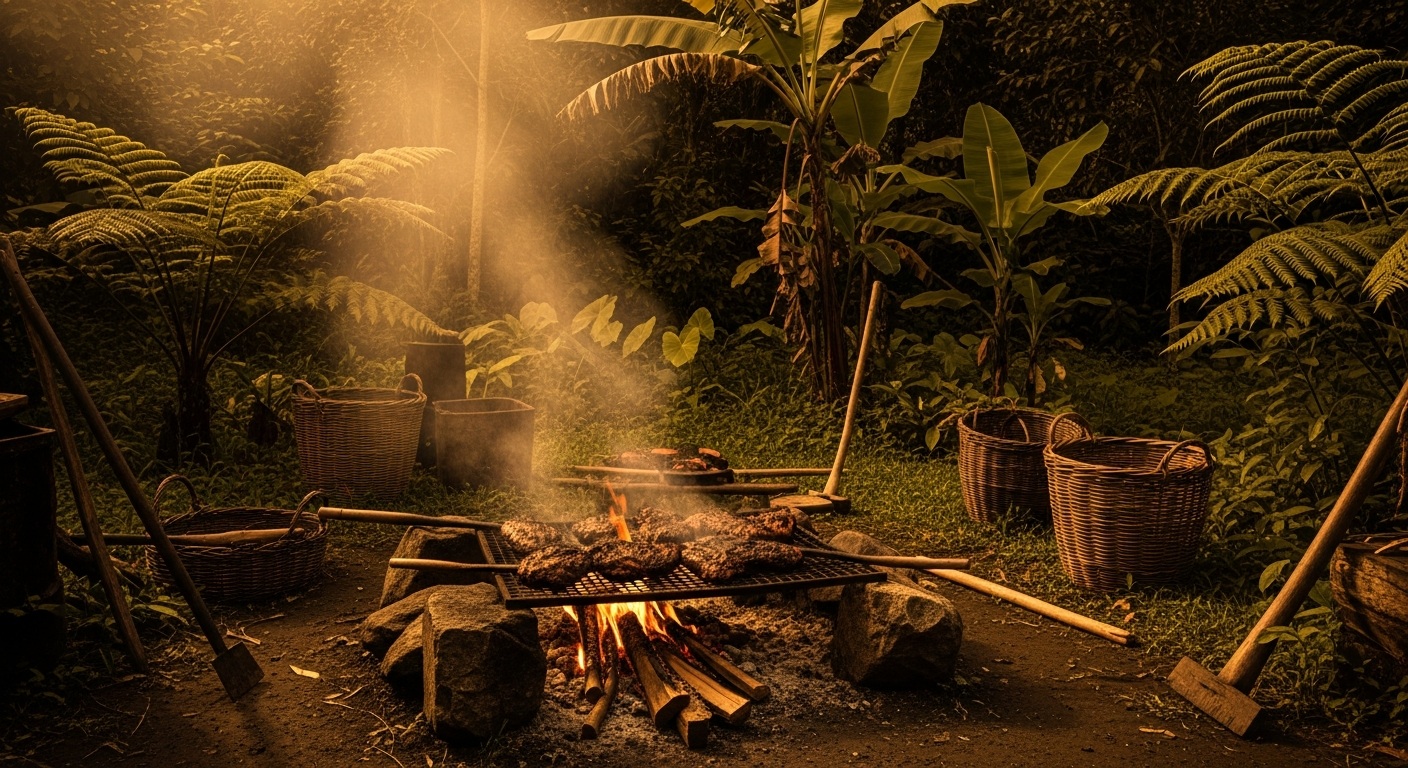
For a deeper exploration of jerk's cultural heritage, read our articles on Maroon traditions and jerk cooking.
What Makes It Authentic
The word "authentic" is overused in food writing, but for Jamaican jerk chicken it carries real meaning because so many commercial versions strip out the elements that make the dish distinctive. Here is what genuine authenticity requires:
Scotch Bonnet Peppers
Not habanero (a reasonable substitute, but not identical), not jalapeño, not "chili pepper." Scotch bonnet (Capsicum chinense) has a specific fruity, slightly apricot-like aromatic quality at 100,000–350,000 Scoville units that is the unmistakable signature of real jerk. The heat should be present, forward, and complex — not a generic burn.
Allspice (Pimento)
Ground allspice is the warm, clove-cinnamon-pepper backbone of the marinade. In Jamaica, pimento berries are ground fresh — for the most authentic result, buy whole allspice berries and grind them in a spice grinder. Pre-ground allspice from the supermarket is acceptable but loses potency quickly after grinding.
The Smoking Element
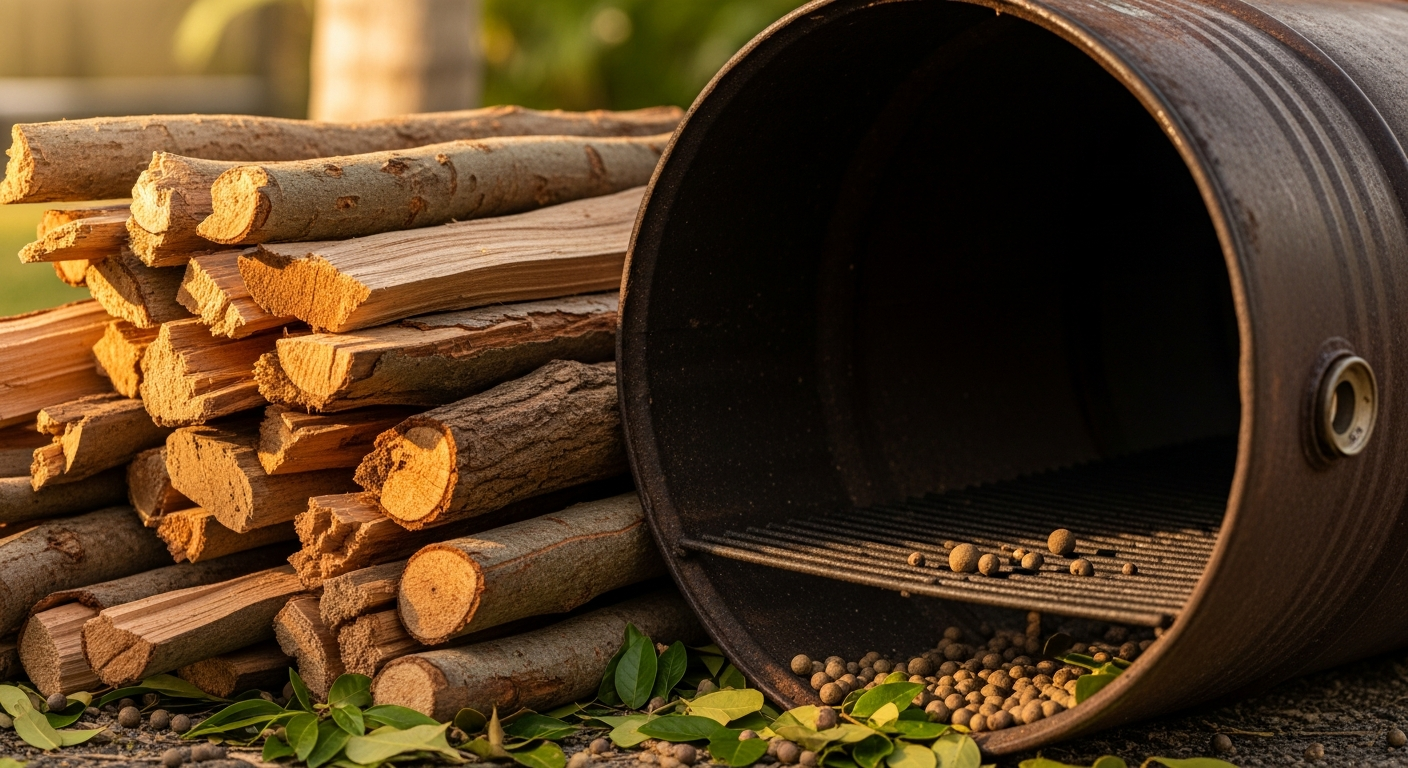
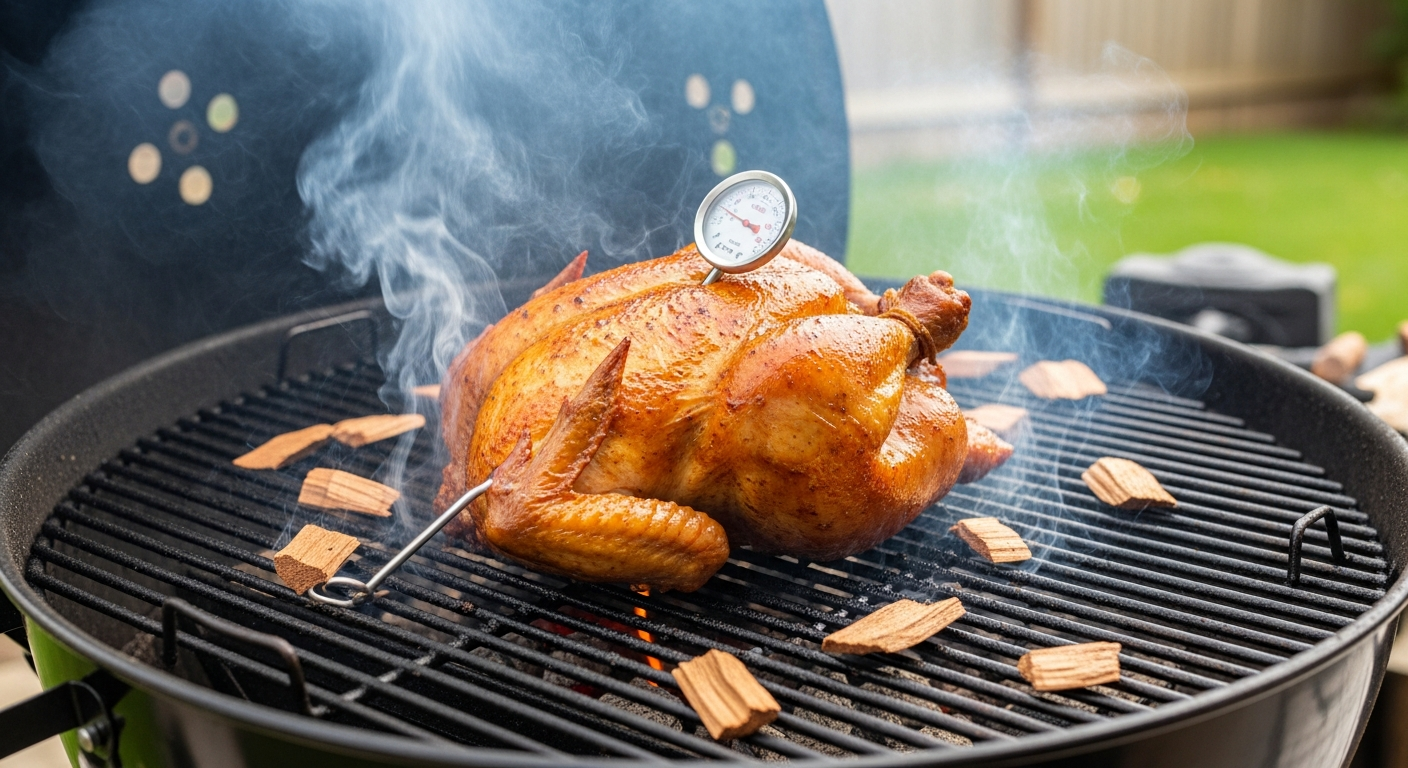
Traditional jerk is smoked, not just grilled. Pimento wood chips (allspice tree) in the coals or a covered grill/drum creates the aromatic smoke layer that distinguishes authentic jerk from marinated grilled chicken. Even a brief smoking period (30–45 minutes) adds enormous depth.
Deep Scoring and Long Marinating
The Maroon method of pressing spiced paste into deeply scored meat allows the flavors to penetrate through to the bone. Surface marinating for 30 minutes is not jerk. Twelve to twenty-four hours is the minimum for authentic flavor depth.
Low and Slow Under Cover
Real jerk is not cooked over screaming hot coals with the lid up. The traditional method is a covered, moderate-temperature cook (300–350°F) that allows the meat to absorb smoke while cooking evenly. The final stage adds direct-heat char — but the bulk of the cooking is indirect and covered.
Ingredients: The Complete List
For the Chicken
- 3–4 lbs bone-in, skin-on chicken pieces (thighs and legs strongly preferred)
For the Jerk Marinade
- 3–4 scotch bonnet peppers (adjust quantity for heat preference)
- 6 green onions (scallions), roots trimmed
- 4 cloves garlic
- 1-inch knob fresh ginger, peeled
- 1½ teaspoons ground allspice (pimento) — or 2 tsp freshly ground whole berries
- 1 teaspoon fresh thyme leaves (or ½ tsp dried Caribbean thyme)
- ½ teaspoon ground cinnamon
- ¼ teaspoon ground nutmeg
- 2 tablespoons brown sugar
- 3 tablespoons soy sauce
- 2 tablespoons neutral vegetable oil
- Juice of 2 limes
- 1 tablespoon white vinegar
- 1 teaspoon freshly ground black pepper
- ½ teaspoon salt
For the Grill
- Pimento wood chips (or hickory/apple wood), soaked 30 minutes in water
- Charcoal — lump charcoal preferred over briquettes for less ash and cleaner flavor
The Jerk Marinade
The marinade is made exactly once, in a blender or food processor, and applies the techniques described in detail on our jerk marinade recipe guide. Here is the process in the context of this complete jerk chicken preparation:
- Safety first: Wear disposable gloves when handling scotch bonnet peppers. Their oil transfers easily to skin and eyes.
- Rough chop scallions, garlic, ginger, and stemmed scotch bonnets (remove seeds for less heat).
- Blend all marinade ingredients until smooth — about 45 seconds on high. The marinade should be a dark, fragrant, deep green-brown paste.
- Reserve ¼ cup in a clean bowl for basting later. Never baste with marinade that has contacted raw chicken.
Preparing the Chicken
Preparation is where most home cooks deviate from the traditional method, and it is the step that makes the biggest difference in final results.
Scoring: The Critical Step
Using a sharp, heavy knife, score each chicken piece with 3–5 deep cuts, pressing the blade down to the bone. On thighs: cut parallel slits from tip to bone. On drumsticks: cut around the circumference at 1-inch intervals. The cuts should be 1–1.5 inches deep. This is not a gentle slash — press firmly. Properly scored chicken looks almost like it has been pre-cut into strips, held together by the bone.
Applying the Marinade
Pour the marinade over the scored chicken and, with your gloved hands, work it into every cut. Lift the skin from the thighs and push marinade directly underneath, against the meat. Make sure every exposed surface, every cut, and the underside of every piece is thoroughly coated.
Marinating
Seal in a large zip-lock bag (squeezing out the air) or a sealed glass container. Refrigerate for a minimum of 12 hours. Turn the bag or turn the pieces at least once during this time. 24 hours produces the best results for bone-in thighs and legs.
Step-by-Step Cooking Process
Step 1: Set Up a Two-Zone Charcoal Grill
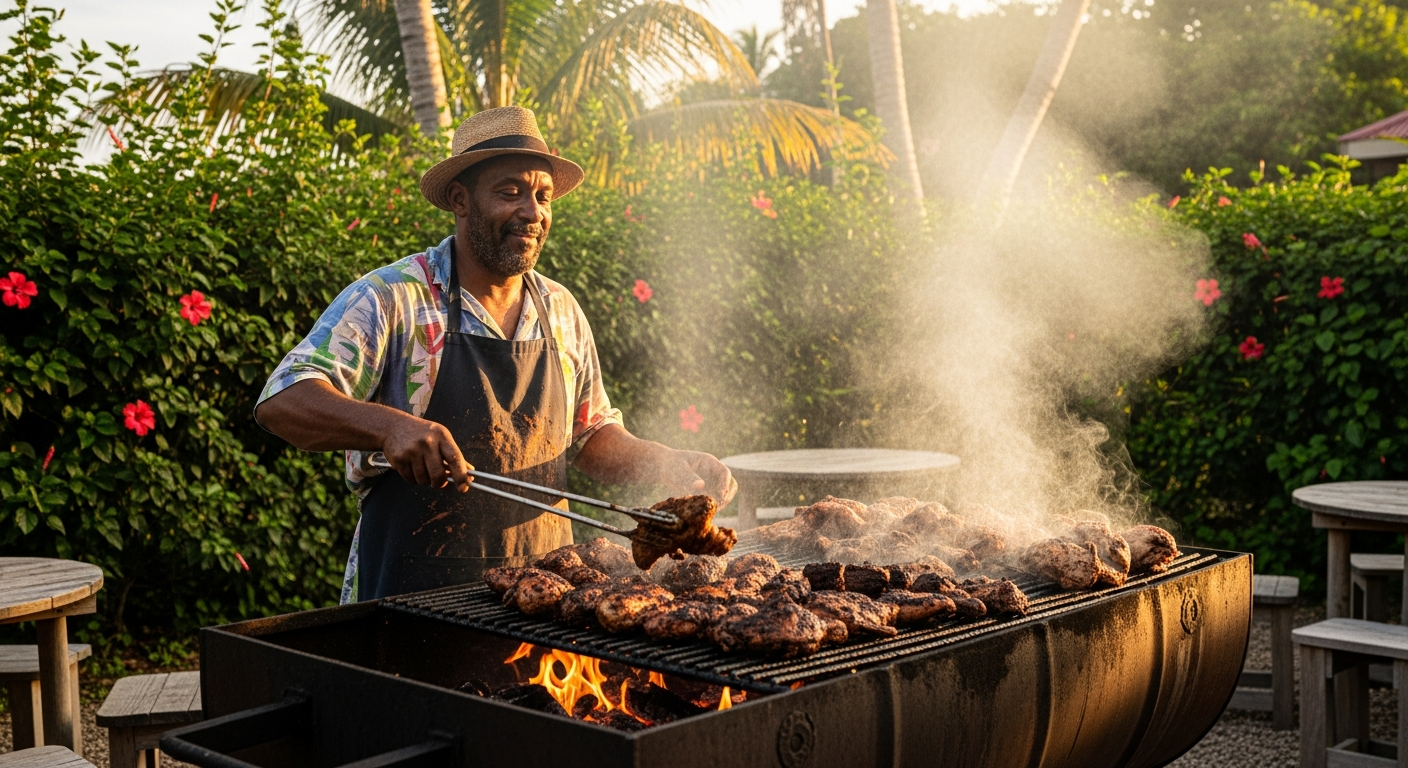
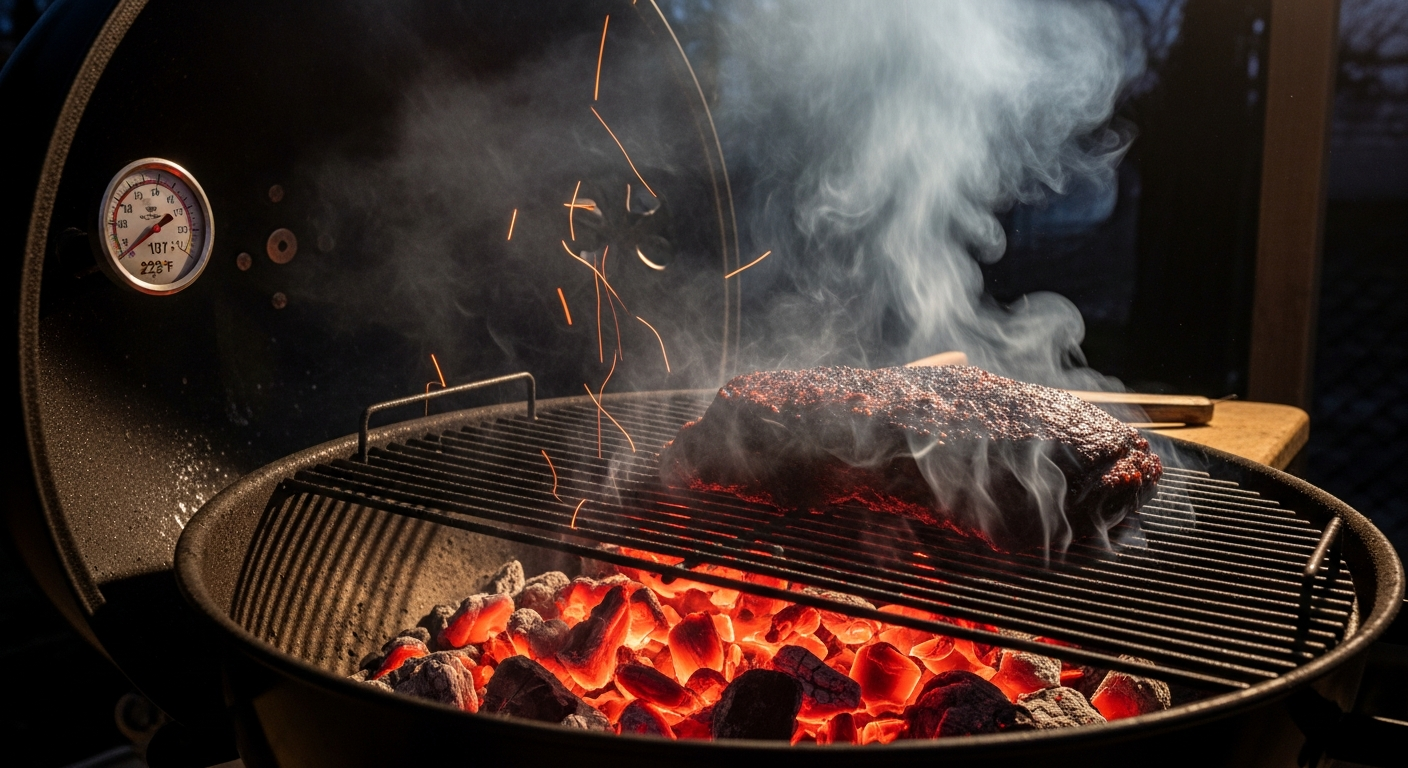
Pile charcoal on one side of your grill only — this creates a hot zone and a cool zone. You will cook the chicken mainly over the cool zone with the lid closed. Add a large handful of soaked pimento or hickory chips directly on top of the hot coals. Allow the grill to stabilize at 300–350°F — use the built-in thermometer if available, or hold your hand 5 inches above the grate: 4–5 seconds = 300–350°F.
Step 2: Place Chicken Over Indirect Heat
Arrange chicken pieces skin-side up on the cool side of the grill, none touching each other. Close the lid. The smoke from the wood chips will immediately begin infusing the chicken. Do not open the lid for the first 30 minutes.
Step 3: Turn and Baste (Low and Slow Phase)
After 30 minutes, open the grill and check: the underside should be beginning to color. Turn pieces over. Add more soaked wood chips to the coals. Baste the upward-facing surfaces with the reserved marinade. Close lid and continue for another 30–40 minutes, turning and basting every 20 minutes.
Step 4: Develop the Char (Direct Heat Finish)
When the internal temperature of the thickest thigh piece reads 165°F (measured in the thigh away from the bone), move all pieces to the direct heat side. Grill for 3–5 minutes per side with the lid open, watching carefully for charring. This builds the characteristic dark, slightly crispy, deeply caramelized exterior.
Step 5: Rest
Remove from the grill. Rest on a cutting board, loosely tented with foil, for 10 minutes. This step is mandatory — it allows the juices to redistribute and the final internal temperature to rise to 175°F+ in the dark meat, which produces the most tender result.
Cooking Methods Compared
| Method | Smoke? | Authenticity | Difficulty | Best For | Notes |
|---|---|---|---|---|---|
| Charcoal grill + pimento wood | Yes | Highest | Moderate | Best result | Traditional method; requires two-zone setup |
| Charcoal grill + hickory chips | Yes | Very High | Moderate | Excellent outdoor result | Best substitute for pimento wood |
| Gas grill + foil wood packet | Some | High | Easy | Convenient outdoor cooking | Less smoke than charcoal; use wood chip foil packet over one burner |
| Drum smoker / offset smoker | Maximum | Highest | High | Large batches, competition-level | Most similar to Jamaican jerk drum |
| Oven (broil + roast) | No (liquid smoke option) | Good | Easy | Year-round indoor cooking | Broil 8 min first for char, then 350°F to finish; add liquid smoke to marinade |
| Cast iron + oven finish | No | Good | Easy | Small batches, apartments | Best indoor char development; no outdoor access needed |
| Air fryer | No | Moderate | Very easy | Boneless thighs, quick meal | 375°F for 22–25 min; good crust but no smoke character |
For a detailed comparison of traditional pit cooking vs oven methods, see jerk cooking: pit vs oven compared.
Internal Temperature Guide
Understanding chicken temperatures is critical both for food safety and optimal texture:
| Cut | Safe Minimum (USDA) | Optimal for Jerk | Why |
|---|---|---|---|
| Thighs (bone-in) | 165°F | 175–185°F | Collagen breaks down at higher temp → tender, juicy |
| Drumsticks | 165°F | 175–180°F | Same as thighs — dark meat benefits from higher temp |
| Breasts (bone-in) | 165°F | 165–170°F | White meat dries above 170°F |
| Wings | 165°F | 175°F | High fat content allows for higher temp |
| Whole chicken | 165°F at thigh | 175°F at thigh / 165°F at breast | Monitor both zones separately |
For complete guidance on cooking temperatures, see jerk chicken temperature guide and our complete jerk chicken recipe guide.
Serving Suggestions
Authentic Jamaican jerk chicken is traditionally served whole or cut at the joint, never boneless and sliced restaurant-style. The informal, hands-on experience is part of the cultural tradition — you eat it with your hands, pulling the charred, aromatic meat from the bone.
Traditional Plating
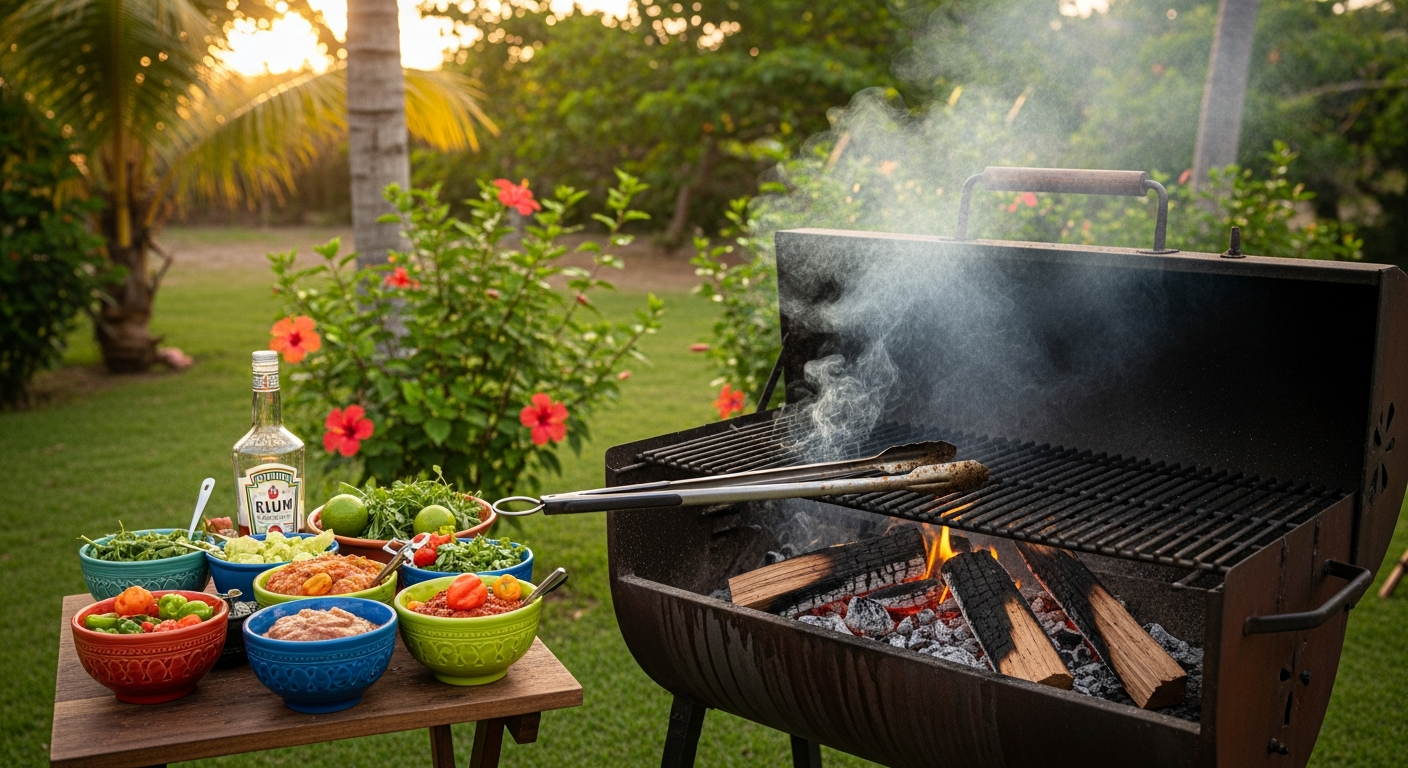
Serve directly from the grill onto a large cutting board or platter. Offer rice and peas (essential), festival bread, and a simple cabbage slaw alongside. Provide extra napkins and a bottle of scotch bonnet pepper sauce on the table for those who want more heat.
Drinks
Serve with cold Red Stripe beer, Jamaican sorrel drink, or cold ginger beer. For a cocktail, a rum punch with pineapple and lime is the traditional celebration beverage. See our full guide: what to serve with jerk chicken.
Presentation for Dinner Parties
Slice larger pieces (whole thighs) in half through the bone for easier serving. Arrange on a large platter over a bed of rice and peas, scatter with fresh scallion greens and lime wedges. The deep mahogany color of properly cooked jerk chicken needs no garnish beyond a lime wedge — it is visually stunning on its own.
Related Guides
- Complete jerk marinade recipe guide
- What to serve with jerk chicken
- Best jerk seasoning brands and homemade blend
- Jamaican jerk chicken recipe — detailed guide
- Optimal jerk chicken marinade timing
- Tips for traditional jerk grilling
- Jerk meats: smoking vs grilling compared
- Mastering heat control in jerk cooking
- How to marinade jerk chicken for maximum flavor
External Resources
- Serious Eats: The Real Deal Jerk Chicken — comprehensive recipe and science breakdown
- Bon Appétit: The History of Jerk Chicken — cultural context and origin story
- Jamaica Travel and Culture: Jerk Cooking — official Jamaica tourism resource on jerk tradition