The story of Jamaican jerk chicken is a story about freedom, ingenuity, and the power of food to carry culture across generations and continents. It begins in 17th-century Jamaica with communities of free Africans called the Maroons, passes through Boston Bay roadside stands in the 20th century, and arrives today in restaurant kitchens and home grills in over 70 countries. Every piece of jerk chicken served anywhere in the world carries this history in its flavor.
Act One: The Maroons (17th–18th Century)
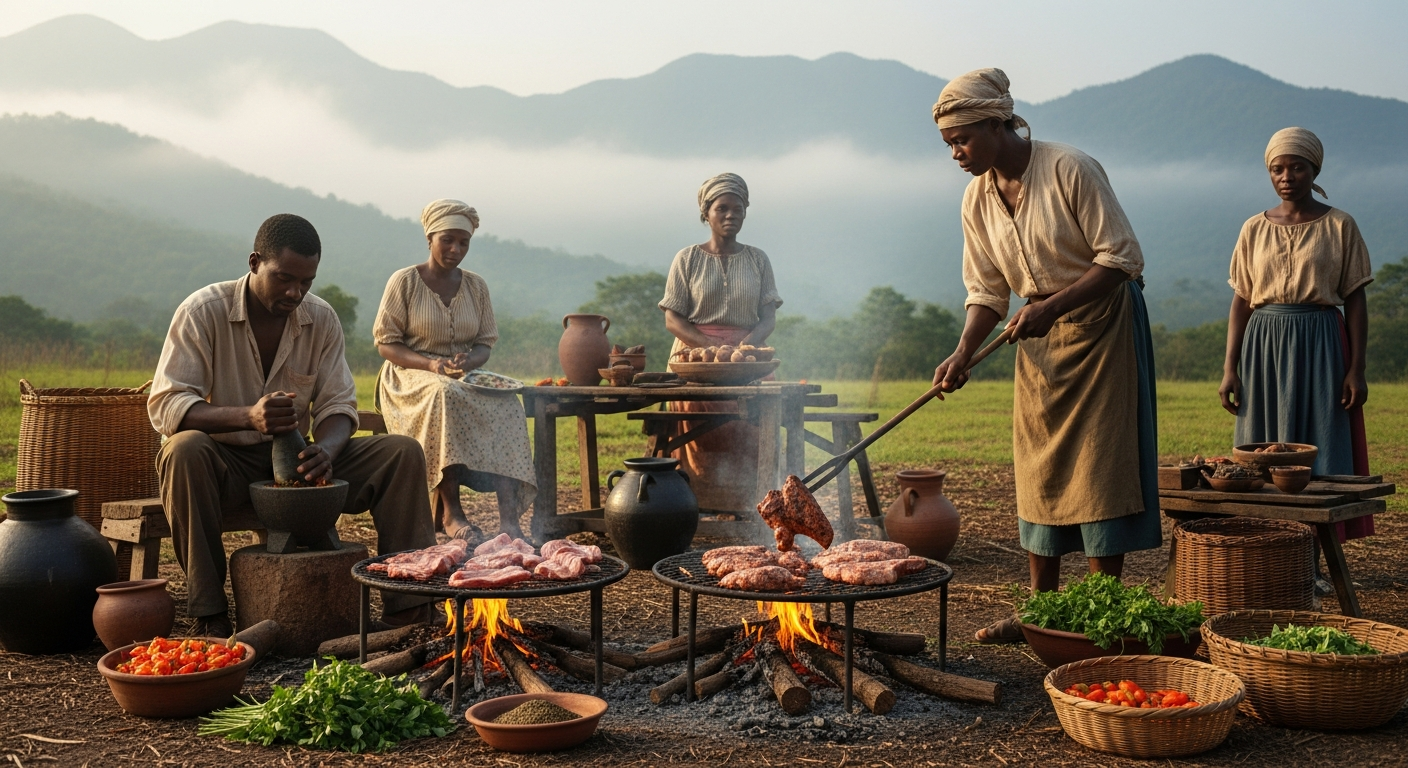
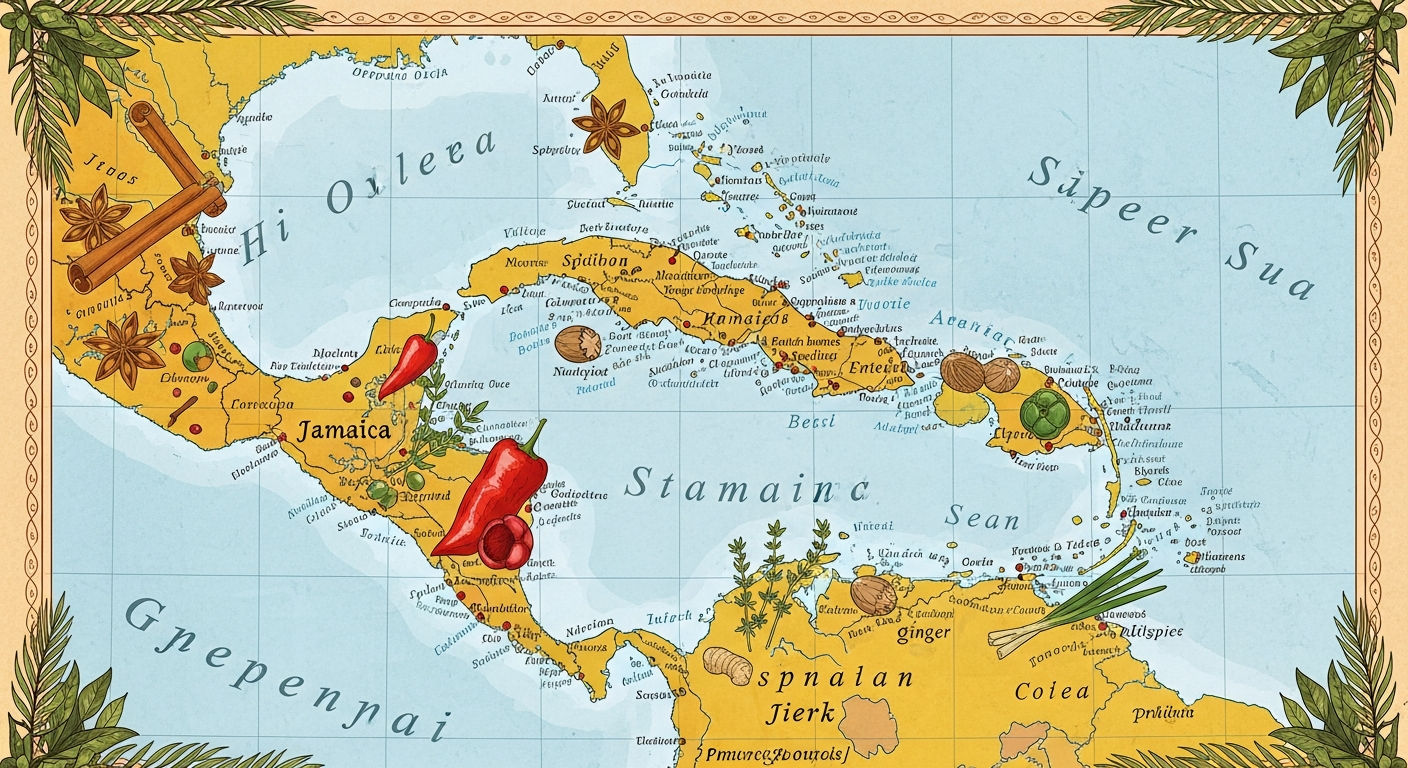
When Britain captured Jamaica from Spain in 1655, many enslaved Africans escaped into the island's mountainous interior rather than face continued enslavement under new masters. These communities — along with those who had escaped from Spanish plantations earlier — formed the Maroon nation in Jamaica's highlands. Living in the forests of the Blue Mountains and the dense limestone formations of the Cockpit Country, they survived by hunting, farming, and gathering.
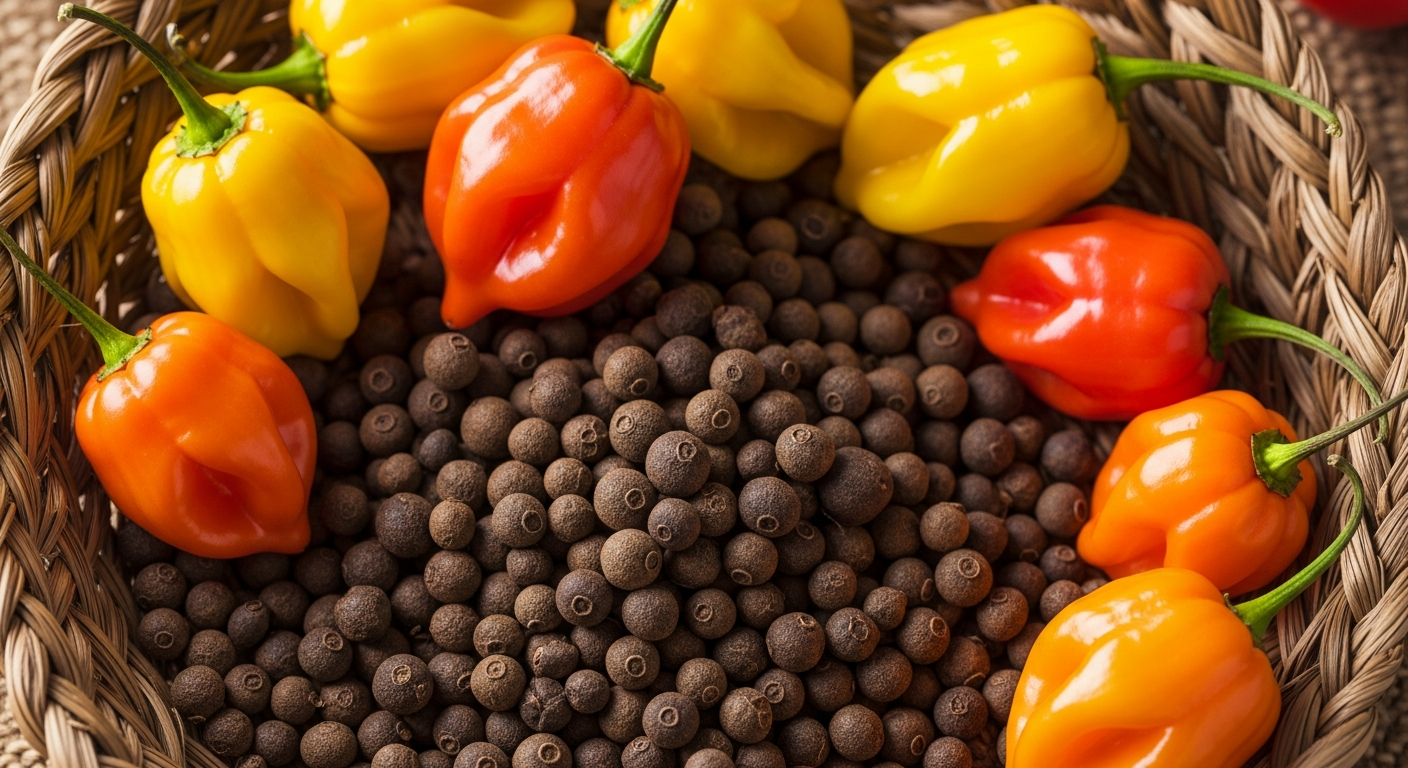
Wild boar was abundant. Allspice trees grew everywhere. Scotch bonnet peppers were cultivated in forest clearings. The Maroons developed a method of preparation: season the meat deeply with allspice berries (pounded) and scotch bonnet peppers, rub with salt, wrap in leaves, and cook low and slow over a smoldering fire of pimento wood. The result preserved the meat for days and tasted unlike anything else — warm, smoky, fiery, and fragrant with pimento's complex aroma.
Act Two: Boston Bay (20th Century)
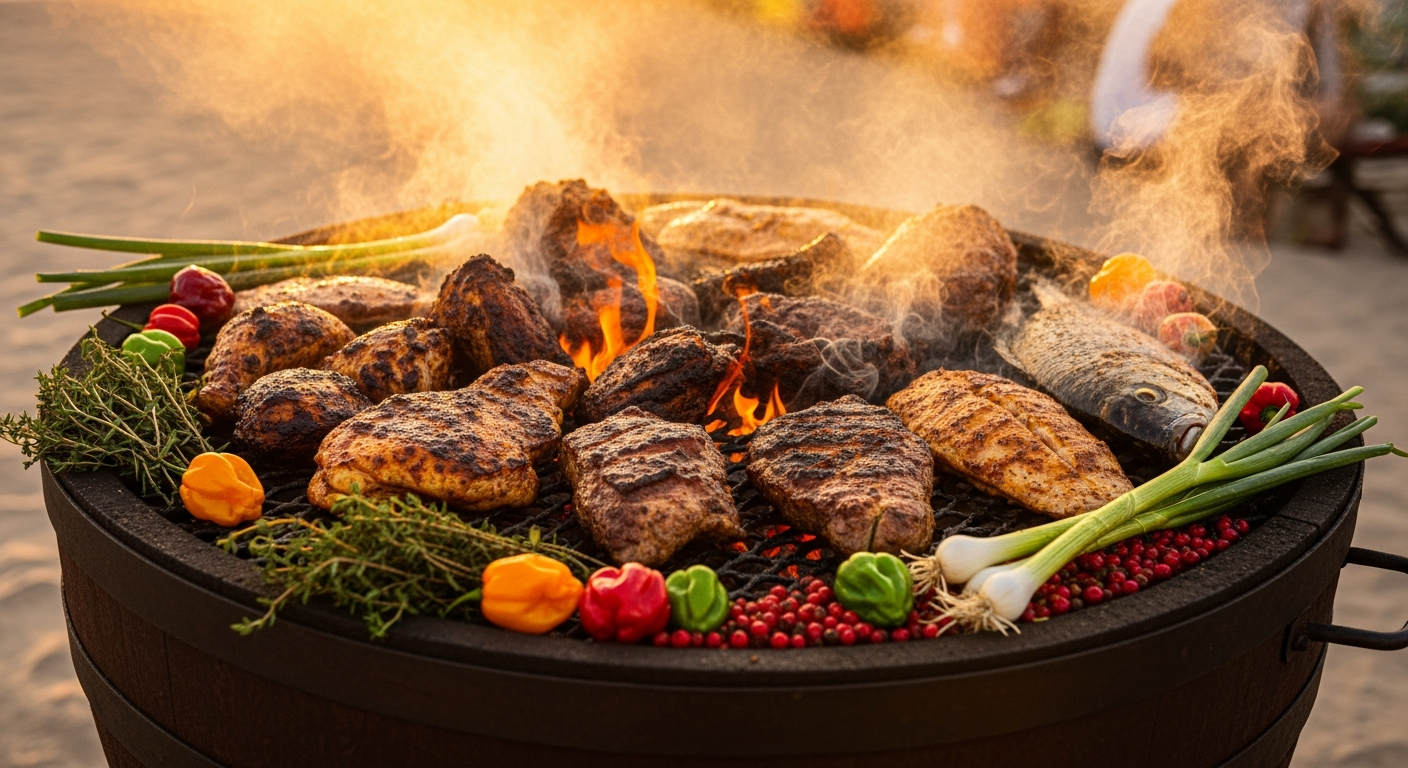
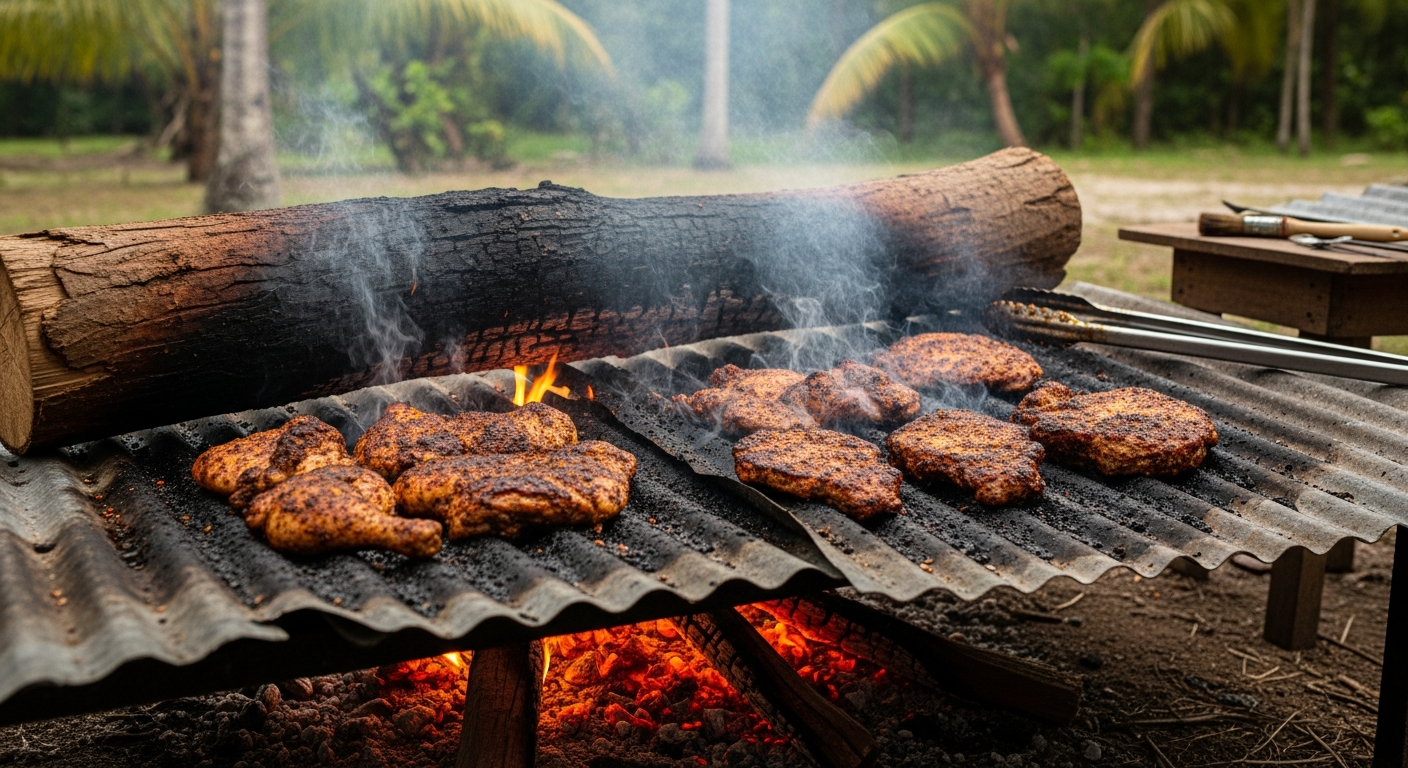
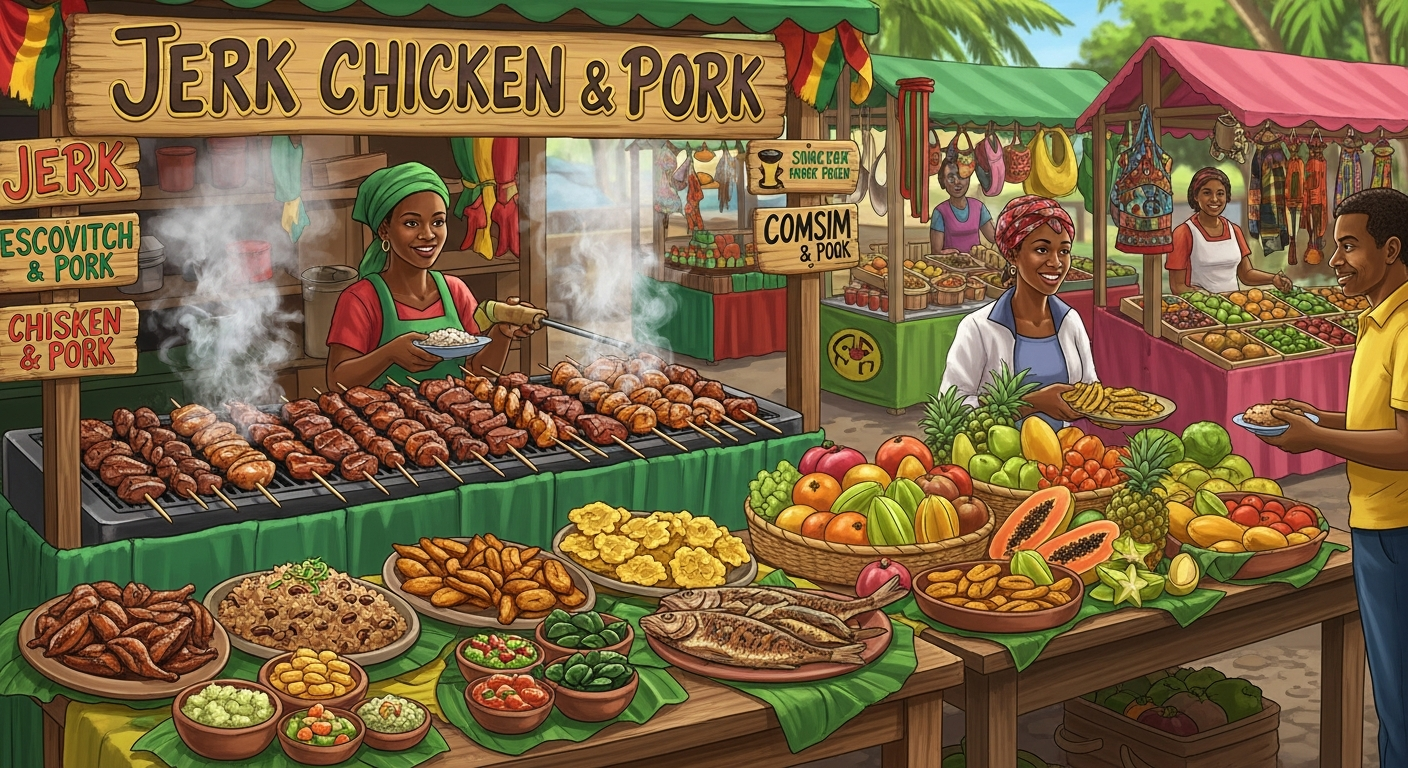
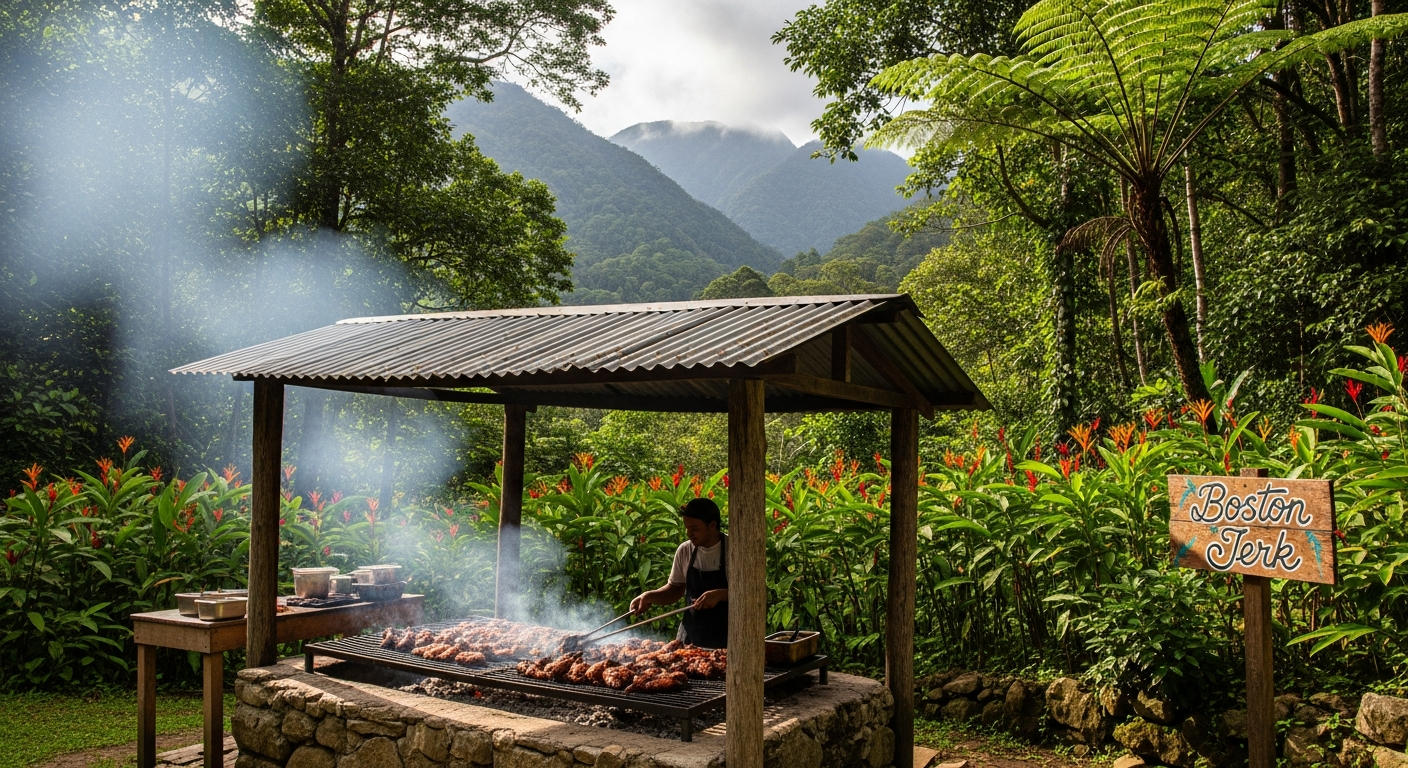
By the mid-20th century, jerk cooking had migrated from mountain communities to coastal Jamaica. The vendors of Boston Bay in Portland Parish became the most famous practitioners — cooking on barrel-drum pits sited on the beach, filling the coastal air with pimento wood smoke that drew travelers from across the island. Boston Bay jerk stands became destination eating: Jamaicans from Kingston would drive three hours to Portland specifically for the jerk. This is still true today. The Boston Bay method — overnight marinating, barrel-drum pit, pimento wood, and the specific smoky-sweet-fiery flavor that results — remains the gold standard against which all jerk chicken is measured.
Act Three: The Diaspora and the World (1970s–Present)
Jamaican migration to the UK, Canada, and the US beginning in the 1950s carried jerk cooking to new cities. The first Jamaican jerk restaurants in London's Brixton opened in the late 1970s. Brooklyn and the Bronx in New York followed. In each city, the cooking adapted slightly to local ingredient availability — pimento wood became rarer and charcoal became more common — but the essential flavor formula held: allspice and scotch bonnet, overnight marinated, cooked at high heat until charred and caramelized.
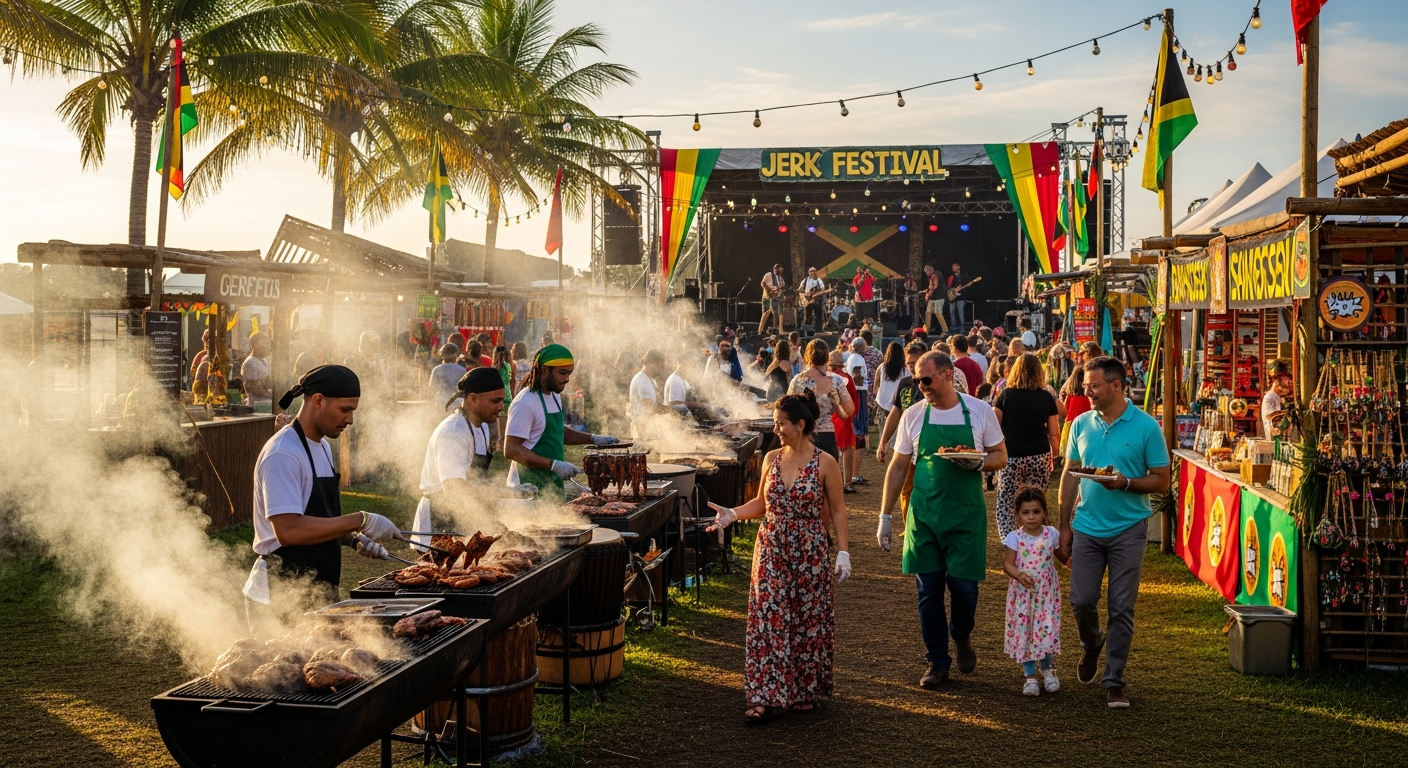
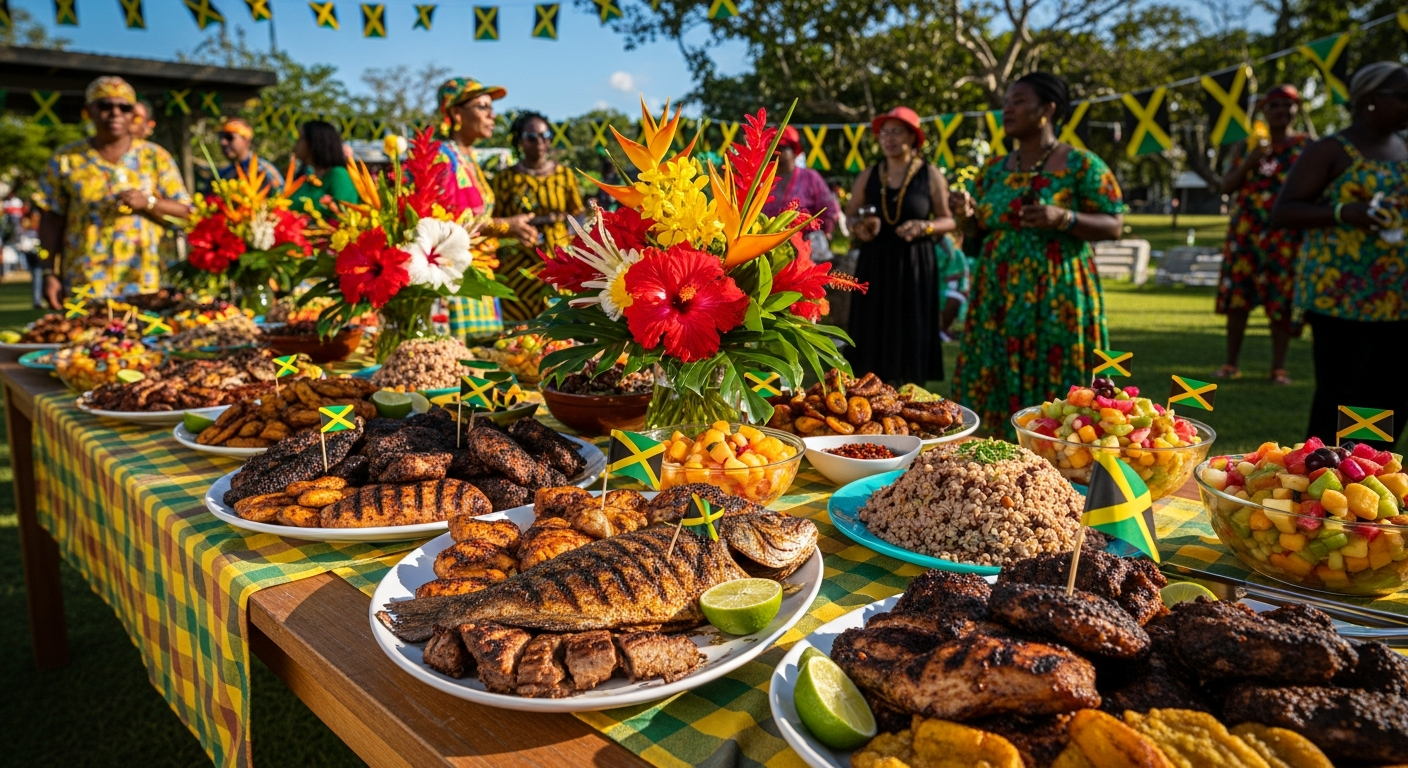
Today jerk seasoning is commercially exported worldwide. Jamaican jerk festivals are held in cities from London to Atlanta to Toronto. The technique has been applied to vegetables, seafood, pork, beef, and tofu. Yet the origin remains singular and specific: a group of free Africans in Jamaica's mountains, cooking wild boar over pimento wood in the 17th century. See our jerk marinade recipe, our best jerk seasoning guide, and our pairing guide for making the tradition at home.